Category Archives: Black History

Pioneers, Activists, Black People, Black History

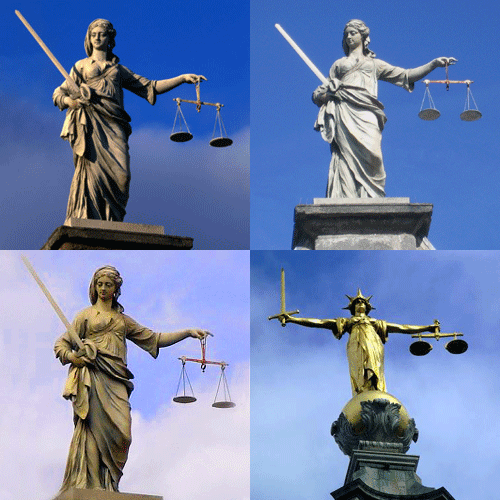
Black teens forced to confess to murder …Rashad Robinson, ColorOfChange.org – Black History- called them the Dixmoor 5, they were innocent !!!!!!!


DNA results prove the innocence of ten Chicago-area men arrested as teens, some imprisoned for nearly 20 years.
Please tell the State’s Attorney to correct these injustices:


Recent DNA testing has proven the innocence of 10 Black men who were were only children when they were forced by Illinois police to confess to murders they didn’t commit.

Some of them have been imprisoned for nearly 20 years, but despite the overwhelming evidence, which has even linked the crimes to the real killers, the state of Illinois refuses to recognize their innocence.

If enough of us speak out, we can expose these injustices and force the state of Illinois to do right by these men. Please join us in demanding that State Attorney Anita Alvarez immediately agree to overturn their convictions. It takes just a moment:

http://act.colorofchange.org/sign/Cook_County/

The Dixmoor Five

In the first case, which occurred in October 1992, five Black teenagers, later called the Dixmoor Five, were arrested in Cook County, IL for the sexual assault and murder of 14-year-old Cateresa Matthews. Three of the five boys confessed to the crime in exchange for lighter sentences and testified against the others. They’ve since recanted their testimony, with one man claiming that he was tricked into signing a confession by local police.1

A few months ago, DNA samples taken from the victim were tested using modern techniques. The DNA didn’t belong to any of the men accused of her rape and murder — instead it was linked to a convicted rapist and armed robber who was 32 years old at the time.2

In the face of this overwhelming evidence, the State’s Attorney’s office stubbornly downplayed the significance of the DNA evidence and opposed the release of the men.

The Englewood Five

Two-and-a-half years later, five more Black Cook County teenagers, known as the Englewood Five, were taken into custody for the sexual assault and murder of a 30-year-old woman named Nina Glover. In this case, five juvenile confessions resulted in the convictions of four teenagers (aged 14-18 at the time). While one teenager wasn’t convicted, the other four received lengthy prison sentences. Recently, DNA extracted from the victim was matched to a now deceased serial rapist and murderer — a man who has a history of preying on women and strangling them.3

The State has argued that any DNA match in this case would be inconclusive due to the lifestyle of the victim, who was known to engage in prostitution. However, the semen found in the strangled body of Ms. Glover is from a man that the Cook County State’s Attorney‘s office has long believed was responsible for two strangulation-murders of prostitutes and violent assaults of at least five others.4

The Common Thread

The thread that connects both these cases? The teenagers were incarcerated as a result of confessions we now know were forced by police. Eight of the 10 teenagers confessed to police during intense and coercive interrogations, and six of the now grown men are still in custody.

Coerced confessions play a part in almost a quarter of all wrongful convictions nationwide.5 Even the U.S. Supreme Court has recognized that teenagers are particularly susceptible to falsely incriminating themselves during questioning from police and should not be subjected to harsh interrogation tactics.6

Coercive interrogation practices must come to an end. Ensuring the release of these men wouldn’t just help correct a gross injustice — it would send a message to law enforcement that they can’t get away with forcing teenagers to confess to crimes they didn’t commit, and that this practice compromises the entire public’s safety.

Please join us in demanding that Cook County State’s Attorney Anita Alvarez agree to vacate the convictions of these young Black men, and when you do, ask your friends and family to do the same:

http://act.colorofchange.org/sign/Cook_County/

Thanks and Peace,

— Rashad, James, Gabriel, William, Dani, Matt, Natasha and the rest of the ColorOfChange.org team
    August 9th, 2011

Help support our work. ColorOfChange.org is powered by YOU–your energy and dollars. We take no money from lobbyists or large corporations that don’t share our values, and our tiny staff ensures your contributions go a long way. You can contribute here:

http://www.colorofchange.org/donate

References:

1. “DNA evidence links man to 1991 murder, may clear 5 convicted in case,” Chicago Tibune, 04-15-11
http://act.colorofchange.org/go/929?akid=2097.1174326.j7cO5x&t=7

2. “State’s response to petition for relief from judgement,” Circuit Court of Cook County, 04-29-11
http://act.colorofchange.org/go/931?akid=2097.1174326.j7cO5x&t=9

3. “Man convicted in 1994 rape, murder pins hopes on advanced DNA test,” Chicago Tribune, 03-25-11
http://act.colorofchange.org/go/930?akid=2097.1174326.j7cO5x&t=11

4. “State’s motion to dismiss request for post-conviction DNA testing,” Circuit Court of Cook County, 01-19-2011
http://act.colorofchange.org/go/932?akid=2097.1174326.j7cO5x&t=13

5. “Understand the Causes,” Innocence Project
 http://act.colorofchange.org/go/934?akid=2097.1174326.j7cO5x&t=15

6. “Supreme Court case J.D.B. v. North Carolina,” Supreme Court opinion, October, 2010
“http://act.colorofchange.org/go/928?akid=2097.1174326.j7cO5x&t=17

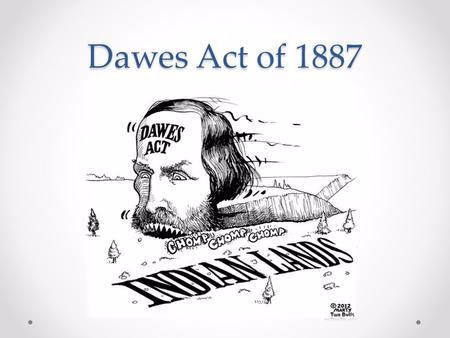
1887 – Cleveland signs the Dawes Severalty Act1887 –


In a well-meaning but ultimately flawed attempt to assimilate Native Americans, President Grover Cleveland signs an act to end tribal control of reservations and divide their land into individual holdings. Named for its chief author, Senator Henry Laurens Dawes from …read more

the awful image above is from a WP site

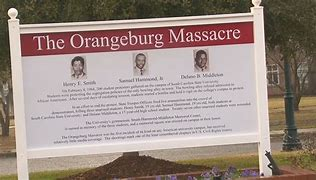
1968 – Three protestors die in the Orangeburg Massacre


On the night of February 8, 1968, police officers in Orangeburg, South Carolina open fire on a crowd of young people during a protest against racial segregation, killing three and wounding around 30 others. The killing of three young African Americans by state officials, four years after racial discrimination had been outlawed by federal law, has gone down in history as the Orangeburg Massacre.

After decades of protests across the country, segregation was abolished in the United States by the Civil Rights Act of 1964.

While its passage was a major victory, many white Americans throughout the South simply refused to obey it, knowing local police would not care to enforce it.

In early February of 1968, a group of activists in Orangeburg tried to convince one such man, Harry Floyd, to desegregate his bowling alley, but he refused. Several days of expanding protests followed, during which protesters damaged a window of the bowling alley, police responded with arrests and beatings, and unrest spread to the nearby campus of South Carolina State University, a historically Black college.

Source: history.com

Jim crow… did you know?


Jim Crow Era

After the Civil War, there was a period from about 1865 to 1877 where federal laws offered observable protection of civil rights for former slaves and free blacks; it wasn’t entirely awful to be an African American, even in the South. However, starting in the 1870s, as the Southern economy continued its decline, Democrats took over power in Southern legislatures and used intimidation tactics to suppress black voters. Tactics included violence against blacks and those tactics continued well into the 1900s. Lynchings were a common form of terrorism practiced against blacks to intimidate them. It is important to remember that the Democrats and Republicans of the late 1800s were very different parties from their current iterations. Republicans in the time of the Civil War and directly after were literally the party of Lincoln and anathema to the South. As white, Southern Democrats took over legislatures in the former Confederate states, they began passing more restrictive voter registration and electoral laws, as well as passing legislation to segregate blacks and whites.

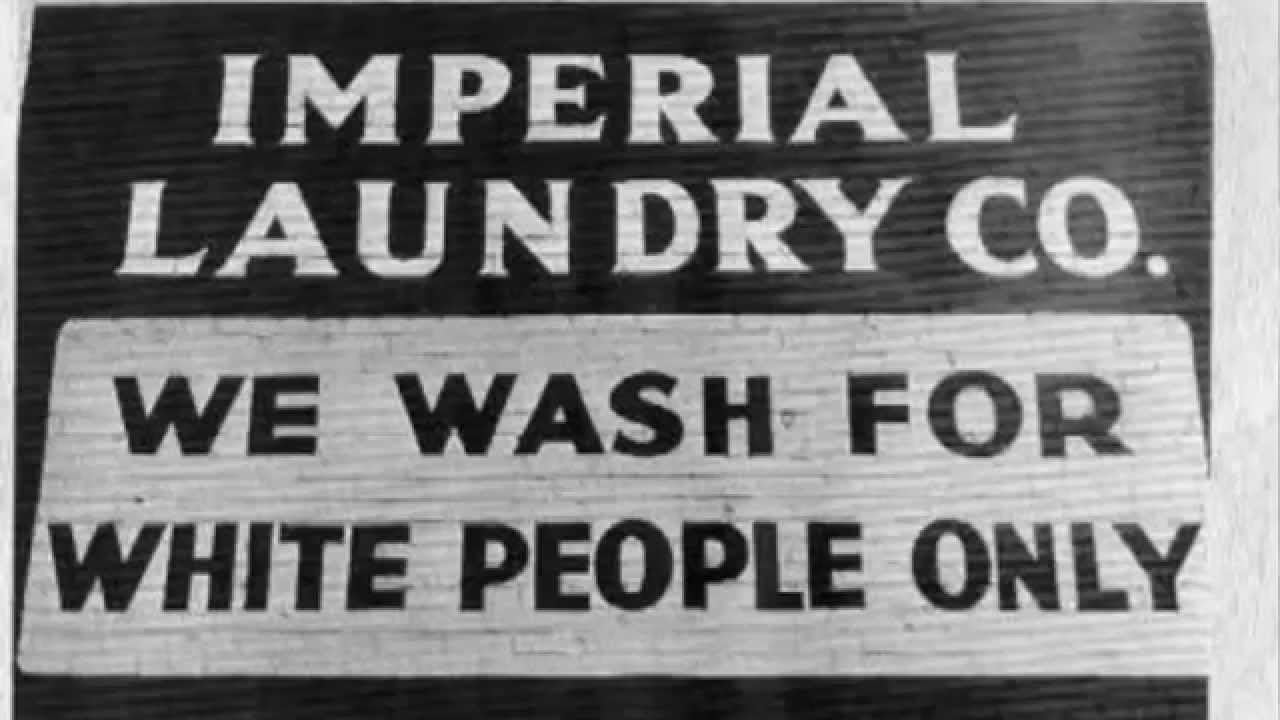
It wasn’t enough just to separate out blacks – segregation was never about “separate but equal.” While the Supreme Court naively speculated in Plessy v. Ferguson that somehow mankind wouldn’t show its worst nature and that segregation could occur without one side being significantly disadvantaged despite all evidence to the contrary, we can look back in hindsight and see that the Court was either foolishly optimistic or suffering from the same racism that gripped the other arms of the government at the time. In practice, the services and facilities for blacks were consistently inferior, underfunded, and more inconvenient as compared to those offered to whites – or the services and facilities did not exist at all for blacks. While segregation was literal law in the South, it was also practiced in the northern United States via housing patterns enforced by private covenants, bank lending practices, and job discrimination, including discriminatory labor union practices.

This kind of de facto segregation has lasted well into our own time.

The era of Jim Crow laws saw a dramatic reduction in the number of blacks registered to vote within the South. This time period brought about the Great Migration of blacks to northern and western cities like New York City, Chicago, and Los Angeles. In the 1920s, the Ku Klux Klan experienced a resurgence and spread all over the country, finding a significant popularity that has lingered to this day in the Midwest. It was claimed at the height of the second incarnation of the KKK that its membership exceeded 4 million people nationwide. The Klan didn’t shy away from using burning crosses and other intimidation tools to strike fear into their opponents, who included not just blacks, but also Catholics, Jews, and anyone who wasn’t a white Protestant.

This time period was not without its triumphs for blacks, even if they came at a cost or if they were smaller than one would have preferred. The NAACP was founded in 1909, in response to the continued practice of lynching and race riots in Springfield, Ill. From the 1920s through the 1930s in Harlem, New York, a cultural, social, and artistic movement took place that was later coined the Harlem Renaissance. Musicians like Duke Ellington and Jelly Roll Morton, writers such as Zora Neale Hurston and Langston Hughes, it-girls like Josephine Baker, and philosophers like W.E.B. Du Bois all had a hand in the Harlem Renaissance and American culture as a whole is richer and better for it. 

Notable Supreme Court Cases:

  • The Slaughter-House Cases, 83 U.S. 36 (1873) – this series of three cases, which were consolidated into one issue, offered the first opinion from the Supreme Court on the 14th Amendment. The court chose to interpret the rights protected by the 14th Amendment as very narrow and this precedent would be followed for many years to come.
  • Civil Rights Cases, 109 U.S. 3 (1883) – in this set of five cases that were consolidated into one issue, a majority of the court held the Civil Rights Act of 1875 unconstitutional against the lone famous dissent of Justice Harlan. The majority argued that Congress lacked authority to regulate private affairs under the 14th Amendment and that the 13th Amendment “merely abolishe[d] slavery”. Segregation in public accommodations would not be declared illegal after these cases until the Civil Rights Act of 1964.
  • Plessy v. Ferguson, 163 U.S. 537 (1896) – this is the case which gave us the phrase “separate but equal” and upheld state racial segregation laws for public facilities. Justice Harlan again offered a lone dissent. These laws would remain in play until 1954.

Selected Library Resources:

Additional Resources:

library.law.howard.edu

Be inspired by activist and suffragette Mary Church Terrell


Career image

The National Museum of African American History and Culture (NMAAHC) is proud to present the next page from Our American Story, an online series for Museum supporters. Despite the variety of uncertain news in the world today, one story continues to speak of powerful strength and uplift: the story of the African American experience. This legacy speaks of everyday heroism, profound resiliency, and the binding power of the community. We offer these stories to honor and celebrate an immensely rich history and culture—and to inspire and sustain our community as we move toward the future, together.
Mary Eliza Church Terrell was a renowned educator and speaker who campaigned fearlessly for women’s suffrage and the social equality of African Americans.

Circular desk calendar owned by Mary Church Terrell

Born in Memphis, Tennessee, in 1863, the year of the Emancipation Proclamation, Mary Eliza Church was part of a changing America. She was the daughter of affluent African American parents, both of whom were previously enslaved. Her mother, Louisa Ayers Church, owned a hair salon. Her father, Robert Reed Church, was a successful businessman who would later become one of the South’s first African American millionaires.
Terrell’s parents sent her to Ohio to attend preparatory school at Antioch and later Oberlin College. There she earned her bachelor’s and master’s degrees. At a time when women were not expected to achieve academically, Terrell excelled—and committed herself to pass on what she learned. After teaching for two years at Wilberforce College, she moved to Washington, D.C. to teach high school, where she met lawyer and future judge Robert Terrell. They married in 1891.

“Most girls run away from home to marry; I ran away to teach.”

— Mary Church Terrell 

Although Mary Church Terrell’s life focused on education and progress, tragedy would spur her into activism.
In 1892, her childhood friend Thomas Moss was lynched in Memphis. Moss was the owner of People’s Grocery, a successful wholesale grocery outside the city. He, like Terrell, represented progress, which many whites at the time felt was a direct threat to their own commerce and livelihood. The gunshot-riddled bodies of Moss and two of his employees were left on a railroad track just north of Memphis.

Terrell, along with journalist Ida B. Wells, organized anti-lynching campaigns to mobilize advocates and generate awareness. Later she would protest President Theodore Roosevelt’s 1906 discharge of 167 African American soldiers for unfounded conspiracy claims in Brownsville, Texas. She wrote columns and essays espousing the importance of dignity and respect for the soldiers and demanded a fair trial. Her efforts were to no avail at the time, although an Army investigation in 1972 led to the honorable discharges of all the soldiers, only two of whom were still alive.

NACWC EMBLEM LOGO SEAL

Pin for the National Association of Colored Women’s Clubs
Terrell held firm to the idea of racial uplift—the belief that blacks would help end racial discrimination by advancing themselves through education, work, and activism. Her words “lifting as we climb” became the motto of the National Association of Colored Women (NACW), the group she co-founded in 1896.
She also would go on to serve as one of the charter members of the NAACP, founded in 1909.

Understanding the intersectionality of race and gender discrimination, she lectured, penned essays, and spoke out on behalf of the women’s suffrage movement—even picketing the Woodrow Wilson White House with members of Howard University’s Delta Sigma Theta sorority.

Terrell was an active member of the National Association of Women’s Suffrage Act (NAWSA), where she worked alongside the organization’s founder, Susan B. Anthony. Terrell was invited to deliver two speeches on the challenges faced by women, and particularly women of color in America, at the International Congress of Women in Berlin in 1904. She was the only woman of African descent invited to speak at the conference. She delivered her speeches in German, French, and English, receiving a standing ovation from the audience.

Terrell’s belief that education and activism would provide a path to equality was demonstrated by her devotion to both pursuits. A self-described “dignified agitator,” Terrell would fight, protest, and work on behalf of social progress for women of color for more than half a century.

While in her 80s, Mary Church Terrell joined efforts to end segregation in restaurants in Washington, D.C., which laid the groundwork for the 1953 court ruling that segregation in D.C. restaurants was unconstitutional. In 1954, two months after the landmark Brown v. Board of Education ruling, she passed away at her home in Highland Beach, Maryland, a Chesapeake Bay resort community for affluent African Americans founded by one of Frederick Douglass’s sons.

From her tireless efforts to pass the Nineteenth amendment 100 years ago to serving as the first black woman on the Washington, D.C. Board of Education, Terrell’s work continues to echo throughout the world today. Her commitment to change opened countless doors of opportunity for those who came after her.
Her legacy endures in the hearts and minds of those continuing the fight for a world with more educated and empowered black women. From Civil Rights leaders and feminists of the 1960s to contemporary activists and trailblazers, many have and will continue to invoke Terrell’s fighting—and dignified—spirit.
The Museum helps connect individuals with a deeper understanding of the African American story by sharing the lives of inspiring pioneers like Mary Church Terrell, who demonstrate the impact one person can make on the world. Please help the Museum continue this important work and consider joining the Museum or making a donation today.

Share this American Story

1400 Constitution Ave NW, Washington, DC 20560
(844) 750-3012 | NMAAHC.si.edu
© 2020 Smithsonian Institution
Opera glasses and case owned by Mary Church Terrell. Collection of the Smithsonian National Museum of African American History and Culture, Gift of Ray and Jean Langston in memory of Mary Church and Robert Terrell.
Gelatin silver print of Mary Church Terrell by Addison Scurlock, ca. 1910. Collection of the Smithsonian National Museum of African American History and Culture, Gift of Ray and Jean Langston in memory of Mary Church and Robert Terrell.
Service award pin for Mary Church Terrell from the National Association of Colored Women, 1900. Collection of the Smithsonian National Museum of African American History and Culture, Gift of Ray and Jean Langston in memory of Mary Church and Robert Terrell.
Circular desk calendar owned by Mary Church Terrell. Collection of the Smithsonian National Museum of African American History and Culture, Gift of Ray and Jean Langston in memory of Mary Church and Robert Terrell.
Pin for the National Association of Colored Women’s Clubs. Collection of the Smithsonian National Museum of African American History and Culture, Gift of Ray and Jean Langston in memory of Mary Church and Robert Terrell.
Unsubscribe | View in Browser