To commemorate and celebrate the contributions to our nation made by people of African descent, American historian Carter G. Woodson established Black History Week. The first celebration occurred on Feb. 12, 1926. For many years, the second week of February was set aside for this celebration to coincide with the birthdays of abolitionist/editor Frederick Douglass and Abraham Lincoln. In 1976, as part of the nation’s bicentennial, the week was expanded to a month. Since then, U.S. presidents have proclaimed February as National African-American History Month.
In the fall of 1870, a handful of students made their way through the northwest quadrant of the nation’s capital, and through the doors of D.C.’s “Preparatory High School for Colored Youth,” the country’s first public high school for African American children. The students and teachers who graced its hallways would be heard through the years in the halls of Congress, in the highest ranks of the United States military, at the heart of our civil rights movement, and in the upper echelons of medical and scientific study.
One such voice was that of Carter G. Woodson; a journalist, author, historian, and co-founder of the Association for the Study of Negro Life and History (ASNLH). It was through his work with the ASNLH that Woodson spearheaded the celebration of “Negro History Week” in America, which served as the precursor to Black History Month, which was officially recognized by President Gerald Ford in 1976. Woodson taught us that, “those who have no record of what their forebears have accomplished lose the inspiration which comes from the teaching of biography and history.”
At least 12 Black chemists and physicists worked as primary researchers on the team that developed the technology behind the atomic bomb.
ZURI SWIMMER/ALAMY STOCK PHOTO
During the height of World War II between 1942 and 1945, the U.S. government’s top-secret program to build an atomic bomb, code-named the Manhattan Project, cumulatively employed some 600,000 people, including scientists, technicians, janitors, engineers, chemists, maids, and day laborers.
While rarely acknowledged, African American men and women were among them—their ranks bolstered by greater wartime employment opportunities and President Franklin D. Roosevelt’s Executive Order 8802 of 1941 outlawing racial discrimination in the defense industries.
At the project’s rural production sites in Oak Ridge, Tennessee, and Hanford, Washington, Black workers were relegated to mostly menial jobs like janitors, cooks, and laborers, regardless of education or experience. But in the project’s urban research centers—the Chicago Metallurgical Laboratory and at Columbia University in New York—several Black scientists were able to play key roles in the development of the two atomic bombs that were released on Hiroshima and Nagasaki in August 1945, effectively ending the war.
After the Civil War, there was a period from about 1865 to 1877 where federal laws offered observable protection of civil rights for former slaves and free blacks; it wasn’t entirely awful to be an African American, even in the South. However, starting in the 1870s, as the Southern economy continued its decline, Democrats took over power in Southern legislatures and used intimidation tactics to suppress black voters. Tactics included violence against blacks and those tactics continued well into the 1900s. Lynchings were a common form of terrorism practiced against blacks to intimidate them. It is important to remember that the Democrats and Republicans of the late 1800s were very different parties from their current iterations. Republicans in the time of the Civil War and directly after were literally the party of Lincoln and anathema to the South. As white, Southern Democrats took over legislatures in the former Confederate states, they began passing more restrictive voter registration and electoral laws, as well as passing legislation to segregate blacks and whites.
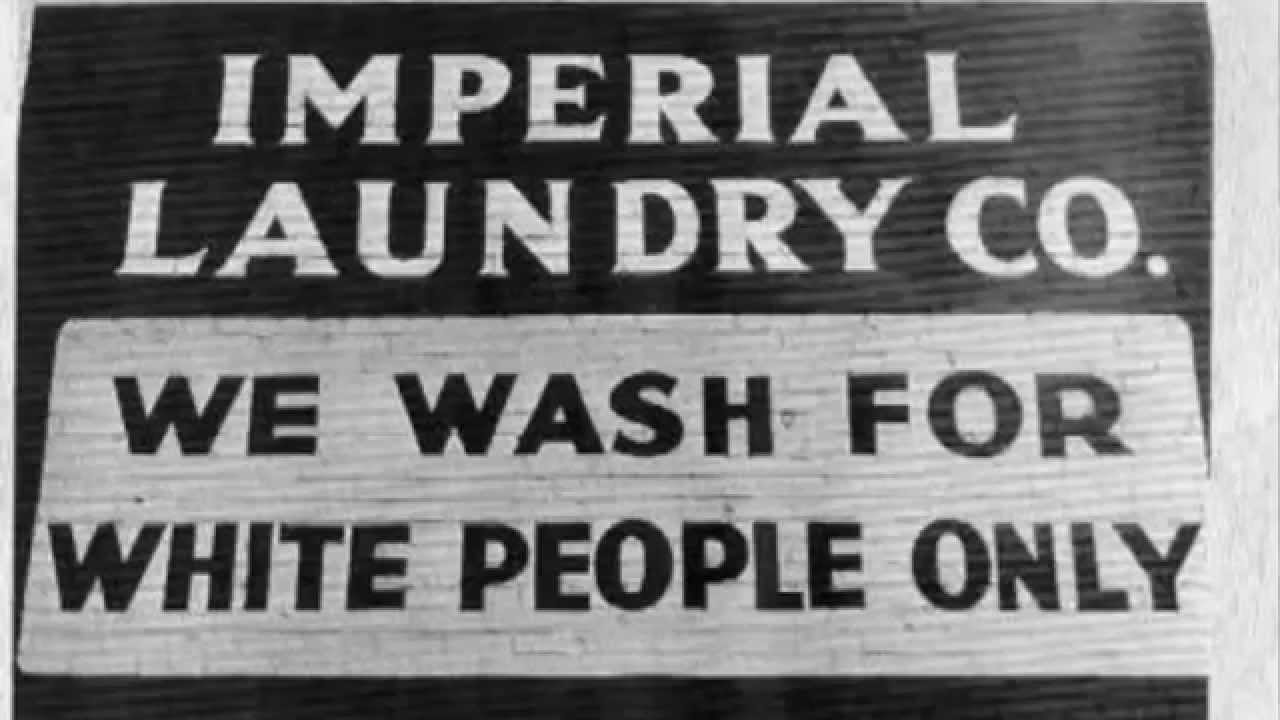
It wasn’t enough just to separate out blacks – segregation was never about “separate but equal.” While the Supreme Court naively speculated in Plessy v. Ferguson that somehow mankind wouldn’t show its worst nature and that segregation could occur without one side being significantly disadvantaged despite all evidence to the contrary, we can look back in hindsight and see that the Court was either foolishly optimistic or suffering from the same racism that gripped the other arms of the government at the time. In practice, the services and facilities for blacks were consistently inferior, underfunded, and more inconvenient as compared to those offered to whites – or the services and facilities did not exist at all for blacks. While segregation was literal law in the South, it was also practiced in the northern United States via housing patterns enforced by private covenants, bank lending practices, and job discrimination, including discriminatory labor union practices.
This kind of de facto segregation has lasted well into our own time.
The era of Jim Crow laws saw a dramatic reduction in the number of blacks registered to vote within the South. This time period brought about the Great Migration of blacks to northern and western cities like New York City, Chicago, and Los Angeles. In the 1920s, the Ku Klux Klan experienced a resurgence and spread all over the country, finding a significant popularity that has lingered to this day in the Midwest. It was claimed at the height of the second incarnation of the KKK that its membership exceeded 4 million people nationwide. The Klan didn’t shy away from using burning crosses and other intimidation tools to strike fear into their opponents, who included not just blacks, but also Catholics, Jews, and anyone who wasn’t a white Protestant.
This time period was not without its triumphs for blacks, even if they came at a cost or if they were smaller than one would have preferred. The NAACP was founded in 1909, in response to the continued practice of lynching and race riots in Springfield, Ill. From the 1920s through the 1930s in Harlem, New York, a cultural, social, and artistic movement took place that was later coined the Harlem Renaissance. Musicians like Duke Ellington and Jelly Roll Morton, writers such as Zora Neale Hurston and Langston Hughes, it-girls like Josephine Baker, and philosophers like W.E.B. Du Bois all had a hand in the Harlem Renaissance and American culture as a whole is richer and better for it.
Notable Supreme Court Cases:
The Slaughter-House Cases, 83 U.S. 36 (1873) – this series of three cases, which were consolidated into one issue, offered the first opinion from the Supreme Court on the 14th Amendment. The court chose to interpret the rights protected by the 14th Amendment as very narrow and this precedent would be followed for many years to come.
Civil Rights Cases, 109 U.S. 3 (1883) – in this set of five cases that were consolidated into one issue, a majority of the court held the Civil Rights Act of 1875 unconstitutional against the lone famous dissent of Justice Harlan. The majority argued that Congress lacked authority to regulate private affairs under the 14th Amendment and that the 13th Amendment “merely abolishe[d] slavery”. Segregation in public accommodations would not be declared illegal after these cases until the Civil Rights Act of 1964.
Plessy v. Ferguson, 163 U.S. 537 (1896) – this is the case which gave us the phrase “separate but equal” and upheld state racial segregation laws for public facilities. Justice Harlan again offered a lone dissent. These laws would remain in play until 1954.
Selected Library Resources:
Ronald M. Labbé and Jonathan Lurie, The Slaughterhouse Cases: Regulation, Reconstruction, and the Fourteenth Amendment, KF228.S545 L33 2003
Williamjames Hull Hoffer, ‘Plessy v. Ferguson’: Race and Inequality in Jim Crow America, KF223. P56 H64 2012
Christopher Waldep, African Americans Confront Lynching: Strategies of Resistance from the Civil War to the Civil Rights Era, HV6457 .W347 2009
Mary-Elizabeth B. Murphy, Jim Crow Capital: Women and Black Freedom Struggles in Washington, D.C., 1920-1945,E185.86 .M9525 2018
Proquest Historical Newspapers – this collection provides access to African American newspapers including Atlanta Daily World (1931-2003), The Baltimore Afro-American (1893-1988), Chicago Defender (1909-1975), Cleveland Call and Post (1934-1991), Los Angeles Sentinel (1934-2005), New York Amsterdam News (1922-1993), Norfolk Journal and Guide (1916-2003), Philadelphia Tribune (1912-2001), Pittsburg Courier (1911-2002).
Slavery in America and the World: History, Culture & Law – HeinOnline
Gale Archives Unbound Collections (available through Howard University Libraries):
smithsonian.com September 8, 2016 | Updated: December 29, 2016
As America stood on the brink of a Second World War, the push for aeronautical advancement grew ever greater, spurring an insatiable demand for mathematicians. Women were the solution. Ushered into the Langley Memorial Aeronautical Laboratory in 1935 to shoulder the burden of number crunching, they acted as human computers, freeing the engineers of hand calculations in the decades before the digital age. Sharp and successful, the female population at Langley skyrocketed.
Many of these “computers” are finally getting their due, but conspicuously missing from this story of female achievement are the efforts contributed by courageous, African-American women. Called the West Computers, after the area to which they were relegated, they helped blaze a trail for mathematicians and engineers of all races and genders to follow.
“These women were both ordinary and they were extraordinary,” says Margot Lee Shetterly. Her new book Hidden Figures shines light on the inner details of these women’s lives and accomplishments. The book’s film adaptation, starring Octavia Spencer and Taraji P. Henson, is new open in theaters
“We’ve had astronauts, we’ve had engineers—John Glenn, Gene Kranz, Chris Kraft,” she says. “Those guys have all told their stories.” Now it’s the women’s turn.
Growing up in Hampton, Virginia, in the 1970s, Shetterly lived just miles away from Langley. Built in 1917, this research complex was the headquarters for the National Advisory Committee for Aeronautics (NACA) which was intended to turn the floundering flying gadgets of the day into war machines. The agency was dissolved in 1958, to be replaced by the National Aeronautics and Space Agency (NASA) as the space race gained speed.
The West Computers were at the heart of the center’s advancements. They worked through equations that described every function of the plane, running the numbers often with no sense of the greater mission of the project. They contributed to the ever-changing design of a menagerie of wartime flying machines, making them faster, safer, more aerodynamic. Eventually their stellar work allowed some to leave the computing pool for specific projects—Christine Darden worked to advance supersonic flight, Katherine Johnson calculated the trajectories for the Mercury and Apollo missions. NASA dissolved the remaining few human computers in the 1970s as the technological advances made their roles obsolete.
The first black computers didn’t set foot at Langley until the 1940s. Though the pressing needs of war were great, racial discrimination remained strong and few jobs existed for African-Americans, regardless of gender. That was until 1941 when A. Philip Randolph, pioneering civil rights activist, proposed a march on Washington, D.C., to draw attention to the continued injustices of racial discrimination. With the threat of 100,000 people swarming to the Capitol, President Franklin D. Roosevelt issued Executive Order 8802, preventing racial discrimination in hiring for federal and war-related work. This order also cleared the way for the black computers, slide rule in hand, to make their way into NACA history.
Katherine Johnson at her desk at Langley with a “celestial training device.” (NASA)
Exactly how many women computers worked at NACA (and later NASA) over the years is still unknown. One 1992 study estimated the total topped several hundred but other estimates, including Shetterly’s own intuition, says that number is in the thousands.
As a child, Shetterly knew these brilliant mathematicians as her girl scout troop leaders, Sunday school teachers, next-door neighbors and as parents of schoolmates. Her father worked at Langley as well, starting in 1964 as an engineering intern and becoming a well-respected climate scientist. “They were just part of a vibrant community of people, and everybody had their jobs,” she says. “And those were their jobs. Working at NASA Langley.”
Surrounded by the West Computers and other academics, it took decades for Shetterly to realize the magnitude of the women’s work. “It wasn’t until my husband, who was not from Hampton, was listening to my dad talk about some of these women and the things that they have done that I realized,” she says. “That way is not necessarily the norm”
The spark of curiosity ignited, Shetterly began researching these women. Unlike the male engineers, few of these women were acknowledged in academic publications or for their work on various projects. Even more problematic was that the careers of the West Computers were often more fleeting than those of the white men. Social customs of the era dictated that as soon as marriage or children arrived, these women would retire to become full-time homemakers, Shetterly explains. Many only remained at Langley for a few years.
But the more Shetterly dug, the more computers she discovered. “My investigation became more like an obsession,” she writes in the book. “I would walk any trail if it meant finding a trace of one of the computers at its end.”
She scoured telephone directories, local newspapers, employee newsletters and the NASA archives to add to her growing list of names. She also chased down stray memos, obituaries, wedding announcements and more for any hint at the richness of these women’s lives. “It was a lot of connecting the dots,” she says.
“I get emails all the time from people whose grandmothers or mothers worked there,” she says. “Just today I got an email from a woman asking if I was still searching for computers. [She] had worked at Langley from July 1951 through August 1957.”
Langley was not just a laboratory of science and engineering; “in many ways, it was a racial relations laboratory, a gender relations laboratory,” Shetterly says. The researchers came from across America. Many came from parts of the country sympathetic to the nascent Civil Rights Movement, says Shetterly, and backed the progressive ideals of expanded freedoms for black citizens and women.
The phenomenal true story of the black female mathematicians at NASA whose calculations helped fuel some of America’s greatest achievements in space.
But life at Langley wasn’t just the churn of greased gears. Not only were the women rarely provided the same opportunities and titles as their male counterparts, but the West Computers lived with constant reminders that they were second-class citizens. In the book, Shetterly highlights one particular incident involving an offensive sign in the dining room bearing the designation: Colored Computers.
One particularly brazen computer, Miriam Mann, took responding to the affront on as a her own personal vendetta. She plucked the sign from the table, tucking it away in her purse. When the sign returned, she removed it again. “That was incredible courage,” says Shetterly. “This was still a time when people are lynched, when you could be pulled off the bus for sitting in the wrong seat. [There were] very, very high stakes.”
But eventually Mann won. The sign disappeared.
The women fought many more of these seemingly small battles, against separate bathrooms and restricted access to meetings. It was these small battles and daily minutiae that Shetterly strove to capture in her book. And outside of the workplace, they faced many more problems, including segregated busses and dilapidated schools. Many struggled to find housing in Hampton. The white computers could live in Anne Wythe Hall, a dormitory that helped alleviate the shortage of housing, but the black computers were left to their own devices.
“History is the sum total of what all of us do on a daily basis,” says Shetterly. “We think of capital “H” history as being these huge figures—George Washington, Alexander Hamilton and Martin Luther King.” Even so, she explains, “you go to bed at night, you wake up the next morning, and then yesterday is history. These small actions in some ways are more important or certainly as important as the individual actions by these towering figures.”
The book and movie don’t mark the end of Shetterly’s work She continues to collect these names, hoping to eventually make the list available online. She hopes to find the many names that have been sifted out over the years and document their respective life’s work.
The few West Computers whose names have been remembered, have become nearly mythical figures—a side-effect of the few African-American names celebrated in mainstream history, Shetterly argues. She hopes her work pays tribute to these women by bringing details of their life’s work to light. “Not just mythology but the actual facts,” she says. “Because the facts are truly spectacular.”





You must be logged in to post a comment.