Category Archives: ~ Culture & History

Politics | Funding for black farmers, Indians stalls again |blame Republicans


Repost

August 5, 2010

Funding for black farmers, Indians stalls again

Despite broad support, legislation to finalize $4.6 billion in settlements with black farmers and American Indians stalled in the Senate again Thursday amid partisan bickering.

By BEN EVANS

Associated Press Writer

Related

WASHINGTON —

Despite broad support, legislation to finalize $4.6 billion in settlements with black farmers and American Indians stalled in the Senate again Thursday amid partisan bickering.

Lawmakers from both parties say they support resolving the long-standing claims of discrimination and mistreatment by federal agencies. But the funding has been caught up for months in a fight over spending and deficits, with Republicans and Democrats arguing over how to pay for them. Read more …click on the link below

Politics | Funding for black farmers, Indians stalls again | Seattle Times Newspaper.

July 22, 2010

Senate rejects $3 billion Indian trust settlement

The U.S. Senate has rejected a $3.4 billion government settlement with American Indians that had been added to a much larger war-funding bill.

The Associated Press

Related

HELENA, Mont. —The U.S. Senate has rejected a $3.4 billion government settlement with American Indians that had been added to a much larger war-funding bill.

The Senate passed the almost $60 billion bill funding President Obama’s troop surge in Afghanistan late Wednesday – but not before stripping out the settlement and $20 billion in other domestic spending approved by the House.

The Senate’s approval would have given the Obama administration the authority to settle a class-action lawsuit filed in 1996 by Elouise Cobell of Browning, Mont. Between 300,000 and 500,000 Native Americans claim the Interior Department mismanaged billions of dollars held in trust by the government.

The House attached the settlement to the war-funding bill earlier this month.

Thursday’s vote marks the second time the settlement has failed to pass the Senate. It was originally included in the Democrats’ jobs-agenda bill that was caught in a filibuster last month.

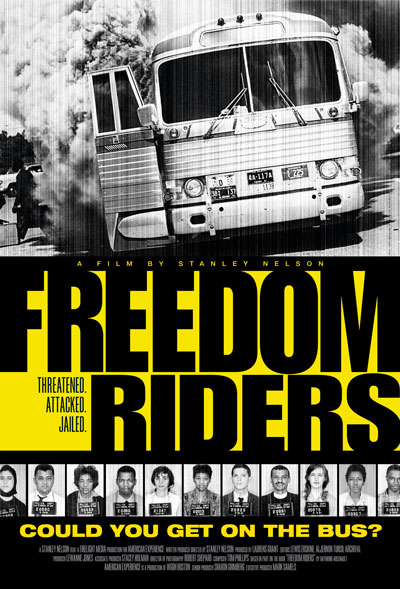
FREEDOM RIDERS : A Stanley Nelson Film : American Experience – In memory


  Get Inspired

 The World Premiere: In 2010 at Sundance Film Festival, US

 A Documentary Competition

Award-winning filmmaker Stanley Nelson (Wounded Knee, Jonestown: The Life and Death of Peoples Temple, The Murder of Emmett Till) returns to the Sundance Film Festival with his latest documentary FREEDOM RIDERS, the powerful, harrowing and ultimately inspirational story of six months in 1961 that changed America forever. From May until November 1961, more than 400 black and white Americans risked their lives—and many endured savage beatings and imprisonment—for simply traveling together on buses and trains as they journeyed through the Deep South. Deliberately violating Jim Crow laws, the Freedom Riders’ belief in non-violent activism was sorely tested as mob violence and bitter racism greeted them along the way.

FREEDOM RIDERS features testimony from a fascinating cast of central characters: the Riders themselves, state and federal government officials, and journalists who witnessed the rides firsthand.

“I got up one morning in May and I said to my folks at home, I won’t be back today because I’m a Freedom Rider. It was like a wave or a wind that you didn’t know where it was coming from or where it was going, but you knew you were supposed to be there.” — Pauline Knight-Ofuso, Freedom Rider

Despite two earlier Supreme Court decisions that mandated the desegregation of interstate travel facilities, black Americans in 1961 continued to endure hostility and racism while traveling through the South. The newly inaugurated Kennedy administration, embroiled in the Cold War and worried about the nuclear threat, did little to address domestic Civil Rights.See the source image

“It became clear that the Civil Rights leaders had to do something desperate, something dramatic to get Kennedy’s attention. That was the idea behind the Freedom Rides—to dare the federal government to do what it was supposed to do, and see if their constitutional rights would be protected by the Kennedy administration,” explains Raymond Arsenault, author of Freedom Riders: 1961 and the Struggle for Racial Justice, on which the film is partially based.

Organized by the Congress of Racial Equality (CORE), the self-proclaimed “Freedom Riders” came from all strata of American society—black and white, young and old, male and female, Northern and Southern. They embarked on the Rides knowing the danger but firmly committed to the ideals of non-violent protest, aware that their actions could provoke a savage response but willing to put their lives on the line for the cause of justice.

Each time the Freedom Rides met violence and the campaign seemed doomed, new ways were found to sustain and even expand the movement. After Klansmen in Alabama set fire to the original Freedom Ride bus, student activists from Nashville organized a ride of their own. “We were past fear. If we were going to die, we were gonna die, but we can’t stop,” recalls Rider Joan Trumpauer-Mulholland. “If one person falls, others take their place.”

Later, Mississippi officials locked up more than 300 Riders in the notorious Parchman State Penitentiary. Rather than weaken the Riders’ resolve, the move only strengthened their determination. None of the obstacles placed in their path would weaken their commitment.

The Riders’ journey was front-page news and the world was watching. After nearly five months of fighting, the federal government capitulated. On September 22, the Interstate Commerce Commission issued its order to end the segregation in bus and rail stations that had been in place for generations. “This was the first unambiguous victory in the long history of the Civil Rights Movement. It finally said, ‘We can do this.’ And it raised expectations across the board for greater victories in the future,” says Arsenault.

“The people that took a seat on these buses, that went to jail in Jackson, that went to Parchman, they were never the same. We had moments there to learn, to teach each other the way of nonviolence, the way of love, the way of peace. The Freedom Ride created an unbelievable sense: Yes, we will make it. Yes, we will survive. And that nothing, but nothing, was going to stop this movement,” recalls Congressman John Lewis, one of the original Riders.

Says Stanley Nelson, “The lesson of the Freedom Rides is that great change can come from a few small steps taken by courageous people. And that sometimes to do any great thing, it’s important that we step out alone.”

CREDITS
A Stanley Nelson Film
A Firelight Media Production for AMERICAN EXPERIENCE

Produced, Written and Directed by
Stanley Nelson

Produced by
Laurens Grant

Edited by
Lewis Erskine, Aljernon Tunsil

Archival Producer
Lewanne Jones

Associate Producer
Stacey HolmanDirector of Photography
Robert Shepard

Composer
Tom Phillips

Music Supervisor
Rena Kosersky

Based in part on the book Freedom Riders by
Raymond Arsenault

AMERICAN EXPERIENCE is a production of WGBH Boston.
Senior producer
Sharon Grimberg

Executive producer
Mark Samels

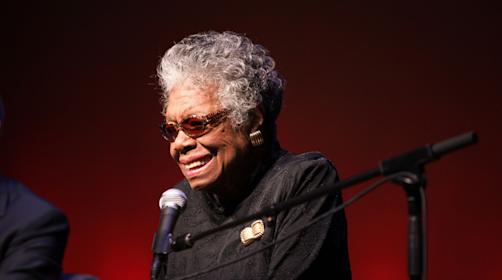
Maya Angelou … Shine On


Maya Angelou

Maya Angelou

Author, Poet, Mom, Singer, Dancer, Actor,  Activist

Maya Angelou is an American author and poet. She has published seven autobiographies, three books of essays, and several books of poetry, and is credited with a list of plays, movies, and television shows spanning… wikipedia.org

Patricia Robert Harris ~ Women’s History Month


National Museum of African American History and Culture
Lonnie Bunch, museum director, historian, lecturer, and author, is proud to present A Page From Our American Story, a regular on-line series for Museum supporters. It will showcase individuals and events in the African American experience, placing these stories in the context of a larger story — our American story.
A Page From Our American Story
A Higher Standard: Patricia Roberts Harris
Patricia Roberts Harris sworn in as US Ambassador to Luxembourg
Patricia Harris in her swearing in ceremony
to be the U.S. Ambassador to Luxembourg.
Provided by the U.S. State Department.

Black women have always served a critical role in the African American community, from the names we all know — Harriet Tubman, Sojourner Truth, and Rosa Parks — to today’s young mother fighting for educational opportunities for her children. Others have quietly broken barriers to open doors that were once closed to people of color.

Patricia Roberts Harris is one of those quiet warriors whose life stands as a testament to excellence, tenacity, and commitment to change.

She was born on May 31, 1924, the daughter of Hildren and Bert Roberts, in Mattoon, Illinois. A product of Illinois public schools, Harris attended Howard University in Washington, D.C., on scholarship and graduated summa cum laude in 1945. From early in her life as a brilliant scholar at Howard, she went on to become the first African American woman to serve as a United States ambassador and later the first African American woman to serve as a Cabinet Secretary. Harris was a powerful influence in American politics and a major figure during the Civil Rights Movement.

After graduation from Howard, she went back to the mid-west and began graduate work at the University of Chicago in 1946. But the opportunity to become actively involved in working for social justice drew her back to Washington, D.C. She continued her graduate work at American University, and, at the same time, served as assistant director for the American Council of Human Rights. She also served as the first national executive director of Delta Sigma Theta Sorority, Inc., of which she was a member.

At the encouragement of her husband, William Beasley Harris, a prominent attorney in the District, Harris enrolled in The George Washington University Law School, where she graduated in 1960, first in her class.

During this time, while still active in the fight for civil rights, Harris became increasingly involved in the Democratic Party. Her ability to organize and manage did not go unnoticed. In 1963, President John F. Kennedy selected Harris to co-chair the National Women’s Committee for Civil Rights, described as an “umbrella organization encompassing some 100 women’s groups throughout the nation.”

In October of 1965, President Lyndon Johnson appointed Harris ambassador to Luxembourg, making her the first African American woman to be chosen as a United States envoy. For Harris the historic moment was bittersweet, saying, “I feel deeply proud and grateful this President chose me to knock down this barrier, but also a little sad about being the ‘first Negro woman’ because it implies we were not considered before.”

With the change of administration in 1968, Harris’ diplomatic role ended. She returned to Washington, D.C., and became the first woman to serve as Dean of Howard University’s School of Law.

In the early 1970s, Harris’ involvement in the Democratic Party culminated in her being named chairman of the powerful credentials committee and an at-large-delegate to the Democratic National Convention.

The election of Jimmy Carter in 1976 thrust Harris into the spotlight, again for another “first.” Shortly after taking office in 1977, Carter selected Harris to become Secretary of Housing and Urban Development (HUD). Again Harris made history, this time by not only becoming the first African American woman to become a Cabinet Secretary, but also the first to be in the line of succession to the Presidency, at number 13.

During her confirmation hearing, Senator William Proxmire challenged her nomination and asked her if she felt capable of representing the interests of the poor and less fortunate in America. By this time in Harris’ life she had established herself as not only a recognized leader for civil rights, but also as a prominent corporate lawyer and businesswoman. Some, including a few black leaders, wondered if Harris had grown out of touch with the very people she was charged with serving.

Harris’ answer silenced her critics and perhaps best explains what motivated her throughout her life:

“Senator, I am one of them. You do not seem to understand who I am. I am a black woman, the daughter of a dining car waiter. …a black woman who could not buy a house eight years ago in parts of the District of Columbia. I didn’t start out as a member of a prestigious law firm, but as a woman who needed a scholarship to go to school. If you think I have forgotten that, you are wrong…if my life has any meaning at all, it is that those who start out as outcasts may end up being part of the system.”


US Postal Stamp of Patricia Roberts Harris

During her tenure as HUD Secretary, she helped reshape the focus of the department. A staunch supporter of housing rehabilitation, Harris funneled millions of dollars into upgrading deteriorating neighborhoods rather than wiping them out through slum clearance. She developed a Neighborhood Strategy Program that subsidized the renovation of apartments in deteriorated areas. In addition, she expanded the Urban Homesteading Plan and initiated Urban Development Action Grants to lure businesses into blighted areas. She poured millions of dollars into renovating deteriorating housing projects throughout the nation.

Harris was so effective in her post, that when HUD was split to create two new entities — the Department of Education and the Department of Health and Human Services (HHS) — Carter moved quickly to name Harris secretary of HHS, a position she held for the remainder of his administration.

In 1982, following an unsuccessful bid to become mayor of Washington, D.C., Harris became a full-time professor at The George Washington University National Law Center. She passed away on March 23, 1985 at the age of 60.

In January, 2000, the U.S. Postal Service honored Ms. Harris with a commemorative postage stamp bearing her likeness. Dignitaries from around the nation attended the unveiling ceremony at Howard University, her alma mater, to pay tribute and recognize her contribution to the nation. In addition, Howard created the Harris Public Service Program in her honor to augment its course offerings in public policy and to encourage students to consider careers in public service.

Patricia Roberts Harris’ life is a powerful chapter in our American story. “I am one of them…,” she said at her 1977 hearing to become HUD Secretary. Those words underscored her commitment to social justice and her sense of responsibility to the African American community and to the nation. Those words serve as testament to her life and legacy: political pioneer, successful businesswoman, educator, and champion for civil and equal rights.

All the best,
Lonnie Bunch, Director

Lonnie Bunch
Director
The National Museum of African American History and Culture is the newest member of the Smithsonian Institution’s family of extraordinary museums.

The Museum will be far more than a collection of objects.
The Museum will be a powerful, positive force in the national discussion about race and the important role African Americans have played in the American story — a museum that will make all Americans proud.

In the Library … Dr Suess


Happy Birthday ! repost

dr.suessin 1904, Theodor Geisel, better known to the world as Dr. Seuss, the author and illustrator of such beloved children’s books as “The Cat in the Hat” and “Green Eggs and Ham,” is born in Springfield, Massachusetts. Geisel, who used his middle name (which was also his mother’s maiden name) as his pen name, wrote 48 books–including some for adults–that have sold well over 200 million copies and been translated into multiple languages. Dr. Seuss books are known for their whimsical rhymes and quirky characters, which have names like the Lorax and the Sneetches and live in places like Hooterville.

Geisel, who was born on March 2, 1904, in Springfield, Massachusetts, graduated from Dartmouth College, where he was editor of the school’s humor magazine, and studied at Oxford University. There he met Helen Palmer, his first wife and the person who encouraged him to become a professional illustrator. Back in America, Geisel worked as a cartoonist for a variety of magazines and in advertising.

The first children’s book that Geisel wrote and illustrated, “And to Think That I Saw It On Mulberry Street,” was rejected by over two dozen publishers before making it into print in 1937. Geisel’s first bestseller, “The Cat in the Hat,” was published in 1957. The story of a mischievous cat in a tall striped hat came about after his publisher asked him to produce a book using 220 new-reader vocabulary words that could serve as an entertaining alternative to the school reading primers children found boring.

Other Dr. Seuss classics include “Yertle the Turtle,” “If I Ran the Circus,” “Fox in Socks” and “One Fish, Two Fish, Red Fish, Blue Fish.”

Some Dr. Seuss books tackled serious themes. “The Butter Battle Book” (1984) was about the arms buildup and nuclear war threat during Ronald Reagan’s presidency. “Lorax” (1971) dealt with the environment.

Many Dr. Seuss books have been adapted for television and film, including “How the Grinch Stole Christmas!” and “Horton Hears a Who!” In 1990, Geisel published a book for adults titled “Oh, the Places You’ll Go” that became a hugely popular graduation gift for high school and college students.

Geisel, who lived and worked in an old observatory in La Jolla, California, known as “The Tower,” died September 24, 1991, at age 87.