Category Archives: ~ Culture & History

He Had a Dream – Celebratin​g Martin Luther King Jr. Day ::Black History


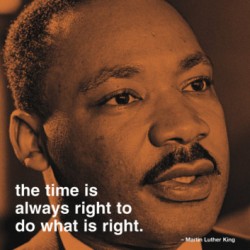
mLKjrDr. Martin Luther King, Jr.’s leadership of the American Civil Rights Movement achieved more genuine progress toward racial equality in America than the previous 350 years had produced. He is widely regarded as one of the greatest leaders in world history.

Our country is celebrating his birthday.  Check out these classroom resources, activities, and lesson plans to learn more about him:

The Charleston Shooting … In memory of


By

Wednesday’s tragic murder of nine black parishioners in Charleston’s Emanuel African Methodist Episcopal Church by a 21-year-old white man wanting “to start a civil war” is weighing heavily on the hearts of all of us. We cannot begin to understand the grief felt by the families of those lost or the Charleston community. But we can speak about what we do know. This was a racist committing a racially motivated murder. This was another tragic example of how guns too easily fall into the hands of dangerous people. This was a terrorist act.

Here is a round-up of the columns and news that we are reading and talking about. We hope they foster and inform your conversations, reflections, and actions too:

1. Jelani Cobb in The New Yorker: Murders in Charleston. “We have, quite likely, found at 110 Calhoun Street, in Charleston, South Carolina, the place where Columbine, Aurora, and Newtown cross with Baltimore, Ferguson, and Sanford.”

2. Ta-Nehisi Coates in The Atlantic: Take Down the Confederate Flag—Now. “Moral cowardice requires choice and action. It demands that its adherents repeatedly look away, that they favor the fanciful over the plain, myth over history, the dream over the real. Here is another choice. Take down the flag. Take it down now.”

3. Jeff Duo in the Washington Post: The legal loophole that allowed Dylann Roof to get a gun. “Dylann Roof, the man accused of a shooting spree that left nine people dead at a historic black church in Charleston on Wednesday night, should not have been able to get a gun.”

4. Jamelle Bouie in Slate: The Black American Holiday Everyone Should Celebrate but Doesn’t. “Juneteenth isn’t just a celebration of emancipation, it’s a celebration of our commitment to make it real.”

5. Jennifer Mascia in The Trace: Charleston Area Faced Gun Violence Spike Before Church Shooting. “Nearly eight out of every 10 killings in the area last year involved a firearm.”

6. Dan Wasserman’s editorial cartoon in The Boston Globe:

wasserman charleston

CREDIT: Dan Wasserman

And be sure to check out the latest news and opinions from our partners at ThinkProgress:

1. Judd Legum: NRA Board Member Blames Charleston Victim For His Own Death. Seriously.

2. Ian Millhiser: When John Roberts Said There Isn’t Enough Racism In America To Justify The Voting Rights Act. It’s a sordid business, this divvying up the amount of racism in the United States to decide whether Congress is allowed to enact laws intended to fix it.

3. Jack Jenkins: How The Charleston Shooting Is Linked To The Confederate Flag, According To A South Carolinian. While the Confederate flag is certainly about heritage, it is and always has been about hate.

4. Kiley Kroh: Charleston Victim’s Son Addresses Media On The Baseball Field. “Love is always stronger than hate. So if we just love the way my mom would, then the hate won’t be anywhere close to where the love is.”

Wishing you a safe and peaceful weekend.

Lawrence Guyot : a Civil Rights Leader, in memory of – Black History


WASHINGTON November 25, 2012 (AP)

Guyot was born in Pass Christian, Miss., on July 17, 1939. He became active in civil rights while attending Tougaloo College in Mississippi, and graduated in 1963. Guyot received a law degree in 1971 from Rutgers University, and then moved to Washington, where he worked to elect fellow Mississippian and civil rights activist Marion Barry as mayor in 1978.

“When he came to Washington, he continued his revolutionary zeal,” Barry told The Washington Post on Friday. “He was always busy working for the people.”

Image result for lawrence guyot

D.C. Delegate Eleanor Holmes Norton told The Post in 2007 that she first met Guyot within days of his beating at a jail in Winona, Miss. “Because of Larry Guyot, I understood what it meant to live with terror and to walk straight into it,” she told the newspaper. On Friday, she called Guyot “an unsung hero” of the civil rights movement.

“Very few Mississippians were willing to risk their lives at that time,” she said. “But Guyot did.”

In recent months, his daughter said he was concerned about what he said were Republican efforts to limit access to the polls. As his health was failing, he voted early because he wanted to make sure his vote was counted, he told the AFRO newspaper.

Cherokee Freedmen Facts – by Marilyn Vann – Black History


Cherokee Freedmen Facts – by Marilyn Vann – President – Descendants of Freedmen

www.freedmen5tribes.com

1) Who are Cherokee freedmen and their descendants?
Cherokee freedmen are people of African descent who have rights to Cherokee citizenship since 1866 (and in some cases
prior) based under a treaty between the US government and the Cherokee nation, the amended 1839 constitution and the
present 1976 constitution. The freedmen were either former slaves of the Cherokees or were free mixed black Cherokees who
generally did not have citizenship rights prior to 1866.

******
2) Who has the right to Cherokee citizenship now?
All persons who were listed on the Dawes Rolls and their descendants, during the early 1900s have the right to Cherokee
citizenship based on the 1976 constitution. The Dawes rolls of the Cherokee nation have several sections – Delaware,
Cherokee by blood, Cherokee Freedmen, etc.

******
3) Didn’t the Freedmen lose their tribal membership and voting rights for a few years?
In 1983, the freedmen people were voting against Chief Swimmer, the registrar sent out letters canceling their tribal
membership cards and the freedmen were blocked from voting at the polls. In 1988, under Chief Mankiller, the tribal council
approved the registration policy of requiring all tribal members to have a CDIB card to keep tribal membership. A tribal
court in 2006 ruled that the tribal council could not pass additional requirements to bar any segment of Dawes enrollees from
receiving tribal membership cards or voting.

******
4) If most of the freedmen have Cherokee blood, why cant they get a cdib card?
The current BIA policy is to only give the card based on the blood degree listed on the Dawes Rolls. The Dawes
Commissioners had the sole authority to place people on any part of the Dawes rolls they wanted to. Because Congress had
decided that people listed as Freedmen would have unrestricted allotments, Commissioners were encouraged to list as many
people as possible as Freedmen with no blood degrees listed rather than as Cherokees with blood degrees even if the person
was listed on previous rolls as blood Cherokee or received payments earlier from the US government as a Cherokee by
blood. An example was Perry Ross who had a Cherokee mother and black father. Perry Ross, was listed on the 1852 Drennan
Roll proving Cherokee by blood, received a 1908 Guion Miller payment for having Cherokee blood, but yet was listed as a
freedmen citizen on the Dawes Rolls. Some Freedmen did get CDIB cards in the past based on other records, but they
stopped giving them out. The tribe never kept degrees of blood records and anything on the Dawes Roll is just guesswork so
far as a true degree of blood. To determine blood degrees for freedmen one must look at Dawes testimony and other records.

******
5) Chief Smith and Councilman Jackie Bob Martin have called for a special election to see if the freedmen people
should keep their tribal membership rights. What’s wrong with that?
Whats right about it? There something wrong about trying to take away the rights of people who have had them for more than
100 years. The court held that the people had been wronged, and now, instead of accepting that, these people are to be more
wronged? Would you not fight a president who wanted to put the US citizenship rights of Cherokee people on a ballot to the
people? Whose next to lose rights? Also, the people who are being asked to vote on the freedmen citizenship rights are not
being told that the freedmen have had rights since at least 1866, have served on the tribal council, generally have Cherokee
blood, and voted between 1971 and 1983 (between 1907 and 1971 there were no elections at all). When did Cherokee people
ever kick people out of the tribe? And why kick out only freedmen who came before Delaware and Shawnee – all 3 have
treaty rights to citizenship? Does anyone sitting here wonder if the movement to kick out the freedmen is fear that they may
not vote for some people now serving in office? Hardly any freedmen will be able to vote in such election because of the
slow process to register tribal members and even freedmen people with old 1970s membership cards must reregister. Is this
justice? Is it right for Cherokee leaders to break the promises made to these people by previous chiefs such as Lewis
Downing and WP Ross – just as the whites have broken their word to the Cherokee people time after time? What if the white
people say, if the Cherokees can break their treaty at will, we will do so too and demand back the Arkansas Riverbed money?

******
6) Won’t the freedmen take away from the rest of the Cherokees so far as benefits?
The Chief and the tribal council can request additional funds from the US government and supposedly are working hard on
economic development. Stop and think – Would you want your US citizenship rights to be taken away because white people
don’t want you to have rental assistance or such the same as them? Freedmen wont cancel medical insurance to go to I H S.

******

7) Did Freedmen get the same rights as Cherokees by blood previously?
Yes, all citizens including freedmen received 110 acres of tribal land equivalent when tribal lands were allotted, they received
the 1912 payroll, and the per capita payment given out in 1962. Freedmen held office between 1866 and 1907 – One
freedman Frank Vann even served with Redbird Smith on the council. Another freedmen councilman was Stick Ross.

The Smithsonian & The Right’s Culture Wars …a message from Michael Keegan


So, this popped up … Things that should not be forgotten and btw he is now a former Sec of the Smithsonian but has Emeritus status at the GA Institue of Technology! ugh

The article below is revelant though mr Keegan posted it in 2011 …

I just posted the following piece to The Huffington Post and thought you might be interested:

The Battle over the Smithsonian and the Right’s New Culture Wars

This week, protesters marched on the National Mall to demand that the Smithsonian’s Board of Regents dismiss Smithsonian Secretary Wayne Clough for his role in removing a work of art from one of the institution’s museums and his continual bungling of the institution’s response in the two months since its removal. Although one Smithsonian regent openly implied that removing the art was a mistake, the board ultimately declined to rebuke Clough, effectively closing the door on the possibility of undoing the damage done by the censorship. But the bigger fight that the Smithsonian debate represented–over the efforts of a small and vocal group on the Right to define American values for us all–is just beginning.

As the newly empowered House GOP gears up to start culture wars on issues from reproductive rights for women to religious freedom for American Muslims, there’s an important lesson to be learned from what happened this winter at the Smithsonian. Institutions and individuals will continue to come under attack from the Right’s powerful extremist-to-media-to-politician echo chamber. But, as the Smithsonian’s experience showed once again, there is little to be gained by caving in to this loud and usually dishonest bullying. Clough’s attempt at compromise–instantly removing a work of art from an important exhibit–only drew louder threats to censor the exhibit as a whole, while causing some of the Smithsonian’s strongest supporters to lose trust in the institution. Despite what most might hope, the Right is not going to stop its culture war campaigns anytime soon. The only thing the rest of us can do is aggressively tell the truth, unapologetically stand on principle, and refuse to back down.

In a report last year, People For the American Way profiled what we call “the new McCarthyism“–a type of demagoguery that hinges on the idea that America and all it stands for is being destroyed by enemies within. This new McCarthyism–in full display in the paranoid tirades of Glenn Beck, in the widespread fear that President Obama is an un-American imposter–has a new foothold in Congress, where Rep. Peter King plans to hold hearings investigating American Muslims and prominent lawmakers spread myths about immigrant “anchor babies” in order to replace real efforts at immigration reform with unfounded fears about immigrants. The House GOP’s fit over “anti-Christian” and -gasp!–gay art in the Smithsonian was a small but powerful example of this dynamic in action. GOP leaders, encouraged by far-right activists, created a narrow definition of what it means to be truly American–straight and a certain type of Christian–and in doing so framed the rest of us as impostors.

The Right’s so-called “culture wars” are more than just a sideline distraction–even manufactured controversies can do real harm. The Smithsonian controversy was a flashy and media-ready story, but it set the tone for the many manufactured battles to come. In coming months, we must be ready to step up and make just as strong a defense of women’s health organizations; of American Muslims; of gays and lesbians; of judicial nominees; of science and history; and yes, of our national museums. Not all of these issues are as exciting and easily categorized as that of censorship in our nation’s capital. But it will be just as important that we all stand up to attempts to narrow the definition of what it means to be American.

It’s disappointing that the Smithsonian’s secretary and board were so quick to give in to the Right’s demagoguery and bluster. Clough’s succumbing to censorship left a stain on his record at the head of the Smithsonian and unfortunately seems to have damaged the credibility of the institution. Cloughs’s two months of virtual silence followed by the board’s effective endorsement of his action have only made it worse. But the Smithsonian’s decision is not the final word on the power of the Right’s new-found zeal for culture wars. Instead, it’s a reminder of how important it is to stand up to those who, in attempting to root out an imaginary enemy within, threaten the vibrant diversity and individual liberties of our democracy.

By The WaY – more information on Mr Clough

Gerald Wayne Clough is President Emeritus of the Georgia Institute of Technology and former Secretary of the Smithsonian Institution. A graduate of Georgia Tech in civil engineering, he was the first alumnus to serve as President of the Institute

In this era of Covid19 ,  Racist Hate and Death to unarmed Black Brown men and Women …

We are the Change we seek- Obama

  • Nativegrl77