Category Archives: ~ Culture & History

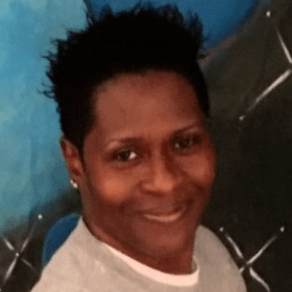
Karen Davis… 20yr sentence for a nonviolent crime, serves 17yrs before clemency is implemented


Women’s History Month

Congratulations to Karen Davis who is NOW FREE thanks to the First Step Act.

DOB: 5/12/71
Age: 48
Race: Black
Marital Status: Married.
Children : Seven children, Timothy Benford, Nathan Benford, Willie Davis, Jr., Isadore Davis, Deonte Davis, Jazmine Davis, Brandon Davis.
Raised: Tennessee
Tried: Tennessee

I was exposed to the drug dealing business in my early teen years by my uncle, and then in my early twenties, drawn in further by my husband. I would sometimes transport drugs to complete their deals, but I was not an enthusiastic participant in this way of life. By the time I was 25 years old my husband was sent to prison for 3 years and left me at home with 5 boys to support. I started back dealing along with other family members, but I never acted as an introduction for anyone and I did not make the kind of sales or money that I was indicted for. My uncle was the first who eventually implicated me by calling at home multiple times telling me to take a plea and asking me to admit to things I knew were lies. I was not informed enough to know to take a plea and then it was withdrawn and I went to a speedy trial. I was portrayed as the leader, which is very far from being accurate. I received enhancements because of my priors and I was not granted a downward departure because I would not admit to lies that my uncle and cousin stated. Today, those who were the organizers and big dealers are out free while I am still incarcerated and paying my penalty.

Karen believes she deserves clemency because:

Karen with her family

 I acknowledge the mistakes I made, I have worked hard to change my way of thinking and acting and I need to return home for the sake of my 7 children. I have learned some valuable lessons while I have been in prison and I want to share my experiences and knowledge with others to help them avoid making the same mistakes I made.   I have grown and evolved into a much more humble and diversified person with a passion to go out into society to make a difference in this world especially for those who may feel lost and wander this earth “not all who wander are always lost”.  I have a fire that burns inside me to rebuild my life with the sincerest intentions to be the best I can be for my family, friends and those who may need someone who has a caring heart.

Future Plans: My future life plans are to obtain a job in a technology call center environment. I worked and learned quite a bit while working in the UNICOR call center for 8 years. I was an operator for several years and then worked my way up to a clerk position. I would also like to continue with my education using government grants that may be available. I would like to be located in the Atlanta area and I want to be part of the EPIC family and assist with the work of CAN-DO to help others who are still incarcerated. I trust that God will reveal to me His Will for my life and use me in ways that He sees fit.

Charge(s): Conspiracy to Distribute and Possess with Intent to Distribute 50 grams or more of cocaine. 21 USC 843: Use of a Telephone to Facilitate Commission of a Conspiracy to distribute Cocaine and Marijuana.
Health Status: High blood pressure
Sentence: 20 years
Date Sentence Started: 7/22/2003
Years served: 17 years
Release Date: 10/22/2020. (NOW FREE)
Will Live: Atlanta, GA
Charge(s):  Conspiracy to Distribute and Possess with Intent to Distribute 50 grams or more of cocaine. 21 USC 843: Use of a Telephone to Facilitate Commission of a Conspiracy to distribute Cocaine and Marijuana.
Priors: Possession of marijuana, simple assault, selling or delivering cocaine.
Prison Conduct: Clear record.
Supporters: CAN-DO Foundation, The LOHM, FEDFAM4LIFE, my family, my church community, many friends.
Address:
FCI PEKIN, SATELLITE CAMP
P.O. BOX 5000
PEKIN, IL 61555

Prison Accomplishments:  Karen mentors new women who enter the prison, participated in the Cancer Walk, and organizes sports events.  She consistently receives “outstanding work evaluation” at UNICOR.

Courses Completed: Completed the 40 hour drug program, Reach 1-Teach 1, AIDS awareness, Wellness, psychology, business education, budgeting and money management courses.

Source: candoclemency.com

1779 – Congress creates U.S. Army Corps of Engineers


On March 11, 1779, Congress establishes the U.S. Army Corps of Engineers to help plan, design and prepare environmental and structural facilities for the U.S. Army. Made up of civilian workers, members of the Continental Army and French officers, the U.S. Army Corps of Engineers …read more

Today, the U. S. Army Corps of Engineers is made up of more than 35,000 civilian and enlisted men and women. In recent years, the Corps has worked on rebuilding projects in Afghanistan and Iraq, as well as the reconstruction of the city of New Orleans in the wake of Hurricane Katrina

1779March 11

Citation Information

Article Title

Congress establishes the U.S. Army Corps of Engineers

AuthorHistory.com Editors

Website Name

HISTORY

URL

https://www.history.com/this-day-in-history/congress-establishes-the-u-s-army-corps-of-engineers

Access Date

March 11, 2022

Publisher

A&E Television Networks

Last Updated

March 9, 2021

Original Published Date

November 13, 2009

BY

 HISTORY.COM EDITORS

Voting is a Right, NOT a Privilege ~~ The Struggle continues


votingTime to pass the Voting Rights Act, change redistricting rules, and make it easier for ALL Americans to VOTE


Those who do not remember the past are condemned to repeat it.” -George Santayana (16 December 1863 in Madrid, Spain – 26 September 1952 in Rome, Italy) was a philosopher, essayist, poet, and novelist. 

 On March 7, 1965, hundreds of brave unarmed nonviolent women and men dared to March for African Americans’ right to vote.

The fact is, that less than 1% of eligible Blacks could vote or register to vote.

A group of people organized a Peaceful Protest: The March would start in Selma, then move on to the state capitol in Montgomery.

However, as these peaceful protesters tried to cross the Edmund Pettus Bridge to Montgomery the police, seemingly already assuming a defensive posture; some on horses had, looking back, a predetermined tactical intervention plan against protesters. The protesters, mostly young African Americans also walked quietly with a mixture of older individuals and white Students as well: and as they did so; police proceeded to try and control the protesters which quickly resulted in the “excessive use of force.”

As protesters continued, it became clear that the excessive force was now an active use of police brutality and acts of murder; the grotesque beating of a young black leader of nonviolent protesting #RepJohnLewis had his skull cracked open among other injuries to his body.  These Montgomery officers were out to do harm as they surrounded and knocked out young protesters using their nightsticks, and sprayed water cannons at close range, while others used tear gas.

These kids had no weapons; they did NOT fight back because they were not there to fight, but showed much courage and strength in the face of absolute brutal violence by an adversarial organization minorities are expected to respect. The men in police uniforms, hired to protect and serve citizens, were actually a force activated by the state to show physical power, discrimination, and racism in all its worse forms.

We must never forget that some of our fellow Americans died for our right to vote! This was an attempt to March in peaceful disobedience quickly became an adverse harmful environment to young black and white women and men, students from all backgrounds, and folks who believed voting is a right had to quickly retreat while journalists and photographers became witnesses to the suffering, violence, and death.

The brutal reaction by the police was not only caught on tape, but it also forced then-President Johnson, once against civil rights programs as a Senator, to call on Congress for equal voting rights for all on March 15.

SelmaMarch

The Voting Act of 1965 became a law on August 6; and is a landmark piece of national legislation in the United States that outlawed discriminatory voting practices that had been responsible for the widespread disenfranchisement of African Americans in the U.S.

A day that started out peacefully quickly descended into an awful, johnlewisbeatwithknightstickugly March of death for the right to vote called, “Bloody Sunday”.

Now, some 50 years later, a new “Jim Crow” era has emerged with a major step backward in the fight for civil and voting rights. Conservative states are targeting not only African Americans but Senior citizens, first-time voters, early voting, Students, low-income, immigrants, and the undocumented though Republicans call them (illegals), those who lean left call them Dreamers; some born or brought to the US as youngsters all victims of circumstance are now, voting age. Also, Governors from Republican controlled States allowed election officials to purge voters, people without birth certificates were given limited or completely denied access to the voting booth failing to meet new voter ID regulations, and some were treated like possible (illegals). This is the 21st Century; we should be on a progressive path toward equality for all, not one that will re-engage folks in the act of racism or exclusion leading to suppressing participation in the election process. In 2017, Republicans tried to pass and or enforce new, even stricter voter ID legislation or influence their districts with strange redistricting rules and regulations.  While some judges … have struck down some of these restrictive laws that ultimately suppress the vote, it is clear the effort to shut people of colour out of the election process sadly continues.

We need to push back on all attempts to suppress the Right to Vote.

With so much at stake, it is time to stop sitting on the sidelines. If we are going to succeed, Conservative lawmakers NEED to hear our Voices.

We cannot turn back the clock on Voting Rights For the sake of the Next Generation

Thank You for Taking Action

     Takeaction2

~ Nativegrl77

Patricia Roberts Harris ~ In Memory


Thanks to some of our sharp-eyed readers, it has come to our attention that several lines had been dropped from our story on Patricia Roberts Harris.

As a result, the information regarding her appointment as Secretary of Health, Education, and Welfare and then Secretary of Health and Human Services was incomplete and, without the full wording, inaccurate.

Below, we present the story of Patricia Roberts Harris again, in its entirety.

Many readers also offered kind words for Our American Story, which marked its first anniversary in September. We launched this series to spur discussion and highlight important people and events in the African American story and the role they played in the larger American story. This series also provides a way for us to connect friends throughout the nation who are excited about the Smithsonian’s National Museum of African American History and Culture and are eager to get an advance look at some of the stories it will present. Thank you for your wonderful support.

Edison R. Wato, Jr.
Membership Program Manager

 
Lonnie Bunch, museum director, historian, lecturer, and author, is proud to present A Page From Our American Story, a regular on-line series for Museum supporters. It will showcase individuals and events in the African American experience, placing these stories in the context of a larger story — our American story.
A Page From Our American Story
A Higher Standard: Patricia Roberts Harris
Patricia Harris in her swearing in ceremony
to be the U.S. Ambassador to Luxembourg.
Provided by the U.S. State Department.

Dear Friends,

Black women have always served a critical role in the African American community, from the names we all know — Harriet Tubman, Sojourner Truth, and Rosa Parks — to today’s young mother fighting for educational opportunities for her children. Others have quietly broken barriers to open doors that were once closed to people of color.

Patricia Roberts Harris is one of those quiet warriors whose life stands as a testament to excellence, tenacity, and commitment to change.

She was born on May 31, 1924, the daughter of Hildren and Bert Roberts, in Mattoon, Illinois. A product of Illinois public schools, Harris attended Howard University in Washington, D.C., on scholarship and graduated summa cum laude in 1945. From early in her life as a brilliant scholar at Howard, she went on to become the first African American woman to serve as a United States ambassador and later the first African American woman to serve as a Cabinet Secretary. Harris was a powerful influence in American politics and a major figure during the Civil Rights Movement.

After graduating from Howard, she went back to the mid-west and began graduate work at the University of Chicago in 1946. But the opportunity to become actively involved in working for social justice drew her back to Washington, D.C. She continued her graduate work at American University, and, at the same time, served as assistant director for the American Council of Human Rights. She also served as the first national executive director of Delta Sigma Theta Sorority, Inc., of which she was a member.

At the encouragement of her husband, William Beasley Harris, a prominent attorney in the District, Harris enrolled in The George Washington University Law School, where she graduated in 1960, first in her class.

During this time, while still active in the fight for civil rights, Harris became increasingly involved in the Democratic Party. Her ability to organize and manage did not go unnoticed. In 1963, President John F. Kennedy selected Harris to co-chair the National Women’s Committee for Civil Rights, described as an “umbrella organization encompassing some 100 women’s groups throughout the nation.”

In October of 1965, President Lyndon Johnson appointed Harris ambassador to Luxembourg, making her the first African American woman to be chosen as a United States envoy. For Harris the historic moment was bittersweet, saying, “I feel deeply proud and grateful this President chose me to knock down this barrier, but also a little sad about being the ‘first Negro woman’ because it implies we were not considered before.”

With the change of administration in 1968, Harris’ diplomatic role ended. She returned to Washington, D.C., and became the first woman to serve as Dean of Howard University’s School of Law.

In the early 1970s, Harris’ involvement in the Democratic Party culminated in her being named chairman of the powerful credentials committee and an at-large-delegate to the Democratic National Convention.

The election of Jimmy Carter in 1976 thrust Harris into the spotlight, again for another “first.” Shortly after taking office in 1977, Carter selected Harris to become Secretary of Housing and Urban Development (HUD). Again Harris made history, this time by not only becoming the first African American woman to become a Cabinet Secretary, but also the first to be in the line of succession to the Presidency, at number 13.

During her confirmation hearing, Senator William Proxmire challenged her nomination and asked her if she felt capable of representing the interests of the poor and less fortunate in America. By this time in Harris’ life she had established herself as not only a recognized leader for civil rights, but also as a prominent corporate lawyer and businesswoman. Some, including a few black leaders, wondered if Harris had grown out of touch with the very people she was charged with serving.

Harris’ answer silenced her critics and perhaps best explains what motivated her throughout her life:

“Senator, I am one of them. You do not seem to understand who I am. I am a black woman, the daughter of a dining car waiter. …a black woman who could not buy a house eight years ago in parts of the District of Columbia. I didn’t start out as a member of a prestigious law firm, but as a woman who needed a scholarship to go to school. If you think I have forgotten that, you are wrong…if my life has any meaning at all, it is that those who start out as outcasts may end up being part of the system.”

US Postal Stamp of Patricia Roberts Harris

During her tenure as HUD Secretary, she helped reshape the focus of the department. A staunch supporter of housing rehabilitation, Harris funneled millions of dollars into upgrading deteriorating neighborhoods rather than wiping them out through slum clearance. She developed a Neighborhood Strategy Program that subsidized the renovation of apartments in deteriorated areas. In addition, she expanded the Urban Homesteading Plan and initiated Urban Development Action Grants to lure businesses into blighted areas. She poured millions of dollars into renovating deteriorating housing projects throughout the nation.

Harris was so effective at HUD that President Carter appointed her Secretary of Health, Education and Welfare (HEW) in 1979. When Congress created a separate Education Department in 1980, HEW was renamed Health and Human Services (HHS), and Carter moved quickly to name Harris its Secretary, a position she held for the remainder of his administration.

In 1982, following an unsuccessful bid to become mayor of Washington, D.C., Harris became a full-time professor at The George Washington University National Law Center. She passed away on March 23, 1985 at the age of 60.

In January, 2000, the U.S. Postal Service honored Ms. Harris with a commemorative postage stamp bearing her likeness. Dignitaries from around the nation attended the unveiling ceremony at Howard University, her alma mater, to pay tribute and recognize her contribution to the nation. In addition, Howard created the Harris Public Service Program in her honor to augment its course offerings in public policy and to encourage students to consider careers in public service.

Patricia Roberts Harris’ life is a powerful chapter in our American story. “I am one of them…,” she said at her 1977 hearing to become HUD Secretary. Those words underscored her commitment to social justice and her sense of responsibility to the African American community and to the nation. Those words serve as testament to her life and legacy: political pioneer, successful businesswoman, educator, and champion for civil and equal rights.

All the best,
Lonnie Bunch, Director

Lonnie Bunch
DirectorThe National Museum of African American History and Culture is the newest member of the Smithsonian Institution’s family of extraordinary museums.The Museum will be far more than a collection of objects.
The Museum will be a powerful, positive force in the national discussion about race and the important role African Americans have played in the American story — a museum that will make all Americans proud.