Category Archives: ~ pop culture

Selling Artifacts – In Memory


Talk about poppin’ tags.

Goodwill offers up African artifacts for sale

Posted on November 19, 2013 | By
Goodwill African artifacts
antique-african-art
Some of the artifacts for sale

Goodwill in Tacoma is beginning to sell African artifacts valued at more than $11,000.

The 55 artifacts, from the mid-19th to mid-20th century, were used in tribal life and for tribal ceremonies. An anonymous donor left the 55 artifacts at the Port Townsend Goodwill store last month.

The items will be sold online at Shopgoodwill.com, a site used to produce the highest prices for items. The site uses competitive bidding to sell high-end fashion, jewelry, art and other items.

Go to the search portion of the site, pick Tacoma in the drop-down menu of sellers, then search for the items.

Goodwill wants the public to know about the online sales. Officials figure if people know valuable goods can fetch a good price, they might be more willing to donate.

“Many people hesitate to donate their high-end furniture, jewelry, clothing, art and collectibles because they assume their treasures will end up for $4 in our thrift stores,” said Dylan Lipert, manager of online sales, in a news release. “My job is to make sure that doesn’t happen.”

(The gallery above shows some of the artifacts, as well as other items that have or will be sold online.)

More than 140 Goodwill agencies provide items for sale online. In the past six years, Tacoma online operations have more than doubled in size and sales from $2.1 million in FY 2008 to $4.5 million in FY 2013.

**************************************************

Century-old Native American artifact dropped off at Goodwill

                  By                                        Published:  Jan 30, 2013 at 4:01 PM PST Last Updated: Apr 26, 2013 at 12:40 PM PST
Century-old Native American artifact dropped off at Goodwill
»Play Video          
SEATTLE — Someone recently donated an old vest

SEATTLE — Someone recently donated an old vest to Goodwill, and while that could happen everyday, this one was unusual.

By old, we mean a century old. It’s a beaded Native American vest that’s so valuable, Goodwill couldn’t bear to sell it.

Instead, the non-profit decided to make its own donation. Now, curators from the Burke Museum are analyzing the vest.

It’s an exquisitely detailed piece from the early 1900s. Everything from the color of the beads to the geometric designs to the velvet lining is a clue pointing to the vest’s history.

“Whoever gave it to Goodwill probably knew more about it. They probably knew their grandfather got it while on a train ride through Glacier. That’s the kind of information we’d love to have,” said Robin Wright, Curator of Native American Art.

The vest was inside a trunk, donated to Goodwill in 2006. Someone recognized its value, and instead of going up for sale, the vest went into storage.

Katherine Boury of Goodwill explained, “We have to make the decision, what’s the best use of the donation. In this case because it’s of cultural significance, it seems it would be best to be accessible to everyone.”

Assessors pinpointed it as Native American work from the northern plains.

“There’s been some discussion with various experts about which particular tribe and we’re not able to say precisely which tribe it might be,” said Wright.

It might have been regalia for a pow wow, but at some point, it seems it was sold to a tourist.

Written on the lining – a price tag of $18 – for a vest that probably took several months to make. There is no price on the vest now, and while there are still questions about where it came from, there’s no question where it’s going.

The museum will keep the vest in its collection for the public to see and treasure.

Do you think you have an artifact in your home? Take up to three objects to the annual Artifact ID Day at the Burke on Feb. 9.

********************************************************

Buyer Will Return Hopi

Face it, says auctioneer, not every mask is sacred

theage.com.au – 10 months ago
Seventy masks revered as sacred by an American Indian tribe have been auctioned in Paris, despite a court attempt to stop the sale.
 

Hopi masks snapped up after French court allows auction

msnbc.msn.com – 10 months ago
The Hopi tribe of northeastern Arizona and supporters including the U.S. ambassador to France and actor Robert Redford had urged the Paris auction house to suspend the sale due to the masks’ cultural
 

Hopi masks auctioned in Paris amid outrage and legal objections

latimes.com – 10 months ago
The gavel came down on 70 sacred Hopi Indian masks at the Drouot auction house in Paris on Friday, generating $1.2 million for the owners and auctioneers – and anger and emotional cries from

wonder if there are updates on any of these stories and hopefully progress on stopping this from happening… return them to their place of origin

In memory of 1/22 ~ Stories That Show What Abortion Was Like Before Roe v. Wade -a reminder, a repost


keepabortionlegal

January 19, 2016 by 

As the anniversary of Roe v. Wade approaches on Jan. 22—and with the Supreme Court set to revisit women’s fundamental right to access abortion in the Whole Woman’s Health v. Cole case, the most serious threat to abortion since 1992—the Ms. Blog decided to look back at the realities of illegal abortion pre-Roe, and for women today who lack access to proper care.

As part of our #WeWontGoBack campaign, Ms. Blog readers are sharing their own stories, or the stories of friends and family members who have resorted to illegal abortions because they had no choice. Use the hashtag to share your story on social media.

Below, read pre-Roe abortion stories collected from the Ms. Facebook page.

“In 9th grade a good friend became pregnant by our AAU coach. He threatened to kill her if she told how she became pregnant. Her parents were divorced and her mother had committed suicide a few weeks prior. She borrowed money from everyone and wrote a check on [her] dad’s account to go to [the] local abortionist. She died in [the] girls bathroom a week later. … She was a very talented artist and composed music. I had known her since third grade and even now, at 62, can hear her laughter and have a caricature of myself she drew. She had to be buried in a different cementary as was Catholic raised, as did her mom. After her death a group told the coach to quit or we would tell. We were 14-year-old kids doing the best we could for our friend. … She was just a baby herself.” — Evelyn H.

“When I was in a Midwest high school, we pooled our babysitting money to help our 16-year-old friend fly to Mexico, alone, for an abortion. Her parents thought she was staying at a friend’s home overnight. Imagine. I am 64. Never again—not going back.” — Bonnie B.

“My mom had one in Tijuana in the late 1960s. She told me she remembers watching the doctor use fire to sterilize the tools. She was OK, but terrified. She had given up a child for adoption a few years prior and couldn’t face that loss again. … I need to get the full story from her soon. I was afraid to ask for more details. It seemed like something she had kept hidden for so long. She only shared this with me when I was in my late 20s. Abortion must remain a safe and legal option.” — Jena G.

“I had a roommate in Madison, Wisconsin who became pregnant and, because in 1969 you couldn’t get an abortion in Wisconsin, the four roommates chipped in to buy her a plane ticket to NYC to have the abortion. She came home in fine shape but it was traumatic for her not to have a regional option and not having the funds as a college student to pay for it. So when I read about the closing of Planned Parenthood clinics so that underserved women don’t have regional options even for breast exams or Pap smears it is infuriating!” — Susan A.K.

My submission is very short. It is about my Mother, b. 1924, d. 1971.

She was found in a pool of blood on her cold white tile bathroom floor. Her mother found her. She was discovered, [she] did not die. Later, she had my sister and me. After her suicide at age 46, her mother told [me] about finding her daughter unconscious in a pool of blood.” — Carol F.

“In 1932 at the height of the Great Depression, my grandmother had one little boy and was five months pregnant with her second child. She was a lifelong, devout Catholic. My grandfather just came home to their tiny-two room apartment and informed her that he was leaving her for another woman. She had no job and was about to be evicted from her apartment. She was desperate, terrified and alone. A week after my grandfather left, she found a back-alley abortionist who performed [the] abortion and she very nearly bled to death. … [Then] she returned home and delivered a ‘stillborn’ (or so her parents thought) baby boy. She developed peritonitis and lapsed into a weeklong coma. When she regained consciousness and realized what she had done, she cried non-stop for two months. I was the only person she ever told; she told me that her grief and sorrow was so intense that she feared dying as she was terrified of having to face the child she aborted. She lived to be 102 and never once allowed herself forgiveness.” — Patricia H.

“My mom spoke of aunts and other beloved female family members who could not afford and/or could not handle another pregnancy and child. All that was available to them was ‘kitchen table’ abortions done in secret with a coat hanger. The pregnancy was aborted, but these women died horrible deaths from peritonitis due to internal punctures and infections. They felt as though they had no choice and were desperate not to have more children. My mom was haunted by their stories and the fact they felt so trapped. It was such a loss for her and the family to lose these lively, strong women. This was in the 1930s and ’40s.” — Jayne B.

“I’m a 62-year-old man but I know that my single mother had an illegal abortion in her teens, before I was born, that almost killed her. She couldn’t stop bleeding and couldn’t go to the hospital without facing criminal charges. All she could do was wait it out in a hotel room. Apparently, her boyfriend collected newspapers for her to sit on to collect the blood.” — Wm P.

Photo via Flickr user Kool Cats Photography licensed under Creative Commons 2.0

On this Day … Moby Dick Published


On this day in 1851, Moby-Dick, a novel by Herman Melville about the voyage of the whaling ship Pequod, is published by Harper & Brothers in New York. Moby-Dick is now considered a great classic of American literature and contains one of the most famous opening lines in fiction: “Call me Ishmael.” Initially, though, the book about Captain Ahab and his quest for a giant white whale was a flop.

Herman Melville was born in New York City in 1819 and as a young man spent time in the merchant marines, the U.S. Navy and on a whaling ship in the South Seas. In 1846, he published his first novel, Typee, a romantic adventure based on his experiences in Polynesia. The book was a success and a sequel, Omoo, was published in 1847. Three more novels followed, with mixed critical and commercial results. Melville’s sixth book, Moby-Dick, was first published in October 1851 in London, in three volumes titled The Whale, and then in the U.S. a month later. Melville had promised his publisher an adventure story similar to his popular earlier works, but instead, Moby-Dick was a tragic epic, influenced in part by Melville’s friend and Pittsfield, Massachusetts, neighbor, Nathaniel Hawthorne, whose novels include The Scarlet Letter.

After Moby-Dick‘s disappointing reception, Melville continued to produce novels, short stories (Bartleby) and poetry, but writing wasn’t paying the bills so in 1865 he returned to New York to work as a customs inspector, a job he held for 20 years.

Melville died in 1891, largely forgotten by the literary world. By the 1920s, scholars had rediscovered his work, particularly Moby-Dick, which would eventually become a staple of high school reading lists across the United States. Billy Budd, Melville’s final novel, was published in 1924, 33 years after his death.

history.com

8 Cleaning Mistakes You’re Probably Making


From faulty dusting to defective dishwashing, common blunders can muck up even your best efforts. Use these pros’ smart suggestions over the holidays and every day to save you time and trouble.

1. Placing all utensils in the dishwasher facing the same direction.
It’s fine for all the forks to point up. (This prevents the tines from bending.) But when spoons sit in one direction in a standard dishwasher basket, they end up, well, spooning, which prevents a complete clean. Place some up and some down for a more thorough, even wash, and do the same with knives.

2. Washing windows on a sunny day.
Glass cleaner dries up much more quickly in direct sunlight, resulting in streaks on window panes. That’s why, in any season, the ideal time to clean windows is late afternoon or evening, or when the skies are overcast (and the temperature is below 70 degrees Fahrenheit). For quicker drying, swap your microfiber cloth for a window squeegee, which covers more surface area with each swipe.

3. Spraying cleaner directly on a surface.
This method is OK once in a while but should be reserved for extremely dirty surfaces that need extra solution. This shouldn’t be an everyday practice, because it will probably leave residue behind (for example, a gummy buildup on wood furniture and drip marks on walls). Instead, spray the formula onto a microfiber cloth. Wipe-downs done this way require less solution, which cuts down on buildup. (Your bottles of cleaner will last longer, too.)

4. Cleaning bare-handed (even for a quickie sink scrub-down).
Your skin is super-absorbent and will soak up almost any substance that touches its surface. Even natural products can dry out hands lickety-split. Avoid chalky rubber or latex gloves. Instead, choose gloves with a lined cotton interior (try these). They offer more of a protective barrier and are so comfortable, you’ll be motivated to put them on.

5. Treating liquid stains on a carpet superficially.
Scrubbing stains like pet urine, red wine, and coffee isn’t effective in the long term. Unless you remove fresh carpet spills at the deepest level, in time they may resurface. Try this method: As soon as you notice the spill, use a dry towel to sop up as much liquid as possible. Next, douse the spot with club soda or ice water and blot again with another dry towel. Step on the towel to absorb the liquid. Repeat the blotting until no more color is transferred to the towel. If the stain persists, apply a stain remover and repeat the process.

6. Putting a rinsed toilet brush right back in the holder.
Moisture breeds bacteria, so it’s important to let the brush dry completely before stashing it. Sandwich the handle between the toilet seat and the base, with the business end suspended over the bowl, to drip-dry. Leave it for at least 10 minutes or until fully dry, then return it to the holder.

7. Considering a rinsed sponge clean.
Because food and bacteria hide in a sponge’s crevices, a water rinse isn’t enough. So once or twice a week, toss sponges into the top rack of the dishwasher, or heat wet ones in the microwave for two minutes. Another option: Use a sponge sanitizer. During the holidays, when cooking activities ramp up, it’s best to clean sponges daily.

8. Vacuuming pet fur without an attachment.
Standard vacuuming on a wood or tile floor often blows away as much fur as it collects, so you’re essentially moving debris all over the room. For controlled suction, resulting in fewer fur flyaways, use the wand attachment. And before you vacuum, do a little prep work: Collect any visible fur into a pile with a broom or an electrostatic dry mop (like a Swiffer).

Thanks to our masters of maintenance:
Linda Cobb, cleaning pro based in Phoenix and creator of the Queen of Clean book series
Laura Dellutri, cleaning pro based in Overland Park, Kansas, and author of Speed Cleaning 101
Donna Smallin, cleaning pro based in Madison, South Dakota, and author of Clear the Clutter, Find Happiness (due out mid-December)

Fashion tips … Handbags


7 Tricks to Ensure Your Handbags Will Last for Years

By Allyson Payer

We’re more willing to splurge on a beautiful designer handbag than on any other wardrobe component, justifying our purchase by saying, “Well, this’ll last me for years,” which brings us to today’s subject: learning how to preserve and properly care for these investment items. Luckily, there are a few simple steps you can take to ensure that your precious satchels are kept in mint condition for years to come.

Scroll down to see our tips, and to shop gorgeous investment bags that you’ll want to protect!

1. Protect The Material:7 Tricks to Ensure Your Handbags Will Last for YearsThe Blonde Salad

Want to shield your new bag from spills and dirt before they happen? Scotchgard Fabric will do the trick for fabric panels, while Scotchgard Suede and Nubuck is a great water and oil repellant for suede. Both Collonil and Chamberlain’s make great leather-protecting products. Apply product with a clean white cotton cloth, followed by a dry cotton cloth to buff. Use products regularly on heavily used bags. With any products, test a small patch on the bag to make sure it doesn’t cause discoloration.

image

Collonil Leather Gel

image

Chamberlain’s Leather Milk

2. Store Them Properly:

image

Le 21eme

Do your bags get tossed onto a haphazard heap at the bottom of your closet? They’ll last longer if stored the right way, ideally in an upright position in their dust bags or a cotton pillowcase. Never store them in plastic or vinyl, which traps moisture inside. Stuff your bags with scarves, sweaters, or acid-free tissue paper, or use a handbag insert made for this purpose. Cross the handles over each other to avoid wear on the bag and unclip any removable straps for long-term storage.

Related: The ONE Mistake Every Handbag Owner Makes

image

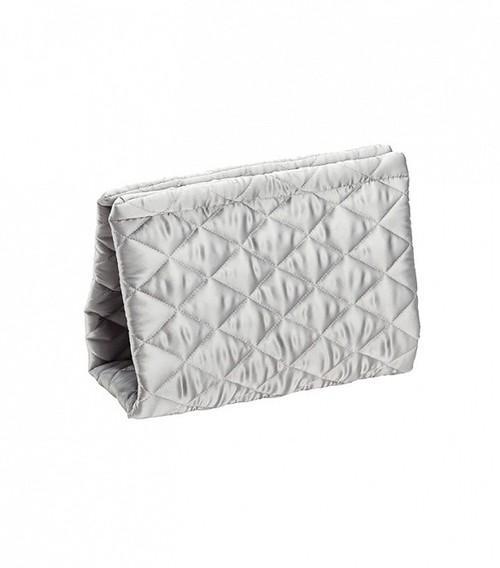
The Container Store Quilted Handbag Shapers

image

The Container Store Linen Handbag Storage Bin

3. Remove Stains the Right Way:

image

Athens Streetstyle

The first step is to know what type of stain you’re dealing with, as that will dictate the removal method. See specific techniques below!

Food stains: Crush white chalk and let it sit on the stain overnight. Brush off with a clean cloth in the morning.

Oil stains: Put cornstarch on the stain immediately, rubbing it in to create heat from friction, which will help the oil absorb. Brush the powder off with a clean cloth after you’ve rubbed it in—don’t let it sit on the stain.

Ink stains: If the stain is fresh, use a white eraser to immediately erase the spot, without applying too much pressure so that the color doesn’t come off. If the ink is already set, you’ll need a professional (see tip #7). An eraser also works for dirt stains.

Water stains: Blot water stains, let them dry naturally, and bring your bag to a professional for removal.

Odor removal: Keep a plastic bag filled with baking soda inside your handbag. Zip the handbag or place it in a larger bag that seals if it doesn’t zip. Keep the baking soda in the bag for one or two days to absorb the odor. Another option? Place a couple of dryer sheets in the bag for a few days.

Related: Heavy Purse? 5 Smart Ways to Lighten Your Load

4. Protect the Lining: 

image

A Love is Blind

Use pouches to store cosmetics and liquids, which will protect the handbag lining from spills and keep you organized to boot. Avoid click pens at all cost, opting for pens with caps instead. Better yet, put those in your pouch too, in case of dreaded ink leaks.

image

Comme des Garçons Star Embossed Small Pouch

5. Keep Metal Hardware Shiny:

image

A Love is Blind

Do your best to keep away jewelry and zippers that could scratch your bag’s metal hardware. A go-to household item, Mr. Clean’s Magic Erasers, do a great job of cleaning up tarnished and grimy hardware.

Related: 14 Items Every Woman Should Have In Her Purse

6. Practice Routine Maintenance: 

image

Athens Streetstyle

Here are a few best practices when it comes to daily handbag maintenance:

1. Avoid handling your bag if your hands are dirty or have lotion or cream on them.
2. Keep your bag out of direct sunlight.
3. Rotate which handbag you carry regularly so that they don’t wear out too quickly.
4. Use a suede brush to clean and revive suede.
5. Regular use of a leather moisturizer will keep the leather supple and free of cracks.
6. Wipe your bag down on a weekly basis (when in use) with a soft cloth.

7. Take It to a Professional:

image


A Love is Blind

For stains and wear and tear beyond your handbag maintenance skill set, take it to a handbag repair professional. Most shoe repair professionals also work on handbags. They’ll treat it for you, clean it, and restore color as needed. If your bag doesn’t have metal feet on the bottom, it’s wise to have those installed, as they’ll protect it from scratches and dirt.

Related: Your Ultimate Guide to Fall’s Must-Have It-Bags

Shop Investment Handbags:

image

A.P.C. Edith Leather Shoulder Bag

A structured black bag will take you from day to night. Bonus points for sleek gold hardware.

image

Chloe Large Drew Grained Leather Shoulder Bag

All the cool girls are wearing this It-bag with a cool yet classic vibe.

Related: Is THIS The New It-Bag for Fall?

image

M2Malletier Memento Mori Bag

This slightly larger version of M2Malletier’s popular clutch style is perfect for everyday wear.

image

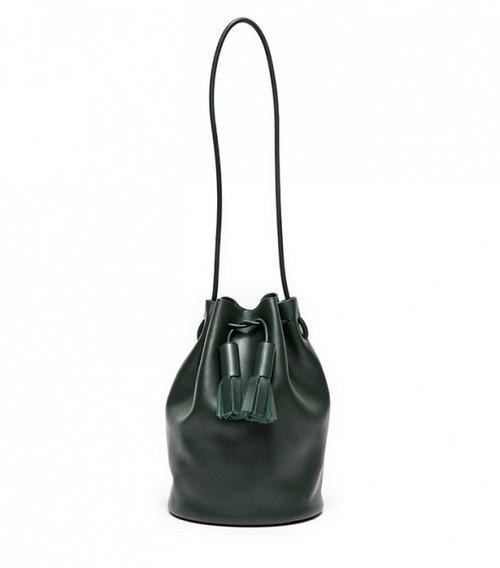
Building Block Bucket Bag

Buttery forest green leather and oversized tassels join forces to create a perfectly quirky bucket bag for fall.

image

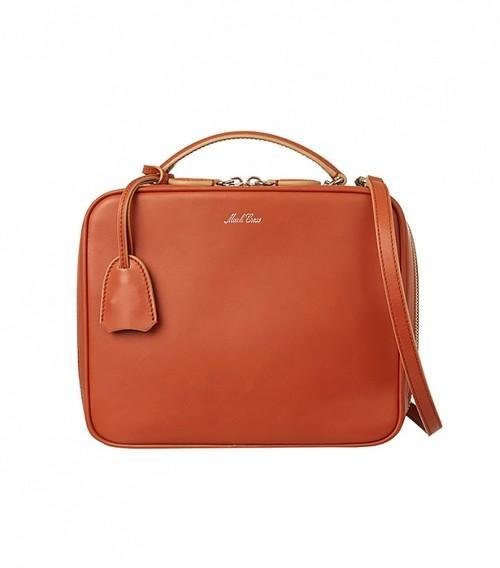
Mark Cross Laura Leather Shoulder Bag

Boxy shapes are in for fall, so tap into the trend with this structured Mark Cross version.

image

Rag & Bone Haircalf Bradbury Small Flap Hobo

This leopard calf-hair bag makes a subtle statement and gives a luxe feel to any outfit.