
Category Archives: ~ politics petitions pollution and pop culture

Ishi was discovered in California
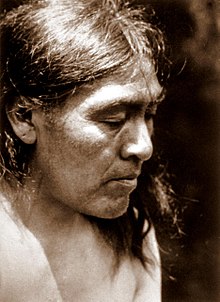
Early in the morning of August 29, 1911, two butchers hear dogs barking in the corral of their slaughterhouse outside Oroville, California. When they go out to check, they encounter Ishi, believed to be the last surviving member of the Native American Yahi tribe.
By the first decade of the 20th century, Euro-Americans had so overwhelmed the North American continent that scarcely any Native Americans remained who had not been assimilated into Anglo society to some degree. Ishi appears to have been something of an exception. Found lost and starving, Ishi was unfamiliar with white American ways and spoke no English.
Authorities took the Native American man into custody for his own protection. News of the so-called “Stone Age Indian” attracted the attention of a young Berkeley anthropologist named Thomas Waterman. Gathering what partial vocabularies existed of northern California Native dialects, the speakers of which had mostly vanished, Waterman went to Oroville to meet Ishi. After unsuccessfully hazarding words from several dialects, Waterman tried a few words from the language of the Yana Indians.
Source: history.com for the complete article
Share this:

Katrina ~Early in the morning on August 29, 2005, Hurricane Katrina struck the Gulf Coast of the US
 #Katrina,
The Gulf Coast is still battling, what looks like, white privilege. If read the news, it appears as if whites are wealthier, and in several locations … it is more unequal; the Po Poorer, the Indigenous, Latino and Black People have still been left behind, and absolutely no fix is in place yet?
Share this:

1786-87 ~ Farmers rise up in Massachusetts
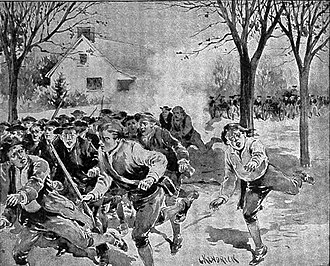
August 29th, 1786: Protesting high taxes and political corruption, American farmers begin a military standoff that closes the federal court in Springfield. It was called Shays’ Rebellion and was eventually defeated by a private militia, but it sufficiently rattled national leaders to call for a stronger national government to suppress future uprisings.
Source: Britannica History
Share this:

1970 – Native American group occupies Mount Rushmore to protest broken Treaty of Fort Laramie

Around dusk, on the evening on August 29, 1970, a group of 23 Native American activists climbed to the top of Mount Rushmore. Renaming the landmark Crazy Horse Mountain, in honor of the Lakota Sioux leader who famously resisted white Americans’ incursions into the area, the protesters are there to reclaim land they believe to be rightfully theirs under the 1868 Treaty of Fort Laramie, which guaranteed Indigenous people the right to all of Western South Dakota. The occupation will last for two months, beginning a new chapter in Native American activism.
Signed at Fort Laramie in the Wyoming Territory, the 1868 treaty was meant to end hostilities between the United States and the Lakota people, Yanktonai Dakota and Arapaho Nation. The treaty allocated the Black Hills and adjacent lands west of the Missouri River—roughly half of what is now South Dakota—to Indigenous peoples. But it tried to incentivize Native Americans to give up their traditional way of life in favor of farming. And it was designed to assimilate Native Americans into white American culture, with U.S. courts, not tribal ones, given jurisdiction over the reservation.
For the complete article, history.com

 Be a Seed for Change
You must be logged in to post a comment.