
For the complete article
chicagotribune.com

On August 30, 1776, General George Washington gives the New York Convention three reasons for the American retreat from Long Island. That same day, he rejects British General William Howe’s second letter of reconciliation.
With Howe and a superior British force having recently landed at Long Island—they handed the Continentals a humiliating defeat at the Battle of Brooklyn Heights on August 27—Washington gave these reasons for his decision to retreat: the need to reunite his forces, the extreme fatigue of his soldiers, and the lack of proper shelter from the weather.
Source: history.com for the complete article
 1146 – European leaders outlawed the crossbow.
1645 – American Indians and the Dutch made a peace treaty at New Amsterdam. New Amsterdam later became known as New York.
1682 – William Penn sailed from England and later established the colony of Pennsylvania in America.
1780 – General Benedict Arnold secretly promised to surrender the West Point fort to the British army.
1806 – New York City’s second daily newspaper, the “Daily Advertiser,” was published for the last time.
1809 – Charles Doolittle Walcott first discovered fossils near Burgess Pass. He named the site Burgess Shale after nearby Mt. Burgess.
1862 – The Confederates defeated Union forces at the second Battle of Bull Run in Manassas, VA.
1928 – The Independence of India League was established in India.
1941 – During World War II, the Nazis severed the last railroad link between Leningrad and the rest of the Soviet Union.
1945 – General Douglas MacArthur set up Allied occupation headquarters in Japan.
1951 – The Philippines and the United States signed a defense pact.
1956 – In Louisianna, the Lake Pontchartrain Causeway opened.
1960 – A partial blockade was imposed on West Berlin by East Germany.
1963 – The “Hotline” between Moscow and Washington, DC, went into operation.
1965 – Thurgood Marshall was confirmed by the U.S. Senate as a Supreme Court justice. Marshall was the first black justice to sit on the Supreme Court.
1982 – P.L.O. leader Yasir Arafat left Beirut for Greece.
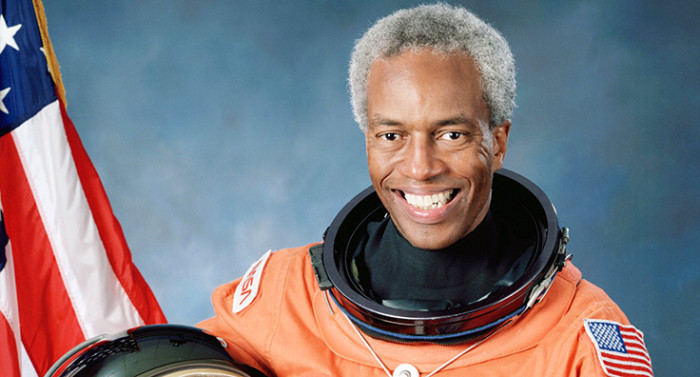
1983 – The space shuttle Challenger blasted off with Guion S. Bluford Jr. aboard. He was the first black American to travel in space.
1984 – The space shuttle Discovery lifted off for the first time. On the voyage three communications satellites were deployed.
1984 – U.S. President Ronald Reagan, and several others, were inducted into the Sportscasters Hall of Fame.
1991 – The Soviet republic of Azerbaijan declared its independence.
1993 – On CBS-TV “The Late Show with David Letterman” premiered.
1994 – Rosa Parks was robbed and beaten by Joseph Skipper. Parks was known for her refusal to give up her seat on a bus in 1955, which sparked the civil rights movement.
1994 – The largest U.S. defense contractor was created when the Lockheed and Martin Marietta corporations agreed to a merger.
1996 – An expedition to raise part of the Titanic failed when the nylon lines being used to raise part of the hull snapped.
1999 – The residents of East Timor overwhelmingly voted for independence from Indonesia. The U.N. announced the result on September 4.
2002 – Conoco Inc. and Phillips Petroleum merged to create ConocoPhillips. The new company was the third largest integrated energy company and the second largest refining company in the U.S.
For the complete article
blackthen.com
Around dusk on the evening on August 29, 1970, a group of 23 Native American activists climbs to the top of Mount Rushmore. Renaming the landmark Crazy Horse Mountain, in honor of the Lakota Sioux leader who famously resisted white Americans’ incursions into the area, the protesters are there to reclaim land they believe to be rightfully theirs under the 1868 Treaty of Fort Laramie, which guaranteed Indigenous people the right to all of Western South Dakota. The occupation will last for two months, beginning a new chapter in Native American activism.
Signed at Fort Laramie in the Wyoming Territory, the 1868 treaty was meant to end hostilities between the United States and the Lakota people, Yanktonai Dakota and Arapaho Nation. The treaty allocated the Black Hills and adjacent lands west of the Missouri River—roughly half of what is now South Dakota—to Indigenous peoples. But it tried to incentivize Native Americans to give up their traditional way of life in favor of farming. And it was designed to assimilate Native Americans into white American culture, with U.S. courts, not tribal ones, given jurisdiction over the reservation.
In a sadly predictable turn of events, the United States broke the treaty within a decade. After George Armstrong Custer’s expedition found gold in the Black Hills region in 1874, white prospectors and settlers rushed into the region, leading to the Great Sioux War of 1876 and American occupation of most of the land promised to the Lakota.
Source: history.com for more information


 Be a Seed for Change
You must be logged in to post a comment.