

 |
||||||||||
 |
|
|
|
|||||||
|
|
Last spring, the EPA issued strict guidelines on permits for mountaintop removal (MTR) coal mining. These guidelines for “valley fill” permits severely limit the dumping of coal mining debris into valleys and streams. These guidelines have the potential to save the rest of Appalachia‘s mountains from being destroyed and Appalachia’s drinking water from being poisoned. The EPA is now seeking feedback on their new approach to MTR permitting. Public comments are due December 1st. Take action today. Tell the EPA to strengthen their guidance on mountaintop removal mining permits. We know the coal industry is gearing up for a massive outpouring of comments, so we must provide leaders at the EPA the support they need to end mountaintop removal. Ask the EPA to stand up to King Coal and end all valley fills. Thank you for taking action to protect our beautiful streams and mountains.
|
||||||||
Category Archives: ~ politics petitions pollution and pop culture


Support the Disclose Act
|
Can you call Sens. Cantwell and Murray? Tell them: “Secret corporate political spending hurts our democracy. Support passing the DISCLOSE Act before the end of the year.” Senator Maria Cantwell Senator Patty Murray |

Dear MoveOn member, We just witnessed an election bought and paid for by corporate front groups and secret donors, and we have exactly 63 days to do something about it.A bill in the Senate would force the high rollers behind the millions in attack ads to come out of the shadows. If we know who they are we can hold them accountable for trying to buy elections for the Republicans who support their pro-Wall Street, pro-oil company agenda.
This is our last best chance to put some rules back into our election process before newly elected Republicans take office and kill any hope of campaign reform in January. We must start to put democracy back in the hands of the American people.
Can you call Senators Maria Cantwell and Patty Murray and say:
“Secret corporate political spending hurts our democracy. Support passing the DISCLOSE Act before the end of the year.”
Senator Maria Cantwell
Phone: 202-224-3441
Senator Patty Murray
Phone: 202-224-2621
Then, please report your call by clicking here:
http://pol.moveon.org/call?tg=FSWA_2.FSWA_1&cp_id=1486&id=25239-17809870-h5gB.Dx&t=2
Earlier this year the DISCLOSE Act came up one vote short. Several Republicans have said they support the principle of transparency but didn’t want it to take effect until after the election.
That means right now we have an opportunity to get that final vote—but we need to convince the Democrats to bring up the bill before the end of the year and put pressure on the potential Republican supporters to stand by their claims.
A coalition of organizations is backing a new push for the DISCLOSE Act launching today to support a final vote for this common-sense measure. By adding our voices today, we can help make sure the Senate seizes on the opportunity to hold corporations and CEOs accountable for their attempts to buy our elections.
Can you call today?
Senator Maria Cantwell
Phone: 202-224-3441
Senator Patty Murray
Phone: 202-224-2621
And then report your call here: http://pol.moveon.org/call?tg=FSWA_2.FSWA_1&cp_id=1486&id=25239-17809870-h5gB.Dx&t=3
Thanks for all you do.
–-Ilyse, Robin, Joan, Milan, and the rest of the team
Want to support our work? We’re entirely funded by our 5 million members—no corporate contributions, no big checks from CEOs. And our tiny staff ensures that small contributions go a long way. Chip in here.
Share this:

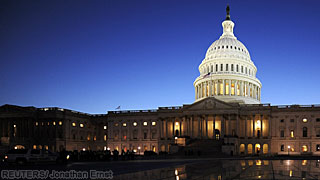
Friday in Congress …
The Senate Convenes: 10:30amET
Following any Leader remarks, the Senate will be in a period of morning business with senators permitted to speak for up to 10 minutes each.
There will be no roll call votes during Friday’s session of the Senate.
Unanimous Consent:
Passed H.R.4783, with substitute amendment (“Claims Settlement Act of 2010)
House Message to accompany H.R.5566, Animal Crush Video Prohibition Act (concur in the House amendment)
House Message to accompany H.R.3689, the Copyright, Clarification and Corrections Act of 2010 (concur in House amendment)
Passed S.3650, Gold Star Fathers
Passed H.R.6198, Bankruptcy Technical Corrections Act
Adopted H.Con.Res.327, a concurrent resolution recognizing and supporting the efforts of the USA Bid Committee to bring the 2022 FIFA World Cup Competition to the United States
Adopted S.Res.611, Cumberland Valley Athletic Club
Adopted S.Res.631, “National School Psychology Week”
Adopted S.Res.689, a resolution recongnizing “National American Indian and Alaska Native Heritage Month”
(((((((((((((((((((((((((((((((((((((((((((((((((((((((((((((((((((((((((((((((((((((((((((((((((
The House is scheduled to meet Monday 22, 2010 at 12:00pmET unless the House receives a message from the Senate transmitting its adoption of H.Con.Res.332, in which case the House shall stand adjourned pursuant to that concurrent resolution
Share this:

6 million children die of hunger every year

 |
Ten million children die before their fifth birthday every year. Malnutrition and hunger-related diseases cause 60 percent of these deaths. CARE needs your support to help people in crises worldwide escape hunger and poverty. Hasana is a young mother in Niger who struggled to feed her 10-month-old daughter during the food crisis that gripped the Sahel region of Africa earlier this year. “I have no milk for her,” Hasana said. “When she cries, I give her millet mixed with water and milk, but it does not have the nourishment she needs.” Suffering from severe malnutrition, baby Farida, was admitted to a health clinic supported by CARE just in time. CARE also helped Hasana through a program for pregnant and breastfeeding women. Today, both are fine. However, Farida’s future depends on whether Hasana will be able to provide the infant with the nutrition she needs to grow healthy and strong in the months and years to come. Hasana needs a partner in her fight against hunger and poverty. Will you make a gift to CARE today? Here are just a few ways your tax-deductible gift can make a difference:
When women like Hasana are empowered to fulfill their potential, they invest in their families and work for lasting change. That’s why CARE works side-by-side with women in the fight against hunger and poverty in more than 70 countries around the world every single day of the year. Please don’t wait for another crisis to help people like Hasana and Farida. Make a gift today to help empower women around the world create a brighter future for all. Sincerely, |
|||||||||||||||


Share this:


ECONOMY: The Assault On Wall Street Reform
Last weekend, a spokesman for the American Bankers Association — the banking industry’s largest trade group — explained that the financial services industry is eagerly anticipating conservative control of the House of Representatives. “We had been disappointed with a number of legislative outcomes with the past Congress, and so we look forward to better outcomes with this Congress,” he said, adding that “banks expect a corrections bill to peel back some of the financial regulations passed into law this year.” Indeed, Wall Street has made no secret of its desire to water down and roll back provisions in the Dodd-Frank financial regulatory reform law, which President Obama signed in July. Dodd-Frank is the most thorough upgrade of the nation’s regulatory structure since the Great Depression, and while complete repeal is unlikely due to the President’s veto power, the banks are counting on their House Republican allies to weaken the bill in other ways, such as withholding funds or scheduling hearings designed to slow the regulators’ rule-making process. Already, the two leading candidates to chair the House Financial Services Committee next year — Reps. Spencer Bachus (R-AL) and Ed Royce (R-CA) — have made known their desire to weaken certain provisions, while incoming presumptive House Majority Leader Eric Cantor (R-VA) told CNBC that Republicans intend to deny regulators the funds to implement Dodd-Frank. “The House has the power of the appropriations process and the leverage that comes with that essentially puts us in a position to deny the administration funding for promulgating the regulations,” Cantor said.
DEFUNDING THE CONSUMER BUREAU : House Republicans have reserved their most intense ire for the newly-created Consumer Financial Protection Bureau, which is being headed by consumer advocate and Harvard Law Professor Elizabeth Warren and is the only regulatory agency explicitly tasked with consumer protection. Rep. Jeb Hensarling (TX), one of the top Republicans on the Financial Services Committee, promised to defund the Bureau, which he believes “assaults the liberties of the consumer.” But defunding is only an effective strategy for holding back the agency until July 2011, when the Bureau will begin to receive an independent funding stream from the Federal Reserve, so Bachus has proposed changing Dodd-Frank to make the Bureau subject to the annual congressional appropriations process. Giving the Bureau an independent stream of funding is important, as it isolates the Bureau from the whims of Congress and prevents appropriators from pushing a political agenda by threatening funding cuts; the Federal Reserve and the Securities and Exchange Commission have independent budgets for the same reason. Royce, meanwhile, has said that he would revive an amendment of his that was defeated during the regulatory reform debate that would allow banking regulators to veto the agency’s rulemaking. “The safety and soundness regulator needs to have a say, needs to have final say in this,” Royce said.
DEFANGING THE REGULATORS : Dodd-Frank delegates much of its authority to regulators, who have the responsibility to craft rules meant to rein in the financial industry’s excess, while taking into consideration the necessary role of the industry. Consequently, House Republicans have been targeting these regulators in an attempt to politicize and delay their rule-making activities. Bachus, for instance, sent a letter to the newly created Financial Stability Oversight Council scaremongering about the effects of the Volcker rule, which is meant to prevent banks from engaging in risky proprietary trading with federally insured dollars. Bachus claimed that the rule will “impose substantial costs on the American economy and market participants” with “doubtful” benefits.” But as Nobel Prize-winning economist Joseph Stiglitz noted, “Through the rise of proprietary trading at our nation’s banks and the largest non-bank financial firms, firms doubled down on the accumulation of risk, much of it with little benefit to the real economy.” Bachus has also said that he wants to weaken the derivatives reform portion of the bill, calling it “overly expansive.” The derivatives title of Dodd-Frank sets up exchanges so that derivatives must be traded publicly (like stocks) and employs clearinghouses to ensure that both parties in a derivatives trade have adequate collateral backing it up. What House Republicans will likely aim to do is entice regulators to grant wide exemptions to the exchange and clearing requirements, letting all sorts of activity that is purely speculative continue to be unregulated. Senate Democrats, however, are standing tall against changes in the law. “I don’t think that major changes will take place on Dodd-Frank,” said Sen. Tim Johnson (D-SD), who will likely chair the Senate Banking Committee next year. “There is not only resistance from the Senate, but the veto is possible, too. So we should focus on realistic solutions to our problems.”
BIG BUSINESS JOINS IN : House Republicans and Wall Street banks are not alone in their fight to weaken Dodd-Frank. The U.S. Chamber of Commerce — which helped coordinate Wall Street’s campaign against financial reform — announced yesterday that “it is setting up a new unit to scrutinize regulatory efforts of the Obama administration, taking special aim at the health care reform law and financial overhaul legislation.” “Regulation is the vehicle by which some seek to control our economy, our businesses and our lives — and left unchecked, it will fundamentally weaken our nation’s capacity to create jobs and opportunity,” said Chamber President Tom Donohue. The Chamber has already sued the SEC “over its proposed rule to give shareholders greater rights to nominate candidates to a public company’s board through proxy access balloting”; the rule was initiated as a result of Dodd-Frank. Of course, Wall Street is also very capable of lobbying for its cause itself. As the Los Angeles Times reported, “Lobbyists for banks, hedge funds and other firms have logged hundreds of meetings with federal regulators since the reform bill was signed into law.” “In all, regulators have had at least 510 meetings with lobbyists representing 325 organizations since July,” the Times found, and “more than 90% of the groups that appear in the meeting logs are banks, hedge funds and other big companies that rely on the financial industry.”

 Be a Seed for Change
You must be logged in to post a comment.