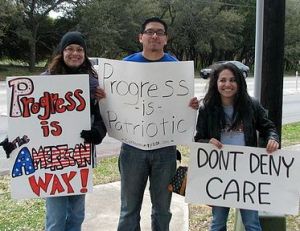
Sunday buzz … as Discrimination breaks out all over the country… in a place that has always welcomed immigrants has a new look and conflict on an old issue – Race, Religion and Sexual Preference.
Yes -there are two sides to every story …
What i see is a whole lot of race baiting from people on the extreme right acting in the name of getting their country back in response to having an African-American President among other things that seem to be on the break the Obama Presidency train agenda. The question is will we start to see angry mobs saying this that and the other in the name of the constitution? That ultimately blocks the rights of people of colour. It is a fact that Republicans state that they are the fiscal party, the conservative party that believes in the constitution yet the last 2years of the Obama Administration have suggested otherwise. We have two Democrats under investigated for possible ethics charges and Democrats in Congress have stated that they will in fact reprimand any member found to be guilty. .FYI: We are all innocent until proven guilty …lets remember that but if we remember that lets also remind ourselves of the list of Republicans who have yet to be investigated for various things that seem to qualify for ethics charges in my opinion…
…Republicans have voted for Tax Cuts for the Rich, more Money for War, and do not want the Bush tax cuts to expire. They did without any morose vote against Teachers, our auto-industry, Wall Street Reform, Health Care reform, First Responders and Americans who are  unemployed…What more do you need in order to Vote to keep Democrats in office or fill more seats with Democrats because Republicans want to take entitlements away from ALL of us… what is an entitlement? Social Security, Medicaid, Medicare and who out there in the middle class knows they need reforming but cutting those programs will create a chaos in the lives of current and future Senior citizens and probably not recover from. Now they are using the 14th Amendment in a disturbing and truly rude awakening way.
If you have been watching the news at all, it is apparent that the attitude and intent of people on the right have reached a new low in my book of nasty actions. The question i have among many others is if 9/11 had not happened. What if people on the right hadn’t said who and where the nexus of evil was and those responsible hadn’t been so determined to blame all Muslims for the action of a few or declare war against Islam as a response to the terror attack on the US; what would be their response. For me and it is just my own feelings and opinions but what i see is truly embarrassing, sad and offensive. I am not a religious person i am spiritual and feel that that is my right to feel and worship where and how i see fit as long as i hurt no one or myself in doing… let me say that again, as long as i hurt no one or myself. I watched the News covering the protests with signs that brought back memories of people who are afraid of the unknown and who have to be completely uninformed of the facts regarding our constitution or something else that probably should scare us all. It made me wonder how it must have felt when pressed, shoved, and provoked into Marching against discrimination. It made wonder how it felt to make a commitment to stand up against racism, against exclusion. We know that they had to take to the streets again and again even with the real possibility of dying at the hands of people who either just do not understand, are obviously listening to provocateurs or are just racists and only see the problem and the most basic of logic…at least for them Race. What we have seen is not at the same level as history has on record yet the fight to uphold the 14th Amendment is on…though civilized now it is troublesome nonetheless.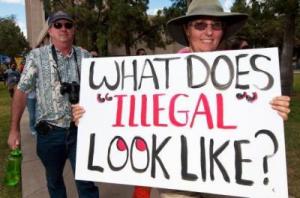
The whole mosque protest is odd, first of all there is already a mosque and FYI location of the mosque and the new community center will not be at ground Zero as suggested by and started by someone misinformed jerk who is trying to stir people up. That is a fact and here is another one. There were great Muslim Americans who worked and lived among others in the NYC as anyone else like those carrying foul signs of contempt acting as if they are better than the Muslims that also died in that dreadful terror attack. I say shame on these people who obviously do not understand that not all Muslims are bad nor are all Black or Brown people or Gays and that brings me back to something i posted yesterday. Yesterday, i posted a picture of the civil rights riots- all or mostly all Black being beat and hosed down for standing up for future and equal rights in society. I know that we are not experiencing that same depth of discrimination but it spoke loudly to me though Blacks have more rights and more opportunities, we still suffer discrimination, women still suffer discrimination, and if the right continues, the right to choose will be an issue women will again have to March against discrimination. It you are in tune, Brown people are the latest target of discrimination, and so are their anchor babies -as Republicans call them. The undocumented and their children have become tool to stir up people who use the Constitution when they are mad at the government or are afraid and who are definitely willing to use the Racist Card as a political bat against giving others rights the 14th Amendment clearly states… People should look up the facts before protesting based on misinformation and anger. The attitude of folks in certain parts of our country seems like feel they have to do something before people of colour move in and take over. That is just my opinion but if you are honest, the target of said anger currently in the news today is about people of coulor. Those who are projecting the anger also know the fight is about equality and since we are in the 21st Century, we all need to move into it because until we do our stagnation will only stop progress. We had hope for change we could believe in that included Climate Change, Clean Energy, Green Jobs better Educational opportunities, and comprehensive immigration. If done correctly the US could become number one again but it requires Congress to create and make laws that gets All Americans back on track with small business loans, tax cuts to the middle class and credits to the private sector in order to get the cooperation that is missing right now. It is not lost on me how businesses such as AIG are still making Profits …the question is why is not this resulting in more jobs? Are they trading overseas, outsourcing and or slashing jobs and saving money while investing? At this moment, i see the country as The Republican Political Party in Congress against Americans. How can we see Republicans any other way? We have a group of people voted into office by Americans who say they are fiscal conservatives yet when they don’t get their way they have major tantrums. They gave become the party of No to all things American. Saying no to health-care reform, unemployment, financial regulations affects everyone not just people who are left of center and if you are right of center or on the extreme right you have been impacted as well and should wonder what has any Republican done to help you because that is their job whether they admit it or not and they have yet to help even their own constituents out.
Equality is a right not a Privilege
Other News …
**Ice island breaks off Greenland Glacier
**Nun’s death is used to create allies and rallies anti-immigration reform
**Some people are being forced to retire early and use SS early
**Entourage will end sometime next year…but they might do a movie
**Thad Allen states BP must use the relief wells …huh?
——————————————————————————————
The Elena Kagan swearing in will be held today about 2pmET.
My Saturday sound off …We have all heard of Ratings Week or what most call Sweeps …whatever it seems like a whole lot of stations have decided to create a mood of doom and gloom for Democrats as we move toward the November elections. It is funny to hear the constant barrage coming from the mouths of an ab stoddard type of journalist who definitely does not speak for me or to me…
Well, none of them speak for me; some have said things that have made me frustrated because they have the platform to say whatever they want and the audience does not challenge it. Some of the commentators think this is News when obviously it is just opinions and sometimes-reckless comments are put out there to stir up trouble and or get ratings …right. It is offensive on most occasions and it may just be me but getting the News plus something extra from the likes of a Jenk just is not appetizing to me in most cases the channel is turned immediately, especially that day he said we all should have voted for Hillary Clinton as if he was speaking for all those in the Democratic Party. It was offensive on so many levels and it was disrespectful to the current President and a great reason no one from the Obama Administration would want to be on that show as of late.
If you were able to see msnbc live yesterday you would have seen the interaction between Jenk and Senator Grayson told it all for me and hopefully other people saw the often-awkward banter on msnbc. It seemed to have left Jenk with a very nervous laugh and while he probably felt he behaved, professionally he did not, all that Senator Grayson could say was good luck with your TV show, and not smile attached … ok that is just my opinion.
Anyway, folks on cable and their cable heads are trying. Maybe too desperately to get Ratings… the almighty Ratings Numbers i guess translates into dollars but we all know that cnn and msnbc are behind the so-called fox news station because as reported in the news they offer up all those things cnn and msnbc or mainstream TV does not such as : Campaign Platform for candidates on the right, Racism and discrimination by hosts, lies, opinions portrayed as News, fabricated News and clowns like beck, hannity and others tell the audience things that are not completely lies but they aren’t accurate either and reach viewership of up to millions and make that and then some in change for telling the public half-truths. It has to be said not all of their commentators engage in such unprofessional behavior but Sheppard smith is the only one i can think of right now and he gets good ratings from what i hear. It was odd when they hired huckabee then Palin as hosts and commentators because i thought both were interested in running for President and clearly the fact that they are on TV in their host or contributor status takes them out of the running for good. At least that is my understanding of the rules.
It has not lost on me that there have been a whole lot of changes to network programming because the November elections are just 60 some odd days away. We have to see prime timers making guest appearance on daytime to talk doom and gloom for Democrats with a little sarcasm about the President Obama and what he did in the short time he has been in office. Then we hear if Republicans played their cards, right the Poll numbers say this that or the other and we all believe those right. It all makes me want to puke but now and until the November elections we have to hear the manipulated truth or the truth with some facts left out or an off the wall opinion backed up by what the commentator believes we all feel as well…NOT. It is offensive to think that we all feel the way the commentator feels on every issue of the day and because they are, free to say whatever they want we the people sit with headphones or watch the screen with distaste. The comments and or manipulation of the truth is why i had to join twitter and blog as well because we as viewers have no recourse to some of the crap we hear on the airwaves or hear and or read from the Media. Beware of Ratings Sweep coming your way from now until the November elections.
Other News …
**6 American on med-team workers died in a Taliban attack in Afghanistan
**Tropical storms colin are heading into Bermuda and warnings of high winds beaches are closed Saturday…estelle moves into the pacific and mexio with 50mph winds
**Overnight gunfight in Baghdad bomb factory kills 5
**Saudi says deal has been reached on BlackBerry services
C-SPAN …
 BP Conference Call
 James Roosevelt on Social Security
Admiral Allen Daily Oil Spill Update
White House Reception
July unemployment rate stays at 9.5%; Trustees report Released
The Bureau of Labor Statistics (BLS) reported yesterday that the unemployment rate for July stayed at 9.5% with 71,000 jobs created during the month.
Overall, the nation lost 131,000 jobs last month, but those losses came as 143,000 Census Bureau workers left their temporary employment, the Labor Department said. June’s number was revised downward to a total loss of 221,000 jobs. The agency originally reported that the nation lost 125,000 jobs in June.
To further examine BLS’s report, the Joint Economic Committee heard testimony from Keith Hall, the Commissioner of the Bureau of Labor Statistics, on unemployment numbers for July, and national employment trends.
Pres. Obama spoke at Gelberg Signs, a small business in Washington, about the employment report. He also discussed the Adminisration’s plans to expand small business with the support of loans from the Small Business Administration.
Also this week, Treasury Secretary Tim Geithner and Health and Human Services Secretary Kathleen Sebelius, who serve on the Board of Trustees of the Social Security and Medicare trust funds, released a new Trustees report on the fiscal condition of Social Security and Medicare. They outlined the report which piggy-backed an earlier announcement by the Obama Administration that projected that new spending cuts would save the Medicare program $8 billion dollars by the end of 2011.
Under the new health care law, signed by the president in March, Medicare spending will increase by 5.3 percent a year over the next decade and allow the program’s trust fund to remain solvent until 2029.
Kagan to become fourth women on supreme court
Elena Kagan will go to the Supreme Court to take the Constitutional and the Judicial Oath to become the next Associate Justice of the Supreme Court. The oath will be administered by Chief Justice John Roberts. The Senate approved Kagan as the 112th Justice on Thursday by a vote of 63-37. Nebraska Democratic Senator Ben Nelson was the only member of his party who opposed Kagan in the final vote. Five Republican Senators joined the Democratic majority to support the nominee: Susan Collins (ME), Lindsey Graham (SC), Richard Lugar (IN), Olympia Snowe (ME) and Judd Gregg (NH). Kagan will replace retiring Justice John Paul Stevens and become the fourth female Justice in the Supreme Court’s history. For the first time in its history, he nine-member court will now have three sitting female justices.
Swearing-In Ceremony: C-SPAN at 2pm ET
C-SPAN’s Senate Confirmation Hub Page
Pres. Obama Meeting With Kagan C-SPAN Biographical History: Elena Kagan
Photos …Getty Images






 BLS July: Employment Situation Summary


 Be a Seed for Change
You must be logged in to post a comment.