
 0240 BC – Eratosthenes estimated the circumference of the Earth using two sticks.
1586 – English colonists sailed away from Roanoke Island, NC, after failing to establish England’s first permanent settlement in America.
1778 – U.S. General George Washington’s troops finally left Valley Forge after a winter of training.
1821 – The Ottomans defeated the Greeks at the Battle of Dragasani.
1846 – The New York Knickerbocker Club played the New York Club in the first baseball game at the Elysian Field, Hoboken, NJ. It was the first organized baseball game.
1862 – U.S. President Abraham Lincoln outlined his Emancipation Proclamation, which outlawed slavery in U.S. territories.
1864 – The USS Kearsarge sank the CSS Alabama off of Cherbourg, France.
1865 – The emancipation of slaves was proclaimed in Texas.
1867 – In New York, the Belmont Stakes was run for the first time.
1873 – Eadweard Muybridge successfully photographed a horse named “Sallie Gardner” in fast motion using a series of 24 stereoscopic cameras. This is considered the first step toward motion pictures.
1903 – The young school teacher, Benito Mussolini, was placed under investigation by police in Bern, Switzerland.
1910 – The first Father’s Day was celebrated in Spokane, Washington.
1911 – In Pennsylvania, the first motion-picture censorship board was established.
1912 – The U.S. government established the 8-hour work day.
1917 – During World War I, King George V ordered the British royal family to dispense with German titles and surnames.
1933 – France granted Leon Trotsky political asylum.
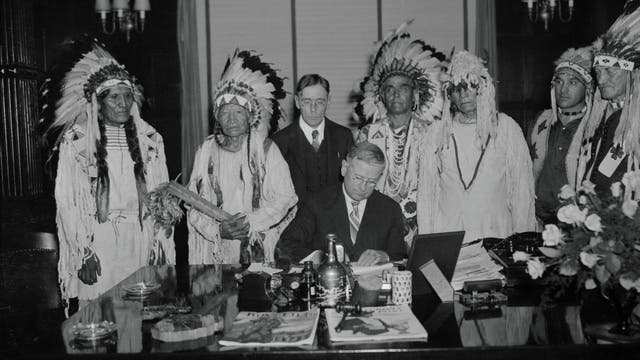
1934 – The U.S. National Archives and Records Administration was established.
1934 – The U.S. Congress established the Federal Communications Commission (FCC). The commission was to regulate radio and TV broadcasting (later).
1937 – The town of Bilbao, Spain, fell to the Nationalist forces.
1939 – In Atlanta, GA, legislation was enacted that disallowed pinball machines in the city.
1942 – Norma Jeane Mortenson (Marilyn Monroe) and her 21-year-old neighbor Jimmy Dougherty were married. They were divorced in June of 1946.
1942 – British Prime Minister Winston Churchill arrived in Washington, DC, to discuss the invasion of North Africa with U.S. President Roosevelt.
1943 – Henry Kissinger became a naturalized United States citizen.
1943 – The National Football League approved the merger of the Philadelphia Eagles and the Pittsburgh Steelers.
1944 – The U.S. won the battle of the Philippine Sea against the Imperial Japanese fleet.
1951 – U.S. President Harry S. Truman signed the Universal Military Training and Service Act, which extended Selective Service until July 1, 1955 and lowered the draft age to 18.
1958 – In Washington, DC, nine entertainers refused to answer a congressional committee’s questions on communism.
1961 – Kuwait regained complete independence from Britain.
1961 – The U.S. Supreme Court struck down a provision in Maryland’s constitution that required state officeholders to profess a belief in God.
1964 – The Civil Rights Act of 1964 was approved after surviving an 83-day filibuster in the U.S. Senate.
1965 – Air Marshall Nguyen Cao Ky became South Vietnam’s youngest premier at age 34.
1968 – 50,000 people marched on Washington, DC. to support the Poor People’s Campaign.
1973 – The Case-Church Amendment prevented further U.S. involvement in Southeast Asia.
1973 – The stage production of “The Rocky Horror Picture Show” opened in London.
1973 – Gordie Howe left the NHL to join his sons Mark and Marty in the WHA (World Hockey League).
1981 – The European Space Agency sent two satellites into orbit from Kourou, French Guiana.
1983 – Lixian-nian was chosen to be China’s first president since 1969.
1987 – The U.S. Supreme Court struck down the Louisiana law that required that schools teach creationism.
1997 – William Hague became the youngest leader of Britain’s Conservative party in nearly 200 years.
1998 – Gateway was fined more than $400,000 for illegally shipping personal computers to 16 countries subject to U.S. export controls.
1998 – A study released said that smoking more than doubles risks of developing dementia and Alzheimer’s.
1998 – Switzerland’s three largest banks offered $600 million to settle claims they’d stolen the assets of Holocaust victims during World War II. Jewish leaders called the offer insultingly low.
2000 – The U.S. Supreme Court ruled that a group prayer led by students at public-school football games violated the 1st Amendment’s principle that called for the separation of church and state.
on-this-day.com







You must be logged in to post a comment.