Category Archives: ~ politics petitions pollution and pop culture

Why Don’t Churches Have To Pay Taxes?


H.R. 1: One Big Beautiful Bill Act


By Party
Selected Caucuses
All VotesRepublicansDemocratsRepublican Study Committee
Aye50%2182180150
No50%21422120

Passed. Simple Majority Required.

Data from the official record at house.gov.

Caucuses are selected based on a statistical analysis of their relevance to the vote outcome. Caucus membership may not be the latest — we are still working on that. Legislators may be a member of multiple caucuses.

Ideology Vote Chart

218 MAGA – 214 DEMs 2 MAGA

The tax-exempt status of churches is rooted in a combination of historical traditions, legal provisions, and constitutional principles. Here are key reasons why churches don’t have to pay taxes:

  1. Constitutional Separation of Church and State: The First Amendment of the United States Constitution prohibits the government from establishing an official religion and ensures the free exercise of religion. Granting tax-exempt status to churches aligns with the principle of separating church and state, preventing government interference in religious affairs.
  2. Recognition of Charitable and Community Contributions: Throughout history, churches have been recognized for their substantial contributions to communities, including charitable activities, education, and social services. Granting tax-exempt status acknowledges and encourages these positive contributions to society.
  3. Internal Revenue Code Section 501(c)(3): The Internal Revenue Code, specifically Section 501(c)(3), outlines the criteria for tax-exempt status for charitable, religious, and educational organizations. Churches qualify for automatic exemption under this section, provided they meet certain requirements.
  4. Preservation of Religious Autonomy: Tax-exempt status allows churches to operate independently and maintain autonomy in matters of doctrine, worship, and internal governance. This preserves the integrity and independence of religious organizations.
  5. Prevention of Government Favoritism: Exempting churches from taxes helps avoid the appearance of government favoritism toward specific religions. By treating all religions equally and not providing financial advantages to any particular faith, the government upholds a neutral stance.
  6. Avoidance of Political Entanglement: Tax-exempt organizations, including churches, are restricted from engaging in substantial political activities. This limitation helps prevent religious institutions from becoming entangled in political affairs, maintaining their focus on spiritual, charitable, and educational missions.
  7. Encouragement of Charitable Giving: Donors to tax-exempt religious organizations can typically deduct their contributions from taxable income. This encourages philanthropy and charitable giving, further supporting the financial well-being of churches.

While churches enjoy tax-exempt status, it is essential to note that this privilege comes with certain limits and conditions. These include adherence to their exclusive religious purpose, avoidance of excessive political activities, and compliance with regulations governing unrelated business income and reporting requirements. The intersection of religious freedom, societal contributions, and fiscal responsibility forms a complex landscape that continues to be shaped by legal, historical, and cultural considerations.

factsontaxes.com

on this day 7/8


1099 – Christian soldiers on the First Crusade march around Jerusalem.

1608 – The first French settlement at Quebec was established by Samuel de Champlain.

1663 – King Charles II of England granted a charter to Rhode Island.

1693 – Uniforms for police in New York City were authorized.

1709 – Peter the Great defeated Charles XII at Poltava, in the Ukraine, The Swedish empire was effectively ended.

1755 – Britain broke off diplomatic relations with France as their disputes in the New World intensified.

1776 – Col. John Nixon gave the first public reading of the U.S. Declaration of Independence to a crowd at Independence Square in Philadelphia.

1794 – French troops captured Brussels, Belgium.

1795 – Kent County Free School changed its name to Washington College. It was the first college to be named after U.S. President George Washington. The school was established by an act of the Maryland Assembly in 1723.

1815 – Louis XVIII returned to Paris after the defeat of Napoleon.

1865 – C.E. Barnes patented the machine gun.

1879 – The first ship to use electric lights departed from San Francisco, CA.

1881 – Edward Berner, druggist in Two Rivers, WI, poured chocolate syrup on ice cream in a dish. To this time chocolate syrup had only been used for making ice-cream sodas.

1889 – The Wall Street Journal was first published.

1889 – John L. Sullivan defeated Jake Kilrain, in the last championship bare-knuckle fight. The fight lasted 75 rounds.

1907 – Florenz Ziegfeld staged his first “Follies” on the roof of the New York Theater in New York City.

1919 – U.S. President Wilson returned from the Versailles Peace Conference in France.

1947 – Demolition work began in New York City for the new permanent headquarters of the United Nations.

1950 – General Douglas MacArthur was named commander-in-chief of United Nations forces in Korea.

1953 – Notre Dame announced that the next five years of its football games would be shown in theatres over closed circuit TV.

1960 – The Soviet Union charged Gary Powers with espionage. He was shot down in a U-2 spy plane.

1963 – All Cuban-owned assets in the United States were frozen.

1969 – The U.S. Patent Office issued a patent for the game “Twister.”

1970 – The San Francisco Giant’s Jim Ray Hart became the first National League player in 59 seasons to collect six runs batted (RBI) during a single inning.

1981 – The Solar Challenger became the frist solar-powered airplane to cross the English Channel.

1986 – Kurt Waldheim was inaugurated as president of Austria despite controversy over his alleged ties to Nazi war crimes.

1997 – The Mayo Clinic and the U.S. government warned that the diet-drug combination known as “fen-phen” could cause serious heart and lung damage.

1997 – NATO invited Poland, Hungary, and the Czech Republic to join the alliance in 1999.

2000 – J.K. Rowling’s “Harry Potter and the Goblet of Fire” was released in the U.S. It was the fourth Harry Potter book.

2010 – The Solar Impulse completed the first 24-hour flight by a solar powered plane.

Mississippi burning … June 1964 an event that lasted …imo through 2005 when Killen was convicted of manslaughter


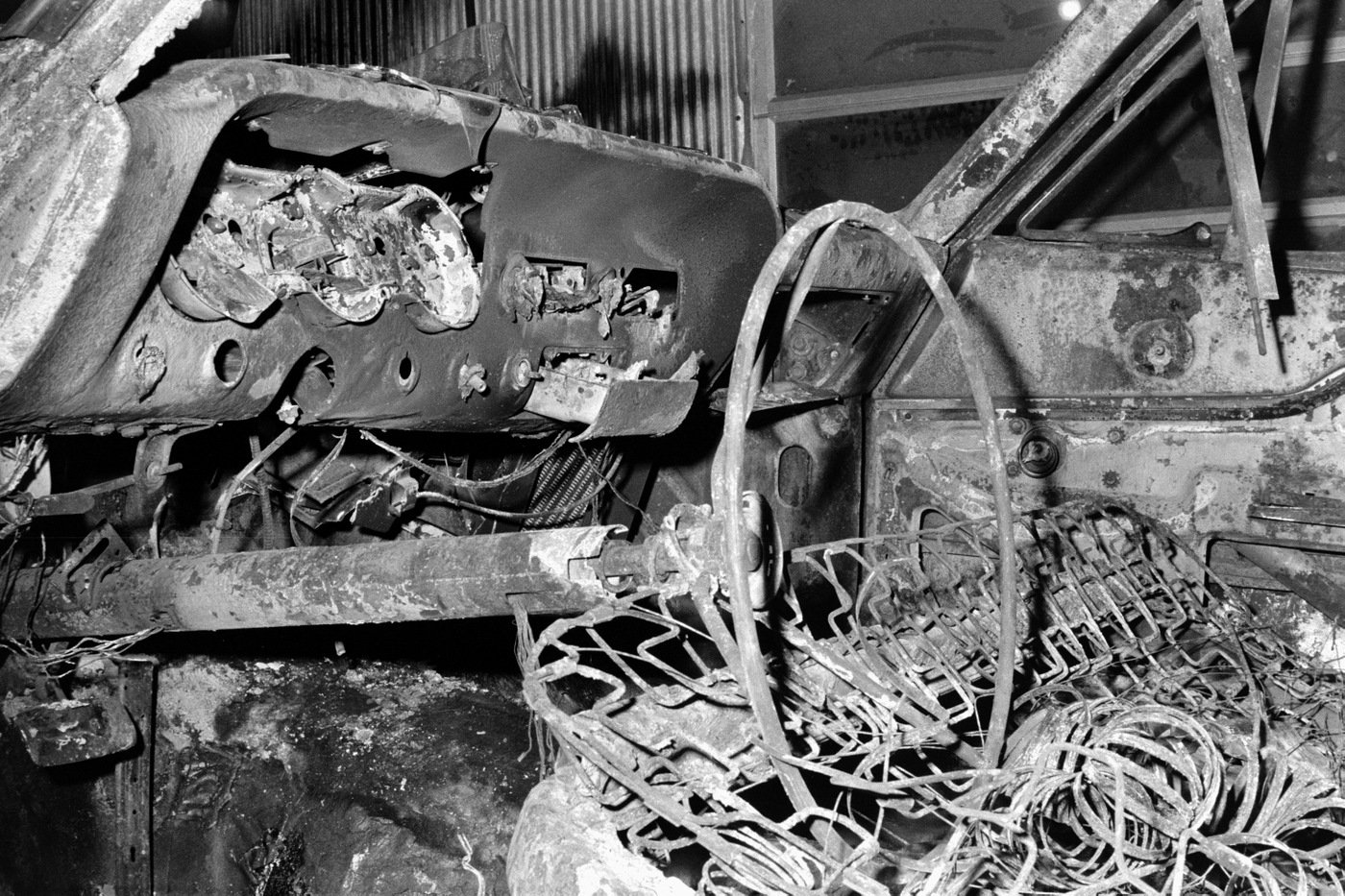
The burned interior of the station wagon that was discovered following the disappearance of activists Michael Schwerner, James Chaney, and Andrew Goodman in Mississippi in 1964.
The burned interior of the station wagon that was discovered following the disappearance of activists Michael Schwerner, James Chaney, and Andrew Goodman.


The KKK was in a murderous mood. It was June 1964—the start of “Freedom Summer,” a massive three-month initiative to register southern blacks to vote and a direct response to the Klan’s own campaign of fear and intimidation.

The Klan in Mississippi, in particular, was after a 24-year-old New Yorker named Michael Schwerner. He’d been especially active in organizing local boycotts of biased businesses and helping with voter registration. On June 16, acting on a tip, a mob of armed KKK members descended on a local church meeting looking for him. Schwerner wasn’t there, so they torched the church and beat the churchgoers.

FBI Poster of Missing Civil Rights Workers
An FBI poster seeks the missing workers.

The Klan missed its target, but the trap was set: on June 20, Schwerner and two fellow volunteers—James Chaney and Andrew Goodman—headed south to investigate the fire. The next afternoon, they interviewed several witnesses and went to meet with fellow activists. The events that followed, outlined here, would stun the nation.

5 p.m. , Sunday, June 21: After driving into Philadelphia, Mississippi, the three civil rights workers were arrested by a Neshoba County Deputy Sheriff named Cecil Price, allegedly for speeding.

Circa 10:30 p.m., June 21: Chaney, Goodman, and Schwerner were released and drove off in the direction of Meridian in a blue station wagon. By preordained plan, KKK members followed. The activists were never heard from again.

Early morning, June 22: Notified of the disappearance, the Department of Justice requested our involvement; a few hours later, Attorney General Robert Kennedy asked us to lead the case. By late morning, we’d blanketed the area with agents, who began intensive interviews.

Late afternoon, June 23: Intelligence developed by our agents led them to the remains of the burnt-out station wagon, shown above. No bodies were found; the worst was feared. The charred station wagon led us to name the case “MIBURN,” for Mississippi Burning.

June 24 to August 3. We launched a massive search for the young men—aided by the National Guard—through back roads, swamps, and hollows. At the same time, we were putting pressure on known members and developing informants who could infiltrate the Klan. At the request of President Lyndon Johnson, we also opened a new field office in Jackson, Mississippi. In time, we’d developed a comprehensive analysis of the local KKK and its role in the disappearance.

August 4. Acting on an informant tip, we exhumed all three bodies 14 feet below an earthen dam on a local farm.

December 4. More than a dozen suspects, including Deputy Price and his boss Sheriff Rainey, were indicted and arrested.

October 20, 1967. Following years of court battles, seven of the 18 defendants were found guilty—including Deputy Sheriff Price—but none on murder charges. One major conspirator, Edgar Ray Killen, went free after a lone juror couldn’t bring herself to convict a Baptist preacher.

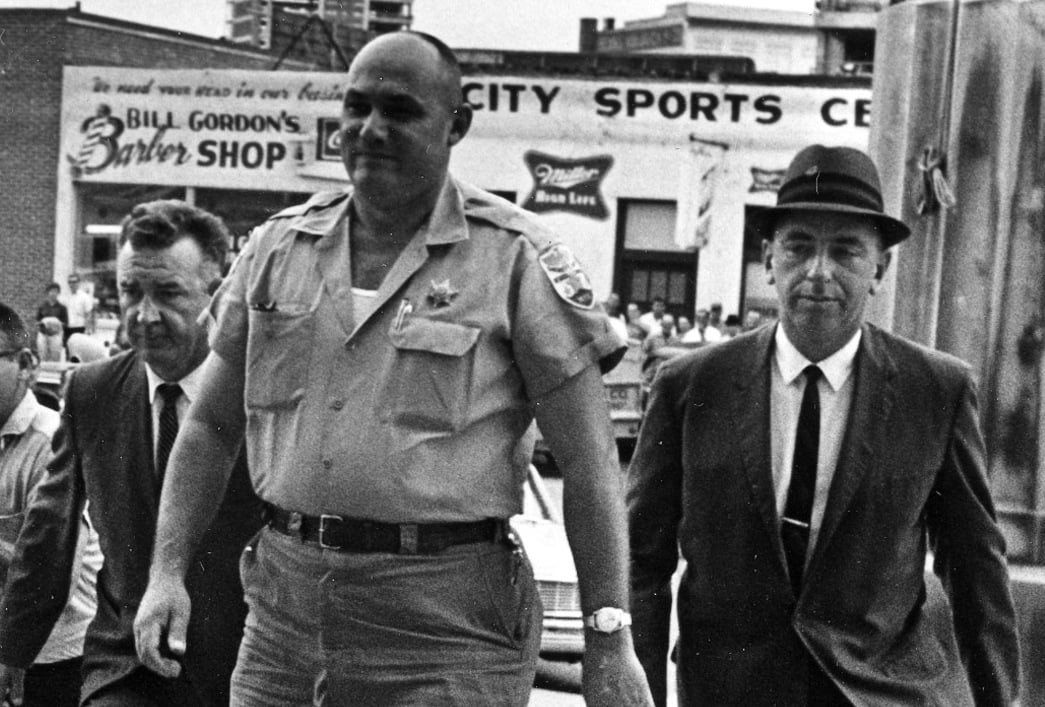
Neshoba County Sheriff Lawrence Rainey, flanked by FBI agents, is brought to court in October 1964 in connection with the Mississippi Burning murders. AP Photo.

In the end, the Klan’s homicidal ways backfired. The murders galvanized the nation and provided impetus for the passage of the landmark Civil Rights Act of 1964 on July 2.  Killen eventually got his due; he was convicted of manslaughter on June 21, 2005, the 41st anniversary of the crimes.

– Mississippi Burning Case Records