Category Archives: ~ politics petitions pollution and pop culture

2006 – 649-day tree sit-in at the University of California, Berkley


649-day tree sit-in at the University of California, Berkeley begins

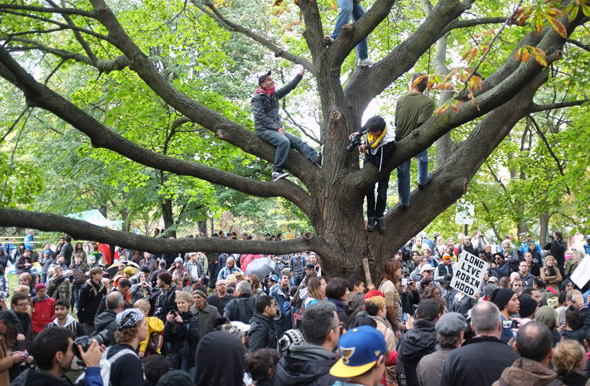
On December 2, 2006, four students at the University of California, Berkeley, inhabit the treetops of an oak grove on campus to protest the university’s plans to demolish over an acre of the forest to build a new athletic center, kicking off an epic 21-month standoff. It was one of the longest tree sit-ins in history.

Tree sit-ins are a form of civil disobedience in which protestors physically occupy a tree to prevent it from being cut down, often for long periods of time. At its peak, the Berkeley protest saw over a dozen people living on the limbs of the grove’s oak and redwood trees; volunteers and others brought them food, water and supplies.

Source: history.com

on this day … 12/02


WethePeople

1823 – U.S. President James Monroe outlined his doctrine opposing European expansion in the Western Hemisphere.


In his December 2, 1823, address to Congress, President James Monroe articulated United States’ policy on the new political order developing in the rest of the Americas and the role of Europe in the Western Hemisphere.  

The statement, known as the Monroe Doctrine, was little noted by the Great Powers of Europe, but eventually became a longstanding tenet of U.S. foreign policy. Monroe and his Secretary of State John Quincy Adams drew upon a foundation of American diplomatic ideals such as disentanglement from European affairs and defense of neutral rights as expressed in Washington’s Farewell Address and Madison’s stated rationale for waging the War of 1812. The three main concepts of the doctrine—separate spheres of influence for the Americas and Europe, non-colonization, and non-intervention—were designed to signify a clear break between the New World and the autocratic realm of Europe. Monroe’s administration forewarned the imperial European powers against interfering in the affairs of the newly independent Latin American states or potential United States territories. While Americans generally objected to European colonies in the New World, they also desired to increase United States influence and trading ties throughout the region to their south. European mercantilism posed the greatest obstacle to economic expansion. In particular, Americans feared that Spain and France might reassert colonialism over the Latin American peoples who had just overthrown European rule. Signs that Russia was expanding its presence southward from Alaska toward the Oregon Territory were also disconcerting.
For their part, the British also had a strong interest in ensuring the demise of Spanish colonialism, with all the trade restrictions mercantilism imposed. Earlier in 1823 British Foreign Minister George Canning suggested to Americans that two nations issue a joint declaration to deter any other power from intervening in Central and South America. Secretary of State John Quincy Adams, however, vigorously opposed cooperation with Great Britain, contending that a statement of bilateral nature could limit United States expansion in the future. He also argued that the British were not committed to recognizing the Latin American republics and must have had imperial motivations themselves. …

for the complete article history.state.gov

Dec. 1st ~ What is World AIDS Day?


Each year, on 1 December, the world commemorates World AIDS Day. People around the world unite to show support for people living with HIV and to remember those who have died from AIDS-related illnesses.

Each World AIDS Day focuses on a specific theme, which this year will be Take the rights path. 

This year’s theme joins a growing list of challenges that World AIDS Day has alerted people to globally. Founded in 1988, World AIDS Day was the first ever international day for global health. Every year, United Nations agencies, governments and civil society join together to campaign around specific themes related to HIV.

Source: unaids.org

1862 ~ Lincoln sends message to Congress


One month before signing the Emancipation Proclamation, President Lincoln sent a long message to Congress which was largely routine, but also proposed controversial measures such as voluntary colonization of slaves and compensated emancipation.

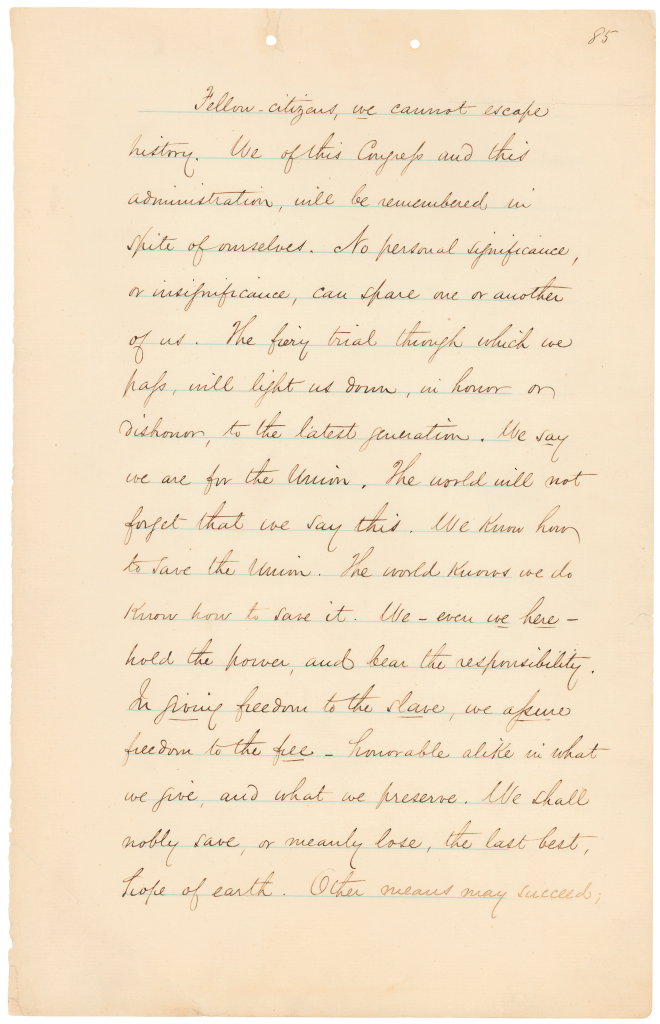
Lincoln devoted so much attention to preparing the message that his friend David Davis said, “Mr. Lincoln’s whole soul is absorbed in his plan of remunerative emancipation.” The concluding paragraphs shown below demonstrate Lincoln’s passion for this plan and contain some of the most famous statements he ever wrote. Composer Aaron Copland used excerpts in his evocative “Lincoln Portrait.”

I do not forget the gravity which should characterize a paper addressed to the Congress of the nation by the Chief Magistrate of the nation. Nor do I forget that some of you are my seniors, nor that many of you have more experience than I, in the conduct of public affairs. Yet I trust that in view of the great responsibility resting upon me, you will perceive no want of respect yourselves, in any undue earnestness I may seem to display.

Is it doubted, then, that the plan I propose, if adopted, would shorten the war, and thus lessen its expenditure of money and of blood? Is it doubted that it would restore the national authority and national prosperity, and perpetuate both indefinitely? Is it doubted that we here–Congress and Executive–can secure its adoption? Will not the good people respond to a united, and earnest appeal from us? Can we, can they, by any other means, so certainly, or so speedily, assure these vital objects? We can succeed only by concert. It is not “can any of us imagine better?” but, “can we all do better?” The dogmas of the quiet past, are inadequate to the stormy present. The occasion is piled high with difficulty, and we must rise — with the occasion. As our case is new, so we must think anew, and act anew. We must disenthrall ourselves, and then we shall save our country.

Fellow-citizens, we cannot escape history. We of this Congress and this administration, will be remembered in spite of ourselves. No personal significance, or insignificance, can spare one or another of us. The fiery trial through which we pass, will light us down, in honor or dishonor, to the latest generation. We say we are for the Union. The world will not forget that we say this. We know how to save the Union. The world knows we do know how to save it. We — even we here — hold the power, and bear the responsibility. In giving freedom to the slave, we assure freedom to the free — honorable alike in what we give, and what we preserve. We shall nobly save, or meanly lose, the last best hope of earth. Other means may succeed; this could not fail. The way is plain, peaceful, generous, just — a way which, if followed, the world will forever applaud, and God must forever bless.

abrahamlincolnonline.org