Wind Advisory in King Co., SeaTac, WA, with possible gusty winds throughout the day, up to 45mph


Today brings rain showers, a high near 58°F and a low near 47°F, humidity between 65% and 91%, winds up to 15 mph, and a UV index of 1.

A Wind Advisory overlaps with these conditions, with gusts up to 45 mph possible.

The chance of moderate rain is supported by 0.51 inches expected.

Impact & Risk Assessment

The main concern today is the increasing wind.

  • West winds may reach 15 to 30 mph with gusts to 45 mph.
  • Light rain showers this morning may make roads slick.
  • Loose outdoor items may blow around.
  • Driving could be harder for taller vehicles.

Stay aware of changes through the afternoon as winds strengthen, then slowly fade by evening.

Timeline / Situation Update

Yesterday was calmer with lighter winds. Today brings increasing gusts from late morning through afternoon. Tomorrow trends quieter with sunnier skies and lighter breezes.

Preparedness & Safety Steps

  • Bring lightweight outdoor items inside.
  • Keep phones charged in case of brief outages.
  • When driving, use both hands on the wheel.
  • Keep pets indoors during the windiest hours.

For more details, click for more details

2016 ~ The National Museum of African American History and Culture opens


Smithsonian

More than 15 years after it was first established, the National Museum of African American History and Culture opens on the National Mall on September 24, 2016. Barack Obama, the nation’s first African American president, leads the ceremony and officially opens the museum by ringing the Freedom Bell, a bell from an African American Baptist church founded in 1776.

As far back as 1915, there had been proposals for a museum recognizing the achievements of African Americans. In 1929, President Herbert Hoover approved a commission to create such an institution, but it never received funding. Various attempts were made to pass legislation establishing a museum through Congress, including multiple bills introduced by Georgia congressman and civil rights icon John Lewis, but even after the Board of Regents of the Smithsonian Institution joined the effort in the 1990s it still took more than a decade.

Source: history.com

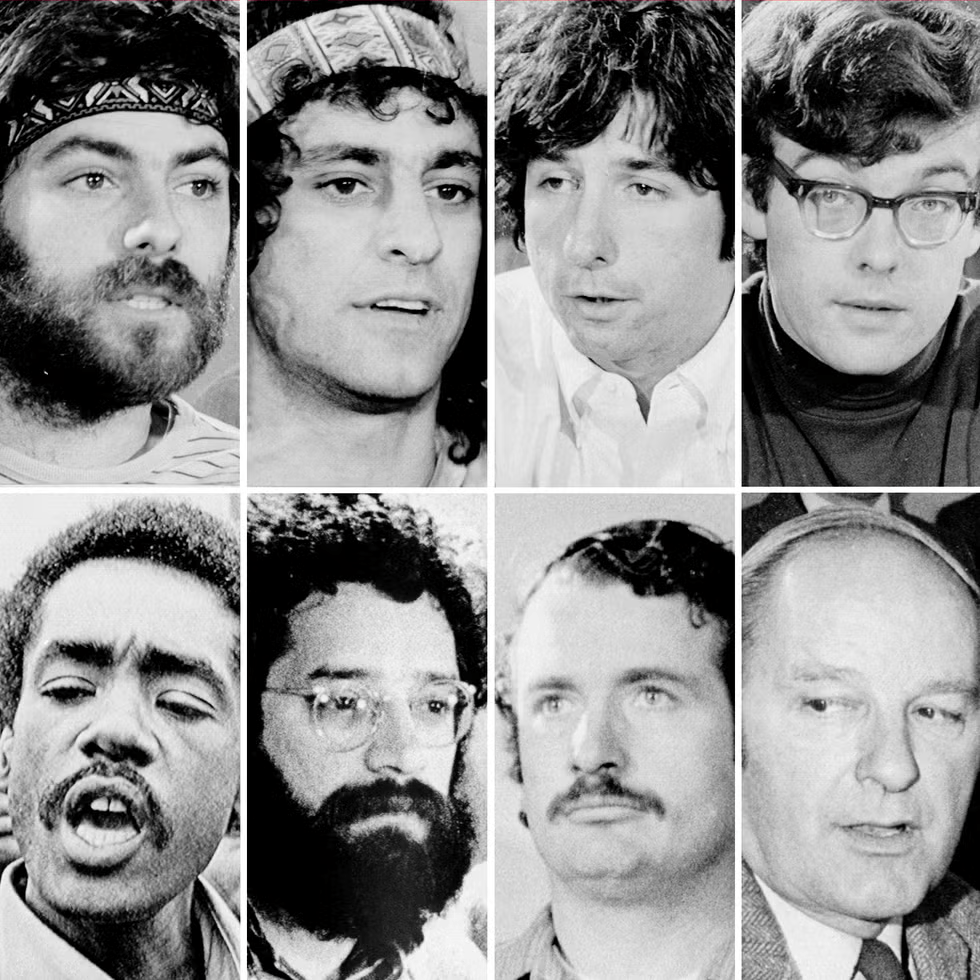
Chicago 8 trial opens in Chicago


The trial for eight antiwar activists charged with inciting violent demonstrations at the August 1968 Democratic National Convention opens in Chicago before Judge Julius Hoffman. Initially there were eight defendants, but one, Bobby Seale of the Black Panthers, denounced Hoffman as a racist and demanded a separate trial. The seven other defendants, including David Dellinger of the National Mobilization Committee to End the War in Vietnam (MOBE); Rennie Davis and Tom Hayden of MOBE and Students for a Democratic Society (SDS); and Jerry Rubin and Abbie Hoffman of the Youth International Party (Yippies), were accused of conspiring to incite a riot.

At the height of the antiwar and civil rights movements, these young leftists had organized protest marches and rock concerts at the Democratic National Convention. During the event, clashes broke out between the protesters and the police and eventually turned into full-scale rioting, complete with tear gas and police beatings. The press, already there to cover the Democratic convention, denounced the overreaction by police and Chicago Mayor Richard Daley’s handling of the situation.

The Chicago Seven were indicted for violating the Rap Brown law, which had been tagged onto the Civil Rights Bill earlier that year by conservative senators. The law made it illegal to cross state lines in order to riot or to conspire to use interstate commerce to incite rioting. President Johnson’s attorney general, Ramsey Clark, refused to prosecute the case.

Source: history.com

1789 – The first Supreme Court is established


The Judiciary Act of 1789 is passed by Congress and signed by President George Washington, establishing the Supreme Court of the United States as a tribunal made up of six justices who were to serve on the court until death or retirement. That day, President Washington nominated John Jay to preside as chief justice, and John Rutledge, William Cushing, John Blair, Robert Harrison and James Wilson to be associate justices. On September 26, all six appointments were confirmed by the U.S. Senate.

READ MORE: Why Do 9 Justices Serve on the Supreme Court?

The U.S. Supreme Court was established by Article 3 of the U.S. Constitution. The Constitution granted the Supreme Court ultimate jurisdiction over all laws, especially those in which their constitutionality was at issue. The high court was also designated to oversee cases concerning treaties of the United States, foreign diplomats, admiralty practice and maritime jurisdiction. On February 1, 1790, the first session of the U.S. Supreme Court was held in New York City’s Royal Exchange Building.

For the complete article: history.com

READ MORE: 7 Things You Might Not Know About the U.S. Supreme Court

Citation Information

Article Title

The first Supreme Court is established

AuthorHistory.com Editors

Website Name

HISTORY

URL

https://www.history.com/this-day-in-history/the-first-supreme-court

Access Date

September 24, 2022

Publisher

A&E Television Networks

Last Updated

September 21, 2021

Original Published Date

November 24, 2009

on this day … 9/24  


1789 – The U.S. Congress passed the First Judiciary Act. The act provided for an Attorney General and a lower federal courts.

1869 – Thousands of businessmen were financially ruined after a panic on Wall Street. The panic was caused by an attempt to corner the gold market by Jay Gould and James Fisk.

1915 – “The Lamb,” Douglas Fairbanks first film, was shown at the Knickerbocker Theater in New York City, NY.

1929 – The first all-instrument flight took place in New York when Lt. James H. Doolittle guided a Consolidated NY2 Biplane over Mitchell Field.

1933 – “Roses and Drums” was heard on WABC in New York City. It was the first dramatic presentation for radio.

1934 – Babe Ruth played his last game as a New York Yankee player.

1938 – Don Budge became the first tennis player to win all four of the major titles when he won the U.S. Tennis Open. He had already won the Australian Open, the French Open and the British Open.

1957 – The Brooklyn Dodgers played their last game at Ebbets Field.

1957 – U.S. President Eisenhower sent federal troops to Little Rock, AR, to enforce school integration.

1960 – The first nuclear powered aircraft carrier was launched. The USS Enterprise set out from Newport News, VA.

1961 – “The Bullwinkle Show” premiered in prime time on NBC-TV. The show was originally on ABC in the afternoon as “Rocky and His Friends.”

1963 – The U.S. Senate ratified a treaty that limited nuclear testing. The treaty was between the U.S., Britain, and the Soviet Union.

1968 – “60 Minutes” premiered on CBS-TV.

1968 – “The Mod Squad” premiered on ABC-TV.

1977 – “The Love Boat” debuted on ABC-TV. The theme song was sung by Jack Jones and was written by Paul Williams and Charles Fox.

1995 – Three decades of Israeli occupation of West Bank cities ended with the signing of a pact by Israel and the PLO.

1996 – The United States, represented by President Clinton, and the world’s other major nuclear powers signed a Comprehensive Test Ban Treaty to end all testing and development of nuclear weapons.

1998 – The U.S. Federal Reserve released into circulation $2 billion in new harder-to-counterfeit $20 bills.

2001 – U.S. President George W. Bush froze the assets of 27 suspected terrorists and terrorist groups.

2003 – Anthony Hopkins received a star on the Hollywood Walk of Fame.

politics,pollution,petitions,pop culture & purses