Little did Ida May Fuller know she would find a piece of history inside her mailbox when she opened it on a February day in 1940. When the 65-year-old retiree and lifelong Republican lifted the lid of the mailbox outside the front door of her Ludlow, Vermont, house, she found a check for $22.54 from the U.S. government.
That check dated January 31, 1940, was the first payout from the Social Security program that had been enacted five years earlier by the federal government during theGreat Depression.
The Social Security program is one of the most enduring legacies of President Franklin D. Roosevelt’s New Deal. The measure provided for compensation to the unemployed and payments to retirees over the age of 65 who contributed payroll tax deductions during their working years. “The civilization of the past hundred years, with its startling industrial changes, has tended more and more to make life insecure. Young people have come to wonder what would be their lot when they came to old age,” Roosevelt said when he signed the Social Security Act into law on August 14, 1935.
A descendant of Mayflower passengers, Fuller was born in 1874 on a farm outside Ludlow. After working as a school teacher for a dozen years, she attended business school and then worked as a legal secretary at a Ludlow law firm for 24 years before her retirement in November 1939.
Referred to as the “Ellis Island of the West,” Angel Island in California’s San Francisco Bay opens January 21, 1910, as America’s major port of entry for Asian immigrants. Over the next 30 years, an estimated 100,000 Chinese and 70,000 Japanese are processed through the station. …read more
Celebrated in several East and Southeast Asian cultures, the Lunar New Year begins with the first new moon of the year and lasts about 15 days, which are filled with cleaning, gift-giving, feasts and parades. In China, it’s called Chinese New Year. Here are eight facts about the …read more
The Chinese Exclusion Act of 1882 is often seen as the first major law to restrict immigration in the United States. But there is an earlier law that was used to effectively prevent Chinese women from immigrating to the United States: The Page Act of 1875. Chinese Immigration in …read moreGandhi assassinated
Mohandas Karamchand Gandhi, the political and spiritual leader of the Indian independence movement, is assassinated in New Delhi by a Hindu extremist. Born the son of an Indian official in 1869, Gandhi’s Vaishnava mother was deeply religious and early on exposed her son to …read more
They toiled through back-breaking labor during both frigid winters and blazing summers. Hundreds died from explosions, landslides, accidents and disease. And even though they made major contributions to the construction of the Transcontinental Railroad, these 15,000 to 20,000 …read more
At 11:38 a.m. EST, on January 28, 1986, the space shuttle Challenger lifts off from Cape Canaveral, Florida, and Christa McAuliffe is on her way to becoming the first ordinary U.S. civilian to travel into space. McAuliffe, a 37-year-old high school social studies teacher from New …read more
While billions of people believe Jesus of Nazareth was one of the most important figures in world history, many others reject the idea that he even existed at all. A 2015 survey conducted by the Church of England, for instance, found that 22 percent of adults in England did not …read more
The Chinese diaspora, which began in the 1800s, was so vast that virtually every major city in the world—from New York to London, Montreal and Lima—boasts a neighborhood called “Chinatown.” Chinese immigration to the United States dates back to the middle of the 19th century, …read more
The amazing works of art and architecture known as the Seven Wonders of the Ancient World serve as a testament to the ingenuity, imagination and sheer hard work of which human beings are capable. They are also, however, reminders of the human capacity for disagreement, …read moreEdgar Allan Poe is born
On January 19, 1809, poet, author and literary critic Edgar Allan Poe is born in Boston, Massachusetts. By the time he was three years old, both of Poe’s parents had died, leaving him in the care of his godfather, John Allan, a wealthy tobacco merchant. After attending school in …read more
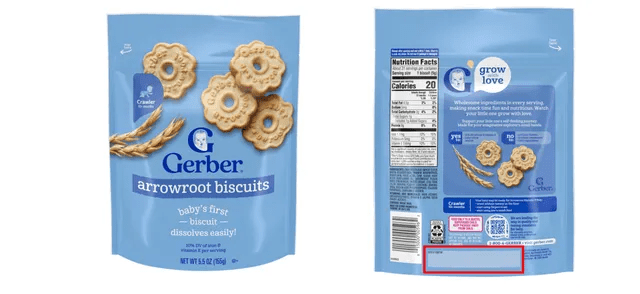
Gerber Products Company is recalling batches of Gerber Arrowroot Biscuits in Canada because of the potential presence of soft plastic and/or paper pieces that should not be consumed
** Left Coast Organics brand organic chia seeds have been recalled in Canada because of Salmonella contamination.https://t.co/Gpe8aNFPOU
Tri-Union Seafoods is cautioning consumers that a third-party distributor inadvertently released quarantined product that was associated with a February 2025 recall. The initial recall was conducted following notification from the
**
**IKM of San Jose, California is recalling the following cookware items because they may be contaminated with significant levels of lead (Pb) which may leach into food.No illnesses have been reported to date.
Consumers who have purchased the recalled products are urged to return them to the place of purchase for a full refund. Consumers with questions may contact the company at 1-650-695- 9009. Our operation hours are from 10:00 from 17:00 PST Mon-Fri, excluding national holidays.
– IKM Aluminum saucepan wooden handle 9” (56 pcs)
– A-cook Aluminum Kadai size 5 (43 pcs)
– Brass Tope (10 pcs)
– IKM 4-quart Pital brass pot (9 pcs)
** Navitas Organics is voluntarily recalling select lots of its 8oz Organic Chia Seeds due to possible Salmonella contamination. This recall is being conducted as a precautionary measure following a recall initiated by the company’s chia seed supplier.
Product was distributed nationally through retail stores such as Whole Foods Market and online retailers including Amazon. The recall applies to the following product packaged in sealed stand-up pouches:
Lot Codes (9-digit codes starting with “W”) are printed on the back of the chia seed bag above the nutritional information. The Lot Codes included in this recall are:
W31025283 – Best If Used By: End APR 2027
W31025286 – Best If Used By: End APR 2027
W31025287 – Best If Used By: End APR 2027
W31025311 – Best If Used By: End MAY 2027
W31025314 – Best If Used By: End MAY 2027
W31025315 – Best If Used By: End MAY 2027
W31025316 – Best If Used By: End MAY 2027
**
** Gregory’s Foods, Inc. of Eagan, MN is recalling its 2-pound 8.5-ounce packages of “Bag Full of Cookies” White Chocolate Macadamia Nut frozen cookie dough because some units may contain undeclared peanuts. Frozen Monster Cookie Dough, which contains Peanut, may be packaged in a bag that is labeled as White Chocolate Macadamia Nut. People who have allergies to peanuts run the risk of serious or life-threatening allergic reaction if they consume these products.
The recalled “Bag full of Cookies” White Chocolate Macadamia Nut frozen cookie dough was distributed in Minnesota, Wisconsin, and Nebraska in retail grocery stores and through distribution centers.
** Superfoods Inc. dba Live it Up. Recalls Live it Up Super Greens Because of Possible Health Risk
The recall includes the following products:
Live it Up Super Greens, Wild Berry, 30 – 0.32oz (9g) Sticks, NET WT. 9.52oz (270g), with UPC 850077468070
Live it Up Super Greens, NET WT 8.5 oz (240g) with UPC 860013190804.
Live it Up Super Greens, 30 – 0.28oz (8g) sticks, NET WT. 8.47 oz (240g) with UPC 850077468063
Live it Up Super Greens, Wild Berry, NET WT 8.5OZ (240g), with UPC 860013190811
** This current recall was initiated after Tri-Union Seafoods discovered that quarantined cases, associated with the initial recall, were inadvertently shipped by a third-party distributor. The impacted products were distributed to limited retail stores as follows:
Safeway, Albertsons, Vons, and Pavilions – California Consumers can contact Tri-Union Seafoods at support@thaiunionhelp.zendesk.com or 833-374-0171, if they have any questions or to request replacement product. The toll-free number hours are Monday through Friday from 9:00 a.m. to 5:00 p.m. EST.
Meijer – Illinois, Indiana, Kentucky, Michigan, Ohio, and Wisconsin
Giant Foods – Maryland and Virginia
Genova Yellowfin Tuna in Olive Oil 5.0 oz 4 Pack
4800073265
S84N D2L
1/21/2028
S84N D3L
1/24/2028
Genova Yellowfin Tuna in in Extra Virgin Olive Oil with Sea Salt 5.0 oz
Diva Fam Inc. is recalling all lots and flavors of its Sea Moss Gel Superfood because of the lack of required regulatory authorization and temperature monitoring records for pH-controlled food
Suzanna’s Kitchen of Norcross, GA, is recalling 13,720 pounds of ready- to-eat grilled chicken breast fillet products that may be contaminated with Listeria monocytogenes, the USDA’s Food
** Jan. 16, 2026 – Suzanna’s Kitchen, a Norcross, Ga., establishment, is recalling approximately 13,720 pounds of ready- to-eat grilled chicken breast fillet products that may be adulterated with Listeria monocytogenes ( Lm), the U.S. Department of Agriculture’s Food Safety and Inspection Service (FSIS) announced…
Impacted Products
• 10-lb. cases containing two 5 lb. bags of fully cooked grilled chicken breast fillets with rib meat, with lot code 60104 P1382 287 5 J14 on the side of the case and on the package.
** The U.S. Food & Drug Administration (FDA) has announced a cheese recall impacting more than 1.5 million bags of shredded cheese. The recalled cheese was produced by Great Lakes Cheese Co. Inc. and may be contaminated with metal fragments.
Great Lakes Cheese Co. Inc. initially announced the recall in October, but the FDA classified it as “Class II,” meaning that eating the cheese “may cause temporary or medically reversible adverse health consequences,” on Dec. 1.
Si Ji Mei brand Wuhan Egg Sheets with Glutinous Rice are under recall in Canada because of potential contamination with Salmonella. The recall was triggered by the company, according to
The California Department of Public Health (CDPH) is issuing an urgent advisory following a recent outbreak of amatoxin poisoning linked to the consumption of wild, foraged mushrooms. Confirmed cases have
** A recall on Ore-ida and Sysco Imperial Tater-Tots for plastic contamination. To date, there have been no reported injuries or illnesses associated with this recall, and it is currently unclear how the products became contaminated. Clear hard plastic fragments:McCain Foods USA Inc. Ore-Ida Tater Tots potatoes with the UPC code 1 00 72714 00215 8
Sysco Imperial Potato Tater Barrel with the UPC code 1 07 34730 62740 0
The tater tots were distributed: CA, WA, AR,AZ,CO,FL,HI, IA, ID,IL,KS,KY,LA,MI,MN,MO,MS,MT,NE,NM,ND,NV,OR,TX,UT,WI
** The recalled product was directly distributed to the two retailers listed below, located IA and NJ , between April 2023 to December 2023 There were no online sales.
1.Golden Land (Des Moines) 2740 Douglas Ave Des Moines IA 50310 Tel: 515-468-8224
The recalled [Klong Kone] Shimp Paste (Klong Kone) “454 G. (1 LBS)” and “910 G. (2 LBS),” is packaged in a white plastic jar with a red cap. The product is a dark-colored paste with a salty flavor. The product was Packed and Distributed By: P. Prateepthong 2000, Product of Thailand.
The recalled product was sold in two sizes:
[Klong Kone] Shrimp Paste (Klong Kone) ‘454 G. (1 LBS)’ , with UPC: 8853142000313, Product Code: DPA159
[Klong Kone] Shrimp Paste (Klong Kone) ‘910 G. (2 LBS)’ , with UPC: 8853142000320, Product Code: DPA161
To date, there has been one report of four children becoming ill, which involved diarrhea and elevated blood levels.
** Sonoma, CA —Primavera Nueva Inc. is voluntarily recalling certain lots of its 4-count tamales because the products have the potential to be contaminated with Listeria monocytogenes, an organism which can cause serious and sometimes fatal infections in young children, frail or elderly people, and others with weakened immune systems. Although healthy individuals may suffer only short-term symptoms such as high fever, severe headache, stiffness, nausea, abdominal pain and diarrhea, listeria infection can cause miscarriages and stillbirths among pregnant women.
Product was distributed by Primavera Nueva Inc. in California and Nevada to retail stores.
The following 4-count tamales, produced between October 10, 2024 and October 10, 2025 are included:
Roasted Green Chile & Jack Cheese
Black Bean Bonanza & Jack Cheese
Butternut Squash w/ Roasted Green Chiles & Cheese
BBQ Chipotle Bean & White Cheddar
Mushroom Spinach & Salsa with Two Cheeses
Roasted Green Chile
Black Bean Bonanza
Butternut Squash w/ Roasted Green Chiles
Mushroom Spinach & Salsa
Roasted Pumpkin & White Cheddar.
No other Primavera Nueva products are affected.
No illnesses have been reported to date. Primavera Nueva has fully corrected the issue—enhanced cooking-temperature monitoring and verification have been in place since October 11, 2025.
Consumer Guidance Consumers who have tamales with date codes 10/22 (year 2024) – 10/22 (year 2025) should not consume the product and should discard it.
For questions, contact: Araceli Santoyo — primaveranueva@aol.com 707 939 9350, Monday through Friday 9am to 3pm pacific
** Distilled Water Meijer Steam Distilled Water one-gallon jugs have been recalled by the FDA for containing a “floating black foreign substance.”
The affected product was sold at Meijer stores in Illinois, Indiana, Kentucky, Michigan, Ohio, and Wisconsin.
** Mountain West Food Group, LLC, a Heyburn, Idaho establishment, is recalling approximately 2,855 pounds of raw ground beef products that may be contaminated with E. coli O26, the U.S. Department of Agriculture’s Food Safety and Inspection Service (FSIS) announced today…
Impacted Products
• 16-oz. (1-lb.) vacuum-sealed packages containing “FORWARD FARMS GRASS-FED GROUND BEEF” with “USE OF FREEZE BY 01/13/26 EST 2083” printed on the side of the packaging.
On January 30, 1956, an unidentified suspected white supremacist terrorist bombed the Montgomery home of Reverend Dr. Martin Luther King Jr. No one was harmed, but the explosion outraged the community and was a major test of King’s steadfast commitment to non-violence. King was …read more
The 1800 population census was the First Decennial Census of the United States. Taken every 10 years since 1790, census records provide a snapshot of the nation’s population.
Frequently Asked Questions About the 1800 Census
Why was the 1800 Census taken?
The U.S. Constitution was ratified September 17, 1787. Article I, Section 2, established that representation in the U.S. House of Representatives was based on population determined by a census taken at 10 year intervals: “The actual Enumeration shall be made within three Years after the first Meeting of the Congress of the United States, and within every subsequent Term of ten Years, in such Manner as they [Congress] shall by Law Direct.”
The law required “That every person whose usual place of abode shall be in any family on [August 4, 1800], shall be returned as of such family, and the name of every person, who shall be an inhabitant of any district or territory, but without a settled place of residence, shall be inserted in the column of the aforesaid schedule, which is allotted for the heads of families, in that division where he or she shall be on [August 4, 1800], and every person occasionally absent at the time of the enumeration, as belonging to that place in which he usually resides in the United States.”
Who was involved?
Secretaries of State John Marshall (1800-1801) and James Madison (1801-1809) had general supervision of census operations and tabulating and reporting the results to the President and Congress.
The U.S. Marshal for each Federal judicial district was responsible for taking the census in his district with the help of assistant marshals whom he appointed. Each took an oath or affirmation that “I will well and truly cause to be made, a just and perfect enumeration and description of all persons resident within my district or territory, and return the same to the Secretary of State, agreeably to the directions of an act of Congress, intitualed [sic, entitled], ‘An act providing for the enumeration of the inhabitants of the United States,’ according to the best of my ability.”
Every free person over age 16 was required to cooperate: “That each and every free person more than sixteen years of age, whether heads of families or not … shall be, and hereby is obligated to render to such assistant of the division, a true account, if required, to the best of his or her knowledge, of all and every person belonging to such family … on pain of forfeiting twenty dollars….”
What questions did the census ask?
Name of head of family
Number of free white males under 10 years of age
Number of free white males of 10 and under 16 years of age
Number of free white males of 16 and under 26 years of age
Number of free white males of twenty six and under 45 years of age
Number of free white males of 45 years of age and upwards
Number of free white females under 10 years of age
Number of free white females of 10 and under 16 years of age
Number of free white females of 16 and under 26 years of age
Number of free white females of twenty six and under 45 years of age
Number of free white females of 45 years of age and upwards
Number of all other free persons, except Indians, not taxed [free African-Americans]







 Be a Seed for Change
You must be logged in to post a comment.