

1846 – Smithsonian Institution created

After a decade of debate about how best to spend a bequest left to America from an obscure English scientist, President James K. Polk signs the Smithsonian Institution Act into law on August 10, 1846.
In 1829, James Smithson died in Italy, leaving behind a will with a peculiar footnote. In the event that his only nephew died without any heirs, Smithson decreed that the whole of his estate would go to “the United States of America, to found at Washington, under the name of the Smithsonian Institution, an Establishment for the increase and diffusion of knowledge.” Smithson’s curious bequest to a country that he had never visited aroused significant attention on both sides of the Atlantic.
Smithson had been a fellow of the venerable Royal Society of London from the age of 22, publishing numerous scientific papers on mineral composition, geology, and chemistry. In 1802, he overturned popular scientific opinion by proving that zinc carbonates were true carbonate minerals, and one type of zinc carbonate was later named smithsonite in his honor.
history.com
Citation Information
Article Title
Smithsonian Institution created
AuthorHistory.com Editors
Website Name
HISTORY
URL
https://www.history.com/this-day-in-history/smithsonian-institution-created
Access Date
August 10, 2022
Publisher
A&E Television Networks
Last Updated
August 6, 2021
Original Published Date
November 24, 2009
BY
Share this:

8/10 1846 – The Smithsonian Institution was chartered by the U.S. Congress. The “Nation’s Attic” was made possible by $500,000 given by scientist Joseph Smithson.
James Smithson and the Founding of the Smithsonian
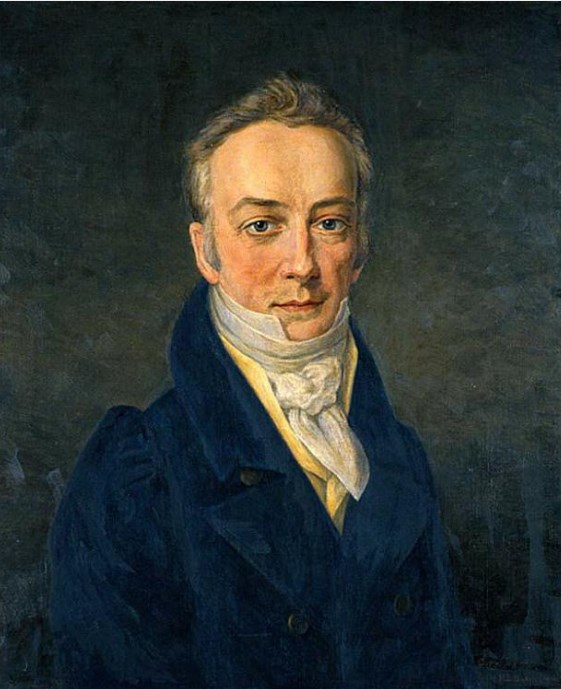
Artist: Hattie Elizabeth Burdette
Smithson, the illegitimate child of a wealthy Englishman, had traveled much during his life, but had never once set foot on American soil. Why, then, would he decide to give the entirety of his sizable estate—which totaled half a million dollars, or 1/66 of the United States’ entire federal budget at the time—to a country that was foreign to him?
Some speculate it was because he was denied his father’s legacy. Others argue that he was inspired by the United States’ experiment with democracy. Some attribute his philanthropy to ideals inspired by such organizations as the Royal Institution, which was dedicated to using scientific knowledge to improve human conditions. Smithson never wrote about or discussed his bequest with friends or colleagues, so we are left to speculate on the ideals and motivations of a gift that has had such significant impact on the arts, humanities, and sciences in the United States.
Visitors can pay homage to Smithson with a visit to his crypt, located on the first floor of the Smithsonian Castle.
Share this:

1945 – The U.S. dropped an atomic bomb on Nagasaki. The bombing came three days after the bombing of Hiroshima. About 74,000 people were killed. Japan surrendered August 14.

1877 Nez Perce (Niimíipu) indians flee into Yellowstone National Park

Having refused government demands that they move to a reservation, a small band of Nez Perce tribesmen clash with the U.S. Army near the Big Hole River in Montana.
The conflict between the U.S. government and the Nez Perce was one of the most tragic of the many Indian wars of the 19th century. Beginning with the tribe’s first contact with the explorers Meriwether Lewis and William Clark, the peaceful Nez Perce had befriended and cooperated with the Americans. Even when hordes of white settlers began to flood into their homelands along the Snake River (around the present-day intersection of the Oregon, Washington and Idaho state borders), most of the Nez Perce peacefully moved to a reservation.
However, about a quarter of the Nez Perce, most of them stockmen and buffalo hunters, refused to accept internment on a reservation. Government pressure to force these last resisters to comply finally led to the outbreak of the Nez Perce War of 1877. A small band of warriors—never more than 145 men, though burdened with about 500 noncombatants—fought U.S. soldiers at four major battles.
Source: history.com for the complete article

 Be a Seed for Change
You must be logged in to post a comment.