“Hidden Figures,”The True Story of the Forgotten Women Who Helped Win the Space Race – Black History


A new book and movie document the accomplishments of NASA’s black “human computers” whose work was at the heart of the country’s greatest battles

Melba Roy
Melba Roy led the the group human computers who tracked the Echo satellites in the 1960s. (NASA)
smithsonian.com
September 8, 2016 | Updated: December 29, 2016

As America stood on the brink of a Second World War, the push for aeronautical advancement grew ever greater, spurring an insatiable demand for mathematicians. Women were the solution. Ushered into the Langley Memorial Aeronautical Laboratory in 1935 to shoulder the burden of number crunching, they acted as human computers, freeing the engineers of hand calculations in the decades before the digital age. Sharp and successful, the female population at Langley skyrocketed.


Many of these “computers” are finally getting their due, but conspicuously missing from this story of female achievement are the efforts contributed by courageous, African-American women. Called the West Computers, after the area to which they were relegated, they helped blaze a trail for mathematicians and engineers of all races and genders to follow.

“These women were both ordinary and they were extraordinary,” says Margot Lee Shetterly. Her new book Hidden Figures shines light on the inner details of these women’s lives and accomplishments. The book’s film adaptation, starring Octavia Spencer and Taraji P. Henson, is new open in theaters

“We’ve had astronauts, we’ve had engineers—John Glenn, Gene Kranz, Chris Kraft,” she says. “Those guys have all told their stories.” Now it’s the women’s turn.

Growing up in Hampton, Virginia, in the 1970s, Shetterly lived just miles away from Langley. Built in 1917, this research complex was the headquarters for the National Advisory Committee for Aeronautics (NACA) which was intended to turn the floundering flying gadgets of the day into war machines. The agency was dissolved in 1958, to be replaced by the National Aeronautics and Space Agency (NASA) as the space race gained speed.

The West Computers were at the heart of the center’s advancements. They worked through equations that described every function of the plane, running the numbers often with no sense of the greater mission of the project. They contributed to the ever-changing design of a menagerie of wartime flying machines, making them faster, safer, more aerodynamic. Eventually their stellar work allowed some to leave the computing pool for specific projects—Christine Darden worked to advance supersonic flight, Katherine Johnson calculated the trajectories for the Mercury and Apollo missions. NASA dissolved the remaining few human computers in the 1970s as the technological advances made their roles obsolete.

The first black computers didn’t set foot at Langley until the 1940s. Though the pressing needs of war were great, racial discrimination remained strong and few jobs existed for African-Americans, regardless of gender. That was until 1941 when A. Philip Randolph, pioneering civil rights activist, proposed a march on Washington, D.C., to draw attention to the continued injustices of racial discrimination. With the threat of 100,000 people swarming to the Capitol, President Franklin D. Roosevelt issued Executive Order 8802, preventing racial discrimination in hiring for federal and war-related work. This order also cleared the way for the black computers, slide rule in hand, to make their way into NACA history.

Katherine Johnson at her desk at Langley with a
Katherine Johnson at her desk at Langley with a “celestial training device.” (NASA)

Exactly how many women computers worked at NACA (and later NASA) over the years is still unknown. One 1992 study estimated the total topped several hundred but other estimates, including Shetterly’s own intuition, says that number is in the thousands.

As a child, Shetterly knew these brilliant mathematicians as her girl scout troop leaders, Sunday school teachers, next-door neighbors and as parents of schoolmates. Her father worked at Langley as well, starting in 1964 as an engineering intern and becoming a well-respected climate scientist. “They were just part of a vibrant community of people, and everybody had their jobs,” she says. “And those were their jobs. Working at NASA Langley.”

Surrounded by the West Computers and other academics, it took decades for Shetterly to realize the magnitude of the women’s work. “It wasn’t until my husband, who was not from Hampton, was listening to my dad talk about some of these women and the things that they have done that I realized,” she says. “That way is not necessarily the norm”

The spark of curiosity ignited, Shetterly began researching these women. Unlike the male engineers, few of these women were acknowledged in academic publications or for their work on various projects. Even more problematic was that the careers of the West Computers were often more fleeting than those of the white men. Social customs of the era dictated that as soon as marriage or children arrived, these women would retire to become full-time homemakers, Shetterly explains. Many only remained at Langley for a few years.

But the more Shetterly dug, the more computers she discovered. “My investigation became more like an obsession,” she writes in the book. “I would walk any trail if it meant finding a trace of one of the computers at its end.”

She scoured telephone directories, local newspapers, employee newsletters and the NASA archives to add to her growing list of names. She also chased down stray memos, obituaries, wedding announcements and more for any hint at the richness of these women’s lives. “It was a lot of connecting the dots,” she says.

“I get emails all the time from people whose grandmothers or mothers worked there,” she says. “Just today I got an email from a woman asking if I was still searching for computers. [She] had worked at Langley from July 1951 through August 1957.”

Langley was not just a laboratory of science and engineering; “in many ways, it was a racial relations laboratory, a gender relations laboratory,” Shetterly says. The researchers came from across America. Many came from parts of the country sympathetic to the nascent Civil Rights Movement, says Shetterly, and backed the progressive ideals of expanded freedoms for black citizens and women.

But life at Langley wasn’t just the churn of greased gears. Not only were the women rarely provided the same opportunities and titles as their male counterparts, but the West Computers lived with constant reminders that they were second-class citizens. In the book, Shetterly highlights one particular incident involving an offensive sign in the dining room bearing the designation: Colored Computers.

One particularly brazen computer, Miriam Mann, took responding to the affront on as a her own personal vendetta. She plucked the sign from the table, tucking it away in her purse. When the sign returned, she removed it again. “That was incredible courage,” says Shetterly. “This was still a time when people are lynched, when you could be pulled off the bus for sitting in the wrong seat. [There were] very, very high stakes.”

But eventually Mann won. The sign disappeared.

The women fought many more of these seemingly small battles, against separate bathrooms and restricted access to meetings. It was these small battles and daily minutiae that Shetterly strove to capture in her book. And outside of the workplace, they faced many more problems, including segregated busses and dilapidated schools. Many struggled to find housing in Hampton. The white computers could live in Anne Wythe Hall, a dormitory that helped alleviate the shortage of housing, but the black computers were left to their own devices.

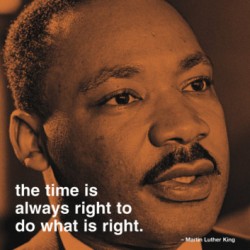
“History is the sum total of what all of us do on a daily basis,” says Shetterly. “We think of capital “H” history as being these huge figures—George Washington, Alexander Hamilton and Martin Luther King.” Even so, she explains, “you go to bed at night, you wake up the next morning, and then yesterday is history. These small actions in some ways are more important or certainly as important as the individual actions by these towering figures.”

The book and movie don’t mark the end of Shetterly’s work She continues to collect these names, hoping to eventually make the list available online. She hopes to find the many names that have been sifted out over the years and document their respective life’s work.

The few West Computers whose names have been remembered, have become nearly mythical figures—a side-effect of the few African-American names celebrated in mainstream history, Shetterly argues. She hopes her work pays tribute to these women by bringing details of their life’s work to light. “Not just mythology but the actual facts,” she says. “Because the facts are truly spectacular.”

 Image result for hidden figures nasa photos

Be inspired by activist and suffragette Mary Church Terrell


Career image

The National Museum of African American History and Culture (NMAAHC) is proud to present the next page from Our American Story, an online series for Museum supporters. Despite the variety of uncertain news in the world today, one story continues to speak of powerful strength and uplift: the story of the African American experience. This legacy speaks of everyday heroism, profound resiliency, and the binding power of the community. We offer these stories to honor and celebrate an immensely rich history and culture—and to inspire and sustain our community as we move toward the future, together.
Mary Eliza Church Terrell was a renowned educator and speaker who campaigned fearlessly for women’s suffrage and the social equality of African Americans.

Circular desk calendar owned by Mary Church Terrell

Born in Memphis, Tennessee, in 1863, the year of the Emancipation Proclamation, Mary Eliza Church was part of a changing America. She was the daughter of affluent African American parents, both of whom were previously enslaved. Her mother, Louisa Ayers Church, owned a hair salon. Her father, Robert Reed Church, was a successful businessman who would later become one of the South’s first African American millionaires.
Terrell’s parents sent her to Ohio to attend preparatory school at Antioch and later Oberlin College. There she earned her bachelor’s and master’s degrees. At a time when women were not expected to achieve academically, Terrell excelled—and committed herself to pass on what she learned. After teaching for two years at Wilberforce College, she moved to Washington, D.C. to teach high school, where she met lawyer and future judge Robert Terrell. They married in 1891.

“Most girls run away from home to marry; I ran away to teach.”

— Mary Church Terrell 

Although Mary Church Terrell’s life focused on education and progress, tragedy would spur her into activism.
In 1892, her childhood friend Thomas Moss was lynched in Memphis. Moss was the owner of People’s Grocery, a successful wholesale grocery outside the city. He, like Terrell, represented progress, which many whites at the time felt was a direct threat to their own commerce and livelihood. The gunshot-riddled bodies of Moss and two of his employees were left on a railroad track just north of Memphis.

Terrell, along with journalist Ida B. Wells, organized anti-lynching campaigns to mobilize advocates and generate awareness. Later she would protest President Theodore Roosevelt’s 1906 discharge of 167 African American soldiers for unfounded conspiracy claims in Brownsville, Texas. She wrote columns and essays espousing the importance of dignity and respect for the soldiers and demanded a fair trial. Her efforts were to no avail at the time, although an Army investigation in 1972 led to the honorable discharges of all the soldiers, only two of whom were still alive.

NACWC EMBLEM LOGO SEAL

Pin for the National Association of Colored Women’s Clubs
Terrell held firm to the idea of racial uplift—the belief that blacks would help end racial discrimination by advancing themselves through education, work, and activism. Her words “lifting as we climb” became the motto of the National Association of Colored Women (NACW), the group she co-founded in 1896.
She also would go on to serve as one of the charter members of the NAACP, founded in 1909.

Understanding the intersectionality of race and gender discrimination, she lectured, penned essays, and spoke out on behalf of the women’s suffrage movement—even picketing the Woodrow Wilson White House with members of Howard University’s Delta Sigma Theta sorority.

Terrell was an active member of the National Association of Women’s Suffrage Act (NAWSA), where she worked alongside the organization’s founder, Susan B. Anthony. Terrell was invited to deliver two speeches on the challenges faced by women, and particularly women of color in America, at the International Congress of Women in Berlin in 1904. She was the only woman of African descent invited to speak at the conference. She delivered her speeches in German, French, and English, receiving a standing ovation from the audience.

Terrell’s belief that education and activism would provide a path to equality was demonstrated by her devotion to both pursuits. A self-described “dignified agitator,” Terrell would fight, protest, and work on behalf of social progress for women of color for more than half a century.

While in her 80s, Mary Church Terrell joined efforts to end segregation in restaurants in Washington, D.C., which laid the groundwork for the 1953 court ruling that segregation in D.C. restaurants was unconstitutional. In 1954, two months after the landmark Brown v. Board of Education ruling, she passed away at her home in Highland Beach, Maryland, a Chesapeake Bay resort community for affluent African Americans founded by one of Frederick Douglass’s sons.

From her tireless efforts to pass the Nineteenth amendment 100 years ago to serving as the first black woman on the Washington, D.C. Board of Education, Terrell’s work continues to echo throughout the world today. Her commitment to change opened countless doors of opportunity for those who came after her.
Her legacy endures in the hearts and minds of those continuing the fight for a world with more educated and empowered black women. From Civil Rights leaders and feminists of the 1960s to contemporary activists and trailblazers, many have and will continue to invoke Terrell’s fighting—and dignified—spirit.
The Museum helps connect individuals with a deeper understanding of the African American story by sharing the lives of inspiring pioneers like Mary Church Terrell, who demonstrate the impact one person can make on the world. Please help the Museum continue this important work and consider joining the Museum or making a donation today.

Share this American Story

1400 Constitution Ave NW, Washington, DC 20560
(844) 750-3012 | NMAAHC.si.edu
© 2020 Smithsonian Institution
Opera glasses and case owned by Mary Church Terrell. Collection of the Smithsonian National Museum of African American History and Culture, Gift of Ray and Jean Langston in memory of Mary Church and Robert Terrell.
Gelatin silver print of Mary Church Terrell by Addison Scurlock, ca. 1910. Collection of the Smithsonian National Museum of African American History and Culture, Gift of Ray and Jean Langston in memory of Mary Church and Robert Terrell.
Service award pin for Mary Church Terrell from the National Association of Colored Women, 1900. Collection of the Smithsonian National Museum of African American History and Culture, Gift of Ray and Jean Langston in memory of Mary Church and Robert Terrell.
Circular desk calendar owned by Mary Church Terrell. Collection of the Smithsonian National Museum of African American History and Culture, Gift of Ray and Jean Langston in memory of Mary Church and Robert Terrell.
Pin for the National Association of Colored Women’s Clubs. Collection of the Smithsonian National Museum of African American History and Culture, Gift of Ray and Jean Langston in memory of Mary Church and Robert Terrell.
Unsubscribe | View in Browser

on this day 2/7


1795 – The 11th Amendment to the U.S. Constitution was ratified.

1818 – “Academician” began publication in New York City.

1877 – The first Guernsey Cattle Club was organized in New York City.

1882 – The last bareknuckle fight for the heavyweight boxing championship took place in Mississippi City.

1893 – Elisha Gray patented a machine called the telautograph. It automatically signed autographs to documents.

1913 – The Turks lost 5,000 men in a battle with the Bulgarian army in Gallipoli.

1922 – DeWitt and Lila Acheson Wallace offered 5,000 copies of “Reader’s Digest” magazine for the first time.

1931 – The American opera “Peter Ibbetson,” by Deems Taylor, premiered in New York City.

1936 – The U.S. Vice President’s flag was established by executive order.

1940 – “Pinocchio” world premiered at the Center Theatre in Manhattan.

1941 – The Tommy Dorsey Orchestra and Frank Sinatra recorded “Everything Happens to Me.”

1943 – The U.S. government announced that shoe rationing would go into effect in two days.

1944 – During World War II, the Germans launched a counteroffensive at Anzio, Italy.

1959 – The play “The Rivalry” opened in New York City.

1962 – The U.S. government banned all Cuban imports and re-export of U.S. products to Cuba from other countries.

1966 – “Crawdaddy” magazine was published by Paul Williams for the first time.

1974 – The nation of Grenada gained independence from Britain.

1976 – Darryl Sittler (Toronto Maple Leafs) set a National Hockey League (NHL) record when he scored 10 points in a game against the Boston Bruins. He scored six goals and four assists.

1977 – Russia launched Soyuz 24.

1984 – Space shuttle astronauts Bruce McCandless II and Robert L. Stewart made the first untethered space walk.

1985 – “Sports Illustrated” released its annual swimsuit edition. It was the largest regular edition in the magazine’s history at 218 pages.

1985 – “New York, New York” became the official anthem of New York City.

1986 – Haitian President-for-Life Jean-Claude Duvalier fled his country ending 28 years of family rule.

1991 – The Rev. Jean-Bertrand Aristide was sworn in as Haiti’s first democratically elected president.

1999 – NASA’s Stardust space probe was launched. The mission was to return comet dust samples from comet Wild 2. The mission was completed on January 15, 2006 when the sample return capsule returned to Earth.

2008 – The Space Shuttle Atlantis launched with the mission of delivering the Columbus science laboratory to the International Space Station.

Wa ~ Cold weather – Advisory


Thu, Feb 6, 10:00 PM PST to Fri, Feb 7, 10:00 AM PST

Alert details

What

Very cold temperatures as low as 15 to 20 degrees for Western Skagit County and the East Puget Sound Lowlands and as low as 20 to 25 degrees for the remaining areas.

Where

Western Skagit County, Bellevue and Vicinity, East Puget Sound Lowlands, Everett and Vicinity, and Seattle and Vicinity.

When

From 10 PM this evening to 10 AM PST Friday.

Impacts

Very cold temperatures can lead to hypothermia with prolonged exposure and will impact vulnerable populations such as the homeless, pets, and those without adequate access to heating.

Summary

Keep pets indoors as much as possible. Make frequent checks on older family, friends, and neighbors. Ensure portable heaters are used correctly. Do not use generators or grills inside.

Issued By

NWS Seattle WA

1820 – Formerly Enslaved people depart on a Journey to Africa


Photo Credit: Universal History Archive/Universal Images Group/Getty Images

The first organized immigration of freed enslaved people to Africa from the United States departs New York harbor on a journey to Freetown, Sierra Leone, in West Africa. The immigration was largely the work of the American Colonization Society, a U.S. organization founded in 1816 by Robert Finley to return formerly enslaved African people to Africa.

Source:

For the complete article: history.com

politics,pollution,petitions,pop culture & purses