Flood – Outlook


from Mon, Dec 16, 4:11 AM PST to Mon, Dec 16, 4:00 PM PST

Alert Details

Hydrologic Outlook issued December 16 at 4:11AM PST by NWS , Seattle WA

ESFSEW

An atmospheric river will impact the region Tuesday and Wednesday, bringing potentially significant rainfall that could drive some rivers in western Washington into flood stage.

There is still a fair amount of uncertainty regarding river flooding mid-week, but the latest rainfall forecast shows 4 to 7 inches over the Olympic Peninsula with snow levels as high as 7000 to 8000 feet.

Forecast models show large variability in the forecast, with as much as 8 inches or higher over the Olympics in less than 36 hours. The northern and central Cascades will also see heavy rainfall during this period, with up to 5 inches of liquid forecast through Wednesday.

The Skokomish River is currently forecast to enter moderate flood stage by Wednesday, and other area rivers will continue to be monitored. In addition, urban and small stream flooding will need to be monitored as well due to potential heavier rain rates Tuesday night into early Wednesday morning.

Forecast models show potential for additional precipitation entering western Washington towards the end of the week, which could cause additional river flooding impacts.

Please monitor the latest river forecasts from the National Weather Service for additional information.

© 2024 National Weather Service

The Bill of Rights added to the Constitution ~ Dec 15, 1791


The main purpose of the U.S. Bill of Rights is to define the civil liberties of American citizens. It refers to the first 10 amendments of the U.S. Constitution, and it was introduced in 1789 to guarantee the protection of the basic rights that citizens continue to enjoy. Continue Reading

The Bill of Rights was ratified in 1791, which was four years following the ratification of the Constitution. In 1803, the Supreme Court of the United States nullified the first act of Congress that had been declared as unconstitutional. More than a century would pass before the Supreme Court would be called into action to protect the rights of the individual.

The Bill of Rights was created to protect the civil liberties of American citizens and prevent the government from abusing power. The first 10 amendments were ratified as a compromise between Federalists and Antifederalists, politicians who debated the federal government’s degree of authority over state legislatures and individual citizenship rights. Continue Reading

The Bill of Rights limits the government by enumerating the rights of the people and listing the things the government cannot do. For example, the Bill of Rights states that the government cannot pass a law limiting the freedom of speech or religion. Continue Reading

ConstitutionFacts.com states that James Madison originally proposed and was the main influence in developing the Bill of Rights because some of the founding fathers argued that the U.S. Constitution … Full Answer

The idea for the Bill of Rights came from George Mason, a famous delegate to the Continental Congress from Virginia who rejected the Constitution as it was being presented because it lacked any declaration of rights at all. He helped pass the Virginia Declaration of Rights, which influenced James Madison to include many of its ideas in the first 10 amendments to the Constitution. George Mason’s protest ended up affecting the nature of the American government as the Bill of Rights limited the power of government and augmented the freedoms of the individual and the states.

Learn more about US History

Selective incorporation prevents states from making laws that infringe on the rights of U.S. citizens, as defined in the Bill of Rights. This is defined in… Full Answer >

The Ninth Amendment is part of the Bill of Rights and provides further detail into the rights of United States citizens. The Ninth Amendment was developed … Full Answer 

According to About.com, The meaning of the Ninth Amendment and one of the principal arguments against the Bill of Rights was that the government would be free to ignore rights not specifically mentioned in the Constitution … Full Answer >


resource: reference.com


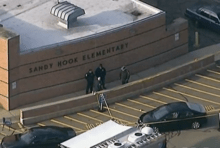
2012 – Sandy Hook Shooting


On December 14, 2012, at Sandy Hook Elementary School in Newtown, Connecticut, Adam Lanza kills 20 first graders and six school employees before turning a gun on himself. Earlier that day, he killed his mother at the home they shared.

The Sandy Hook shooting was, at the time, the second-deadliest mass shooting in the United States after the 2007 shooting at Virginia Tech, in which a gunman killed 32 students and teachers before committing suicide.

Shortly after 9:30 a.m., 20-year-old Adam Lanza shot through a plate-glass window next to Sandy Hook’s locked front entrance in order to gain access to the school. Hearing the noise, the school principal and school psychologist went to investigate and were shot and killed by Lanza, who was armed with a semiautomatic rifle, two semiautomatic pistols and multiple rounds of ammunition. Lanza also shot and wounded two other Sandy Hook staff members.

He then entered two first-grade classrooms, where he gunned down two teachers and 15 students in one room and two teachers and five students in the other room. The children Lanza murdered, 12 girls and 8 boys, were 6 and 7 years old. Twelve first-graders from the two classrooms survived.

When Lanza heard the police closing in on him, he killed himself in a classroom at approximately 9:40 a.m.

Police soon learned that sometime earlier that morning, before arriving at Sandy Hook, Lanza had shot and killed his 52-year-old mother at their home. She owned the weapons her son used in his deadly rampage.

Source: history.com Image: Wikipedia

Sandy Hook – Newtown, Connecticut


List of deaths

Killed:

  • Perpetrator’s mother:
    • Nancy Lanza, 52 (shot at home)[23]
  • School personnel:
    • Rachel D’Avino, 29, behavior therapist[24]
    • Dawn Hochsprung, 47, principal
    • Anne Marie Murphy, 52, special education teacher[25]
    • Lauren Rousseau, 30, teacher
    • Mary Sherlach, 56, school psychologist
    • Victoria Leigh Soto, 27, teacher
  • Students:
    • Charlotte Bacon, 6[26]
    • Daniel Barden, 7
    • Olivia Engel, 6
    • Josephine Gay, 7
    • Dylan Hockley, 6
    • Madeleine Hsu, 6
    • Catherine Hubbard, 6
    • Chase Kowalski, 7
    • Jesse Lewis, 6
    • Ana Márquez-Greene, 6
    • James Mattioli, 6
    • Grace McDonnell, 7
    • Emilie Parker, 6
    • Jack Pinto, 6
    • Noah Pozner, 6
    • Caroline Previdi, 6[27]
    • Jessica Rekos, 6
    • Avielle Richman, 6
    • Benjamin Wheeler, 6
    • Allison Wyatt, 6
  • Perpetrator:
    • Adam Lanza, 20 (suicide)

Wounded:

  • Natalie Hammond, 40, lead teacher
  • Deborah Pisani[28]

Sources:[29][30][31] Wikipedia

politics,pollution,petitions,pop culture & purses