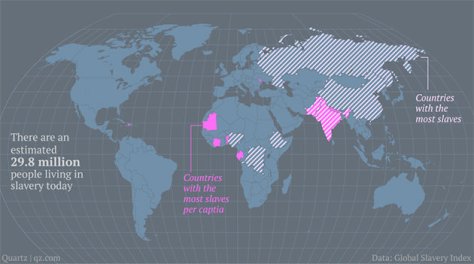
1865 – The 13th Amendment to the U.S. Constitution was ratified. The amendment abolished slavery in the U.S.


On December 6, 1865, the 13th Amendment to the U.S. Constitution, officially ending the institution of slavery, is ratified. “Neither slavery nor involuntary servitude, except as a punishment for crime whereof the party shall have been duly convicted, shall exist within the United States, or any place subject to their jurisdiction.”

1868 1st blacks on US trial jury appointed for Jefferson Davis trial


According to the web search results, the first blacks on US trial jury were appointed for the trial of Jefferson Davis, the former president of the Confederate States of America, on December 3, 1868123. This was a historic event that marked the integration of the American jury system and the recognition of black citizens’ rights and citizenship. The jury consisted of six white men and six black men, who were selected by a lottery from various counties in Virginia4The trial lasted for two weeks and resulted in Davis being found not guilty on all charges4The jury service was a rare and remarkable achievement for black activists who had been campaigning for years to abolish the all-white jury system in antebellum America5.

Posted: 23 Oct 2023

Thomas Frampton

University of Virginia School of Law

Date Written: September 5, 2023

Abstract

Supreme Court opinions involving race and the jury invariably open with the Fourteenth Amendment, the Civil Rights Act of 1875, or landmark cases like Strauder v. West Virginia (1880). Legal scholars and historians unanimously report that free people of color did not serve as jurors, in either the North or South, until 1860. In fact, this Article shows, Black men served as jurors in antebellum America decades earlier than anyone has previously realized. While instances of early Black jury service were rare, campaigns insisting upon Black citizens’ admission to the jury-box were not. From the late 1830s onward, Black activists across the country organized to abolish the all-white jury. They faced, and occasionally overcame, staunch resistance. This Article uses jury lists, court records, convention minutes, diaries, bills of sale, tax rolls, and other overlooked primary sources to recover these forgotten efforts, led by activists who understood the jury-box to be both a marker and maker of citizenship. A broader historical perspective—one that centers Black activists in the decades before the ratification of the Fourteenth Amendment in 1868—offers a new way of thinking about the relationship between race, rights, citizenship, and the jury.

Keywords: race, juries, legal history, citizenship, abolition

Suggested Citation:

Frampton, Thomas, The First Black Jurors and the Integration of the American Jury (September 5, 2023). New York University Law Review, 2024, Available at SSRN: https://ssrn.com/abstract=4562373

The First Black Jurors and the Integration of the American Jury

New York University Law Review, 2024

Source:

Gwendolyn Brooks


 American poet and educator (born June 7, 1917, TopekaKansas, U.S.—died December 3, 2000, Chicago, Illinois) American poet whose works deal with the everyday life of urban Blacks. She was the first African American poet to win the Pulitzer Prize (1950), and in 1968 she was named the poet laureate of Illinois.

Brooks graduated from Wilson Junior College in Chicago in 1936. Her early verses appeared in the Chicago Defender, a newspaper written primarily for that city’s African American community. Her first published collection, A Street in Bronzeville (1945), reveals her talent for making the ordinary life of her neighbours extraordinary. Annie Allen (1949), for which she won the Pulitzer Prize, is a loosely connected series of poems related to an African American girl’s growing up in Chicago. The same theme was used for Brooks’s novel Maud Martha (1953).

2006 – 649-day tree sit-in at the University of California, Berkley


649-day tree sit-in at the University of California, Berkeley begins

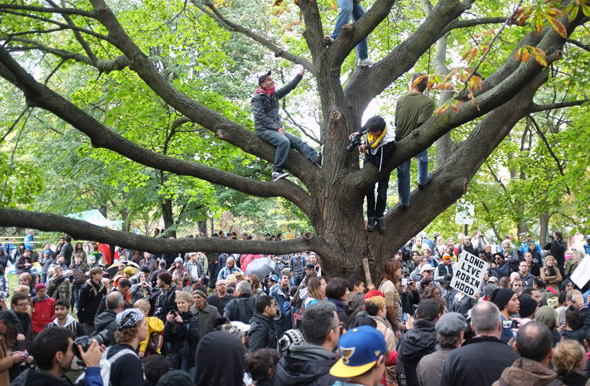
On December 2, 2006, four students at the University of California, Berkeley, inhabit the treetops of an oak grove on campus to protest the university’s plans to demolish over an acre of the forest to build a new athletic center, kicking off an epic 21-month standoff. It was one of the longest tree sit-ins in history.

Tree sit-ins are a form of civil disobedience in which protestors physically occupy a tree to prevent it from being cut down, often for long periods of time. At its peak, the Berkeley protest saw over a dozen people living on the limbs of the grove’s oak and redwood trees; volunteers and others brought them food, water and supplies.

Source: history.com

1823 – U.S. President James Monroe outlined his doctrine opposing European expansion in the Western Hemisphere.


In his December 2, 1823, address to Congress, President James Monroe articulated United States’ policy on the new political order developing in the rest of the Americas and the role of Europe in the Western Hemisphere.  

The statement, known as the Monroe Doctrine, was little noted by the Great Powers of Europe, but eventually became a longstanding tenet of U.S. foreign policy. Monroe and his Secretary of State John Quincy Adams drew upon a foundation of American diplomatic ideals such as disentanglement from European affairs and defense of neutral rights as expressed in Washington’s Farewell Address and Madison’s stated rationale for waging the War of 1812. The three main concepts of the doctrine—separate spheres of influence for the Americas and Europe, non-colonization, and non-intervention—were designed to signify a clear break between the New World and the autocratic realm of Europe. Monroe’s administration forewarned the imperial European powers against interfering in the affairs of the newly independent Latin American states or potential United States territories. While Americans generally objected to European colonies in the New World, they also desired to increase United States influence and trading ties throughout the region to their south. European mercantilism posed the greatest obstacle to economic expansion. In particular, Americans feared that Spain and France might reassert colonialism over the Latin American peoples who had just overthrown European rule. Signs that Russia was expanding its presence southward from Alaska toward the Oregon Territory were also disconcerting.
For their part, the British also had a strong interest in ensuring the demise of Spanish colonialism, with all the trade restrictions mercantilism imposed. Earlier in 1823 British Foreign Minister George Canning suggested to Americans that two nations issue a joint declaration to deter any other power from intervening in Central and South America. Secretary of State John Quincy Adams, however, vigorously opposed cooperation with Great Britain, contending that a statement of bilateral nature could limit United States expansion in the future. He also argued that the British were not committed to recognizing the Latin American republics and must have had imperial motivations themselves. …

for the complete article history.state.gov

politics,pollution,petitions,pop culture & purses