Opinions are personal beliefs or judgments, while hate speech involves expressions that demean or incite violence against individuals or groups based on characteristics like race, religion, or sexual orientation
Definitions
Opinion: An opinion is a personal belief or judgment that is not founded on certainty or proof. It can encompass a wide range of thoughts and feelings about various topics, and while opinions can be controversial or unpopular, they are generally protected under free speech laws.
Hate Speech: Hate speech refers to any form of communication that attacks or discriminates against a person or group based on attributes such as race, religion, ethnicity, sexual orientation, or gender identity. This can include derogatory language, slurs, and incitements to violence or prejudice. While hate speech is often offensive, it is not formally defined in U.S. law, and its protection under the First Amendment is complex
Legal Context
First Amendment Protections: The First Amendment of the U.S. Constitution protects a wide array of speech, including opinions that may be offensive or hateful. However, this protection is not absolute. Hate speech that incites violence or constitutes a true threat may lose its protection under the law
Distinction in Legal Terms: While opinions are generally protected, hate speech can cross legal thresholds that may lead to consequences, especially if it incites violence or constitutes harassment. Courts have established that for speech to lose constitutional protection, it must meet specific criteria, such as inciting imminent lawless action
Societal Implications
Impact of Hate Speech: Hate speech can have significant social consequences, contributing to a hostile environment for marginalized groups. It can perpetuate discrimination and violence, leading to calls for more stringent regulations against such expressions
Debate on Free Speech: The distinction between opinion and hate speech often sparks debate, particularly in academic and public settings. While some argue for the protection of all speech, others advocate for limiting hate speech to foster a more inclusive and safe environment
In summary, while opinions are a fundamental aspect of free expression, hate speech poses unique challenges that intersect with legal protections and societal values. Understanding this distinction is crucial for navigating discussions about free speech and its limits in a diverse society.
Sources: unconstitutional.net, legalclarity.org, Center for American Progress
The International Criminal Court (ICC) in The Hague prosecutes individuals for the most serious crimes under international law, as defined in the Rome Statute. These are not ordinary crimes — they are large-scale, organized violations of humanitarian law that often involve mass atrocities during armed conflict or peacetime
The Four Main Crimes the ICC Prosecutes
Genocide Acts committed with the specific intent to destroy, in whole or in part, a national, ethnic, racial, or religious group. This includes killing group members, causing serious harm, imposing measures to prevent births, or forcibly transferring children to another group l
Crimes Against Humanity Serious violations committed as part of a widespread or systematic attack against any civilian population, regardless of whether an armed conflict exists. Examples include murder, enslavement, torture, rape, apartheid, and enforced disappearances
War Crimes Grave breaches of the Geneva Conventions and other rules of armed conflict. These include:
Deliberately targeting civilians or protected persons
Using prohibited weapons
Killing or torturing prisoners of war
Forcing children under 15 into the armed forces
Destroying property without military justification
Taking hostages or unlawful detention of protected persons
Crime of Aggression The use of armed force by a state leader against another sovereign state in violation of the UN Charter. Only those in a position to control a state’s political or military decisions can be charged
When the ICC Gets Involved
The ICC can act when:
The accused is a national of a state party to the Rome Statute.
The crime occurred on the territory of a state party.
The UN Security Council refers a situation to the Court
It complements, not replaces, national courts — it only steps in when national systems are unwilling or unable to prosecute
In short: The Hague’s ICC handles the gravest crimes — genocide, crimes against humanity, war crimes, and the crime of aggression — when they meet the legal thresholds and jurisdictional requirements under the Rome Statute
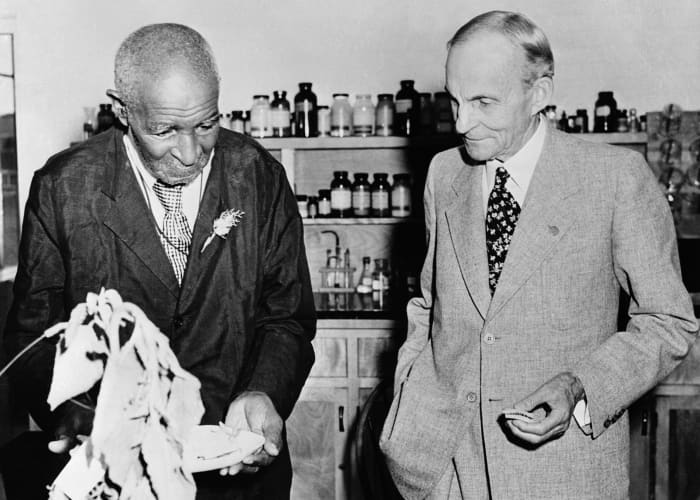
The agricultural chemist George Washington Carver, head of Alabama’s famed Tuskegee Institute, arrives in Dearborn, Michigan at the invitation of Henry Ford, founder of Ford Motor Company. Born to slave parents in Missouri during the Civil War, Carver managed to get a high …read more
Air traffic controllers in Washington, D.C., detect UFOs over the White House and US Capitol building. More appear a week later, but the government dismisses the sightings as a harmless weather phenomenon.








 Be a Seed for Change
You must be logged in to post a comment.