 1746 – The College of New Jersey was officially chartered. It later became known as Princeton University.
1797 – Andre-Jacques Garnerin made the first recorded parachute jump. He made the jump from about 3,000 feet.
1836 – Sam Houston was inaugurated as the first constitutionally elected president of the Republic of Texas. – insane!
1844 – This day is recognized as “The Great Disappointment” among those who practiced Millenarianism. The world was expected to come to an end according to the followers of William Miller.
1879 – Thomas Edison conducted his first successful experiment with a high-resistance carbon filament.
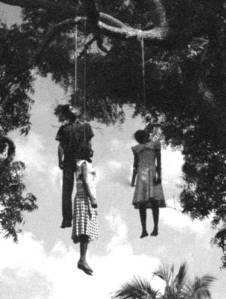
1906 – Three thousand Blacks demonstrated and rioted in Philadelphia to protest a theatrical presentation of Thomas Dixon’s The Clansman. Sixty-two Blacks reported lynched in 1906. 2 blackfacts.com
1907 – The Panic of 1907 began when depositors began withdrawing money from many New York banks.
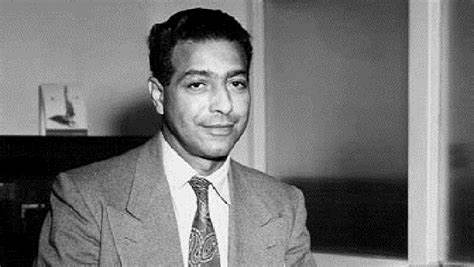
1953 – Clarence S. Green becomes the first African-American certified in neurological surgery. blackfacts.com
1954 – The Federal Republic of Germany was invited to join the North Atlantic Treaty Organization (NATO).
1955 – The first black post office open, Atlanta GA, 1955 blackfacts.com
1962 – U.S. President Kennedy went on radio and television to inform the United States about his order to send U.S.forces to blockade Cuba. The blockade was in response to the discovery of Soviet missile bases on the island.
1963 – Some 225,000 students boycotted Chicago schools in Freedom Day protest of de facto segregation. blackfacts.com
1968 – Apollo 7 splashed down in the Atlantic Ocean. The spacecraft had orbited the Earth 163 times.
1975 – Air Force Technical Sergeant Leonard Matlovich was discharged after publicly declaring his homosexuality. His tombstone reads ” “A gay Vietnam Veteran. When I was in the military they gave me a medal for killing two men and a discharge for loving one.”
1979 – The ousted Shah of Iran, Mohammad Riza Pahlavi was allowed into the U.S. for medical treatment.
1981 – The Professional Air Traffic Controllers Organization was decertified by the federal government for its strike the previous August.
1983 – At the Augusta National Golf Course in Georgia, an armed man crashed a truck through front gates and demanded to speak with U.S. President Ronald Reagan.
1986 – U.S. President Reagan signed the Tax Reform Act of 1986 into law.
1991 – The European Community and the European Free Trade Association agreed to create a free trade zone of 19 nations by the year 1993.
1995 – The 50th anniversary of the United Nations was marked by a record number of world leaders gathering.
1998 – The United Nations announced that over 2 million children had been killed in war as innocent victims since 1987.
1998 – Pakistan’s carpet weaving industry announced that they would begin to phase out child labor.
1999 – China ended its first-ever human rights conference in which it defied Western definitions of civil liberties.
1999 – The U.N. Security Council voted to send 6,000 troops to Sierra Leone to oversee a peace plan that had been signed in July.
2008 – The iTunes Music Store reached 200 million applications downloaded.
2010 – The International Space Station set the record (3641 days) for the longest continuous human occupation of space. It had been continuously inhabited since November 2, 2000.
2014 – The iPad Air 2 was released in the U.S.




You must be logged in to post a comment.