Bullying Prevention Awareness Month

October is Bullying Prevention Awareness Month – when individuals, families, schools, and communities across the nation help to raise awareness about bullying prevention.

 |
|||||||||||||||
|
|||||||||||||||
The Clean Water Act (CWA) establishes the basic structure for regulating discharges of pollutants into the waters of the United States and regulating quality standards for surface waters. The basis of the CWA was enacted in 1948 and was called the Federal Water Pollution Control Act, but the Act was significantly reorganized and expanded in 1972. “Clean Water Act” became the Act’s common name with amendments in 1972.
Under the CWA, EPA has implemented pollution control programs such as setting wastewater standards for industry. We have also set water quality standards for all contaminants in surface waters.
The CWA made it unlawful to discharge any pollutant from a point source into navigable waters, unless a permit was obtained. EPA’s National Pollutant Discharge Elimination System (NPDES) permit program controls discharges. Point sources are discrete conveyances such as pipes or man-made ditches. Individual homes that are connected to a municipal system, use a septic system, or do not have a surface discharge do not need an NPDES permit; however, industrial, municipal, and other facilities must obtain permits if their discharges go directly to surface waters.
The Office of Water (OW) ensures drinking water is safe, and restores and maintains oceans, watersheds, and their aquatic ecosystems to protect human health, support economic and recreational activities, and provide healthy habitat for fish, plants, and wildlife.
1898 U.S. takes control of Puerto Rico Only one year after Spain granted Puerto Rico self-rule, American troops raise the U.S. flag over the Caribbean nation, formalizing U.S. authority over the island’s one million inhabitants. In July 1898, near the end of the Spanish-American War, U.S. forces launched an invasion …read more
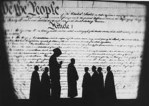
Getting an education isn’t just about books and grades – we’re also learning how to participate fully in the life of this nation. (We’re tomorrow’s leaders after all!)
But in order to really participate, we need to know our rights – otherwise, we may lose them. The highest law in our land is the U.S. Constitution, which has some amendments, known as the Bill of Rights. The Bill of Rights guarantees that the government can never deprive people in the U.S. of certain fundamental rights including the right to freedom of religion and to free speech and the due process of law. Many federal and state laws give us additional rights, too.
The Bill of Rights applies to young people as well as adults. And what I’m going to do right here is tell you about EQUAL TREATMENT.
for their complete article aclu.org


You must be logged in to post a comment.