


1863 Slavery abolished in Suriname and Dutch Antilles
On July 1, 1863, the Netherlands abolished slavery in Suriname and the Netherlands Antilles. In the Netherlands, the impression is often that slavery is an American and British concept, a period when both nations traded in, and transported shiploads of people from Africa to the American continent.
The fact of the matter is that the Netherlands also has several centuries of slavery history which Dutch teachers are often scared of teaching their students, white Dutch folks are very uncomfortable to talk about, and the chapter in history is almost completely ignored to date by the Dutch government.
For the complete article the url is below … it was definitely a good read
dutchreview.com
Share this:

July 1 Caribbean Day !!!

For 24 hours, International Reggae Day (IRD) Festival – a global media festival – will celebrate the best of Jamaica’s creativity and contributions worldwide.
The annual July 1 event will claim major cities from the hub of Kingston, Jamaica to London to New York.
According to a press release, IRD was designed “as an annual celebration to reinforce Kingston, Jamaica as the culturally authentic home of the global phenomenon known as Reggae music.”
Showcasing Reggae’s cultural contributions through media, technology and lifestyle events across the globe, various parties, art exhibits and more will pop up on July 1
. ~ caribbeanlifenews.com
For the complete article and events planned go to the address above

Share this:

1971 – The 26th Amendment to the U.S. Constitution was ratified when Ohio became the 38th state to approve it. The amendment lowered the minimum voting age to 18.

26TH AMENDMENT
From its beginnings in 1787, the U.S. Constitution has provided a powerful framework for the workings of the federal government. The purpose of Amendments to the Constitution is generally due to the changing nature of the country. Amendments can be proposed by anyone, but there is a long, difficult process from proposal to actual ratification. The Bill of Rights safeguards individual freedoms in the U.S. These were ratified in 1791. After these 10, the next Amendments dealt with issues such as slavery, voting rights, Presidential term limits, and prohibition. Then, on March 23, 1971, Congress passed the 26th Amendment, and it was ratified on July 1, 1971. This Amendment also dealt with voting rights. It lowered the voting age from 21 to 18.
The 26th Amendment Today
At present time, the states Florida, Kentucky, Mississippi, Nevada, New Mexico, North Dakota, South Dakota, and Utah have not ratified this amendment. Although the end of the Vietnam War era saw the number of young voters winding down, this number increased significantly during the 2004 elections, and rose again in 2008. The same young people who are old enough to be drafted are old enough to vote today.
totallyhistory.com
The Twenty-Sixth Amendment provides, “The right of citizens of the United States, who are 18 years of age or older, to vote, shall not be denied or abridged by the United States or any state on account of age.” It prohibits states from discriminating among voters based on age, for people who are at least 18 years old, and grants Congress power to “enforce” that prohibition through “appropriate legislation.” The Twenty-Sixth Amendment is the last in a series of amendments enacted over more than a century expanding constitutional protection for voting rights. Like many other amendments, it was enacted as a direct repudiation of a U.S. Supreme Court ruling.
From its beginnings in 1787, the U.S. Constitution has provided a powerful framework for the workings of the federal government. The purpose of Amendments to the Constitution is generally due to the changing nature of the country. Amendments can be proposed by anyone, but there is a long, difficult process from proposal to actual ratification. The Bill of Rights safeguards individual freedoms in the U.S. These were ratified in 1791. After these 10, the next Amendments dealt with issues such as slavery, voting rights, Presidential term limits, and prohibition. Then, on March 23, 1971, Congress passed the 26th Amendment, and it was ratified on July 1, 1971. This Amendment also dealt with voting rights. It lowered the voting age from 21 to 18.
Right to Vote at Age 18
Passed by Congress March 23, 1971. Ratified July 1, 1971. The 26th Amendment changed a portion of the 14th Amendment
Section 1
The right of citizens of the United States, who are eighteen years of age or older, to vote shall not be denied or abridged by the United States or by any State on account of age.
Section 2
The Congress shall have the power to enforce this article by appropriate legislation
constitutioncenter.org
Share this:

Martin Luther King Jr., Why We Can’t Wait
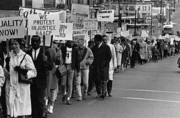
“Time itself is neutral; it can be used either destructively or constructively. More and more I feel that the people of ill will have used time much more effectively than have the people of good will. We will have to repent in this generation not merely for the hateful words and actions of the bad people but for the appalling silence of the good people. Human progress never rolls in on wheels of inevitability; it comes through the tireless efforts of men willing to work to be co-workers with God, and without this hard work, time itself becomes an ally of the forces of social stagnation. We must use time creatively, in the knowledge that the time is always ripe to do right.”
― Martin Luther King Jr., Why We Can’t Wait
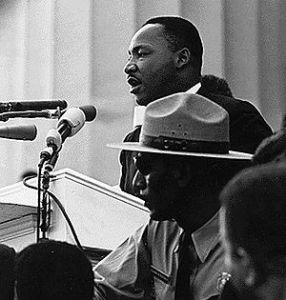
“The conservatives who say, “Let us not move so fast,” and the extremists who say, “Let us go out and whip the world ,” would tell you that they are as far apart as the poles. But there is a striking parallel: They accomplish nothing; for they do not reach the people who have a crying need to be free.”
― Martin Luther King Jr., Why We Can’t Wait
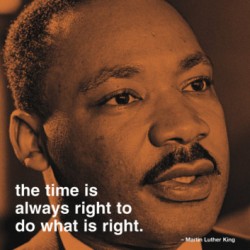
“Even today there still exists in the South–and in certain areas of the North–the license that our society allows to unjust officials who implement their authority in the name of justice to practice injustice against minorities. Where, in the days of slavery, social license and custom placed the unbridled power of the whip in the hands of overseers and masters, today–especially in the southern half of the nation–armies of officials are clothed in uniform, invested with authority, armed with the instruments of violence and death and conditioned to believe that they can intimidate, main or kill Negroes with the same recklessness that once motivated the slaveowner. If one doubts this conclusion, let him search the records and find how rarely in any southern state a police officer has been punished for abusing a Negro.”
― Martin Luther King Jr., Why We Can’t Wait


You must be logged in to post a comment.