
Get tips on how to safely store, thaw, and roast a turkey.
Here are a few key tips:
Avoid Fresh Pre-Stuffed Turkeys – Don’t buy fresh pre-stuffed turkeys because harmful bacteria in the stuffing can quickly multiply. If you buy a frozen pre-stuffed turkey, look for a USDA or state mark of inspection. Frozen pre-stuffed turkeys should not be thawed before cooking.
Thaw Frozen Turkey – There are 3 ways to safely thaw a frozen turkey: in the refrigerator, in cold water, or in the microwave. Look at the thawing chart, based on the size of the turkey.
Clean Up – Use soap and water to wash hands, utensils, counters, sinks, and anything that comes in contact with raw turkey and its juices.
Cook to 165°F – Cook your turkey to a minimum internal temperature of 165°F. Look at timetables for roasting a turkey in a 325°F oven, based on the size of the turkey and whether or not it’s stuffed.
Discard After 2 Hours – After you’ve enjoyed your Thanksgiving meal, discard any turkey, stuffing, or gravy left at room temperature for more than 2 hours. Or, if room temperature is above 90°F, discard food after 1 hour.

1998 – A U.S. federal judge rejected a Virginia county’s effort to block pornography on library computer calling the attempt unconstitutional.


On Nov. 18,1993 – The U.S. House of Representatives joined the U.S. Senate in approving legislation aimed at protecting abortion facilities, staff and patients.

In 1993, however, Representative Barbara Boxer offered a proposal allowing such abortions in the case of rape and incest and, in the first pro-choice victory in many years in Congress, the proposal passed and in subsequent years those additional exceptions were incorporated in the Hyde Amendment. At this point, this measure has not been challenged in years.
Share this:

(1832) CONSTITUTION OF THE FEMALE ANTI SLAVERY SOCIETY OF SALEM
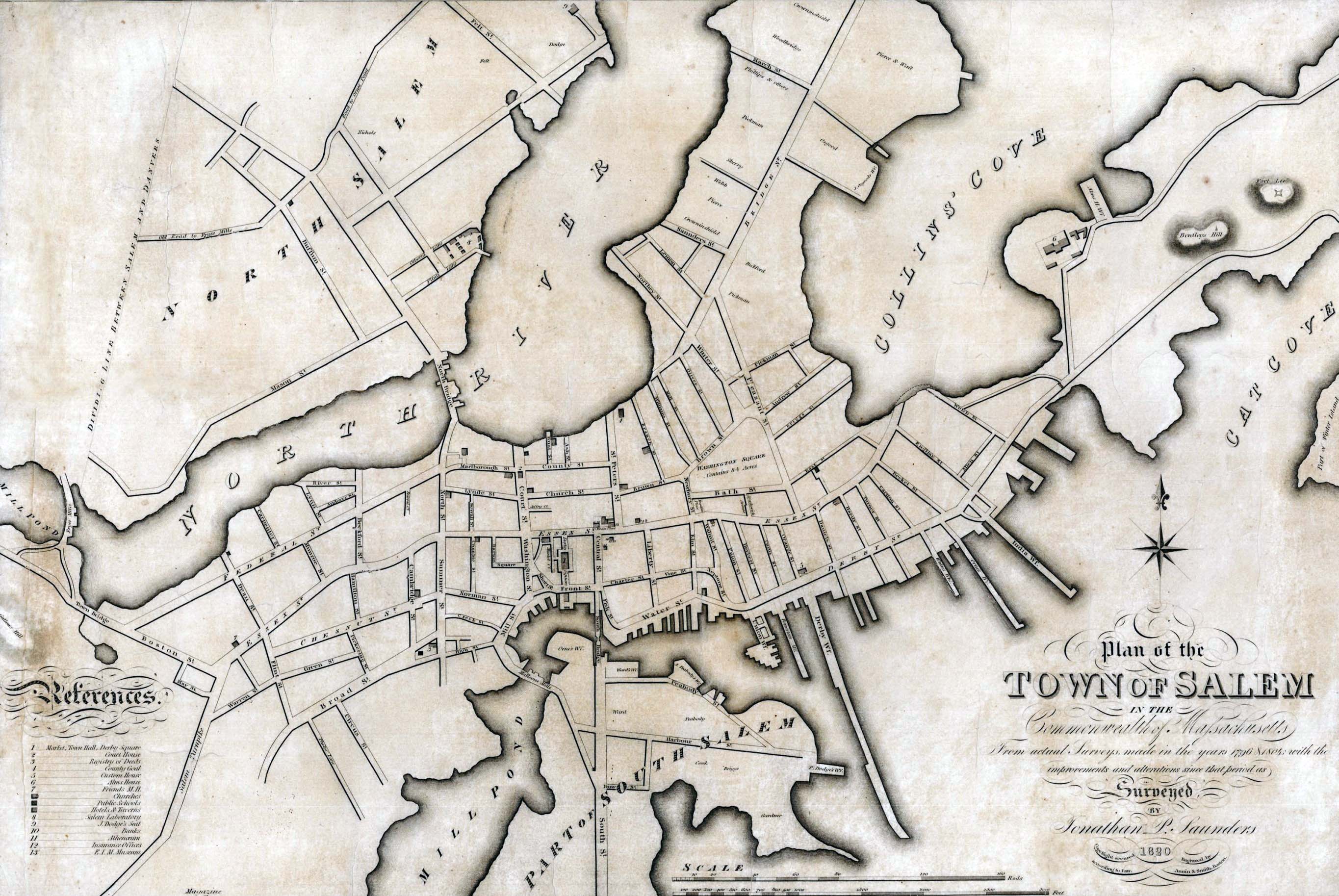
We the undersigned, females of color, of the Commonwealth of Massachusetts, being duly convinced of the importance of union and morality, have associated ourselves together for our natural improvement, and to promote the welfare of our color, as far as is consistent with the means of this Society; therefore we adopt the following resolutions.
Resolved, that as we believe the Boston Liberator to be the means of enlightening the minds of many, in regard to the ungenerous scheme of African colonization, and also removing the monster prejudice from the minds of many, in regard to the free people of color, by representing things in their true light, we are determined to support it and all anti-slavery publications.
Resolved, that this Society be supported by voluntary contributions, a part to be appropriated for the purchasing of books, etc.: the other to be reserved until a significant sum be accumulated, which shall then be deposited in a bank for the relief of the needy
Resolved, that the meetings of this society shall commence with prayer and singing. Any member who wishes to speak is allowed the privilege: when any member speaks, there shall be no interruption.
Resolved, that this Society shall be governed by a President, Vice President, Corresponding Secretary, Recording Secretary, Treasurer, and Librarian who are hereafter to be instructed in the duties of their offices.
Resolved that persons not conforming to the rules of the Society shall be expelled, by receiving a note or card bearing the names of the President and Vice President, and signed by the Corresponding Secretary.
Mary A. Battys, President
E. A. Drew, Vice President
Charlotte Bell, Corresponding Secretary
Hannah B. Fowler, Recording Secretary
Eleanor C. Harvey, Treasurer
Dorothy C. Battys, Librarian
blackfacts.com
Share this:

Separation of Powers ~ Constitution

Based on their experiences, the framers shied away from giving any branch of the new government too much power.
The separation of powers provides a system of shared power known as Checks and Balances.
Three branches are created in the Constitution.
The United States Constitution is deliberately inefficient.
The Separation of Powers devised by the framers of the Constitution was designed to do one primary thing: to prevent the majority from ruling with an iron fist. Based on their experience, the framers shied away from giving any branch of the new government too much power. The separation of powers provides a system of shared power known as Checks and Balances.
Three branches are created in the Constitution. The Legislative, composed of the House and Senate, is set up in Article 1.
The Executive, composed of the President, Vice-President, and the Departments, is set up in Article 2.
The Judicial, composed of the federal courts and the Supreme Court, is set up in Article 3.
Each of these branches has certain powers, and each of these powers is limited, or checked, by another branch.
For example, the President appoints judges and departmental secretaries. But these appointments must be approved by the Senate. The Congress can pass a law, but the President can veto it. The Supreme Court can rule a law to be unconstitutional, but the Congress, with the States, can amend the Constitution.
All of these checks and balances, however, are inefficient. But that’s by design rather than by accident. By forcing the various branches to be accountable to the others, no one branch can usurp enough power to become dominant.
The following are the powers of the Executive: veto power over all bills; appointment of judges and other officials; makes treaties; ensures all laws are carried out; commander in chief of the military; pardon power. The checks can be found on the Checks and Balances Page.
The following are the powers of the Legislature: Passes all federal laws; establishes all lower federal courts; can override a Presidential veto; can impeach the President. The checks can be found on the Checks and Balances Page.
The following are the powers of the Judiciary: the power to try federal cases and interpret the laws of the nation in those cases; the power to declare any law or executive act unconstitutional. The checks can be found on the Checks and Balances Page.
Historical Examples
Historically, the concept of Separation of Powers dates back as far as ancient Greece. The concepts were refined by contemporaries of the Framers, and those refinements influenced the establishment of the three branches in the Constitution.
Aristotle favored a mixed government composed of monarchy, aristocracy, and democracy, seeing none as ideal, but a mix of the three useful by combining the best aspects of each. In his 1656 Oceana, James Harrington brought these ideas up-to-date and proposed systems based on the separation of power. John Locke, in his 1690 Civil Government, second treatise, separated the powers into an executive and a legislature. Montesquieu’s 1748 Spirit of the Laws expanded on Locke, adding a judiciary. The framers of the Constitution took all of these ideas and converted the theories into practical applications.
When discussing Separation of Power, is it helpful to contrast the American System to the governments of other nations. This list below is far from a representative sample of nations or systems. The United States, Britain, France, Canada, and Mexico are actually more similar than they are different, especially when the whole range of nations is taken into account. However, sometimes the smaller differences between similar systems can be interesting and illustrative. It is left to the reader to conduct studies of more disparate systems.
Conclusions
Is the American system superior to any of these, or to any other, system of government? That depends on where you sit. The French and the British might scoff at the fact that our head of state, the President, has no power to make laws. They might cringe at the thought that judges can render the will of the people, in the form of a duly passed law, null and void. Canadians might think that state powers ought to be enumerated; Mexicans might marvel at the longevity of some career American politicians.
Americans might look with amusement at the institution of the British monarchy, and its continued hold, if only on paper, on Canada. Americans might cringe at the British thought of majority rule with no written constitution to be used as a guide or rule book. We might worry that the French Presidency has the potential to turn tyrannical by the misuse of emergency powers. We might worry that a Mexican judiciary, without lifetime tenure or a solid stare decisis system might lead to incoherent judicial policy.
But recall that each of these nations, and the hundred others in this world, have political and social traditions that sometimes date back a thousand years. Despite what Americans might think are odd institutions and traditions in France, Britain, Canada, Mexico, and elsewhere, these are all prosperous nations. The systems work in the context of each nation, even if the details could not work in some others.
Primary sources for this topic page are Comparative Politics by Gregory Mahler (Schenkman Publishing, 1983) and Comparative Politics by Gregory Mahler (Prentice Hall, 2000). Individual pages from Wikipedia and Canada in the Making were also helpful in keeping this page up to date.


You must be logged in to post a comment.