2007 – The Virginia General Assembly passed a resolution expressing “profound regret” for the state’s role in slavery.


Meeting on the grounds of the former Confederate Capitol, the Virginia General Assembly voted unanimously Saturday to express “profound regret” for the state’s role in slavery.

Sponsors of the resolution say they know of no other state that has apologized for slavery, although Missouri lawmakers are considering such a measure. The resolution does not carry the weight of law but sends an important symbolic message, supporters said.
“This session will be remembered for a lot of things, but 20 years hence I suspect one of those things will be the fact that we came together and passed this resolution,” said Delegate A. Donald McEachin, a Democrat who sponsored it in the House of Delegates.

The resolution passed the House 96-0 and cleared the 40-member Senate on a unanimous voice vote. It does not require Gov. Timothy M. Kaine’s approval.
The measure also expressed regret for “the exploitation of Native Americans.”
The resolution was introduced as Virginia begins its celebration of the 400th anniversary of Jamestown, where the first Africans arrived in 1619. Richmond, home to a popular boulevard lined with statues of Confederate heroes, later became another point of arrival for Africans and a slave-trade hub.
The resolution says government-sanctioned slavery “ranks as the most horrendous of all depredations of human rights and violations of our founding ideals in our nation’s history, and the abolition of slavery was followed by systematic discrimination, enforced segregation, and other insidious institutions and practices toward Americans of African descent that were rooted in racism, racial bias, and racial misunderstanding.”

For more … cbsnews.com

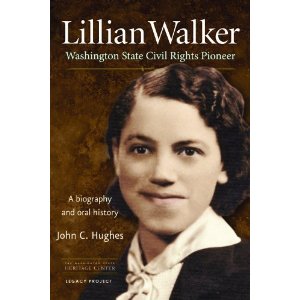
In the Library … Lillian Walker , by John C. Hughes


OLYMPIA…Bremerton civil rights heroine Lillian Walker

A book called “Lillian Walker, Washington Civil Rights Pioneer,” written by John C. Hughes, an author and interviewer with The Legacy Project, an oral history program established by the Office of Secretary of State in 2008. The book is published by the Washington State Heritage Center and printed by Gorham Printing.Joyce.

“The YWCA’s goal is to make Mrs. Walker’s inspirational story available to all school and public libraries in the nation as an example of a young person who not only had the courage to stand up for what is right, but also to continue to stay involved in her community to make it better over a 70-year time period,” Jackson said.

Click here http://www.sos.wa.gov/legacyproject/oralhistories/lillianwalker/ to read The Legacy Project’s oral history on Lillian Walker based on sit-down interviews, as well as photos and other materials.

Lillian Walker helped found the Bremerton branch of the NAACP in 1943 and went on to serve as state NAACP secretary. She was conducting sit-ins and filing civil rights lawsuits when Martin Luther King was in junior high school.

Mrs. Walker and her late husband, James, arrived in the Navy Yard city of Bremerton in 1941 together with thousands of other African–American wartime workers who thought they had left racism behind in the South and industrialized cities of Midwest and East. But many Kitsap County businesses, including cafes, taverns, drug stores and barber shops, displayed signs saying, “We Cater to White Trade Only.” In a landmark case, the Walkers took a soda fountain owner to court and won.

Mrs. Walker is a charter member of the YWCA of Kitsap County, former chairman of the Kitsap County Regional Library Board, a 69-year member of Ebenezer African Methodist Episcopal Church, and a founder and former president of Church Women United in Bremerton.

To learn more about The Legacy Project, go to its web site at http://www.sos.wa.gov/heritage/LegacyProject/default.aspx.

politics,pollution,petitions,pop culture & purses