
 |
|||||||||||||||||
|
Victory in NYC!
|
|||||||||||||||||
|






on this day 1963, Some 225,000 students boycotted Chicago schools in Freedom Day protest of de facto segregation.
Civil rights issues were on many Americans’ minds in 1963. The growing movement was hard to ignore, even if you didn’t participate. Activists protested racial segregation nationwide, and protests sometimes turned violent.
In the spring, youth in Birmingham, Alabama, demonstrated against segregation in their city. In late summer, the focus shifted to Washington, DC, when 250,000 Americans marched for jobs and freedom. By fall, the movement had come north to Chicago.


Segregation Is Not Just a Southern Problem
As a student in Chicago in 1963, you couldn’t choose where to go to public school. You had to attend the one in your neighborhood. Since the city’s neighborhoods were either black or white so were its schools. Public schools in black neighborhoods were often outdated and always overcrowded. Although Superintendent Ben Willis and the Chicago Board of Education tried to improve these conditions, they resisted integration.

Marching for Change
On October 22, 1963, a coalition of civil rights groups staged Freedom Day, a mass boycott and demonstration against segregated schools and inadequate resources for black students. Almost half of Chicago’s public school students skipped class, leaving many schools on the South and West Sides virtually empty.
The climax of Freedom Day was the march to the downtown office of the Chicago Board of Education. Thousands took to the streets, carrying signs that voiced their frustrations. Many targeted Superintendent Ben Willis, comparing him to segregationist George Wallace, the governor of Alabama. Police met the nearly 10,000 protestors and prevented them from entering the Chicago Board of Education building.
The protest ignited other demonstrations, each demanding an end to segregation in Chicago. Change occurred slowly, but this activism led to increasing support for integration and revealed that racial segregation extended beyond the south.
Share this:

April 10, 2015 ~ Rep. Frederica Wilson ~ Honoring the FBI …building

Let’s build a fair democracy ~ Organizing for Action


“I’m definitely going to need taking care of in my retirement, just like everyone else”
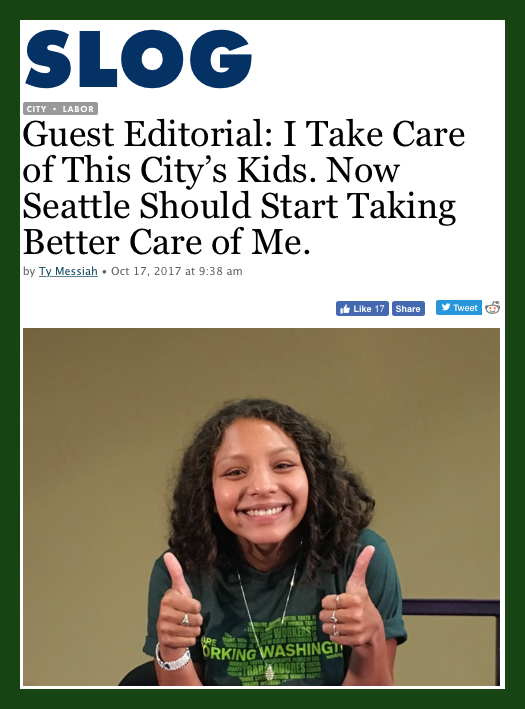
“I’ve been working as a nanny in Seattle for about two years. I enjoy being a nanny because I enjoy working with children and becoming a part of a family outside of my own — it can be demanding at times but it’s never boring. Unfortunately, the job doesn’t come with any retirement benefits.
But I’m definitely going to need taking care of in retirement, just like everyone else. That’s why I’m organizing with my fellow nannies for higher standards and better benefits in our industry…”
— Ty Messiah, a leader with the Seattle Domestic Workers Alliance
Dear Friends,
Have you ever worked as a nanny or other type of domestic worker? Ever hired one? Then we want to hear from you! Check out what Seattle nanny Ty Messiah had to say in The Stranger about why she’s organizing with her fellow nannies and other domestic workers for higher standards and better benefits in the industry, and then let us know what you think.
Thanks!
Working Washington
workingwa.org


You must be logged in to post a comment.