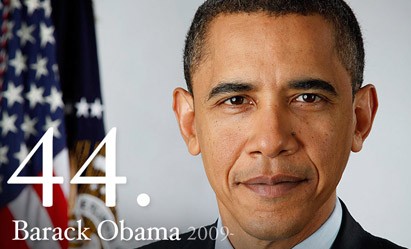
“I’ve reached my limit. This may bring my Presidency down, but I will not yield on this.” – President Obama to Eric Cantor and Congressional Republicans
in a closed-door meeting at the White House.
President Obama has had enough of Republicans’ childish games.
Despite weeks of negotiations, Republicans are still holding our economy hostage with their ridiculous demands.
The Union of Concerned Scientists is proud to unveil the 2011 Hybrid Scorecard. More automakers are delivering real environmental benefits at good value, yet others continue to try and use the “hybrid halo” to peddle small benefits, bigger, dirtier engines, and lots of unnecessary bells and whistles. To find out how they stack up, check out the fully updated Hybrid Scorecard homepage.
Hybrid technology stands poised to play an important role in transforming vehicles in America. But only strong clean car standards will push the automakers to produce more of the hybrids that will rate high on our scorecard for environmental impact, efficiency, and value. The vehicles occupying the top of our scorecard prove such an expansion CAN be done. Strong clean car standards ensure that it WILL be done.
The Obama administration is deciding right now whether to set clean car standards as high as 60 miles per gallon (mpg) through 2025. That number matters—for our wallets and for our environment. And right now, we need big numbers of people telling the White House to deliver for U.S. consumers.
You and your fellow UCS supporters have taken public action, engaging the Department of Transportation on their blog and commenting on President Obama’s weekly address on YouTube—now it’s time to go right to the source.
We need you, and as many of your friends as you can muster, to send emails straight to President Obama telling him you want the kind of cars a 60 mpg standard can deliver.
You know what? I think they’re doing a terrible job. Now it’s time for us, the American people, to come up with our own vision.
So today we’re launching a new effort. And we need your help.
Our goal is to help create a “Contract for the American Dream“—a people-powered plan for creating an economy that works for ALL of us.
When it is completed, this document will be very special. For one thing: thousands of us will have created it TOGETHER, as a community of friends and neighbors.
You are an important part of this community, and you have a key role to play in this effort:helping to choose the best ideas for fixing our economy.
It won’t take long, and you don’t need to be an expert. Just visit our new site and rate which ideas you think will make a real difference. We have some great ideas from progressive leaders. And you can add your own, too. No idea is too big or too small, too tame or too out there. We need your brain engaged on this.
To help get started, former Labor SecretaryRobert Reich made a short video about how we can invest in creating more good jobs.
Check it out, then help rate some proposals!
We’re building this Contract with a deep belief that folks like us—all across America—have enough wisdom and common sense to come up with workable solutions to our nation’s problems. By putting our heads together, and combining our best thinking on a national basis, we believe we can craft a plan that unites our struggles for economic fairness and opportunity.
The key to this idea working is simple: we need as many people as possible to participate. We need you to submit ideas and to give feedback. The more people who join in to help craft the Contract, the better it’s going to be.
This week we’re going to focus on four areas. We are starting today with good jobs. Over the coming days, we’ll look for solutions to problems in other areas—from education, to labor rights, to taxes.
Then, on July 16 and 17, thousands of Americans are going to gather in living rooms, community centers, and church basements across the country. In just ten days, people will discuss and help sort the top ideas we have generated together. Between now and then, it’s up to all of us to feed the very best, most creative, most inspiring ideas into the conversations.
Can you help right now—by rating ideas and submitting your own?
When your car breaks down in a ditch and you need it to get to work, what do you do?
A. Fix it, even if you have to responsibly take out a loan—and work harder over time to pay off the debt, even if it means taking a second job.
B. Stay in the ditch, throw a tantrum and default on your mortgage.
The economy still is reverberating from the deepest financial crisis since the Great Depression. But rather than work to fix our economy, congressional Republicans are willing to keep it in a ditch.
Two leading Republicans—Rep. Eric Cantor (R-Va.) and Sen. Jon Kyl (R-Ariz.)—recently left budget negotiations and are threatening to force default on our national debt if they don’t get their way.
When our economy’s broken, we need leaders who will fix it—not politicians who throw temper tantrums when millionaires and billionaires are asked to pay their fair share. Programs like Medicare, Medicaid and Social Security are not just lifelines for working people and poor families—they’re all that’s stopping our economy from falling off a cliff again.
With businesses not hiring and wages flat, every dollar in cuts will hurt the economy—and cuts that hurt middle-class and poor Americans will hurt the economy most. Some jaded Republican politicians are willing to let that happen. They figure that if the economy tanks, it’ll cost Barack Obama the 2012 election—and that’s all they care about.
To fix our economy, we can and should be building up the American middle class—not tearing it down. We need to educate our children, build a clean energy future and invest in 21st century American infrastructure that makes us competitive in the world. It’s time to act like the wealthy, compassionate, imaginative country we are—not let hypocritical politicians turn us into an impoverished nation.
Some congressional Republicans say they’ll accept a temporary default on our national debt to get the cuts they demand. But it’s a big lie. A temporary default would hurt Wall Street and Big Banks more than it would hurt working folks. And Wall Street controls enough of our politics these days that it will never happen.
The reality is, a deal will have to be reached soon to keep us from defaulting on our national debt—and if President Obama and congressional Democrats stand strong, that deal doesn’t have to hurt working families.
Vice President Biden said, “We’re never going to get this done, we’re never going to solve our debt problem if we ask only those who are struggling in this economy to bear the burden and let the most fortunate among us off the hook.” We agree.
P.S. The ”Robin Hood in Reverse” budget ideas proposed by congressional Republicans are shocking:
Congressional Republicans want to end Medicare as we know it and put Americans at the mercy of private insurance companies. Congressional Republicans voted for a radical budget that would end Medicare and replace it with underfunded vouchers for private insurance. It would cause a typical 65-year-old to spend $6,359 more per year out of pocket for health care in 2022.
Congressional Republicans want hundreds of billions in cuts to Medicaid. These cuts would hurt millions of children and seniors in nursing homes. Medicaid is health care of last resort. It’s for poor kids and our most vulnerable senior citizens. It saves the lives of countless children each year and keeps senior citizens in quality nursing homes. According to Families USA, “Every federal Medicaid dollar that flows into a state stimulates business activity and generates jobs.” Cutting Medicaid will kill jobs—and there are way too few private-sector jobs to fill in the gap.
Congressional Republicans want to rob the Social Security Trust Fund. Social Security has a $2.6 trillion surplus—and will pay full benefits through 2037 if we just leave it alone. Even after that, it will pay 78 percent of benefits. It’s completely separate from the federal budget. We have time to make responsible fixes to shore up Social Security in the long term, separate from the immediate budget issues.
Tell President Obama and congressional Democrats: Don’t cut Medicare, Medicaid or Social Security. Make millionaires and billionaires pay their fair share.
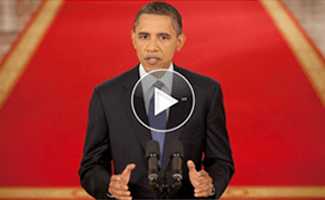
If you missed it , you should take a few minutes to watch President Obama‘s address to the nation about our policy in Afghanistan:
The President’s address marks a major turning point in a nearly decade-long conflict. He announced his plan to start withdrawing our troops from Afghanistan next month, fulfilling a promise he made a year and a half ago to begin the drawdown this summer.
To put it simply: when this president took office, there were 180,000 troops in Iraq and Afghanistan. Now, the combat mission in Iraq has ended, Afghanistan will be fully responsible for its own security by 2014, and there will be fewer than 100,000 American troops in the two countries by the end of this year.
As President Obama decisively concludes two long-running wars, he is refocusing our foreign policy to more effectively address the threats we face and strengthen America‘s leadership in the world as we do.
I’m writing to you because this transformation has already begun to reshape the policy debate — foreign and domestic — in the 2012 election. As the President said last night: “It is time to focus on nation building here at home.”
The outcome of this debate will have consequences for all of us, so it’s important that you understand the policy and help inform the conversation.
You can read the President’s remarks below, or watch the address on the White House website here:
Jim Messina
Campaign Manager
Obama for America
———————-
FULL REMARKS BY THE PRESIDENT ON THE WAY FORWARD IN AFGHANISTAN
June 22, 2011
8:01 P.M. EDT
THE PRESIDENT: Good evening. Nearly 10 years ago, America suffered the worst attack on our shores since Pearl Harbor. This mass murder was planned by Osama bin Laden and his al Qaeda network in Afghanistan, and signaled a new threat to our security — one in which the targets were no longer soldiers on a battlefield, but innocent men, women and children going about their daily lives.
In the days that followed, our nation was united as we struck at al Qaeda and routed the Taliban in Afghanistan. Then, our focus shifted. A second war was launched in Iraq, and we spent enormous blood and treasure to support a new government there. By the time I took office, the war in Afghanistan had entered its seventh year. But al Qaeda’s leaders had escaped into Pakistan and were plotting new attacks, while the Taliban had regrouped and gone on the offensive. Without a new strategy and decisive action, our military commanders warned that we could face a resurgent al Qaeda and a Taliban taking over large parts of Afghanistan.
For this reason, in one of the most difficult decisions that I’ve made as President, I ordered an additional 30,000 American troops into Afghanistan. When I announced this surge at West Point, we set clear objectives: to refocus on al Qaeda, to reverse the Taliban’s momentum, and train Afghan security forces to defend their own country. I also made it clear that our commitment would not be open-ended, and that we would begin to draw down our forces this July.
Tonight, I can tell you that we are fulfilling that commitment. Thanks to our extraordinary men and women in uniform, our civilian personnel, and our many coalition partners, we are meeting our goals. As a result, starting next month, we will be able to remove 10,000 of our troops from Afghanistan by the end of this year, and we will bring home a total of 33,000 troops by next summer, fully recovering the surge I announced at West Point. After this initial reduction, our troops will continue coming home at a steady pace as Afghan security forces move into the lead. Our mission will change from combat to support. By 2014, this process of transition will be complete, and the Afghan people will be responsible for their own security.
We’re starting this drawdown from a position of strength. Al Qaeda is under more pressure than at any time since 9/11. Together with the Pakistanis, we have taken out more than half of al Qaeda’s leadership. And thanks to our intelligence professionals and Special Forces, we killed Osama bin Laden, the only leader that al Qaeda had ever known. This was a victory for all who have served since 9/11. One soldier summed it up well. “The message,” he said, “is we don’t forget. You will be held accountable, no matter how long it takes.”
The information that we recovered from bin Laden’s compound shows al Qaeda under enormous strain. Bin Laden expressed concern that al Qaeda had been unable to effectively replace senior terrorists that had been killed, and that al Qaeda has failed in its effort to portray America as a nation at war with Islam — thereby draining more widespread support. Al Qaeda remains dangerous, and we must be vigilant against attacks. But we have put al Qaeda on a path to defeat, and we will not relent until the job is done.
In Afghanistan, we’ve inflicted serious losses on the Taliban and taken a number of its strongholds. Along with our surge, our allies also increased their commitments, which helped stabilize more of the country. Afghan security forces have grown by over 100,000 troops, and in some provinces and municipalities we’ve already begun to transition responsibility for security to the Afghan people. In the face of violence and intimidation, Afghans are fighting and dying for their country, establishing local police forces, opening markets and schools, creating new opportunities for women and girls, and trying to turn the page on decades of war.
Of course, huge challenges remain. This is the beginning — but not the end — of our effort to wind down this war. We’ll have to do the hard work of keeping the gains that we’ve made, while we draw down our forces and transition responsibility for security to the Afghan government. And next May, in Chicago, we will host a summit with our NATO allies and partners to shape the next phase of this transition.
We do know that peace cannot come to a land that has known so much war without a political settlement. So as we strengthen the Afghan government and security forces, America will join initiatives that reconcile the Afghan people, including the Taliban. Our position on these talks is clear: They must be led by the Afghan government, and those who want to be a part of a peaceful Afghanistan must break from al Qaeda, abandon violence, and abide by the Afghan constitution. But, in part because of our military effort, we have reason to believe that progress can be made.
The goal that we seek is achievable, and can be expressed simply: No safe haven from which al Qaeda or its affiliates can launch attacks against our homeland or our allies. We won’t try to make Afghanistan a perfect place. We will not police its streets or patrol its mountains indefinitely. That is the responsibility of the Afghan government, which must step up its ability to protect its people, and move from an economy shaped by war to one that can sustain a lasting peace. What we can do, and will do, is build a partnership with the Afghan people that endures — one that ensures that we will be able to continue targeting terrorists and supporting a sovereign Afghan government.
Of course, our efforts must also address terrorist safe havens in Pakistan. No country is more endangered by the presence of violent extremists, which is why we will continue to press Pakistan to expand its participation in securing a more peaceful future for this war-torn region. We’ll work with the Pakistani government to root out the cancer of violent extremism, and we will insist that it keeps its commitments. For there should be no doubt that so long as I am President, the United States will never tolerate a safe haven for those who aim to kill us. They cannot elude us, nor escape the justice they deserve.
My fellow Americans, this has been a difficult decade for our country. We’ve learned anew the profound cost of war — a cost that’s been paid by the nearly 4,500 Americans who have given their lives in Iraq, and the over 1,500 who have done so in Afghanistan — men and women who will not live to enjoy the freedom that they defended. Thousands more have been wounded. Some have lost limbs on the battlefield, and others still battle the demons that have followed them home.
Yet tonight, we take comfort in knowing that the tide of war is receding. Fewer of our sons and daughters are serving in harm’s way. We’ve ended our combat mission in Iraq, with 100,000 American troops already out of that country. And even as there will be dark days ahead in Afghanistan, the light of a secure peace can be seen in the distance. These long wars will come to a responsible end.
As they do, we must learn their lessons. Already this decade of war has caused many to question the nature of America’s engagement around the world. Some would have America retreat from our responsibility as an anchor of global security, and embrace an isolation that ignores the very real threats that we face. Others would have America over-extended, confronting every evil that can be found abroad.
We must chart a more centered course. Like generations before, we must embrace America’s singular role in the course of human events. But we must be as pragmatic as we are passionate; as strategic as we are resolute. When threatened, we must respond with force — but when that force can be targeted, we need not deploy large armies overseas. When innocents are being slaughtered and global security endangered, we don’t have to choose between standing idly by or acting on our own. Instead, we must rally international action, which we’re doing in Libya, where we do not have a single soldier on the ground, but are supporting allies in protecting the Libyan people and giving them the chance to determine their own destiny.
In all that we do, we must remember that what sets America apart is not solely our power — it is the principles upon which our union was founded. We’re a nation that brings our enemies to justice while adhering to the rule of law, and respecting the rights of all our citizens. We protect our own freedom and prosperity by extending it to others. We stand not for empire, but for self-determination. That is why we have a stake in the democratic aspirations that are now washing across the Arab world. We will support those revolutions with fidelity to our ideals, with the power of our example, and with an unwavering belief that all human beings deserve to live with freedom and dignity.
Above all, we are a nation whose strength abroad has been anchored in opportunity for our citizens here at home. Over the last decade, we have spent a trillion dollars on war, at a time of rising debt and hard economic times. Now, we must invest in America’s greatest resource — our people. We must unleash innovation that creates new jobs and industries, while living within our means. We must rebuild our infrastructure and find new and clean sources of energy. And most of all, after a decade of passionate debate, we must recapture the common purpose that we shared at the beginning of this time of war. For our nation draws strength from our differences, and when our union is strong no hill is too steep, no horizon is beyond our reach.
America, it is time to focus on nation building here at home.
In this effort, we draw inspiration from our fellow Americans who have sacrificed so much on our behalf. To our troops, our veterans and their families, I speak for all Americans when I say that we will keep our sacred trust with you, and provide you with the care and benefits and opportunity that you deserve.
I met some of these patriotic Americans at Fort Campbell. A while back, I spoke to the 101st Airborne that has fought to turn the tide in Afghanistan, and to the team that took out Osama bin Laden. Standing in front of a model of bin Laden’s compound, the Navy SEAL who led that effort paid tribute to those who had been lost — brothers and sisters in arms whose names are now written on bases where our troops stand guard overseas, and on headstones in quiet corners of our country where their memory will never be forgotten. This officer — like so many others I’ve met on bases, in Baghdad and Bagram, and at Walter Reed and Bethesda Naval Hospital — spoke with humility about how his unit worked together as one, depending on each other, and trusting one another, as a family might do in a time of peril.
That’s a lesson worth remembering — that we are all a part of one American family. Though we have known disagreement and division, we are bound together by the creed that is written into our founding documents, and a conviction that the United States of America is a country that can achieve whatever it sets out to accomplish. Now, let us finish the work at hand. Let us responsibly end these wars, and reclaim the American Dream that is at the center of our story. With confidence in our cause, with faith in our fellow citizens, and with hope in our hearts, let us go about the work of extending the promise of America — for this generation, and the next.
May God bless our troops. And may God bless the United States of America.

 “I’ve reached my limit. This may bring my Presidency down, but I will not yield on this.”





 Be a Seed for Change
You must be logged in to post a comment.