Tag Archives: black

In memory of Claudette Colvin


Black History Unsung Heroes: Claudette Colvin

Women’s History Month

Image result for claudette colvin

Black History Unsung Heroes: Claudette Colvin

click on link above to read her amazing story

As a teenager, she made history, but it took decades for her to become recognized for her courage and achievements.

source: biography.com

first posted 2015

A full nine months before Rosa Parks‘s famous act of civil disobedience, 15-year-old Claudette Colvin is arrested on March 2, 1955 for refusing to give up her seat on a segregated Montgomery, Alabama bus. 

Colvin was traveling home from school when the bus’ driver ordered her, along with three fellow Black students, to give up their row of seats to a white passenger. Colvin’s friends obliged, but she refused to move. At school, she had recently learned about abolitionists, and later recalled that “it felt like Sojourner Truth was on one side pushing me down, and Harriet Tubman was on the other side of me pushing me down. I couldn’t get up.”

Women’s History Month!

FRANKLIN D. ROOSEVELT, 1941 STATE OF THE UNION ADDRESS (“THE FOUR FREEDOMS”) (6 January 1941)


[1] Mr. President, Mr. Speaker, Members of the Seventy-seventh Congress:Voices of Democracy

[2] I address you, the Members of the members of this new Congress, at a moment unprecedented in the history of the Union. I use the word “unprecedented,” because at no previous time has American security been as seriously threatened from without as it is today.

[3] Since the permanent formation of our Government under the Constitution, in 1789, most of the periods of crisis in our history have related to our domestic affairs. And fortunately, only one of these–the four-year War Between the States–ever threatened our national unity. Today, thank God, one hundred and thirty million Americans, in forty-eight States, have forgotten points of the compass in our national unity.

[4] It is true that prior to 1914 the United States often had been disturbed by events in other Continents. We had even engaged in two wars with European nations and in a number of undeclared wars in the West Indies, in the Mediterranean and in the Pacific for the maintenance of American rights and for the principles of peaceful commerce. But in no case had a serious threat been raised against our national safety or our continued independence.

[5] What I seek to convey is the historic truth that the United States as a nation has at all times maintained opposition, clear, definite opposition, to any attempt to lock us in behind an ancient Chinese wall while the procession of civilization went past. Today, thinking of our children and of their children, we oppose enforced isolation for ourselves or for any other part of the Americas.

[6] That determination of ours, extending over all these years, was proved, for example, in the early days during the quarter century of wars following the French Revolution.

[7] While the Napoleonic struggles did threaten interests of the United States because of the French foothold in the West Indies and in Louisiana, and while we engaged in the War of 1812 to vindicate our right to peaceful trade, it is nevertheless clear that neither France nor Great Britain, nor any other nation, was aiming at domination of the whole world.

[8] And in like fashion from 1815 to 1914–ninety-nine years–no single war in Europe or in Asia constituted a real threat against our future or against the future of any other American nation.

[9] Except in the Maximilian interlude in Mexico, no foreign power sought to establish itself in this Hemisphere; and the strength of the British fleet in the Atlantic has been a friendly strength. It is still a friendly strength.

[10] Even when the World War broke out in 1914, it seemed to contain only small threat of danger to our own American future. But, as time went on, as we remember, the American people began to visualize what the downfall of democratic nations might mean to our own democracy.

[11] We need not overemphasize imperfections in the Peace of Versailles. We need not harp on failure of the democracies to deal with problems of world reconstruction. We should remember that the Peace of 1919 was far less unjust than the kind of “pacification” which began even before Munich, and which is being carried on under the new order of tyranny that seeks to spread over every continent today. The American people have unalterably set their faces against that tyranny.

[12] I suppose that every realist knows that the democratic way of life is at this moment being directly assailed in every part of the world–assailed either by arms, or by secret spreading of poisonous propaganda by those who seek to destroy unity and promote discord in nations that are still at peace.

[13] During sixteen long months this assault has blotted out the whole pattern of democratic life in an appalling number of independent nations, great and small. And the assailants are still on the march, threatening other nations, great and small.

[14]Therefore, as your President, performing my constitutional duty to “give to the Congress information of the state of the Union,” I find it, unhappily, necessary to report that the future and the safety of our country and of our democracy are overwhelmingly involved in events far beyond our borders.

[15] Armed defense of democratic existence is now being gallantly waged in four continents. If that defense fails, all the population and all the resources of Europe, and Asia, and Africa and Australasia will be dominated by conquerors. And let us remember that the total of those populations in those four continents, the total of those populations and their resources greatly exceeds the sum total of the population and the resources of the whole of the Western Hemisphere–yes, many times over.

[16] In times like these it is immature–and incidentally, untrue–for anybody to brag that an unprepared America, single-handed, and with one hand tied behind its back, can hold off the whole world.

[17] No realistic American can expect from a dictator’s peace international generosity, or return of true independence, or world disarmament, or freedom of expression, or freedom of religion–or even good business.

[18] Such a peace would bring no security for us or for our neighbors. “Those, who would give up essential liberty to purchase a little temporary safety, deserve neither liberty nor safety.”

[19] As a nation, we may take pride in the fact that we are softhearted; but we cannot afford to be soft-headed.

[20] We must always be wary of those who with sounding brass and a tinkling cymbal preach the “ism” of appeasement.

[21] We must especially beware of that small group of selfish men who would clip the wings of the American eagle in order to feather their own nests.

[22] I have recently pointed out how quickly the tempo of modern warfare could bring into our very midst the physical attack which we must eventually expect if the dictator nations win this war.

[23] There is much loose talk of our immunity from immediate and direct invasion from across the seas. Obviously, as long as the British Navy retains its power, no such danger exists. Even if there were no British Navy, it is not probable that any enemy would be stupid enough to attack us by landing troops in the United States from across thousands of miles of ocean, until it had acquired strategic bases from which to operate.

[24] But we learn much from the lessons of the past years in Europe-particularly the lesson of Norway, whose essential seaports were captured by treachery and surprise built up over a series of years.

[25] The first phase of the invasion of this Hemisphere would not be the landing of regular troops. The necessary strategic points would be occupied by secret agents and by their dupes- and great numbers of them are already here, and in Latin America.

[26] As long as the aggressor nations maintain the offensive, they-not we–will choose the time and the place and the method of their attack.

[27] And that is why the future of all the American Republics is today in serious danger.

[28] That is why this Annual Message to the Congress is unique in our history.

[29] That is why every member of the Executive Branch of the Government and every member of the Congress face great responsibility and great accountability.

[30] The need of the moment is that our actions and our policy should be devoted primarily–almost exclusively–to meeting this foreign peril. For all our domestic problems are now a part of the great emergency.

[31] Just as our national policy in internal affairs has been based upon a decent respect for the rights and the dignity of all of our fellow men within our gates, so our national policy in foreign affairs has been based on a decent respect for the rights and the dignity of all nations, large and small. And the justice of morality must and will win in the end.

[32] Our national policy is this:

[33] First, by an impressive expression of the public will and without regard to partisanship, we are committed to all-inclusive national defense.

[34] Second, by an impressive expression of the public will and without regard to partisanship, we are committed to full support of all those resolute people everywhere who are resisting aggression and are thereby keeping war away from our Hemisphere. By this support, we express our determination that the democratic cause shall prevail; and we strengthen the defense and the security of our own nation.

[35] Third, by an impressive expression of the public will and without regard to partisanship, we are committed to the proposition that principles of morality and considerations for our own security will never permit us to acquiesce in a peace dictated by aggressors and sponsored by appeasers. We know that enduring peace cannot be bought at the cost of other people’s freedom.

[36] In the recent national election there was no substantial difference between the two great parties in respect to that national policy. No issue was fought out on this line before the American electorate. And today it is abundantly evident that American citizens everywhere are demanding and supporting speedy and complete action in recognition of obvious danger.

[37] Therefore, the immediate need is a swift and driving increase in our armament production.

[38] Leaders of industry and labor have responded to our summons. Goals of speed have been set. In some cases these goals are being reached ahead of time; in some cases we are on schedule; in other cases there are slight but not serious delays; and in some cases–and I am sorry to say very important cases–we are all concerned by the slowness of the accomplishment of our plans.

[39] The Army and Navy, however, have made substantial progress during the past year. Actual experience is improving and speeding up our methods of production with every passing day. And today’s best is not good enough for tomorrow.

[40] I am not satisfied with the progress thus far made. The men in charge of the program represent the best in training, in ability, and in patriotism. They are not satisfied with the progress thus far made. None of us will be satisfied until the job is done.

[41] No matter whether the original goal was set too high or too low, our objective is quicker and better results.

[43] We are behind schedule in turning out finished airplanes; we are working day and night to solve the innumerable problems and to catch up.

[44] We are ahead of schedule in building warships but we are working to get even further ahead of that schedule.

[45] To change a whole nation from a basis of peacetime production of implements of peace to a basis of wartime production of implements of war is no small task. And the greatest difficulty comes at the beginning of the program, when new tools, new plant facilities, new assembly lines, and new ship ways must first be constructed before the actual materiel begins to flow steadily and speedily from them.

[46] The Congress, of course, must rightly keep itself informed at all times of the progress of the program. However, there is certain information, as the Congress itself will readily recognize, which, in the interests of our own security and those of the nations that we are supporting, must of needs be kept in confidence.

[47] New circumstances are constantly begetting new needs for our safety. I shall ask this Congress for greatly increased new appropriations and authorizations to carry on what we have begun.

[48] I also ask this Congress for authority and for funds sufficient to manufacture additional munitions and war supplies of many kinds, to be turned over to those nations which are now in actual war with aggressor nations.

[49] Our most useful and immediate role is to act as an arsenal for them as well as for ourselves. They do not need man power, but they do need billions of dollars worth of the weapons of defense.

[50] The time is near when they will not be able to pay for them all in ready cash. We cannot, and we will not, tell them that they must surrender, merely because of present inability to pay for the weapons which we know they must have.

[51] I do not recommend that we make them a loan of dollars with which to pay for these weapons–a loan to be repaid in dollars.

[52] I recommend that we make it possible for those nations to continue to obtain war materials in the United States, fitting their orders into our own program. And nearly all of their materiel would, if the time ever came, be useful in our own defense.

[53] Taking counsel of expert military and naval authorities, considering what is best for our own security, we are free to decide how much should be kept here and how much should be sent abroad to our friends who by their determined and heroic resistance are giving us time in which to make ready our own defense.

[54] For what we send abroad, we shall be repaid, repaid within a reasonable time following the close of hostilities, repaid in similar materials, or, at our option, in other goods of many kinds, which they can produce and which we need.

[55] Let us say to the democracies: “We Americans are vitally concerned in your defense of freedom. We are putting forth our energies, our resources and our organizing powers to give you the strength to regain and maintain a free world. We shall send you, in ever-increasing numbers, ships, planes, tanks, guns. This is our purpose and our pledge.”

[56] In fulfillment of this purpose we will not be intimidated by the threats of dictators that they will regard as a breach of international law or as an act of war our aid to the democracies which dare to resist their aggression. Such aid . . . such aid is not an act of war, even if a dictator should unilaterally proclaim it so to be.

[57] And when the dictators, if the dictators, are ready to make war upon us, they will not wait for an act of war on our part. They did not wait for Norway or Belgium or the Netherlands to commit an act of war.

[58] Their only interest is in a new one-way international law, which lacks mutuality in its observance, and, therefore, becomes an instrument of oppression.

[59] The happiness of future generations of Americans may well depend upon how effective and how immediate we can make our aid felt. No one can tell the exact character of the emergency situations that we may be called upon to meet. The Nation’s hands must not be tied when the Nation’s life is in danger.

[60] Yes, and we must all prepare–all of us prepare–to make the sacrifices that the emergency– almost as serious as war itself–demands. Whatever stands in the way of speed and efficiency in defense–in defense preparations of any kind–must give way to the national need.

[61] A free nation has the right to expect full cooperation from all groups. A free nation has the right to look to the leaders of business, of labor, and of agriculture to take the lead in stimulating effort, not among other groups but within their own groups.

[62] The best way of dealing with the few slackers or trouble makers in our midst is, first, to shame them by patriotic example, and, if that fails, to use the sovereignty of government to save government.

[63] As men do not live by bread alone, they do not fight by armaments alone. Those who man our defenses, and those behind them who build our defenses, must have the stamina and the courage which come from unshakable belief in the manner of life which they are defending. The mighty action that we are calling for cannot be based on a disregard of all things the worth fighting for.

[64] The Nation takes great satisfaction and much strength from the things which have been done to make its people conscious of their individual stake in the preservation of democratic life in America. Those things have toughened the fibre of our people, have renewed their faith and strengthened their devotion to the institutions we make ready to protect.

[65] Certainly this is no time for any of us to stop thinking about the social and economic problems which are the root cause of the social revolution which is today a supreme factor in the world.

[66] For there is nothing mysterious about the foundations of a healthy and strong democracy. The basic things expected by our people of their political and economic systems are simple. They are:

[67] Equality of opportunity for youth and for others.

[68] Jobs for those who can work.

[69] Security for those who need it.

[70] The ending of special privilege for the few.

[71] The preservation of civil liberties for all.

[72] The enjoyment . . . the enjoyment of the fruits of scientific progress in a wider and constantly rising standard of living.

[73] These are the simple, the basic things that must never be lost sight of in the turmoil and unbelievable complexity of our modern world. The inner and abiding strength of our economic and political systems is dependent upon the degree to which they fulfill these expectations.

[74] Many subjects connected with our social economy call for immediate improvement.

[75] As examples:

[76] We should bring more citizens under the coverage of old-age pensions and unemployment insurance.

[77] We should widen the opportunities for adequate medical care.

[78] We should plan a better system by which persons deserving or needing gainful employment may obtain it.

[79] I have called for personal sacrifice. And I am assured of the willingness of almost all Americans to respond to that call.

[80] A part of the sacrifice means the payment of more money in taxes. In my Budget Message I will recommend that a greater portion of this great defense program be paid for from taxation than we are paying for today. No person should try, or be allowed, to get rich out of the program; and the principle of tax payments in accordance with ability to pay should be constantly before our eyes to guide our legislation.

[81] If the Congress maintains these principles, the voters, putting patriotism ahead of pocketbooks, will give you their applause.

[82] In the future days, which we seek to make secure, we look forward to a world founded upon four essential human freedoms.

[83] The first is freedom of speech and expression–everywhere in the world.

[84] The second is freedom of every person to worship God in his own way–everywhere in the world.

[85] The third is freedom from want–which, translated into world terms, means economic understandings which will secure to every nation a healthy peacetime life for its inhabitants-everywhere in the world.

86] The fourth is freedom from fear–which, translated into world terms, means a world-wide reduction of armaments to such a point and in such a thorough fashion that no nation will be in a position to commit an act of physical aggression against any neighbor–anywhere in the world.

[87] That is no vision of a distant millennium. It is a definite basis for a kind of world attainable in our own time and generation. That kind of world is the very antithesis of the so-called new order of tyranny which the dictators seek to create with the crash of a bomb.

[88] To that new order we oppose the greater conception–the moral order. A good society is able to face schemes of world domination and foreign revolutions alike without fear.

[89] Since the beginning of our American history, we have been engaged in change–in a perpetual peaceful revolution–a revolution which goes on steadily, quietly adjusting itself to changing conditions–without the concentration camp or the quick-lime in the ditch. The world order which we seek is the cooperation of free countries, working together in a friendly, civilized society.

[90] This nation has placed its destiny in the hands and heads and hearts of its millions of free men and women; and its faith in freedom under the guidance of God. Freedom means the supremacy of human rights everywhere. Our support goes to those who struggle to gain those rights and keep them. Our strength is our unity of purpose.

[91] To that high concept there can be no end save victory.

Textual Authentication Information

LABOR — BUSINESS LOBBYISTS YEARN FOR THE DAYS WHEN BUSH APPOINTEE ELAINE CHAO RAN THE LABOR DEPARTMENT:


The Associated Press …

reports that the first year of Labor Secretary Hilda Solis’ tenure has brought “aggressive moves to boost enforcement and crack down on businesses that violate workplace safety rules have sent employers scrambling to make sure they are following the rules.” In many ways, Solis has reversed the course of the Labor Department that was set by her Bush-era predecessor, Elaine Chao. Solis’ crackdown has business lobbyists yearning for the days when Chao ran the show. “Our members are concerned that the department is shifting its focus from compliance assistance back to more of the ‘gotcha’ or aggressive enforcement first approach,” Karen Harned, executive director of the National Federation of Independent Business’ small business legal center, told BusinessWeek. Keith Smith, a spokesman for the National Association of Manufacturers, explained that his organizations wants “to build upon [Chao’s] progress and recognize what’s working.” The business lobbyists’ reaction to Solis’ tenure is unsurprising, given the fact that her predecessor’s Labor Department spent eight years “walking away from its regulatory function across a range of issues, including wage and hour law and workplace safety.” The Government Accountability Office found that under Chao, the agency “did an inadequate job of investigating complaints by low-wage workers who alleged that their employers were stiffing them for overtime, or failing to pay the minimum wage.” In one survey, 68 percent of low-income workers reported a pay violation in the previous week alone. Solis, meanwhile, has “slapped the largest fine in [Department] history on oil giant BP PLC for failing to fix safety problems after a 2005 explosion at its Texas City refinery.” She is hiring 250 additional wage-theft inspectors, and “started a new program that scrutinizes business records to make sure worker injury and illness reports are accurate.”

thinkprogress.org

Separation of Church and State …


United States

John Locke, English political philosopher argued for individual conscience, free from state control

The concept of separating church and state is often credited to the writings of English John Locke.[1] philosopher According to his principle of the social contract, Locke argued that the government lacked authority in the realm of individual conscience, as this was something rational people could not cede to the government for it or others to control. For Locke, this created a natural right in the liberty of conscience, which he argued must therefore remain protected from any government authority. These views on religious tolerance and the importance of individual conscience, along with his social contract, became particularly influential in the American colonies and the drafting of the United States Constitution.[21] Thomas Jefferson stated: “Bacon, Locke and Newton..I consider them as the three greatest men that have ever lived, without any exception, and as having laid the foundation of those superstructures which have been raised in the physical and moral sciences”[22][23] Indeed such was Locke’s influence,

The concept was implicit in the flight of Roger Williams from religious oppression in Massachusetts to found what became Rhode Island on the principle of state neutrality in matters of faith.[24][25]

Reflecting a concept often credited in its original form to the English political philosopher John Locke,[1] the phrase separation of church and state is generally traced to the letter written by Thomas Jefferson in 1802 to the Danbury Baptists, in which he referred to the First Amendment to the United States Constitution as creating a “wall of separation” between church and state.[2]United States Supreme Court first in 1878, and then in a series of cases starting in 1947. This led to increased popular and political discussion of the concept. The phrase was quoted by the

The concept has since been adopted in a number of countries, to varying degrees, depending on the applicable legal structures and prevalent views toward the proper role of religion in society. A similar principle of laïcité has been applied in France and Turkey, while some socially secularized countries such as Norway have maintained constitutional recognition of an official state religion. The concept parallels various other international social and political ideas, including secularism, disestablishment, religious liberty, and religious pluralism.

source: internet

Recycle … From A to Z


 by James Baigrie – 2016 
pretty sure the list has increased!

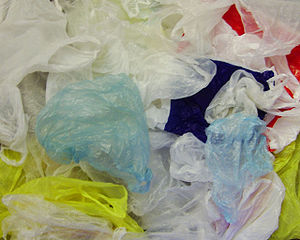
 Plasticbagsrecycle

 A

Aerosol cans: These can usually be recycled with other cans, as long as you pull off the plastic cap and empty the canister completely.
Antiperspirant and deodorant sticks: Many brands have a dial on the bottom that is made of a plastic polymer that’s different from the plastic used for the container, so your center might not be able to recycle the whole thing (look on the bottom to find out). Tom’s of Maine makes a deodorant stick composed solely of plastic No. 5.

B

Backpacks: The American Birding Association accepts donated backpacks, which its scientists use while tracking neotropical birds (americanbirding.org).
Batteries: Recycling batteries keeps hazardous metals out of landfills. Many stores, like RadioShack and Office Depot, accept reusable ones, as does the Rechargeable Battery Recycling Corporation (rbrc.org/call2recycle). Car batteries contain lead and can’t go in landfills, because toxic metals can leach into groundwater, but almost any retailer selling them will also collect and recycle them.
Beach balls: They may be made of plastic, but there aren’t enough beach balls being thrown away to make them a profitable item to recycle. If a beach ball is still usable, donate it to a thrift store or a children’s hospital.
Books: “Hard covers are too rigid to recycle, so we ask people to remove them and recycle just the pages,” says Sarah Kite, recycling manager of the Rhode Island Resource Recovery Corporation, in Johnston. In many areas, paperbacks can be tossed in with other paper.

C

Carpeting (nylon fiber): Go to carpetrecovery.org and click on “What can I do with my old carpet?” to find a carpet-reclamation facility near you, or check with your carpet’s manufacturer. Some carpet makers, like Milliken (millikencarpet.com), Shaw (shawfloors.com), and Flor (flor.com), have recycling programs.
Cars, Jet Skis, boats, trailers, RVs, and motorcycles: Even if these are unusable―totaled, rusted―they still have metal and other components that can be recycled. Call junkyards in your area, or go to junkmycar.com, which will pick up and remove cars, trailers, motorcycles, and other heavy equipment for free.
Cell phones: According to the U.S. Environmental Protection Agency, fewer than 20 percent of cell phones are recycled each year, and most people don’t know where to recycle them. The Wireless Foundation refurbishes old phones to give to domestic-violence survivor calltoprotect.org. For information on other cell-phone charities, log on to gowirelessgogreen.org. In some states, like California and New York, retailers must accept and recycle old cell phones at no charge.

How to Recycle Anything

An A-to-Z guide of what can be tossed into which bin.

By Natalie Ermann Russell
Compact fluorescent lightbulbs: CFLs contain mercury and shouldn’t be thrown in the trash. Ikea and the Home Depot operate CFL recycling programs; you can also check with your local hardware store or recycling center to see if it offers recycling services.
Computers: You can return used computers to their manufacturers for recycling (check mygreenelectronics.com for a list of vendors) or donate them to a charitable organization (log on to sharetechnology.org or cristina.org). Nextsteprecycling.org repairs your broken computers and gives them to underfunded schools, needy families, and nonprofits.
Crayons: Send them to the National Crayon Recycle Program (crazycrayons.com, which melts down crayons and reforms them into new ones. Leave the wrappers on: “When you have black, blue, and purple crayons together without wrappers, it’s hard to tell them apart,” says the program’s founder, LuAnn Foty, a.k.a. the Crazy Crayon Lady.
Crocs: The manufacturer recycles used Crocs into new shoes and donates them to underprivileged families. Mail them to: Crocs Recycling West, 3375 Enterprise Avenue, Bloomington CA 92316.

D

DVDs, CDs, and jewel cases: If you want to get rid of that Lionel Richie CD because “Dancing on the Ceiling” doesn’t do it for you anymore, you can swap it for a disc from another music lover at zunafish.com. But if you just want to let it go and not worry about it ending up in a landfill, send it (along with DVDs and jewel cases) to greendisk.com for recycling.

E

Empty metal cans (cleaning products): Cut off the metal ends of cans containing powdered cleansers, such as Ajax and Bon Ami, and put them in with other household metals. (Use care when cutting them.) Recycle the tubes as you would any other cardboard.
Empty metal cans (food products): Many towns recycle food cans. If yours doesn’t, you can find the nearest steel-can recycling spot at recycle-steel.org. Rinse out cans, but don’t worry about removing the labels. “Leaving them on doesn’t do any harm,” says Marti Matsch, the communications director of Eco-Cycle, one of the nation’s oldest and largest recyclers, in Boulder, Colorado. “When the metal is melted,” she says, “the paper burns up. If you want to recycle the label with other paper, that’s great, but it’s not necessary.”
Eyeglasses: Plastic frames can’t be recycled, but metal ones can. Just drop them into the scrap-metal bin. However, given the millions of people who need glasses but can’t afford them, your frames, broken or not, will go to better use if you donate them to neweyesfortheneedy.com (sunglasses and plastic frames in good condition can also be donated). Or drop off old pairs of glasses at LensCrafters, Target Optical, or other participating stores and doctors’ offices, which will send them to onesight.org.

F

Fake plastic credit cards: They’re not recyclable, so you can’t just toss them along with their paper junk-mail solicitations. Remove them first and throw them in the trash.
Film canisters: Check with your local recycling center to find out if it takes gray film-container lids (No. 4) and black bases (No. 2). If not, many photo labs will accept them.
Fire extinguishers: There are two types of extinguishers. For a dry-chemical extinguisher, safely relieve the remaining pressure, remove the head from the container, and place it with your bulk-metal items (check with your local recycler first). Alternatively, call fire-equipment companies and request that they dispose of your extinguisher. Carbon dioxide extinguishers are refillable after each use.
Food processors. Some communities accept small household appliances for recycling―if not in curbside collection, then in drop-off locations. (New York City will even pick up appliances left on the sidewalk.) “If an appliance is more than 50 percent metal, it is recyclable,” says Kathy Dawkins, director of public information for New York City’s Department of Sanitation. Most appliances are about 75 percent steel, according to the Steel Recycling Institute. So unless you know something is mostly plastic, it will probably qualify.
Formal wear: Finally, a use for that mauve prom or bridesmaid dress: Give it to a girl who can’t afford one (go to operationfairydust.org or catherinescloset.org).

G

Gadgets: There are many ways to recycle PDAs, MP3 players, and other devices so that any money earned from the parts goes to worthy causes―a win, win, win scenario (for you, the environment, and charity). Recycleforbreastcancer.org, for example, will send you prepaid shipping labels, recycle your gadgets, then donate the proceeds to breast cancer charities.
Glue: Many schools have recycling programs for empty containers of Elmer’s glue and glue sticks. Students and teachers rinse out the bottles, which are then sent to Wal-Mart for recycling. Find out more at elmersgluecrew.com.
Glue strips and inserts in magazines: Lotion samples and nonpaper promotional items affixed to glue strips in magazines should be removed because they can jam up recycling equipment (scented perfume strips, on the other hand, are fine). “One of the biggest challenges we get is pages of promotional stickers and stamps,” says Matsch, “which can adhere to the machinery and tear yards of new paper fiber.”

H

Hangers (plastic): These are not widely accepted at recycling centers, because there aren’t enough of them coming through to make it worthwhile. However, some cities, such as Los Angeles, are equipped to recycle them. You might consider donating them to a thrift store.
Hangers (wire): Some dry cleaners and Laundromats will reuse them. Otherwise, they can be recycled with other household metals. But be sure to remove any attached paper or cardboard first.
Hearing aids: The Starkey Hearing Foundation (starkeyhearingfoundation.org) recycles used hearing aids, any make or model, no matter how old. Lions Clubs also accept hearing aids (as well as eyeglasses) for reuse; log on to donateglasses.org to find designated collection centers near you.
Holiday cards: After they’ve lined your mantel for two months, you could throw them into the recycling bin, or you could give them a whole new life. St. Jude’s Ranch for Children (stjudesranch.org), a nonprofit home for abused and neglected youths, runs a holiday-card reuse program in which the kids cut off the front covers, glue them onto new cards, and sell the result―earning them money and confidence.

I

iPods: Bring in an old iPod to an Apple store and get 10 percent off a new one. Your out-of-date iPod will be broken down and properly disposed of. The catch? The discount is valid only that day, so be prepared to buy your new iPod.

J

Jam jars: Wherever there is container-glass recycling (meaning glass jars and bottles), jam jars are eligible. It helps if you remove any remaining jam, but no need to get obsessive―they don’t have to be squeaky clean. Before putting them in the bin, remove their metal lids and recycle those with other metals.
Juice bags: Because most are a combination of a plastic polymer and aluminum, these are not recyclable. But TerraCycle will donate 2 cents for each Honest Kids, Capri Sun, and Kool-Aid Drink pouch and 1 cent for any other brand you collect and send in to the charity of your choice. The organization provides free shipping, too. What does TerraCycle do with all those pouches? Turns them into colorful purses, totes, and pencil cases that are sold at Target and Walgreens stores throughout the country. To get started, go to terracycle.net.

K

Keys and nail clippers: For many recycling centers, any metal that isn’t a can is considered scrap metal and can be recycled. “There’s not a whole lot of scrap metal we wouldn’t take,” says Kite. “It’s a huge market now.”

L

Leather accessories: If your leather goods are more than gently worn, take them to be fixed. If they’re beyond repair, they have to be thrown in the trash―there’s no recycling option. (A product labeled “recycled leather” is often made from scraps left over from the manufacturing process, which is technically considered recycling.) Donate shoes in decent condition to solesforsouls.org, a nonprofit that collects used footwear and distributes it to needy communities.

M

Makeup: Makeup can expire and is none too pretty for the earth when you throw it in the trash (chemicals abound in most makeup). Some manufacturers are making progress on this front. People who turn in six or more empty MAC containers, for example, will receive a free lipstick from the company in return; SpaRitual nail polishes come in reusable, recyclable glass; and Josie Maran Cosmetics sells biodegradable plastic compacts made with a corn-based resin―just remove the mirror and put the case in your compost heap.
Mattresses and box springs: Mattresses are made of recyclable materials, such as wire, paper, and cloth, but not all cities accept them for recycling. (Go to earth911.org to find out if yours does.)
Metal flatware: If it’s time to retire your old forks, knives, and spoons, you can usually recycle them with other scrap metal.
Milk cartons with plastic spouts and caps: Take off and throw away the cap (don’t worry about the spout―it will be filtered out during the recycling process). As for the carton, check your local recycling rules to see whether you should toss it with plastics and metals or with paper.
Mirrors: These aren’t recyclable through most municipal recyclers, because the chemicals on the glass can’t be mixed with glass bottles and jars. You can donate them to secondhand stores, of course. Or if the mirror is broken, put it in a paper bag for the safety of your trash collectors. To find out what your municipality recycles, call 800-CLEANUP or visit recyclingcenters.org.

N

Nikes and other sneakers: Nike’s Reuse-a-Shoe program (nikereuseashoe.com) accepts old sneakers (any brand) and recycles them into courts for various sports so kids around the world have a place to play. You can drop them off at a Nike store, other participating retailers, athletic clubs, and schools around the country (check the website for locations), or mail them to Nike Recycling Center, c/o Reuse-a-Shoe, 26755 SW 95th Avenue, Wilsonville OR 97070. If your sneakers are still in reasonable shape, donate them to needy athletes in the United States and around the world through oneworldrunning.com. Mail them to One World Running, P.O. Box 2223, Boulder CO 80306.
Notebooks (spiral): It may seem weird to toss a metal-bound notebook into the paper recycling, but worry not―the machinery will pull out smaller nonpaper items. One caveat: If the cover is plastic, rip that off, says Matsch. “It’s a larger contaminant.”

O

Office envelopes

  • Envelopes with plastic windows: Recycle them with regular office paper. The filters will sieve out the plastic, and they’ll even take out the glue strip on the envelope flaps.
  • FedEx: Paper FedEx envelopes can be recycled, and there’s no need to pull off the plastic sleeve. FedEx Paks made of Tyvek are also recyclable (see below).
  • Goldenrod: Those ubiquitous mustard-colored envelopes are not recyclable, because goldenrod paper (as well as dark or fluorescent paper) is saturated with hard-to-remove dyes. “It’s what we call ‘designing for the dump,’ not the environment,” says Matsch.
  • Jiffy Paks: Many Jiffy envelopes―even the paper-padded ones filled with that material resembling dryer lint―are recyclable with other mixed papers, like cereal boxes. The exception: Goldenrod-colored envelopes must be tossed.
  • Padded envelopes with Bubble Wrap: These can’t be recycled. The best thing you can do is reuse them.
  • Tyvek: DuPont, the maker of Tyvek, takes these envelopes back and recycles them into plastic lumber. Turn one envelope inside out and stuff others inside it. Mail them to Tyvek Recycle, Attention: Shirley B. Wright, 2400 Elliham Avenue #A, Richmond VA 23237. If you have large quantities (200 to 500), call 866-338-9835 to order a free pouch.

P

Packing materials: Styrofoam peanuts cannot be recycled in most areas, but many packaging stores (like UPS and Mail Boxes Etc.) accept them. To find a peanut reuser near you, go to loosefillpackaging.com. Some towns recycle Styrofoam packing blocks; if yours doesn’t, visit epspackaging.org to find a drop-off location, or mail them in according to the instructions on the site. Packing pillows marked “Fill-Air” can be deflated (poke a hole in them), then mailed to Ameri-Pak, Sealed Air Recycle Center, 477 South Woods Drive, Fountain Inn SC 29644. They will be recycled into things like trash bags and automotive parts.
Paint: Some cities have paint-recycling programs, in which your old paint is taken to a company that turns it into new paint. Go to earth911.org to see if a program exists in your area.
Pendaflex folders: Place these filing-cabinet workhorses in the paper bin. But first cut off the metal rods and recycle them as scrap metal.
Phone books: Many cities offer collection services. Also check yellowpages.com/recycle, or call AT&T’s phone book–recycling line at 800-953-4400.
Pizza boxes: If cheese and grease are stuck to the box, rip out the affected areas and recycle the rest as corrugated cardboard. Food residue can ruin a whole batch of paper if it is left to sit in the recycling facility and begins to decompose.
Plastic bottle caps: Toss them. “They’re made from a plastic that melts at a different rate than the bottles, and they degrade the quality of the plastic if they get mixed in,” says Kite.
Plastic wrap (used): Most communities don’t accept this for recycling because the cost of decontaminating it isn’t worth the effort.
Post-its: The sticky stuff gets filtered out, so these office standbys can usually be recycled with paper.
Prescription drugs: The Starfish Project (thestarfish-project.org) collects some unused medications (TB medicines, antifungals, antivirals) and gives them to clinics in Nigeria. The organization will send you a prepaid FedEx label, too.
Printer-ink cartridges: Seventy percent are thrown into landfills, where it will take 450 years for them to decompose. “Cartridges are like gas tanks,” says Jim Cannan, cartridge-collection manager at Recycleplace.com. “They don’t break. They just run out of ink. Making new ones is like changing motors every time you run out of gas.” Take them to Staples and get $3 off your next cartridge purchase, or mail HP-brand cartridges back to HP.

Q

Quiche pans and other cookware: These can be put with scrap metal, and “a plastic handle isn’t a problem,” says Tom Outerbridge, manager of municipal recycling at Sims Metal Management, in New York City.

R

Recreational equipment: Don’t send tennis rackets to your local recycling center. “People may think we’re going to give them to Goodwill,” says Sadonna Cody, director of government affairs for the Northbay Corporation and Redwood Empire Disposal, in Santa Rosa, California, “but they’ll just be trashed.” Trade sports gear in at Play It Again Sports (playitagainsports.com), or donate it to sportsgift.org, which gives gently used equipment to needy kids around the world. Mail to Sports Gift, 32545 B Golden Lantern #478, Dana Point CA 92629. As for skis, send them to skichair.com, 4 Abbott Place, Millbury MA 01527; they’ll be turned into Adirondack-style beach chairs.
Rugs (cotton or wool): If your town’s recycling center accepts rugs, great. If not, you’re out of luck, because you can’t ship rugs directly to a fabric recycler; they need to be sent in bulk. Your best bet is to donate them to the thrift store of a charity, like the Salvation Army.

S

Shopping bags (paper): Even those with metal grommets and ribbon handles can usually be recycled with other paper.
Shopping bags (plastic): If your town doesn’t recycle plastic, you may be able to drop them off at your local grocery store. Safeway, for example, accepts grocery and dry-cleaning bags and turns them into plastic lumber. (To find other stores, go to plasticbagrecycling.org.) What’s more, a range of retailers, like City Hardware, have begun to use biodegradable bags made of corn. (BioBags break down in compost heaps in 10 to 45 days.)
Shower curtains and liners: Most facilities do not recycle these because they’re made of PVC. (If PVC gets in with other plastics, it can compromise the chemical makeup of the recycled material.)
Six-pack rings: See if your local school participates in the Ring Leader Recycling Program (ringleader.com); kids collect six-pack rings to be recycled into other plastic items, including plastic lumber and plastic shipping pallets.
Smoke detectors: Some towns accept those that have beeped their last beep. If yours doesn’t, try the manufacturer. First Alert takes back detectors (you pay for shipping); call 800-323-9005 for information.
Soap dispensers (pump): Most plastic ones are recyclable; toss them in with the other plastics.
Stereos and VCRs: Visit earth911.org for a list of recyclers, retail stores, and manufacturers near you that accept electronics. Small companies are popping up to handle electronic waste (or e-waste) as well: Greencitizen.com in San Francisco will pull apart your electronics and recycle them at a cost ranging from nothing to 50 cents a pound. And the 10 nationwide locations of freegeek.org offer a similar service.

T

Takeout-food containers: Most are not recyclable. Paper ones (like Chinese-food containers) aren’t accepted because remnants can contaminate the paper bale at the mill. Plastic versions (like those at the salad bar) are a no-go too.
Tinfoil: It’s aluminum, not tin. So rinse it off, wad it up, and toss it in with the beer and soda cans.
Tires: You can often leave old tires with the dealer when you buy new ones (just check that they’ll be recycled). Worn-out tires can be reused as highway paving, doormats, hoses, shoe soles, and more.
Tissue boxes with plastic dispensers: The plastic portion will be filtered out during the recycling process, so you can usually recycle tissue boxes with cardboard.
Toothbrushes: They’re not recyclable, but if you buy certain brands, you can save on waste. Eco-Dent’s Terradent models and Radius Source’s toothbrushes have replaceable heads; once the bristles have worn out, snap on a new one.
Toothpaste tubes: Even with all that sticky paste inside, you can recycle aluminum tubes (put them with the aluminum cans), but not plastic ones.
TVs: Best Buy will remove and recycle a set when it delivers a new one. Or bring old ones to Office Depot to be recycled. Got a Sony TV? Take it to a drop-off center listed at sony.com/recycle.

U

Umbrellas: If it’s a broken metal one, drop the metal skeleton in with scrap metal (remove the fabric and the handle first). Plastic ones aren’t accepted.
Used clothing: Some towns recycle clothing into seat stuffing, upholstery, or insulation. Also consider donating clothing to animal boarders and shelters, where it can be turned into pet bedding.
Utensils (plastic): “There is no program in the country recycling plastic flatware as far as I know,” says Matsch. “The package might even say ‘recyclable,’ but that doesn’t mean much.”

V

Videotapes, cassettes, and floppy disks: These aren’t accepted. “Videotapes are a nightmare,” says Outerbridge. “They get tangled and caught on everything.” Instead, send tapes to the ACT (actrecycling.org) facility in Columbia, Missouri, which employs disabled people to clean, erase, and resell videotapes. You can also send videotapes, cassettes, and floppy disks to greendisk.com; recycling 20 pounds or less costs $6.95, plus shipping.

W

Wheelchairs: Go to lifenets.org/wheelchair, which acts as a matchmaker, uniting wheelchairs with those who need them.
Wine corks: To turn them into flooring and wall tiles, send them to Wine Cork Recycling, Yemm & Hart Ltd., 610 South Chamber Drive, Fredericktown MO 63645. Or put them in a compost bin. “They’re natural,” says Matsch, “so they’re biodegradable.” Plastic corks can’t be composted or recycled.
Wipes and sponges: These can’t be recycled. But sea sponges and natural sponges made from vegetable cellulose are biodegradable and can be tossed into a compost heap.
Writing implements: You can’t recycle pens, pencils, and markers, but you can donate usable ones to schools that are short on these supplies. At iloveschools.com, teachers from around the United States specify their wish lists. And there’s always the option of buying refillable pencils and biodegradable pens made of corn (like those at grassrootsstore.com) so that less waste winds up in the landfill.

X

Xmas lights: Ship your old lights to holidayleds.com, Attention: Recycling Program, 120 W. Michigan Avenue, Suite 1403, Jackson MI 49201. The company will send you a coupon for 10 percent off its LED lights, which use 80 percent less energy and last 10 years or more. And they’re safer, too. LEDs don’t generate much heat, whereas incandescents give off heat, which can cause a dry Christmas tree to catch fire.

Y

Yogurt cups: Many towns don’t recycle these because they’re made of a plastic that can’t be processed with other plastics. But Stonyfield Farm has launched a program that turns its cups into toothbrushes, razors, and other products. Mail to Stonyfield Farm, 10 Burton Drive, Londonderry NH 03053. Or you can join TerraCycle’s Yogurt Brigade (terracycle.net) to recycle Stonyfield containers and raise money for your favorite charity. For every cup collected, Stonyfield will donate 2 cents or 5 cents, depending on the cup size.

Z

Zippered plastic bags: Venues that recycle plastic bags will also accept these items, as long as they are clean, dry, and the zip part has been snipped off (it’s a different type of plastic).