Tag Archives: Clean Water Act

The Clean Water Act 1972


Summary of the Clean Water Act

Quick Links

33 U.S.C. §1251 et seq. (1972)

The Clean Water Act (CWA) establishes the basic structure for regulating discharges of pollutants into the waters of the United States and regulating quality standards for surface waters. The basis of the CWA was enacted in 1948 and was called the Federal Water Pollution Control Act, but the Act was significantly reorganized and expanded in 1972. “Clean Water Act” became the Act’s common name with amendments in 1972.

Under the CWA, EPA has implemented pollution control programs such as setting wastewater standards for industry. We have also set water quality standards for all contaminants in surface waters.

The CWA made it unlawful to discharge any pollutant from a point source into navigable waters, unless a permit was obtained. EPA’s National Pollutant Discharge Elimination System (NPDES) permit program controls discharges. Point sources are discrete conveyances such as pipes or man-made ditches. Individual homes that are connected to a municipal system, use a septic system, or do not have a surface discharge do not need an NPDES permit; however, industrial, municipal, and other facilities must obtain permits if their discharges go directly to surface waters.

Compliance and Enforcement

History of this Act

More Information

The Office of Water (OW) ensures drinking water is safe, and restores and maintains oceans, watersheds, and their aquatic ecosystems to protect human health, support economic and recreational activities, and provide healthy habitat for fish, plants, and wildlife.

  • The EPA Watershed Academy provides training courses on statutes, watershed protection, and other key Clean Water Act resources.

Take Action …


Want to know how your Representatives and Senators voted? Check out the full list at WhoVotesDirty.com. Make a list of the politicians that voted against your right to breathe clean air, and vote them out of office on November 6th.

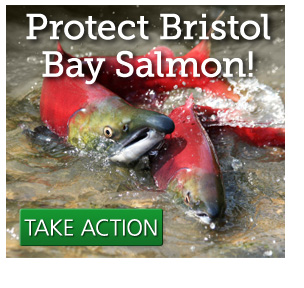
Protect Bristol Bay … Please sign the Petition


Bristol Bay is one of our most pristine national treasures, supporting tens of millions of returning wild salmon each year. This vibrant ecosystem is home to five salmon and trout species, which support over 14,000 fishing and tourism jobs from Alaska to Washington State.

But according to a draft report released by the Environmental Protection Agency that you may have seen in the news, a proposed large-scale Pebble Mine in the region could threaten our wild salmon and Washington jobs.

I’ve long said that protecting Bristol Bay salmon — and the thousands of jobs that rely on them — needs to be our top priority. We must base any future large-scale development decisions in the Bristol Bay watershed on sound science. With this new report, the evidence against the mine is mounting — and we need to speak out

Sign my petition today: Protecting Bristol Bay needs to be our top priority — too much is at stake!  click on the link below

Bristol Bay’s significance cannot be understated. It is home to the world’s largest sockeye salmon population, the largest king salmon run in Alaska, and almost one third of Alaska’s salmon population. The sockeye salmon run alone supports almost half of all wild sockeye on the planet. Bristol Bay also supports abundant wildlife such as 35 fish species, over 190 birds and 40 animal species.

We need to do everything we can to protect the commercial, subsistence, and recreational fishermen who rely on this sustainable fishery.

The EPA has the authority under Section 404(c) of the Clean Water Act to block the mine if it poses an unacceptable adverse effect on natural resources, fisheries, wildlife, waters, or recreational areas. Last year, I became the first U.S. Senator to call on the EPA to use this power if the threat to Bristol Bay’s threat to our salmon fueled coastal economy is confirmed. Will you stand with me?

Take action in support of Bristol Bay: We need to stop Bristol Bay projects that would hurt Washington jobs!

While the EPA is continuing its comprehensive investigation of the potential impact of the mine, the picture painted in this draft watershed assessment is staggering. At a minimum, the proposed mine would likely eliminate or block at least 87 miles of salmon producing streams and destroy at least 2,500 acres of wetlands.

What’s more, the mine is estimated to produce 10 billion tons of toxic mine waste as a byproduct of its operation, and even a small chance that this waste could end up in Bristol Bay is an unacceptable risk

Will you join me in showing the widespread support for protecting our Bristol Bay salmon?

Sign my petition: Make it clear that Bristol Bay’s fish and wildlife need to come first!

So far, the evidence confirms what Alaska and Washington fishermen feared: that the world’s largest salmon fishery cannot co-exist with large-scale mining.

We need to do all we can to make sure the waters of Bristol Bay come first, and Washingtonian voices are heard in this process. Thanks for your help.

Sincerely,

Maria Cantwell  U.S. Senator

P.S. After you’ve signed my petition, please forward this email to five friends so that they can take action in support of Bristol Bay, too!

Great News! EPA Finally Vetoes Spruce Mine Permit!


Rainforest Action Network
Click on the banner above for more information …

Great news came from the coalfields of Appalachia this morning: the EPA vetoed the Spruce No. 1 mountaintop-removal mining permit in West Virginia!

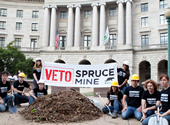
Activists like you from around the country have worked hard to urge the EPA to veto the Spruce Mine permit, and all of your hard work has finally paid off! Thousands of people have emailed comments to the EPA about this issue; many have shared the Spruce Mine story with friends and allies, and still others dumped 1,000 pounds of West Virginian dirt on the front lawn to demand a veto of the Spruce Mine permit. We should all feel proud of this success.

Because the Spruce Mine was the largest proposed mountaintop removal mine site in all of Appalachia, it has been viewed as a bellwether for the MTR industry. While we certainly hope that the EPA’s decision this morning means that the agency is working hard to slow the destruction caused by MTR in Appalachia, it’s important that we don’t forget that there are many more MTR mines in central Appalachia that have devastating impacts on nearby residents.

Thank EPA Administer Lisa Jackson for protecting communities in West Virginia by vetoing the Spruce No.1 Mine Permit and to encourage her to continue to uphold federal laws and regulations for clean water enforcement.

Thank you for helping to stop the Spruce No. 1 mine!

GFC team

For the mountains,

Amanda Starbuck, Annie Sartor and Scott Parkin
Global Finance Campaign Team