Tag Archives: ~ Culture & History

Jefferson Thomas and the courage of Children ~ Black History


Jefferson Thomas and the Courage of Children

by Marian Wright Edelman

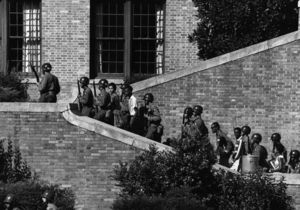
In 1957, Jefferson Thomas and eight fellow black students known as the Little Rock Nine stood up to institutionalized segregation in America‘s education system and helped our nation live up to the promise of Brown v. Board of Education. Thomas passed away, but Change.org Changemaker Marian Wright Edelman writes that his legacy will live on in all who fight for equality.

for the complete article … use the link below

https://www.huffingtonpost.com/marian-wright-edelman/jefferson-thomas-and-the_b_714390.html?ncid=engmodushpmg00000004 via huffingtonpost.com


#IAMTROYDAVIS – Black History


NAACPTwo years ago, in the final hours of his life, I sat with Troy Davis and talked with him as we fought to stop his execution. He made me promise then that, no matter the outcome, the NAACP would remain resolute in the fight against the death penalty.
Dedicate your tears to healing this world and your prayers to ending the death penalty. America must do better than this. And your deeds and actions will help get us there.
Friends : We wage this critical fight in Troy’s name. Last year, our work led to Connecticut repealing the death penalty. This year, Maryland became the first state south of the Mason-Dixon Line to do the same. Those two states now join New Jersey, New York, New Mexico, and Illinois as the fifth and sixth states in six years to abolish the death penalty.
Troy Davis’ legacy serves as a reminder that our justice system will remain broken until the death penalty is abolished across the country. Today, our community is uniting to send a powerful message on the anniversary of Troy Davis’ execution, and we want you to be a part of it.
Tweet our message using the hashtag #IamTroyDavis to support ending capital punishment in America.
Or write a message of your own.
Our message is simple: We must bring an end to this immoral, biased, and ineffective practice and the inequalities that plague our justice system.
It is appalling that the barbaric practice of capital punishment still exists in the United States. Even more so when you consider how easily a man was condemned to die in the face of overwhelming evidence pointing to his innocence.
We’re making progress, Carmen.
We must keep this miscarriage of justice in the hearts and minds of the public if we are to continue moving forward. Help by sending a tweet using the hashtag #IamTroyDavis on today’s solemn anniversary:
http://action.naacp.org/i-am-troy

Thank you,
Benjamin Todd Jealous
President and CEO
NAACP
PS: Next week, join Troy’s family on the I Am Troy Davis book tour. Visit the NAACP website for more details.

Freddie Stowers ~ Honor and recognition Long Overdue – Black History


NMAAHC -- National Museum of African American History and Culture

Lonnie Bunch, museum director, historian, lecturer, and author, is proud to present A Page from Our American Story, a regular on-line series for Museum supporters. It will showcase individuals and events in the African American experience, placing these stories in the context of a larger story — our American story.

A Page From Our American Story

Grave of Cpl Freddie Stowers
Grave of CPL Freddie Stowers
at Meuse-Argonne American Cemetery
in France.

Freddie Stowers, the grandson of a South Carolina slave, holds a unique spot in America’s pantheon of war heroes — as the only African American awarded the Medal of Honor for service in World War I. Stowers’ story, however, must be told in two parts.

The first part of the story is his act of heroism in 1918; the second part is that it took more than 72 years before Stowers finally received the recognition he was due.

The United States was the last major combatant to enter World War I, the “war to end all wars.” The conflict began in Europe in 1914, but in the U.S., isolationist sentiments were strong resulting in a foreign policy of non-intervention. However, in April 1917, after a German U-boat sank the British ship Lusitania, killing 128 Americans on board, President Woodrow Wilson asked Congress to declare war on Germany. Three months later, on July 3, 1917, American troops landed in France.

Corporal Freddie Stowers came to France as part of the all-black Company C, 371st Regiment, 93rd Division that deployed in September, 1918. His service in France was short but courageous and memorable.

More than 50 years after the Civil War, America’s military was still segregated. The French, however, had no such rules, and Stowers and Company C were sent to the front lines to serve alongside French troops.

On September 28, just days after arriving in France, Stowers’ company was in the midst of an attack on Hill 188, Champagne Marne Sector, France, when enemy forces appeared to be giving up.

According to the War Department, German soldiers emerged from their trenches waving a white flag, arms in the air — military actions that signal surrender. It was a ruse, however. As Americans, including Cpl. Stowers, went to capture the “surrendering” Germans, another wave of the enemy arose and opened fire.

Very quickly, Company C’s lieutenant and non-commissioned officers were killed in the fight. This left the 21-year-old Stowers in command. Without hesitation, he implored his men to advance on the Germans.

Stowers would be mortally shot during the exchange. Wounded and dying, Stowers continued to fight on, inspiring his men to push the enemy back. With Stowers leading the counter-attack, Americans took out an enemy machine gun position and went on to capture Hill 188.

Following the battle, Stowers’ commanding officer nominated him for the Medal of Honor, but the nomination was never processed. The Pentagon said the paperwork was misplaced. Some raise the possibility that the nomination wasn’t misplaced at all, but deliberately lost. They point to the fact that American troops were segregated and suggest that racial bias in the military might be the reason for Stowers’ missing paperwork.

The final part of Freddie Stowers’ story begins in 1990. As the Department of Defense began to modernize its data systems, it ordered a review of all battlefield medal nominations. When Stowers’ recommendation was found, the Pentagon quickly took action to give the corporal the long overdue recognition and honor he deserved.

Freddie Stowers MOH Ceremony in 1991.
After the posthumous presentation of the Medal of Honor
to the sisters of Corporal (CPL) Freddie Stowers by
President George H. W. Bush, Mrs. Barbara Bush and
Mary Bowens admire the Medal of Honor certificate.
Ms Bowens is CPL Stowers’ sister. His other sister
Georgina Palmer (far left) looks on. CPL Stowers is the
only Black American to receive the Medal for action during
World War I. Photo: Robert Ward, DOD PA, April 4, 1991.

On April 24, 1991, more than 72 years after Stowers made the ultimate sacrifice for his nation, his sisters Georgiana Palmer and Mary Bowens, 88- and 77-years-old at the time, were presented his Medal of Honor by President George H. W. Bush.

Long before Stowers was honored by his nation, he, along with other members of Company C, received recognition from the French government: “For extraordinary heroism under fire.” Stowers and his unit received the Croix de Guerre – the French War Cross — the highest military medal France awards to allied soldiers.

Prior to World War I, 49 African Americans had been awarded the Medal of Honor, including 25 men who fought for the Union in the Civil War. There were 119 Medals of Honor recipients in World War I, with Stowers being the only African American. His long overdue recognition in 1991 is a small but important sign of the progress we as a nation have made.

Lonnie Bunch, Director All the best,
Lonnie Bunch
Director

P.S. We can only reach our $250 million goal with your help. I hope you will consider making a donation or becoming a Charter Member today.

The National Museum of African American History and Culture is the newest member of the Smithsonian Institution’s family of extraordinary museums.


The museum will be far more than a collection of objects. The Museum will be a powerful, positive force in the national discussion about race and the important role African Americans have played in the American story — a museum that will make all Americans proud.

The impact of SB1070 on people of color… by Joel Dreyfuss


In 2010, the reality of life smacked folks in the face, and people of color were targets in the state of AZ imo we are headed in that same direction, but it’s 2026 now!

The Source: The Root …This is a Re-Post
 
If you’re black and think that state’s new immigration law has nothing to do with you, think again. By: Joel Dreyfuss


A law that makes people suspects on the basis of their looks should outrage African Americans, even if they are worried about illegal immigration.

The immigration law passed in Arizona last week is the kind of reckless act that keeps us minorities paranoid in America. The new law compels local law enforcers to verify immigration status based on “reasonable suspicion”–whatever that is–and has created the potential for cops to stop brown people in the streets and demand to see their papers. Even the sheriff of Pima County, Ariz., (which borders Mexico) says the law is “stupid,” “racist,” and would force his officers to racially profile people. The scope of the law was narrowed after its passage in order to assure Hispanics, who make up 30 percent of the state’s population, that they would not be the victims of racial profiling.

But those assurances that people won’t be suspects because of the way they look have little credibility when the experience of black and brown people in America has been so contrary to those promises. Being stopped for Driving While Black (or Brown) is such a common phenomenon that comedians make jokes about it. And a city like New York, which operates a massive stop-and-frisk policy that probably violates a dozen constitutional principles, keeps trying to explain why black and brown citizens make up 80 to 90 percent of those questioned by police. The latest rationale: They fit the description of suspected perps when 98 percent of those stopped and questioned are innocent of any crime.

The reason people of color get worked up about such policies is America’s nasty habit of making everything racial in a panic. We have a long history of lynchings and runaway convictions that were triggered by fears that black people were getting out of hand in some fashion, whether it was interracial sex or talking back to massa. The roundup of Japanese Americans during World War II will forever stain this country’s history.

After 9/11, looking Arab or simply wearing a turban, whether you are Muslim or not, turned out to be a grave danger in some parts of the country and a constant annoyance in others. No Muslim American believes that the frequent “random” checks they endured at airports in the months after the tragedy were really a matter of chance. And last week, the front page of the Boston Herald illustrated a cover story about the crackdown on benefits for illegal immigrants with a photo of black, Hispanic and Asian models, their foreheads stamped with the following: “No Tuition, No Welfare, No Medicaid.” Ironically, the headline at above the newspaper’s logo announced a “workplace diversity job fair.”

Of course, the concept of white or blonde illegal aliens is apparently beyond the capacity of the people passing the laws or the editors at the Herald. But nearly 600,000 of those in the United States illegally were estimated to come from Europe or Canada in 2005; and while I knew many Irish, English and other Europeans who had overstayed their visas when I was growing up in New York, I never heard of a raid of an Irish bar, except when ATF or the FBI were trying to trap Irish Republican Army gun runners during the “troubles.”

Now Arizona, better known for resorts, retirees in golf carts, and college basketball teams whose players never graduate, is suddenly at the center of a debate that could shape U.S. politics for the next 10 years. The only surprise is that it took so long. All the great economies have been struggling with the immigration issue for years. Just last week, France was in tizzy about the burqa, the full-length outfit with only an eye-slit that conservative Muslim women wear. Nicolas Sarkozy’s government has considered banning the burqa on security grounds (you can’t identify the person), but the real reason behind this initiative, Arizona’s or any of the dozen being considered in other states or countries is fear of change.

No doubt, the Great Recession of the last three years has heightened American insecurity. Although the downturn has hit blue-collar workers the hardest, many people who thought they were solidly in the middle class have seen their savings, their safety net, even their homes evaporate in the financial collapse. The next step for many of them would be to step “down” into the blue-collar workforce. Suddenly, the Mexican, Salvadorian and African immigrants they hardly noticed during boom times are now potential competitors.

African Americans, who lost more than their fair share of blue-collar jobs in the downturn, have long been ambiguous about illegal immigration. As Cord Jefferson noted here a few months ago, a growing number of experts believe that blacks and Hispanic immigrants battle for unskilled jobs at the bottom of the labor pool. Black Americans have not turned out in large numbers at immigration rallies, despite the fact that many African-American politicians talk of the need for coalitions with Hispanics.

But a law that puts you in jeopardy for being has special resonance with black Americans. We already know the peril of living in a state where you are presumed guilty by the color of your skin. A law that makes a suspect of anyone who might look illegal should make us vigorously resist this encroachment.

Joel Dreyfuss is managing editor of The Root. Follow him on Twitter.

History ~ 1/20/2021 – Kamala Harris becomes first female vice president – The first Black American


Kamala Harris made history when she was sworn in as the 49th U.S. vice president on January 20, 2021, becoming the first woman, the first Black American, and the first Asian American to occupy the office.

When Harris was chosen as Joe Biden’s running mate in August 2020, the former California senator and attorney general, the daughter of Jamaican and Indian immigrants, became the third woman to be named on a major political party’s ticket, following Geraldine Ferraro (chosen by Walter Mondale) in 1984 and Sarah Palin (chosen by John McCain) in 2008. Harris made her own presidential bid in the 2020 Democratic Party’s primary before suspending her campaign and endorsing Biden. Together, they defeated incumbents Donald Trump and Mike Pence.

“In many ways, this moment embodies our character as a nation,” Harris said on the evening of her inauguration. “It demonstrates who we are. Even in dark times—we not only dream. We do. We not only see what has been, we see what can be.”

As second in line for the U.S. presidency, Harris has come closer than any woman before her to breaking what Hillary Clinton famously called “the highest, hardest glass ceiling.” 

Citation Information

Article Title

Kamala Harris becomes first female vice president

AuthorHistory.com Editors

Website Name

HISTORY

URL

https://www.history.com/this-day-in-history/kamala-harris-sworn-in-first-female-vice-president

Access Date

January 20, 2023

Publisher

A&E Television Networks

Last Updated

January 18, 2022

Original Published Date

January 18, 2022