Tag Archives: Democratic Party

Get Set for a Healthy Winter Season


While contagious viruses are active year-round, fall and winter are when we’re most vulnerable to them. This is due in large part to people spending more time indoors with others when the weather gets cold.

Most respiratory bugs come and go within a few days, with no lasting effects. However, some cause serious health problems. People who use tobacco or who are exposed to secondhand smoke are more prone to respiratory illnesses and more severe complications than nonsmokers.

Colds usually cause stuffy or runny nose and sneezing. Other symptoms include coughing, a scratchy throat, and watery eyes. There is no vaccine against colds, which come on gradually and often spread through contact with infected mucus.

Flu comes on suddenly and lasts longer than colds. Flu symptoms include fever, headache, chills, dry cough, body aches, fatigue, and general misery. Like colds, flu can cause a stuffy or runny nose, sneezing, and watery eyes. Young children may also experience nausea and vomiting with the flu. Flu viruses spread mainly by droplets made when people with flu cough, sneeze or talk. A person might also get flu by touching a surface or object that has flu virus on it.

Flu season in the United States may begin as early as October and can last as late as May, and generally peaks between December and February. According to the Centers for Disease Control and Prevention (CDC):

  • More than 200,000 people in the United States are hospitalized from flu-related complications each year, including 20,000 children younger than age 5.
  • Between 1976 and 2006, the estimated number of flu-related deaths every year ranged from about 3,000 to about 49,000.
  • In the 2013 – 2014 season, there were in the U.S. 35.4 million influenza-associated illnesses, 14.6 medically attended flu illnesses, and 314,000 flu hospitalizations.
  • Prevention Tips

Get vaccinated against flu.

With rare exceptions, everyone 6 months of age and older should be vaccinated against flu. Flu vaccination, available as a shot or a nasal spray, can reduce flu illnesses, doctors’ visits, missed work and school, and prevent flu-related hospitalizations and deaths.

It’s ideal to be vaccinated by October, although vaccination into January and beyond can still offer protection. Annual vaccination is needed because flu viruses are constantly changing, flu vaccines may need to be updated, and because a person’s immune protection from the vaccine declines over time. Annual vaccination is especially important for people at high risk for developing serious complications from flu. These people include:

  • young children under 5 years, but especially those younger than 2.
  • pregnant women
  • people with certain chronic health conditions (like asthma, diabetes, or heart and lung disease)
  • people age 65 years and older

Vaccination also is especially important for health care workers, and others who live with or care for people at high risk for serious flu-related complications. Since babies under 6 months of age are too young to get a flu vaccine, their mother should get a flu shot during her pregnancy to protect them throughout pregnancy and up to 6 months after birth. Additionally, all of the baby’s caregivers and close contacts should be vaccinated as well.

Wash your hands often. Teach children to do the same. Both colds and flu can be passed through contaminated surfaces, including the hands. FDA says that while soap and water are best for hand hygiene, alcohol-based hand rubs may also be used. However, dirt or blood on hands can render the hand rubs unable to kill bacteria.

Try to limit exposure to infected people. Keep infants away from crowds for the first few months of life.

Practice healthy habits.

  • Eat a balanced diet.
  • Get enough sleep.
  • Exercise.
  • Do your best to keep stress in check.

Already Sick?

Usually, colds have to run their course. Gargling with salt water may relieve a sore throat. And a cool-mist humidifier may help relieve stuffy noses.

Here are other steps to consider:

  • Call your health care professional. Start the treatment early.
  • Limit your exposure to other people. Cover your mouth with a tissue when you cough or sneeze.
  • Stay hydrated and rested. Avoid alcohol and caffeinated products which may dehydrate you.
  • Talk to your health care professional to find out what will work best for you.

In addition to over-the-counter (OTC) medicines, there are FDA-approved prescription medications for treating flu. Cold and flu complications may include bacterial infections (e.g., bronchitis, sinusitis, ear infections, and pneumonia) that could require antibiotics.

Taking OTC Products

Read medicine labels carefully and follow the directions. People with certain health conditions, such as high blood pressure, should check with a health care professional or pharmacist before taking a new cough and cold medicine.

Choose OTC medicines appropriate for your symptoms. To unclog a stuffy nose, use nasal decongestants. Cough suppressants quiet coughs; expectorants loosen mucus; antihistamines help stop a runny nose and sneezing; and pain relievers can ease fever, headaches, and minor aches.

Check the medicine’s side effects. Medications can cause drowsiness and interact with food, alcohol, dietary supplements, and each other. It’s best to tell your health care professional and pharmacist about every medical product and supplement you are taking.

Check with a health care professional before giving medicine to children.

See a health care professional if you aren’t getting any better. With children, be alert for high fevers and for abnormal behavior such as unusual drowsiness, refusal to eat, crying a lot, holding the ears or stomach, and wheezing.

Signs of trouble for all people can include

  • a cough that disrupts sleep
  • a fever that won’t respond to treatment
  • increased shortness of breath
  • face pain caused by a sinus infection
  • high fever, chest pain, or a difference in the mucus you’re producing, after feeling better for a short time.

This article appears on FDA’s Consumer Updates page, which features the latest on all FDA-regulated products.

They fought for our right to vote and suffered… We must Vote!


This post had to be reposted as we count down to the 2022 midterms


Over 50 years ago, African-Americans made up 45% of Mississippi’s population, but fewer than 7% of  Mississippians were registered to vote.

In June of 1964, civil rights groups came together to kick off Freedom Summer, a 10-week campaign to dramatically increase the number of registered black voters in the state.

More than 1,000 volunteers of all races and colors, from all over the nation, traveled to Mississippi to do this important work. While there, youth volunteers and their black Mississippian supporters suffered unimaginable levels of vitriol and violence, but they did not stop fighting for what was right.

In the end, Freedom Summer emerged as a defining moment in the civil rights movement, pushing our country one step closer to the passage of the Voting Rights Act of 1965.


The best way we can honor the work, bravery, and sacrifice of the Freedom Summer volunteers is to exercise the right they fought for so diligently.

Honor the mission of Freedom Summer by pledging to vote in this year’s midterm election.

The extremely low levels of black voter registration in the South were fueled by generations of discriminatory elections practices. States were legally able to hold whites-only primaries, collect poll taxes, and administer literacy tests. When legal barriers weren’t enough, lynchings and bombings—threats and fulfilled promises—kept even more African-Americans away from the polls.

Fifty years later, legislators are attempting to take us backward to 1964, weakening the VRA, making it ever harder for the poor and people of color to have their voices heard at the polls.

Don’t allow these lawmakers to roll back history. They can only win and keep their seats in office when people like you and I stay home during midterm elections.

Raise your voice against those who seek to violate civil rights and human rights. Make a pledge to vote this November:

http://action.naacp.org/My-Vote-2014

In solidarity,

Lorraine C. Miller
Interim President and CEO
NAACP

August … a month full of historic events


270px-Hurricane_Katrina_Mobile_Alabama_flooded_parking_lot_20050829just another rant …

August~

 remember Katrina … remind folks what happened on the Gulf Coast as the people fled, some were forced out into the streets some died in the Katrina disaster trying to get out safely; while others faced excessive force violence and death

August 1, 1838 – Slavery was abolished in Jamaica. It had been introduced by Spanish settlers 300 years earlier in 1509.

August 2, 1776 – In Philadelphia, most of the 55-56 members of the Continental Congress signed the parchment copy of the Declaration of Independence.

August 3
1936 – Jesse Owens won the first of his four Olympic gold medals.

1943 – Gen. George S. Patton verbally abused and slapped a private. Later, Gen. Dwight D. Eisenhower ordered him to apologize for the incident.

1981 – U.S. traffic controllers with PATCO, the Professional Air Traffic Controllers Organization, went on strike. They were fired just as U.S. President Reagan had warned.

1992 – The U.S. Senate voted to restrict and eventually end the testing of nuclear weapons.

2004 – NASA launched the spacecraft Messenger. The 6 1/2 year journey was planned to arrive at the planet Mercury in March 2011. On April 30, 2015, Messenger crashed into the surface of Mercury after sending back more than 270,000 pictures.

August 4, 1962 – Apartheid opponent Nelson Mandela was arrested by security police in South Africa. He was then tried and sentenced to five years in prison. In 1964, he was placed on trial for sabotage, high treason and conspiracy to overthrow the government and was sentenced to life in prison. A worldwide campaign to free him began in the 1980s and resulted in his release on February 11, 1990, at age 71 after 27 years in prison. In 1993, Mandela shared the Nobel Peace Prize with South Africa’s President F.W. de Klerk for their peaceful efforts to bring a nonracial democracy to South Africa. In April 1994, black South Africans voted for the first time in an election that brought Mandela the presidency of South Africa.

August 4, 1964 – Three young civil rights workers, James Chaney, Andrew Goodman and Michael Schwerner, were found murdered and buried in an earthen dam outside Philadelphia, Mississippi. They had disappeared on June 21 after being detained by Neshoba County police on charges of speeding. They were participating in the Mississippi Summer Project organized by the Student Nonviolent Coordinating Committee (SNCC) to increase black voter registration. When their car was found burned on June 23, President Lyndon Johnson ordered the FBI to search for the men.

August 5, 1861 – President Abraham Lincoln signed into law the first Federal income tax, a 3 percent tax on incomes over $800, as an emergency wartime measure during the Civil War. However, the tax was never actually put into effect.

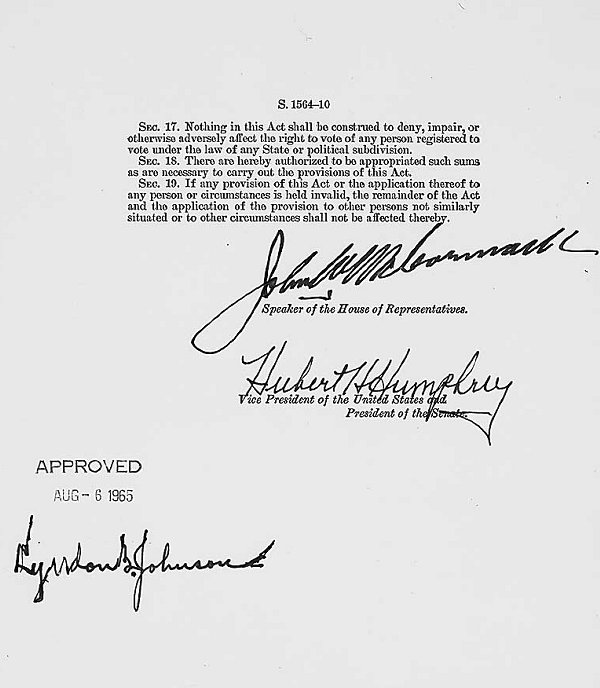
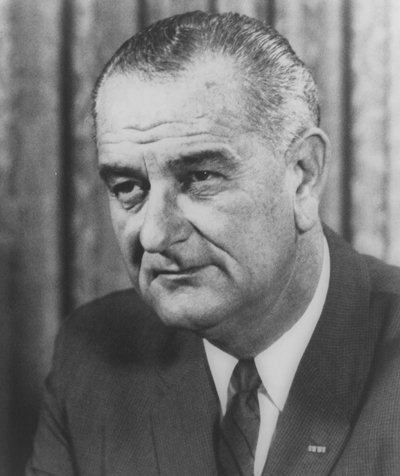
August 6, 1965 – The Voting Rights Act of 1965 was signed into law by President Lyndon B. Johnson. The Act suspended literacy, knowledge and character tests designed to keep African Americans from voting in the South. It also authorized the appointment of Federal voting examiners and barred discriminatory poll taxes. The Act was renewed by Congress in 1975, 1984 and 1991.

August 6-10, 1787 – The Great Debate occurred during the Constitutional Convention. Outcomes included the establishment of a four-year term of office for the President, granting Congress the right to regulate foreign trade and interstate commerce, and the appointment of a committee to prepare a final draft of the Constitution.

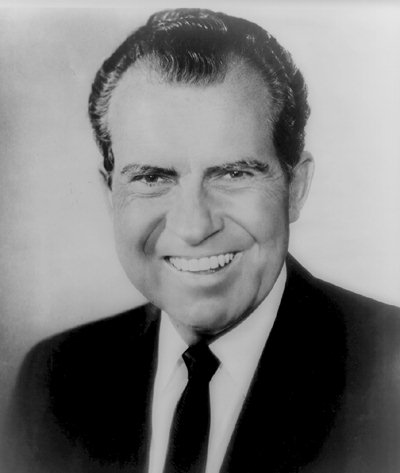
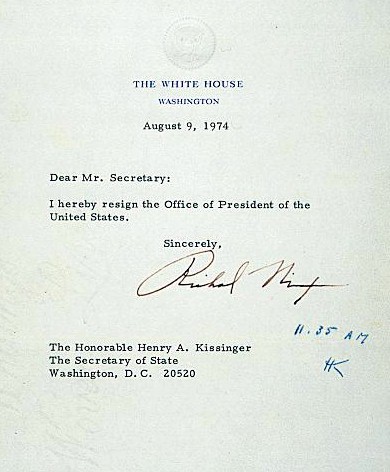
August 9, 1974 – Effective at noon, Richard M. Nixon resigned the presidency as a result of the Watergate scandal. Nixon had appeared on television the night before and announced his decision to the American people. Facing possible impeachment by Congress, he became the only U.S. President ever to resign.

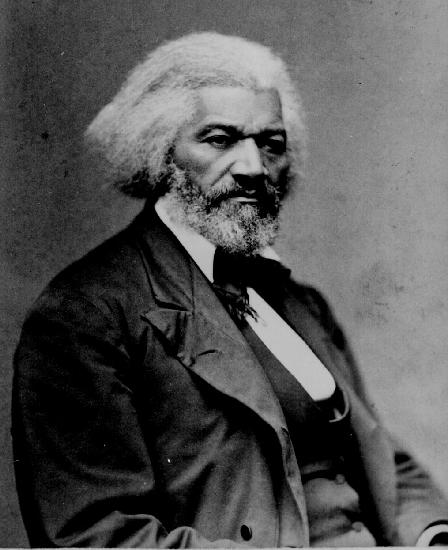
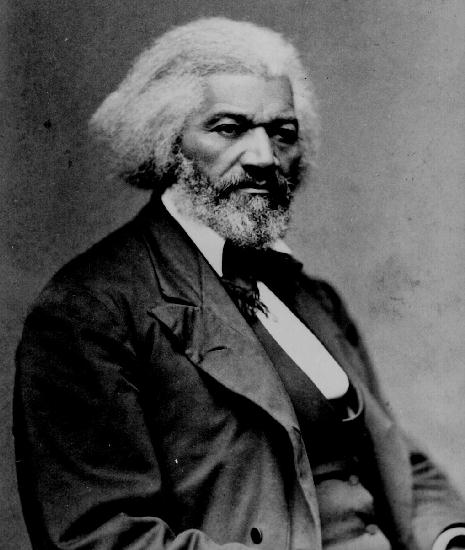
August 10, 1863 – The President meets with abolitionist Frederick Douglass who pushes for full equality for Union ‘Negro troops.’

August 11, 1841Frederick Douglass, an escaped slave, spoke before an audience in the North for the first time. During an anti-slavery convention on Nantucket Island, he gave a powerful, emotional account of his life as a slave. He was immediately asked to become a full-time lecturer for the Massachusetts Antislavery Society.

August 11-16, 1965 – Six days of riots began in the Watts area of Los Angeles, triggered by an incident between a white member of the California Highway Patrol and an African American motorist. Thirty-four deaths were reported and more than 3,000 people were arrested. Damage to property was listed at $40 million.

On August 14, 1862, Abraham Lincoln did something unprecedented in presidential history up to that point: he met with a small delegation of black leaders (all free: 5 black clergymen). But the meeting did not auger a decision to give African Americans a voice in government. In essence, Lincoln sought to lobby these men in essence to agree to a divorce. In other words, the President wanted to get black Americans behind his plan to colonize them abroad. –Source http://quod.lib.umich.edu/l/lincoln/lincoln5/1:812?rgn=div1;singlegenre=All;sort=occur;subview=detail;type=simple;view=fulltext;q1=August+14

August 14, 1935 – President Roosevelt signed the Social Security Act establishing the system which guarantees pensions to those who retire at age 65. The Social Security system also aids states in providing financial aid to dependent children, the blind and others, as well as administering a system of unemployment insurance.

August 15, 1969 – Woodstock began in a field near Yasgur’s Farm at Bethel, New York. The three-day concert featured 24 rock bands and drew a crowd of more than 300,000 young people. The event came to symbolize the counter-culture movement of the 1960’s.

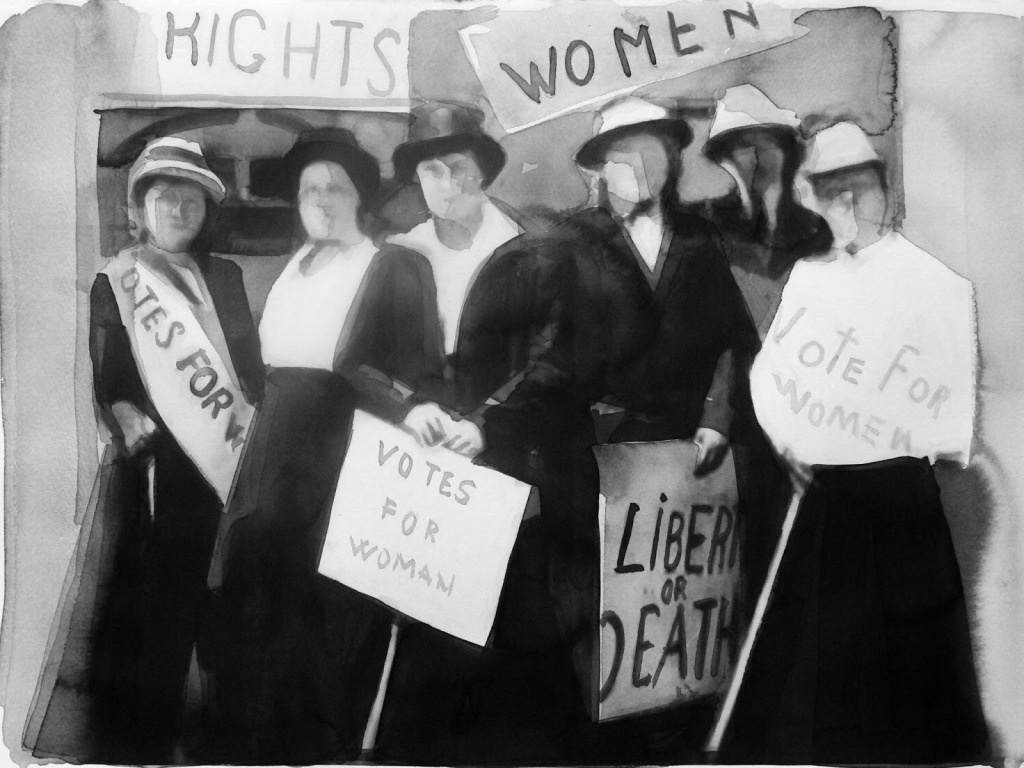
August 18, 1920 – The 19th Amendment to the U.S. Constitution was ratified, granting women the right to vote.

August 24-

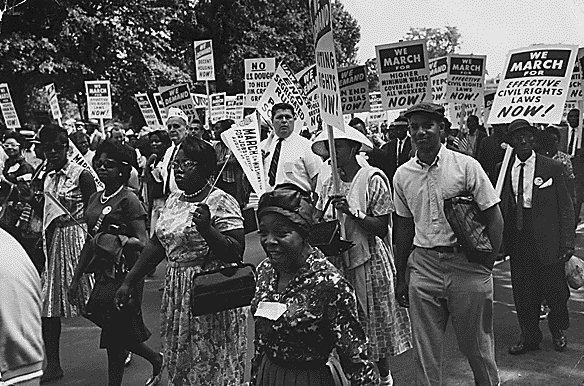
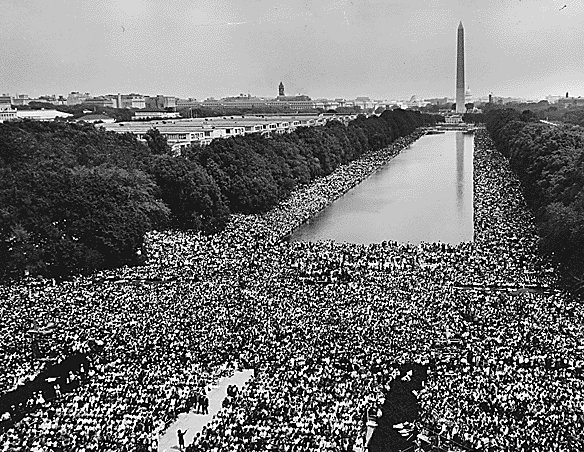
August 28, 1963 – The March on Washington occurred as over 250,000 persons attended a Civil Rights rally in Washington, D.C., at which Rev. Dr. Martin Luther King, Jr. made his now-famous I Have a Dream speech.

    August 28, 1955 The death of Emmett Till

 August 29, 2005 Hurricane Katrina slams into Gulf Coast

August 30 1967  Thurgood Marshall confirmed as Supreme Court justice

1983 U.S. Air Force Lieutenant Colonel Guion S. Bluford becomes the first African American to travel into space when the space shuttle Challenger

August 31

Resource: http://www.historyplace.com

~Nativegrl77

Feminism …


by The Thinker-Writer, January 31, 2010
 The belief that women are and should be treated as potential intellectual equals and social equals to men. These people can be male or female human beings, although the ideology is commonly (and perhaps falsely) associated mainly with women. The basic idea of Feminism revolves around the principle that just because human bodies are designed to perform certain procreative functions, biological elements need not dictate intellectual and social functions, capabilities, and rights. Feminism also, by its nature, embraces the belief that all people are entitled to freedom and liberty within reason–including equal civil rights–and that discrimination should not be made based on gender, sexual orientation, skin color, ethnicity, religion, culture, or lifestyle. Feminists–and all persons interested in civil equality and intellectuality–are dedicated to fighting the ignorance that says people are controlled by and limited to their biology.
Feminism is the belief that people are entitled to the same civil rights and liberties and can be intellectual equals regardless of gender. However, you should still hold the door for a feminist; this is known as respect or politeness and need have nothing whatever to do with gender discrimination.
By The Thinker-Writer, January 31, 2010
***********************************************************

So, why did I go to the urban dictionary for a definition of Feminism?

I saw the article above and thought, nah, that wasn’t what I was taught as a young child…

Then

beaseedforchangestickersGREENI got my Cosmo in the mail and while the fashions are fun, some gaudy, others worthy of a second look or two, but most are out of my price and age range, but when I see hair and beauty products, well now, that is a whole different response entirely. As I was thumbing through one of many magazines, which is another bad habit, an article about feminism popped up and yes folks are questioning Beyoncé among others with headlines such as, “can you be Sexy and a Feminist? ” or as Cosmo asks,

“Can you be a Sexy Feminist? It was a quick read and in all honesty, I don’t spend a lot of my time dissecting labels, but I will say that being a feminist used to be defined as a woman who didn’t appreciate men, some said, they despised them.  Honestly, there was a time when Women were advised not to question the gender roles of men & women, and when that barrier fell, women realized it was time to demand equal access to education. While so-called hardcore feminists suggested being a companion, forget about being happily married, lest we acquiesce simply because we are women. I don’t subscribe to hating on men, I like men on several levels, that includes my dad, my kid’s father, my son, a couple of teachers, and a couple of bosses who happened to be male.

As a side note on a political level, current Republican men are the bane of our (women) existence in my opinion.

  So, getting back to Feminism, when it comes to being an active participant in what seemingly is the opposite side of equality and justice for everyone.  I have to admit, I have danced to fabulous music that had one or more negatives like sexual assault, and misogynistic and chauvinistic words. It’s definitely not something I ever used to think about while dancing, and as an adult, I found it upsetting when what was being said became clear; generally, this kind of talk would get a whole different response if these words were being exchanged through a conversation at work, a bar or one on one. In this 21st Century, we hear more Women with edgy lyrics and to find out that a story or two based on reality inadvertently comes to light … so, the choice to listen and buy is up to you.

   However, it does appear that the word feminism or being a feminist in this 21st century society is ever-changing and ever-evolving to bring about a belief in equality and the rights for everyone in all its forms and genders. I see the urban dictionary as a place run not only by a younger group of folks, but who use it, research it, and discuss the “stuff” they post. I admit to not referring to the urban dictionary that much, but I found the post in the process of searching out what younger folks felt about the comments on who is or can be a feminist, it caught my eye.  As you read on, Cosmo asked stars like Lady Gaga, Lana Del Rey, and Taylor Swift just to name a few, but when Pharrell was asked he stated, “I don’t think it’s possible for me to be (a feminist). I’m a man, but I do support feminists.”

Anyway, an article worth reading in Cosmo in September 2014

~~ Nativegrl77

What do you think?

Is being a feminist gender-specific?

The answer is yes, in the 1800s, as the root of feminism they used to define women, was fem, being that of the female feminine persuasion, so Pharrell among others probably used the definitions as their guide … though in this 21st Century like and while we are coming out of the nightmare that was the era of trump … The dictionary defines a Feminist as a person who believes in Equal Rights for Women. We need more 21st Century thoughts and people action.


a sport not many focus on … Golf & Women of Colour – reminder – Black History


Wethepeople

So, I’m flipping through my newest 2015 Essence from back to front because of the horoscope section and as I’m looking I see a section called “trending topics” reporting that the USTA just appointed former tennis player Katrina Adams, President, CEO and chairman of the board and the first African American to fill the role. So, more things have changed in the World of Sports in which women of colour historically have not dominated.  While flipping through my 2014 issue of Essence with various fashions it was became obvious that this is not just about fashion, though the title gave me that impression and had to share given the history. In fact, it is about a Woman named Renee Powell and some young Women who were introduced to her and who have chosen her as their mentor. Now, the surprise to most would be that these brightly fashionable women are people of colour and that the article is about golf or as they say, “One of America’s favourite pastimes.”  In fact my family lived just a few blocks away from a golf course and while golf wasn’t my choice the history of golf was well known in our house, including a couple of good along with the bad and the really ugly stories of racism. It is a sad day to know that the practice is still alive and well, though tiger woods did shatter the glass ceiling some. The art of discrimination is subtle these days, while the stories of’ the good ‘olé boys club were worse, golf is a work in progress. The article tells us about the ups and downs of Powell’s life and daily experiences as a young girl to becoming one of four African-American women qualifying for golf’s top pro-circuit … The LPGA Tour that included Althea Gibson, LaRee Pearl Sugg, Shasta Avery Hardt and Renee Powell. Their legacy on the links is gone into in depth. They list the youngest pro at 17, four others including the niece of tiger woods who also has a great story, but what is even more exciting is that after Powell retired she now owns her own golf club, is the golf pro. She also teaches and mentors a new generation of girls/women of colour who love the game and are willing to take it as far as they can. Golfing is not cheap, so, if you have an opportunity to donate to your area’s youth sports club or make time to teach train and expose kids of colour to golf … do it!

Oh and the article on Golf is in Essence and was written by Connie Aitcheson

and … it’s in  “Trending Topics”  the February issue of Essence