Tag Archives: Carly Fiorina

A power plant for the Internet: our newest data center in Alabama


Two technicians servicing server racks in a modern data center
Technicians maintain server racks beneath an extensive network of overhead cables in a modern data center.


Every time you check your Gmail, search on Google for a nearby restaurant, or watch a YouTube video, a server whirs to life in one of our data centers.
Data centers are the engines of the Internet, bringing the power of the web to millions of people around the world. And as millions more people come online, our data centers are growing, too. We’ve recently expanded our data centers in Iowa, Georgia, Singapore and Belgium.
And today we’re announcing a new data center in Alabama—our 14th site globally.
 
This time, we’re doing something we’ve never done before: we’ll be building on the grounds of the Widows Creek coal power plant in Jackson County, which has been scheduled for shutdown. Data centers need a lot of infrastructure to run 24/7, and there’s a lot of potential in redeveloping large industrial sites like former coal power plants. Decades of investment shouldn’t go to waste just because a site has closed; we can repurpose existing electric and other infrastructure to make sure our data centers are reliably serving our users around the world.

At Widows Creek, we can use the plants’ many electric transmission lines to bring in lots of renewable energy to power our new data center. Thanks to an arrangement with Tennessee Valley Authority, our electric utility, we’ll be able to scout new renewable energy projects and work with TVA to bring the power onto their electrical grid. Ultimately, this contributes to our goal of being powered by 100% renewable energy.

In 2010, we were one of the first companies outside of the utility industry to buy large amounts of renewable energy. Since then, we’ve become the largest corporate renewable energy purchaser in the world (in fact we’ve bought the equivalent of over 1.5 percent of the installed wind power capacity in the U.S.). We’re glad to see this trend is catching on among other companies.

Of course, the cleanest energy is the energy you don’t use. Our Alabama data center will incorporate our state-of-the-art energy efficiency technologies. We’ve built our own super-efficient servers, invented more efficient ways to cool our data centers, and even used advanced machine learning to squeeze more out of every watt of power we consume. Compared to five years ago, we now get 3.5 times the computing power out of the same amount of energy.

Since the 1960s, Widows Creek has generated power for the region—now the site will be used to power Internet services and bring information to people around the world. We expect to begin construction early next year and look forward to bringing a Google data center to Alabama.

Source: Posted by Patrick Gammons, Senior Manager, Data Center Energy and Location Strategy

The SOS was right in front of our… my face. Yes, I felt the urgency to post this article, giving us info about what they are doing, as well as the other side telling voters the reality of how the data centers will impact the lives of Americans, and not necessarily in a good way. talk’bout naivete. sigh

Now, the struggle for land, energy, water, and utilities will be seen in real time, and there may be an increase in costs for constituents!  Will the negative impact on communities in America affect those who agreed to have a data center in their city? I added the image of a data center

Nativegrl77

August … a month full of historic events


270px-Hurricane_Katrina_Mobile_Alabama_flooded_parking_lot_20050829just another rant …

August~

 remember Katrina … remind folks what happened on the Gulf Coast as the people fled, some were forced out into the streets some died in the Katrina disaster trying to get out safely; while others faced excessive force violence and death

August 1, 1838 – Slavery was abolished in Jamaica. It had been introduced by Spanish settlers 300 years earlier in 1509.

August 2, 1776 – In Philadelphia, most of the 55-56 members of the Continental Congress signed the parchment copy of the Declaration of Independence.

August 3
1936 – Jesse Owens won the first of his four Olympic gold medals.

1943 – Gen. George S. Patton verbally abused and slapped a private. Later, Gen. Dwight D. Eisenhower ordered him to apologize for the incident.

1981 – U.S. traffic controllers with PATCO, the Professional Air Traffic Controllers Organization, went on strike. They were fired just as U.S. President Reagan had warned.

1992 – The U.S. Senate voted to restrict and eventually end the testing of nuclear weapons.

2004 – NASA launched the spacecraft Messenger. The 6 1/2 year journey was planned to arrive at the planet Mercury in March 2011. On April 30, 2015, Messenger crashed into the surface of Mercury after sending back more than 270,000 pictures.

August 4, 1962 – Apartheid opponent Nelson Mandela was arrested by security police in South Africa. He was then tried and sentenced to five years in prison. In 1964, he was placed on trial for sabotage, high treason and conspiracy to overthrow the government and was sentenced to life in prison. A worldwide campaign to free him began in the 1980s and resulted in his release on February 11, 1990, at age 71 after 27 years in prison. In 1993, Mandela shared the Nobel Peace Prize with South Africa’s President F.W. de Klerk for their peaceful efforts to bring a nonracial democracy to South Africa. In April 1994, black South Africans voted for the first time in an election that brought Mandela the presidency of South Africa.

August 4, 1964 – Three young civil rights workers, James Chaney, Andrew Goodman and Michael Schwerner, were found murdered and buried in an earthen dam outside Philadelphia, Mississippi. They had disappeared on June 21 after being detained by Neshoba County police on charges of speeding. They were participating in the Mississippi Summer Project organized by the Student Nonviolent Coordinating Committee (SNCC) to increase black voter registration. When their car was found burned on June 23, President Lyndon Johnson ordered the FBI to search for the men.

August 5, 1861 – President Abraham Lincoln signed into law the first Federal income tax, a 3 percent tax on incomes over $800, as an emergency wartime measure during the Civil War. However, the tax was never actually put into effect.

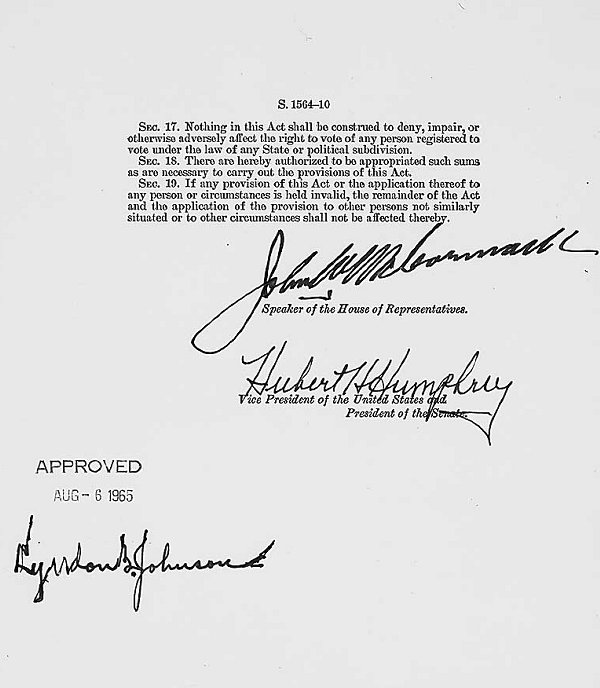
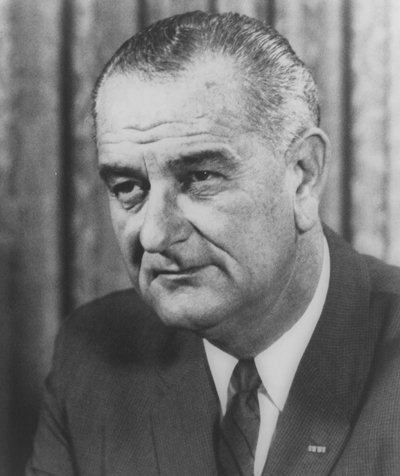
August 6, 1965 – The Voting Rights Act of 1965 was signed into law by President Lyndon B. Johnson. The Act suspended literacy, knowledge and character tests designed to keep African Americans from voting in the South. It also authorized the appointment of Federal voting examiners and barred discriminatory poll taxes. The Act was renewed by Congress in 1975, 1984 and 1991.

August 6-10, 1787 – The Great Debate occurred during the Constitutional Convention. Outcomes included the establishment of a four-year term of office for the President, granting Congress the right to regulate foreign trade and interstate commerce, and the appointment of a committee to prepare a final draft of the Constitution.

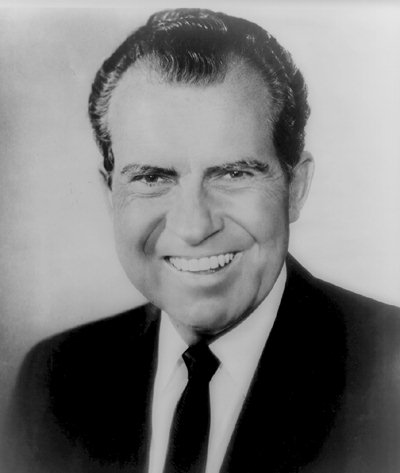
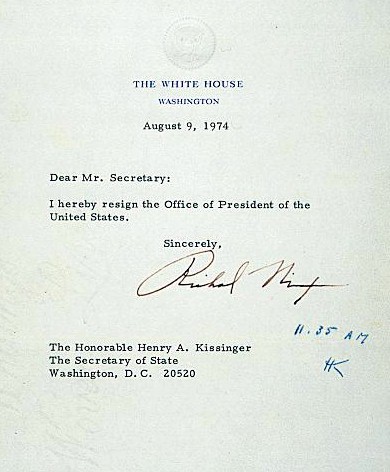
August 9, 1974 – Effective at noon, Richard M. Nixon resigned the presidency as a result of the Watergate scandal. Nixon had appeared on television the night before and announced his decision to the American people. Facing possible impeachment by Congress, he became the only U.S. President ever to resign.

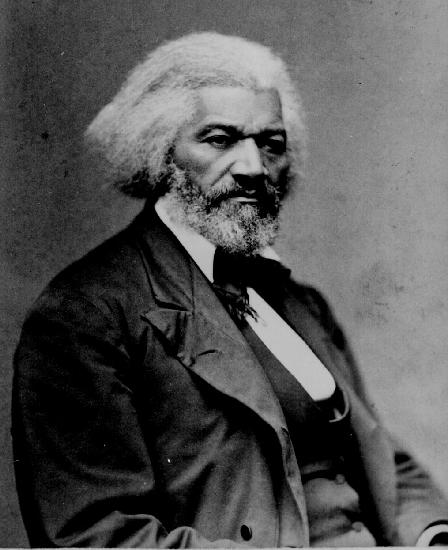
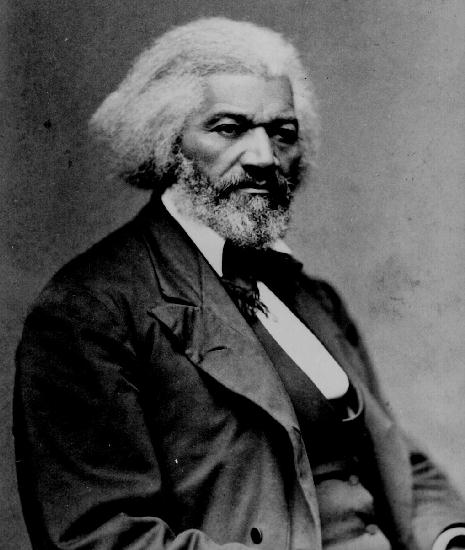
August 10, 1863 – The President meets with abolitionist Frederick Douglass who pushes for full equality for Union ‘Negro troops.’

August 11, 1841Frederick Douglass, an escaped slave, spoke before an audience in the North for the first time. During an anti-slavery convention on Nantucket Island, he gave a powerful, emotional account of his life as a slave. He was immediately asked to become a full-time lecturer for the Massachusetts Antislavery Society.

August 11-16, 1965 – Six days of riots began in the Watts area of Los Angeles, triggered by an incident between a white member of the California Highway Patrol and an African American motorist. Thirty-four deaths were reported and more than 3,000 people were arrested. Damage to property was listed at $40 million.

On August 14, 1862, Abraham Lincoln did something unprecedented in presidential history up to that point: he met with a small delegation of black leaders (all free: 5 black clergymen). But the meeting did not auger a decision to give African Americans a voice in government. In essence, Lincoln sought to lobby these men in essence to agree to a divorce. In other words, the President wanted to get black Americans behind his plan to colonize them abroad. –Source http://quod.lib.umich.edu/l/lincoln/lincoln5/1:812?rgn=div1;singlegenre=All;sort=occur;subview=detail;type=simple;view=fulltext;q1=August+14

August 14, 1935 – President Roosevelt signed the Social Security Act establishing the system which guarantees pensions to those who retire at age 65. The Social Security system also aids states in providing financial aid to dependent children, the blind and others, as well as administering a system of unemployment insurance.

August 15, 1969 – Woodstock began in a field near Yasgur’s Farm at Bethel, New York. The three-day concert featured 24 rock bands and drew a crowd of more than 300,000 young people. The event came to symbolize the counter-culture movement of the 1960’s.

August 18, 1920 – The 19th Amendment to the U.S. Constitution was ratified, granting women the right to vote.

August 24-

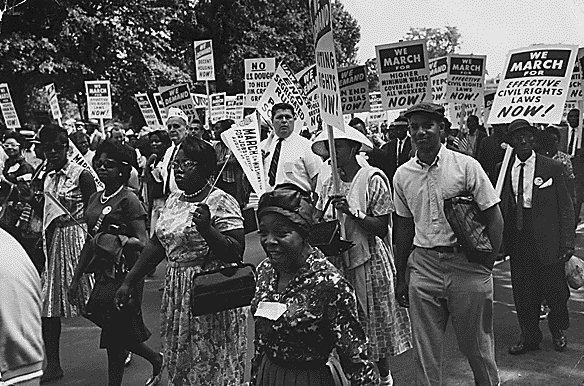
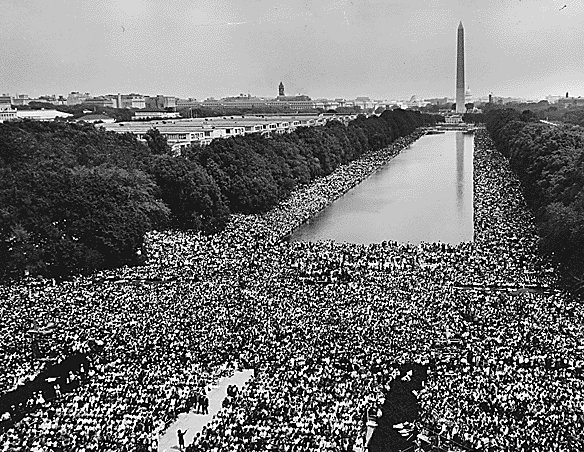
August 28, 1963 – The March on Washington occurred as over 250,000 persons attended a Civil Rights rally in Washington, D.C., at which Rev. Dr. Martin Luther King, Jr. made his now-famous I Have a Dream speech.

    August 28, 1955 The death of Emmett Till

 August 29, 2005 Hurricane Katrina slams into Gulf Coast

August 30 1967  Thurgood Marshall confirmed as Supreme Court justice

1983 U.S. Air Force Lieutenant Colonel Guion S. Bluford becomes the first African American to travel into space when the space shuttle Challenger

August 31

Source: http://www.historyplace.com

~Nativegrl77

Rescind my city’s cruel anti-homeless feeding ban … still?


Donald Trump … Él no es tu amigo


One Caribbean or several different faces of ~ Caribbean Island Countries ~


RTX1H6EIHaitian migrants and Dominicans of Haitian descent yell slogans during a protest in Santo Domingo June 18, 2015. People took to the streets to demonstrate against the risk of deportation from the Dominican Republic due to a deadline of a national immigration law.  Reuters

just another rantRTR4YTSMHaitian Rolando Joshept (R), 19, sits near a Dominican soldier on a bus of the National Migration Office in Santo Domingo June 24, 2015. Joshept is returning to Haiti voluntarily after a new Dominican migration law requires hundreds of thousands of Haitians and people of Haitian descent to show identity documents or register for a so-called “regularization” program.  Reuters

Just another rant …

In 2011, Officials of the Dominican Republic warned DR nationals and after many changes to the rules, they seem determined to deport at least onehundred thousand Haitians.   According to the media, approximately 250K applied for residency but only about 10k had the proper paper work.  This means that DR Officials might implement the papers please rule as the U.S. state of Arizona tried.

It has gotten worse.

There are reports that the Dominican Republic seems to be engaging in what some consider ethnic cleansing.  The idea that DR officials decided they needed to deport DR nationals without due process is disturbing. When In fact, some are of DR descent, others  are undocumented most have worked and lived there for all their lives to only have a few weeks before being “rounded up” as stated by DR officials.  So far, approximately 26K undocumented DR nationals have left voluntarily.  Is it possible that Dominican elites want to regain their privileged lives at the expense of families, possibly family ties as well?

Why is this bothering me? The last time I asked folks to boycott, there were reports of fights about who looks more Dominican or not and in the wake of men women and children being assaulted based on their looks and skin colour dealing with a papers please law is beyond my understanding. I know this is not a new problem, but in this 21st Century, one would think the Caribbean Community would come together and implement solutions.  The problem seems to be an archaic caste system that needs to end.

Where is the CARICOM community and what side are they on?

Thing is, the Caribbean and i use that to cover a wide range of territory …beyond being a beautiful, a paradise, a tourist destination, sadly it is reported as having corrupt government police and always under constant threats of natural disasters so these issues of color, land, looks, legacy religion seem petty when some serious money can be made … but the government needs to be legitimate …the soul of the Caribbean kept intact

the question: Is the government and police both corrupt?

There is a Common Wealth of and a Republic of, yet both are a part of the Caribbean Community.

Folks are suffering victims of crime, corruption, and a huge debt due to economic austerity. While some visitors choose to ignore it others conveniently bring up the label given to differentiate the face of one Caribbean Community member from another.  I have read it so many times and though I roll my eyes at the clichés “ they are very very serious about making sure folks “are not confused with” or “pronounced as”. The fact remains, the Dominica and all the islands on that coast are still apart of the sum total called the Caribbean Community, and more often than not; “the not to be confused” locales are groomed island destinations for the rich.  I know, not all rich folks are, but a whole lot are buying land, usually white and from the UK, France and now so are folks from the US, making it a place that is or once was 86% to 95% black (Caribbean) now a  place that provides low wages for resort bartenders,  house cleaners, ethnic-entertainers while being another place beaten used and eaten up by eco-tourism. Studies show that when tourism flounders so does the economy …duh. so, alternative sustainable options need to be considered.

Most of us would say eco-tourism is not bad as it mostly helps protect against deforestation, but nowadays you need to ask what are the locals getting out of it. We need to think about all the Caribbean islands or similar hard to get to places with extraordinary weather, climate, food, mountains, rainforests, freshwater lakes, hot springs, waterfalls, and diving spots that tourists tend to trample or buy up.  The waterfronts are now home to cruise liners that not only take up space, it has resulted in a loss of land,  some fishing rights, and reports are that cruise ships have been quietly dumping environmental waste into what used to be pristine waterways. In the end, like so many destinations of paradise or eco-tourist friendly places succumb to new developments and or modernization of facilities now have fewer visitors, even with all the tax perks which happens to negatively affects the locals and their overall economy in far too many cases.

There is a difference between the Commonwealth and a Republic in my opinion.   If you read the news, the commonwealth is far more likely to be groomed for “the people” most are hard to get to.  That means a whole lot of tourists and definitely user friendly; the other is usually a little more urban, rugged a lot less likely to have many tourists.  The leaders in a commonwealth are more likely and able to make a deal with countries like the US, UK or France while the people of a Republic probably choose to talk with China or any other resource seeking nation.  The fact remains that fifteen CARICOM members include the Dominican Republican, as well as Dominica, are all in this crisis, all members need to step up.

In a letter to CARICOM, chair Bahamian Prime Minister Perry Christie, the organization expressed shock that the regional body has not commented on the issue.  “We are shocked but not surprised about CARICOM’s silence during this period when the Chair has fallen to the Prime Minister of The Bahamas”.

In the image to the left, a Haitian man is pulled back toward the Haitian side of the border by Dominican soldiers, at the Jimani border crossing, in the Dominican Republic last Wednesday. The man was later allowed to pass. Authorities are prepared to resume deporting non-citizens without legal residency in the Dominican Republic after largely putting the practice on hold for a year, the head of the country’s immigration agency said. For decades, the Dominican Republic has deported non-citizens, the vast majority of whom come from neighbouring Haiti to work in low-wage jobs. (PHOTO: AP)

I don’t know the answers … though I think Caribbean island nations and those that have, like the Republic of Madagascar similar weather, lakes, waterfalls,  forests and amazons want to export what they make not have folks come in and take it, promise or build massive structures making the indigenous people’s give up land, fishing rights only to get a small amount of return or actual help then it ends with a series of broken promises.  Some thinking they are doing well, talk about having jobs like being tour guides, cultural dancers are helping them or giving them an opportunity because they had nothing before … this is such bs! We need to help our fellow man with income inequality, demand not only human rights, see actual humanitarian acts completed, and a legit government. We must always try to prevent or stop the slashing, burning, and deforestation because it is one of many things that will prevent the next generation from thriving not to mention trying to keep the next generation healthy

These nations, regions or countries considered islands of paradise ultimate vacay destination is home to people that should not be poor … We need to ask who what where and why this is happening!

Resources:

jamaicaobserver.com

wiki

ft.com

Barbados today

12newsnow.com

Jamaica-gleaner.com

ibtimes.org

A Case of Mistaken Identity: Antihaitianismo in Dominican Culture By Ernesto Sagás

started June 18