Tag Archives: Education

How … A Bill Becomes a Law


How a Bill Becomes a Law

When performing legislative research, it is important to understand the legislative process. The numerous steps that result in a bill becoming a law are described in this 24th edition of “How Our Laws Are Made.”

the original

Film on Mandela’s life to premiere in S.Africa


A long-awaited movie on Nelson Mandela’s life, which will premiere in South Africa on Sunday, has been described as a “very emotional” and accurate portrayal by one of his daughters.

The movie “Mandela, Long Walk to Freedom”, largely based on his autobiography of the same name, traces the life of the anti-apartheid icon from his childhood in the rural Eastern Cape to his election as the country’s first black president in 1994.

.

The Connecticut General Assembly passes the “BlackLaw” ::: 1833 :::


 Prudence Crandall

Prudence Crandall was an American schoolteacher who stirred controversy when she insisted on educating African-American girls at her school in Canterbury, Connecticut.

Prudence Crandell stood trial in 1833 to defend her decision to educate African-American girls but eventually closed the school in 1834 because of the violence and public backlash against it.

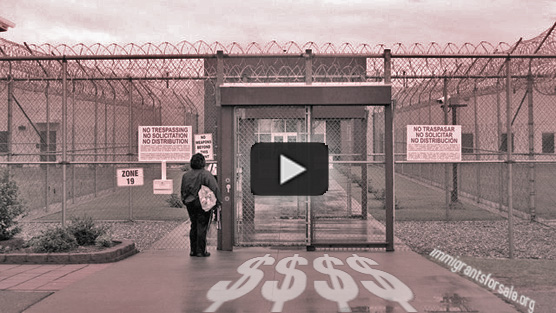
Gates Foundation supports for-profit youth prisons?


occupyprison

I’m Rashad Robinson of the organization ColorOfChange, and I started a petition to Bill & Melinda Gates Foundation CEO Jeff Raikes, which says:

An awareness of and opposition to private prisons is growing. States and companies previously invested are recognizing the uniquely devastating impacts of private prisons and choosing to disassociate completely. But the Gates Foundation—one of the world’s largest private funds, which aims to promote the health and well-being of communities across the world—continues to support an industry responsible for immeasurable human suffering.

Sign Rashad’s petition

For years, the Bill & Melinda Gates Foundation has supported the shameful for-profit prison industry, investing millions of their vast wealth to finance companies that profit from locking Black and Brown youth in some of the most dangerous and inhumane conditions in the country. 

ColorOfChange has urged the Gates Foundation to do the right thing and divest, but executives with the power to do so have refused to act. Now, it’s time for the public to get involved. 

Please sign the petition to urge the Gates Foundation to live up to their mission and end all support of for-profit prisons.

Click here to add your name to this petition, and then pass it along to your friends.

Thanks!

–Rashad Robinson

This petition was created on MoveOn’s online petition site, where anyone can start their own online petitions. ColorofChange didn’t pay us to send this email—we never rent or sell the MoveOn.org list.

“by the way, we have to fix that.”


By 

How to Improve Access to Voting, Everywhere

On election night in 2012, a newly re-elected President Barack Obama uttered an important aside in his speech: “I want to thank every American who participated in this election. Whether you voted for the very first time — or waited in line for a very long time — by the way, we have to fix that.” Sticking to his word, Obama went on to issue an executive order forming a nonpartisan Presidential Commission on Election Administration to, in his words, “improve the voting experience in America.”

Almost a year later, that commission — chaired by the top attorneys from both the Obama and Romney campaigns — has issued a series of recommendations based on six months of study. Overall, the report calls for the creation of a new national standard: “no citizen should have to wait more than 30 minutes to vote.” The recommendations focus primarily on two categories of improving voter access: expanding access to the ballot box in an effort to reduce lines, and modernizing voting procedures and equipment.

Here are some of the more noteworthy specific recommendations offered by the commission, via the Huffington Post:

  • An expansion of online voter registration by the states to enhance both accuracy of the voter rolls and efficiency;
  • The expansion of voting before Election Day, recognizing that the majority of states now provide either mail balloting or in-person early voting and that voters are increasingly seeking these options;
  • The increased use of schools as polling places, since they are the best-equipped facilities in most jurisdictions, with security concerns met by scheduling an in-service training day for students and teachers on Election Day;
  • Recognizing and addressing the impending crisis in voting technology as machines bought 10 years ago with post-2000 federal funds wear out and require replacement with no federal appropriations on the horizon;
  • To usher in this needed next generation of equipment, reforming the standards and certification process to allow innovation and the adoption of widely available and significantly less expensive off-the-shelf technologies and “software-only” solutions;
  • Assuring that polling places are accessible to all voters, are located close to where voters live and are designed to function smoothly;
  • Increasing and enhancing training and recruitment of poll workers, in the recognition that volunteer poll workers are voters’ primary source of contact during the actual voting process.

The commission also called for improving the data collected about election administration and voting machine performance so policymakers can better assess actual election administration performance against ideals.

The bipartisan commission stayed away from the most controversial issue surrounding voting: voter ID law. But many of these recommendations are an important validation of the work of many voting rights advocates. They are also an explicit rebuke to some conservative state governments that have taken steps to reduce voting access by decreasing early voting days and restricting the absentee ballot process.

The Commission’s findings complement a report that CAP Action released last week on voting access. Our report analyzes county-level data in seventeen 2012 swing states and ranks each county in those states on voter access. It highlights how there are wide discrepancies in a voter’s access to the polls not just based on which state he or she lives in, but also which county within the state.

If you live in a swing state and want to see how your county stacks up, check out the full CAP Action report HERE.