![]() |
||||||||||||||||||
|
Tag Archives: election
Lydia Cacho with Avaaz
Mexican photojournalist Rubén Espinosa was just found tortured and murdered. One of Latin America’s oldest democracies is now one of the most dangerous places on the planet to report the truth. Add your voice to a powerful open letter demanding an end to violence against journalists doing their jobs! When enough of us join Avaaz will publish it on the front page of key Mexican media:
| SIgn now |
Back-to-School Food Safety Tips
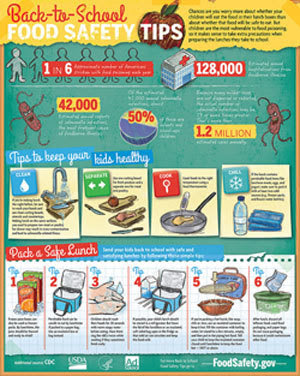
Back to school, back to the books, back in the saddle or back in the car for all the parents. The new school year means it’s back to packing lunches and after-school snacks for students, scouts, athletes, dancers, and all the other children who carry these items to and from home. One ‘back’ you do not want to reacquaint children with, however, is Bacteria. Read our latest blog for tips on how to keep bacteria from the cafeteria by safely packing and storing school lunches and snacks.
|
![]() |
More Like National Employee Suppression Week
During National Employee Freedom Week, Conservatives Promote The Ruse of Right To Work Laws
Today marks the last day of “National Employee Freedom Week,” a week created by conservatives to promote the benefits of right-to-work laws. Anti-union policy groups and lawmakers in states across the country are attacking an already weakened labor movement by advancing so-called “right-to-work” laws, which inhibit workers from collectively bargaining for better wages, benefits and protections, under the guise of ‘choice.’ These laws allow some workers to get the advantages of a union contract—such as higher wages, benefits, and protection against arbitrary discipline—without paying any fee associated with negotiating on these matters.
Proponents of right-to-work argue a multitude of benefits from enacting such laws such as, lower unemployment, higher wages, less workplace injuries, and that workers’ families and states’ economies fare better. But here are the facts:
- The typical worker in a right-to-work state makes about $1,560 less per year than she would in a state without such a law.
- The rate of employer-sponsored health insurance is 2.6 percentage points lower in right-to-work states.
- The rate of employer-sponsored pensions is 4.8 percentage points lower in right-to-work states.
- Even workplace safety is affected—the rate of worker fatalities in construction is 34 percent higher in right-to-work states than non-right-to-work states
Last spring, under the leadership of Governor and presidential candidate Scott Walker, Wisconsin became the latest state to adopt a right-to-work law and take its working families in the wrong direction. Estimates by Marquette University economist Abdur Chowdhury suggest that Wisconsin workers and families will lose between $3.89 and $4.82 billion in direct income annually due to effects of the law. Unsurprisingly, Walker is one of several GOP candidates speaking at the Americans for Prosperity confab in Columbus this weekend. Americans for Prosperity, the Koch brothers’ flagship organization, has been a staunch supporter of right-to-work laws and has had a hand in almost every right-to-work fight across the country.
Over the last several decades, the share of income going to middle-class Americans has fallen in conjunction with the falling rate of union membership. Analysis by CAP Action shows a strong correlation between the decline in national union membership and the declining share of total national income going to the middle class. Take Wisconsin for example—from 1977 to 2013, Wisconsin middle-class families have seen their share of income fall more than 12 percent as the rate of union membership in the state has decreased. Meanwhile, the share of income going to the top 20 percent of households increased by nearly 20 percent during this time period.

With wages stagnant, inequality at record levels, and union membership in serious decline, we should use this misguided “Employee Freedom Week” as an opportunity to set the record straight and focus on rebuilding the middle class by raising state laws above and beyond federal standards—not by racing to the bottom with right-to-work.
BOTTOM LINE: Workers, their families, and states’ economies fare worse in right-to-work states, which is why the majority of Americans support labor unions. Proponents of right-to-work argue they’re fighting for choice and the right of workers to decide on their representation, but it’s the workers whose rights are being trampled on by this political ruse. Wisconsin and fellow right-to-work states need policies to empower workers and boost their ability to bargain collectively, not strip away the few protections they have left.
EdNet: The National Food Safety Educator’s Network

EdNet, the National Food Safety Educator’s Network, is a monthly, multi-agency electronic news journal from the U.S. Food and Drug Administration (FDA), Food Safety and Inspection Service (FSIS), and the Centers for Disease Control and Prevention (CDC). EdNet provides educators, consumer advocates, government officials, and industry representatives with a quick monthly summary of news about food safety programs and activities.
In this issue:
Advisories, Alerts, and Warnings
Resources for Educators
- USDA’s Meat and Poultry Hotline Celebrates 30 Years of Service
- Talking Across International Borders About FSMA
- FDA Proposes Additional Revisions to the Nutrition Facts Label
- New Tools Would Advance Efforts to Ensure the Safety of Imported Foods (FDA)
- FDA Makes Available New Food Related Emergency Exercise
- Almost Everyone Uses Packaged Ice During the Summer (FDA)
- Coming Together to Talk About FSMA (FDA)
- Continuing the Conversation About FSMA (FDA)
- Thinking About FSMA Issues (FDA)
- Looking at the Road Ahead for FSMA
- Eating Outdoors, Handling Food Safely (FDA)
- Dietary Supplements – Reporting an Adverse Event (FDA)
- What do Millennials and the USDA Meat and Poultry Hotline Have in Common? – The Big 3-0 (USDA)
- USDA’s Let’s Talk Turkey— Order Yours Now!
- FSDZ on the Road Again (USDA)
Industry
- FSIS Updates the RTE Testing Program
- FDA Statement on Extension of Menu Labeling Compliance Date by Michael R. Taylor, FDA Deputy Commissioner for Foods and Veterinary Medicine
- FDA Released the Supplement to the 2013 Food Code
- FSIS Posts Q&A Fact Sheet on Importing Egg Products into the U.S
- FDA Issued Final Rule to Add Selenium to List of Required Nutrients for Infant Formula
- FSIS Posts Meat Slaughter Survey Results
- FSIS Policy Updates


You must be logged in to post a comment.