7 Summer Solstice Facts


Let’s get on with some fun facts about the June solstice:

The kind of energy the Sun emits most strongly is not ultraviolet, gamma rays, or even visible light—it’s actually infrared. That’s the Sun’s strongest emission, which is the kind we feel as heat.

As for the Sun’s visible emissions, its strongest is the green light. That’s why our eyes are maximally sensitive to that color.

With all that, most people only care about one single solstice fact:

  1. “Solstice” comes from the Latin words sol (sun) and sistere (to stand still). On the summer solstice, the Sun’s path stops advancing northward each day and appears to stop in the sky before going back the other way.
  2. On the solstice, the Sun reaches its northernmost position, reaching the Tropic of Cancer and standing still before reversing direction and starting to move south again. (See illustration above.) In fact, that’s how the Tropic of Cancer got its name. A few thousand years ago, the solstice happened when the Sun was in the constellation of Cancer the Crab.
  3. On the summer solstice, you may observe that the Sun’s path across the sky is curved—NOT a straight line. It appears to rise and keeps veering to the right as it passes high overhead. This is quite different from the laser-straight path the Sun moves along in late March and late September, near the equinoxes.
  4. You may also observe that the midday Sun is highest up in the sky (or, lowest if you live in the Southern Hemisphere). But did you know that the Sun’s highest point is getting lower and lower over time? That’s because Earth’s tilt is slowly decreasing.
  5. It may be the “longest day,” but it’s not the latest sunset or the earliest sunrise! The earliest sunrises happen before the summer solstice, and the latest sunsets happen after the summer solstice. See it for yourself wherever you live.
  6. In India, the summer solstice ends the 6-month period when spiritual growth is supposedly easiest. Better hurry—you only have a few days left!
  7. On this day, the Sun rises farthest left on the horizon and sets at its rightmost possible spot. Sunlight strikes places in your home that are illuminated at no other time.
Sun and clouds

Source: almanac.com

1798 – President John Adams oversees the passage of the first Alien and Sedition Acts


https://youtu.be/ys4E4Xle1T8?si=5RpoCgtqcXAwkuaM

President John Adams oversees the passage of the Naturalization Act, the first of four pieces of controversial legislation known together as the Alien and Sedition Acts, on June 18, 1798. Strong political opposition to these acts succeeded in undermining the Adams administration, helping Thomas Jefferson to win the presidency in 1800.

At the time, America was threatened by war with France, and Congress was attempting to pass laws that would give more authority to the federal government, and the president in particular, to deal with suspicious persons, especially foreign nationals. The Naturalization Act raised the requirements for aliens to apply for U.S. citizenship, requiring that immigrants reside in the U.S. for 14 years before becoming eligible. The earlier law had required only five years of residence before an application could be made.

Adams, in fact, never enforced the Naturalization Act. Nevertheless, he came under heavy fire from opponents, led by Vice President Thomas Jefferson, who felt that the Naturalization Act and its companion legislation were unconstitutional and smacked of despotism. So disgusted was Jefferson with Adams’ enthusiastic support of the law that he could no longer support the president and left Washington during the Congressional vote. 

Source and complete article: history.com

Of the four acts, the Sedition Act was the most distressing to staunch First Amendment advocates. They objected to the fact that treasonable activity was vaguely defined, was defined at the discretion of the president, and would be punished by heavy fines and imprisonment. The arrest and imprisonment of 25 men for supposedly violating the Sedition Act ignited an enormous outcry against the legislation. Among those arrested was Benjamin Franklin’s grandson, Benjamin Franklin Bache, who was the editor of the Republican-leaning Philadelphia Democrat-Republican Aurora. Citing Adams’ abuse of presidential powers and threats to free speech, Jefferson’s party took control of Congress and the presidency in 1800.

The full article is at history.com

Source: NBCNews,

On this day


On-This-Day.com

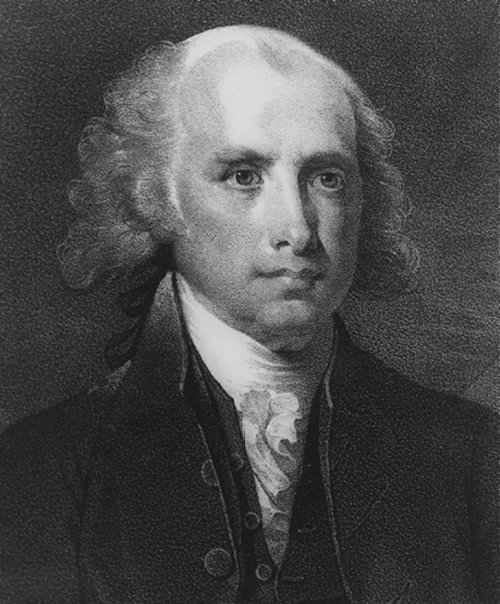
June 18, 1812 – After much debate, the U.S. Senate voted 19 to 13 in favor of a declaration of war against Great Britain, prompted by Britain’s violation of America’s rights on the high seas and British incitement of Indian warfare on the Western frontier. The next day, President James Madison officially proclaimed the U.S. to be in a state of war. The War of 1812 lasted over two years and ended with the signing of the Treaty of Ghent in Belgium on December 24, 1814.

June 18, 1815 – On the fields near Waterloo in central Belgium, 72,000 French troops, led by Napoleon, suffered a crushing military defeat from a combined Allied army of 113,000 British, Dutch, Belgian, and Prussian troops. Thus ended 23 years of warfare between France and the other powers of Europe. Napoleon was then sent into exile on the island of St. Helena off the coast of Africa. On May 5, 1821, the former vain-glorious Emperor died alone on the tiny island, abandoned by everyone.

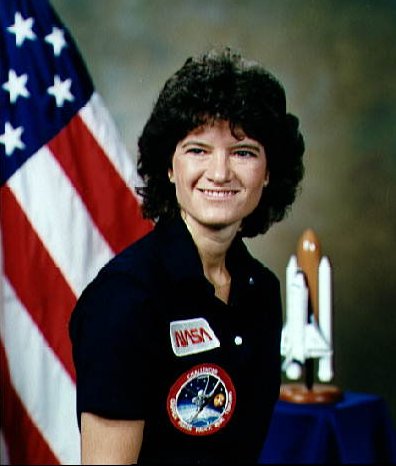
June 18, 1983 – Dr. Sally Ride, a 32-year-old physicist and pilot, became the first American woman in space, beginning a six-day mission aboard the space shuttle Challenger, launched from Cape Canaveral, Florida.

Birthday – British explorer George Mallory (1886-1924) was born in Mobberley, Cheshire, England. When asked why he wanted to climb Mount Everest, the highest mountain in the world, he simply answered, “Because it is there.” He disappeared while climbing through the mists toward its summit on the morning of June 8, 1924. His body, perfectly preserved due to the cold conditions, was discovered by climbers in 1999, just 600 meters (2,030 feet) from the summit.

1968 – 50,000 people marched on Washington, DC. to support the Poor People’s Campaign


Rev. Ralph Abernathy and demonstrators at the Poor People’s Campaign
The Poor People’s Campaign (PPC) was created on December 4, 1967, by the Southern Christian Leadership Conference (SCLC) to address the issues of unemployment, housing shortages for the poor, and the impact of poverty on the lives of millions of Americans. Unlike earlier efforts directed toward helping African Americans gain civil rights and voting rights, SCLC and its leader, Dr. Martin Luther King, Jr., now addressed issues that impacted all who were poor regardless of racial background. Their immediate aim was to secure Federal legislation ensuring full employment and promoting the construction of low-income housing to raise the quality of life of the nation’s impoverished citizens.
The SCLC planned a nationwide march on Washington on April 22, 1968, to focus the nation’s attention on this issue and particularly to pressure Congress to pass legislation to address the employment and housing issues. Unlike earlier marches, SCLC leaders planned the creation of Resurrection City, a giant tent city on the Mall in Washington, D.C., where demonstrators would remain until their demands were met. When Dr. King was assassinated in Memphis, Tennessee on April 4, 1968, movement leaders debated whether to go forward with the planned demonstration. They chose to continue the march with King’s lieutenant, Rev. Ralph Abernathy, as its new leader. The march date was postponed to May 12, 1968, though a few hundred people arrived in Washington on the original date. The first week, May 12-29, brought a wave of nearly 5,000 demonstrators. During the second week Resurrection City was completed.
The protestors, people from a wide range of racial, ethnic, and socioeconomic backgrounds—Native Americans from reservations, Latinos from the Southwest, impoverished whites from West Virginia, as well as rural and urban blacks—came together and spread the message of the campaign to various Federal agencies. They also disrupted life in Washington to try and force the government to respond. At its peak, the number of protestors reached nearly 7,000 but still far short of the expectation of 50,000 people.
The march was also marred by weather and leadership divisions. An unusual downpour of rain made the ground turn to mud causing the tents to weaken, and eventually forcing people to leave. Tension among the demonstrators themselves caused violent outbreaks and undermined the effectiveness of PPC leadership. The assassination of Senator Robert Kennedy, a presidential aspirant and one of the PPC’s principal supporters in Congress, on June 5, 1968, sealed the fate of the campaign. Resurrection City closed two weeks later on June 19, 1968.

BTS Concert Schedule:


  • June: Madrid, Spain (Jun 26-27).
  • July: Brussels, Belgium (Jul 1-2); London, UK (Jul 6-7); Munich, Germany (Jul 11-12); Paris, France (Jul 17-18).
  • August: East Rutherford, USA (Aug 1-2); Foxborough, USA (Aug 5-6); Baltimore, USA (Aug 10-11); Arlington, USA (Aug 15-16); Toronto, Canada (Aug 22-23); Chicago, USA (Aug 27-28).
  • September: Los Angeles, USA (Sep 1-2, 5-6).
  • October: Bogotá, Colombia (Oct 2-3); Lima, Peru (Oct 9-10); Santiago, Chile (Oct 16-17); Buenos Aires, Argentina (Oct 23-24); São Paulo, Brazil (Oct 28, 30-31).
  • November: Kaohsiung, Taiwan (Nov 19, 21-22).
  • December: Bangkok, Thailand (Dec 3, 5-6); Kuala Lumpur, Malaysia (Dec 12-13); Singapore (Dec 17, 19-20, 22); Jakarta, Indonesia (Dec 26-27).