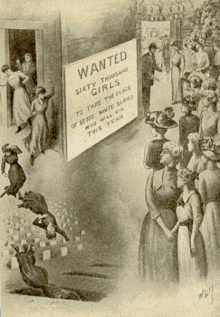
Congress passed the Mann Act, which was ostensibly aimed at keeping young women from being lured into prostitution but really offered a way to make a crime out of many kinds of consensual sexual activity.
The Mann Act, previously called the White-Slave Traffic Act of 1910, is a United States federal law, passed June 25, 1910. It is named after Congressman James Robert Mann of Illinois.
The outrage over sex work began with a commission appointed in 1907 to investigate the problem of immigrant prostitutes. Allegedly, women were brought to America for the purpose of being forced into sexual slavery; likewise, immigrant men were allegedly luring American girls into prostitution.
The Congressional committees that debated the Mann Act did not believe that a woman would ever choose to be a prostitute unless she was drugged and held hostage. The law made it illegal to “transport any woman or girl” across state lines “for any immoral purpose.” In 1917, the Supreme Court upheld the conviction of two married California men, Drew Caminetti and Maury Diggs, who had gone on a romantic weekend getaway with their girlfriends to Reno, Nevada, and had been arrested. Following this decision, the Mann Act was used in all types of cases: someone was charged with violating the Mann Act for bringing a woman from one state to another in order to work as a chorus girl in a theater; wives began using the Mann Act against girls who ran off with their husbands. The law was also used for racist purposes: Jack Johnson, heavyweight champion of the world, was prosecuted for bringing a prostitute from Pittsburgh to Chicago, but the motivation for his arrest was public outrage over his marriages to white women.
Source: history.com, wiki,
Union organizer and social activist A. Philip Randolph in 1941 was so frustrated with segregation in the United States’ military and pervasive discrimination in defense industries that prohibited Blacks from benefiting from the skilled, well-paying jobs they provided that he planned a march on Washington to protest that segregation.
On June 18, in a meeting at the White House with President Franklin D. Roosevelt, NAACP secretary Walter White and the National Urban League’s T. Hill Arnold, he demanded that the president intercede. “Our people are being turned away at factory gates because they are colored,” he said. “They can’t live with this thing. Now what are you going to do about it?” Randolph insisted that the demonstration, which Roosevelt desperately wanted to avoid, would go on unless the president issued a “strongly written” executive order.
His hand forced, Roosevelt issued Executive Order 8802, which prohibited employment discrimination in government and the defense industries and created the Fair Employment Practices Committee to monitor hiring.
BET National News – Keep up to date with breaking news stories from around the nation, including headlines from the hip hop and entertainment world
politics,pollution,petitions,pop culture & purses



 Be a Seed for Change
You must be logged in to post a comment.