

Daily Archives: 06/23/2026

1972 – Haldeman encourages Nixon, on tape, to thwart FBI inquiry into Watergate

On June 23, 1972, President Richard Nixon’s advisor, H.R. Haldeman, tells the president to put pressure on the head of the FBI to “stay the hell out of this [Watergate burglary investigation] business.” In essence, Haldeman was telling Nixon to obstruct justice, which is one of the articles Congress threatened to impeach Nixon for in 1974.
Source: history.com for the complete article
Share this:

June 1972 Title IX enacted
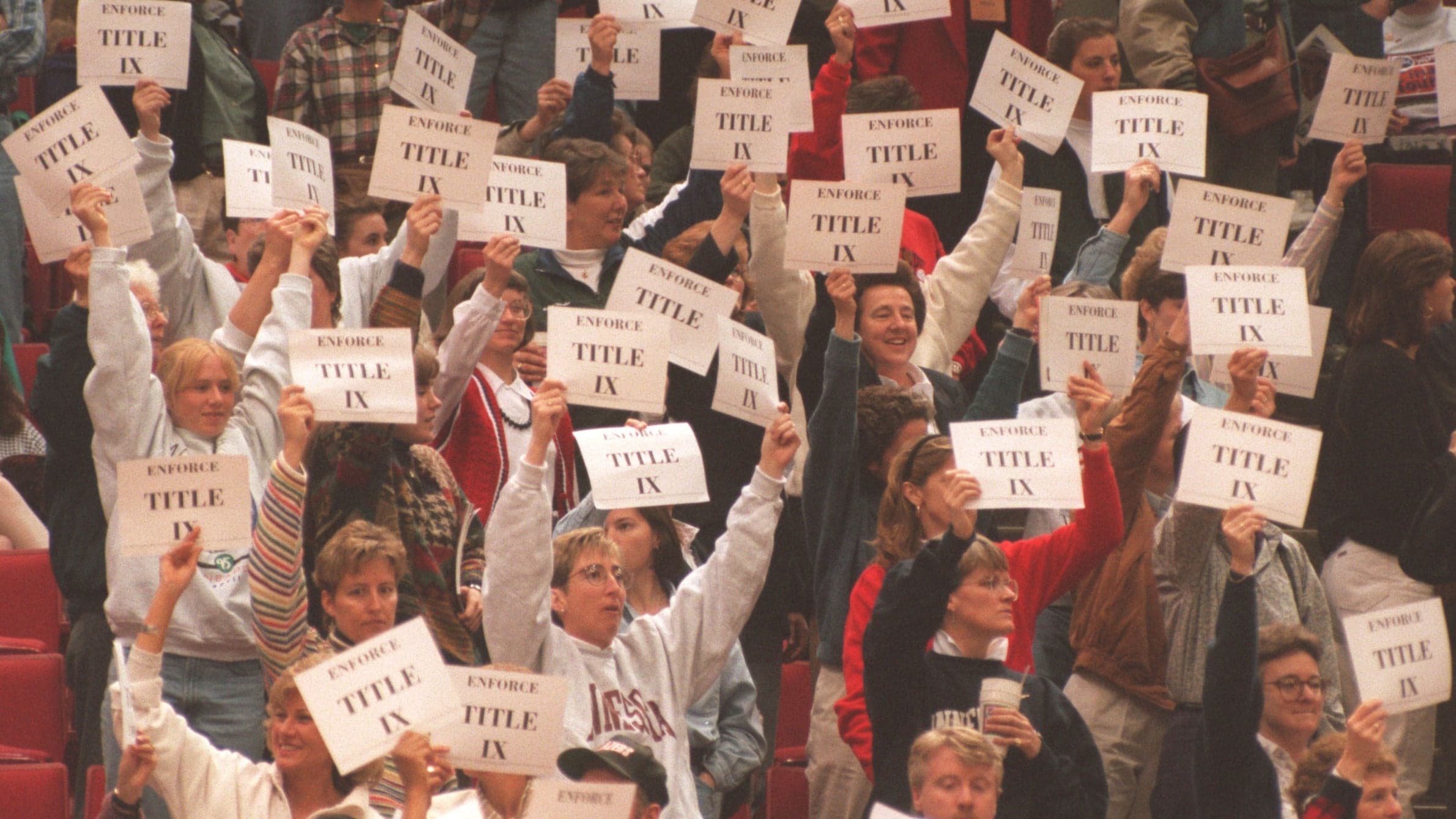
Photo Credit: JOEY MCLEISTER/Star Tribune via Getty Images
On June 23, 1972, Title IX of the education amendments of 1972 is enacted into law. Title IX prohibits federally funded educational institutions from discriminating against students or employees based on sex. It begins: “No person in the United States shall, on the basis of sex, be excluded from participation in, be denied the benefits of, or be subjected to discrimination under any education program or activity receiving Federal financial assistance.” As a result of Title IX, any school that receives any federal money from the elementary to university level—in short, nearly all schools—must provide fair and equal treatment of the sexes in all areas, including athletics.
Before Title IX, few opportunities existed for female athletes. The National Collegiate Athletic Association (NCAA), which was created in 1906 to format and enforce rules in men’s football but had become the ruling body of college athletics, offered no athletic scholarships for women and held no championships for women’s teams. Furthermore, facilities, supplies and funding were lacking. As a result, in 1972 there were just 30,000 women participating in NCAA sports, as opposed to 170,000 men.
Source: history.com
Share this:

Why Settlements are illegal – a repost from 2019
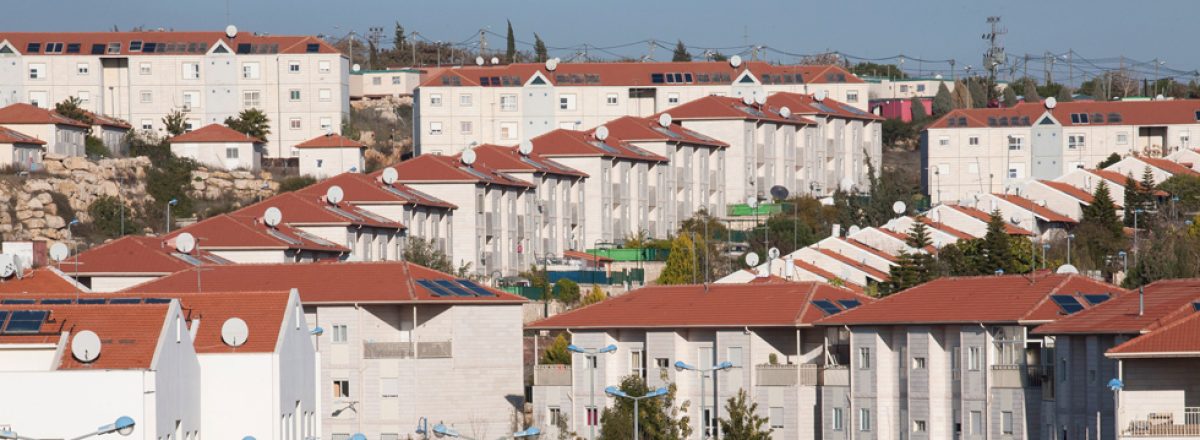
International humanitarian law is very clear that occupation must only be temporary; the Israeli settlements are in direct violation of this principle. For instance, the settlements are in breach of Article 49 of the 4th Geneva Convention, which forbids an occupier from transferring its own civilians into the territory it occupies. Additionally, according to Article 55 of the Hague Regulations, the occupying power’s role is to safeguard occupied properties and maintain the status quo.
As the international development organization Diakonia explains, the construction of settlements violates this article because of the major changes it inflicts upon the occupied territory. And, according to Article 43 of the Hague Regulations, the occupying power must uphold order and safety while respecting the laws of the occupied country. Yet as Diakonia also explains, the settlements actually undermine public order and violate existing laws.
See also the following pages from the B’tselem (The Israeli Information Center for Human Rights in the Occupied Territories) website:
Share this:

The Lincoln Memorial Reflecting Pool, completed in 1923 and reconstructed in 2012, is a central landmark of the National Mall, symbolizing reflection, democracy, and historical memory.
Design and Construction
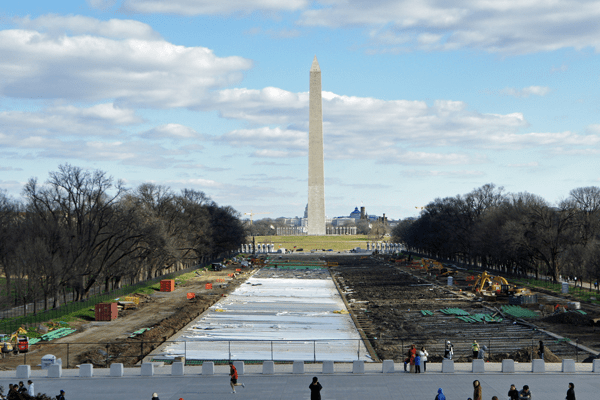
The Reflecting Pool was designed by architect Henry Bacon as part of the Lincoln Memorial complex and the broader 1901 McMillan Plan for the National Mall, which envisioned a grand axial layout connecting key monuments. Construction began in 1919 and was completed in 1923, shortly after the Lincoln Memorial’s dedication in 1922 The pool measures approximately 2,030 feet long and 167 feet wide, with a depth ranging from 18 inches at the edges to 30 inches in the center, holding roughly 6.75 million gallons of water Its long, narrow rectangular form was inspired by classical sacred pools, creating a reflective surface that mirrors the Lincoln Memorial, the Washington Monument, and the surrounding landscape
Structural Challenges
The pool was originally built on marshland supplemented with dredged material from the Potomac River, without a proper underlying support structure. Over decades, the heavy structure gradually sank into the soft ground, leading to leaks and water loss of up to 500,000 gallons per week by the 1980s. Temporary fixes, such as pouring concrete into the bottom, were insufficient, and the pool’s structural integrity continued to deteriorate.
Restoration and Modernization
A major restoration project began in November 2010 and lasted 18 months, costing over $30 million The reconstruction involved draining the pool, removing most of the original structure, and installing over 2,100 timber pilings sunk into the ground to stabilize the basin The water system was modernized to circulate water from the Tidal Basin, replacing the previous potable water supply, and paved walking paths were added to prevent erosion The restoration preserved the pool’s reflective quality while ensuring long-term structural stability.
Cultural and Historical Significance
The Reflecting Pool has been the site of numerous historic events. Most notably, it framed Martin Luther King Jr.’s “I Have a Dream” speech during the 1963 March on Washington, hosting over 250,000 people. It has also been central to presidential inaugurations, civil rights demonstrations, memorial services, and public celebrations, including the 2009 Obama inauguration. Its reflective surface not only enhances the visual impact of the Lincoln Memorial but also serves as a symbolic mirror of American ideals, continuity, and civic engagement
Legacy
The Lincoln Memorial Reflecting Pool remains a vital ceremonial and aesthetic feature of the National Mall, blending classical design with democratic symbolism. Its history reflects both the engineering challenges of building on marshland and the cultural importance of public spaces in American history, making it a landmark of both architectural and social significance
Sources: daveslocker.net, wiki, history.com, image from mallhistory.com


You must be logged in to post a comment.