

 First posted seven years ago
We are not myths of the past, ruins in the jungle, or zoos. We are people and we want to be respected, not to be victims of intolerance and racism.” —Rigoberta Menchu, Guatemala Nobel Peace Prize Winner, 1992
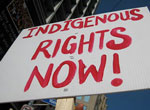
The United Nations Declaration on the Rights of Indigenous People has now been endorsed by 161 countries around the world. It is time for all countries to walk this talk. Here are some of the ways you can join RAN in doing just that.
Table of Contents
**Stand for Justice
**Reclaim Ancestral Lands
**Honor Sacred Sites
**Respect Traditional Territories
**Recognize Free, Prior & Informed Consent
**Protect-An-Acre
**RAN Recommends
~~~~~~~~~~~~~~~~~~~~
Stand For Justice
Chevron’s massive oil disaster in the Ecuadorean Amazon has affected the health, culture and communities of five Indigenous nationalities: the Cofan, Siona, Secoya, Kichwa, and Huaorani. Chevron has now been found guilty by a court of law but, unsurprisingly, is refusing to pay. Stand with the Indigenous peoples of the Amazon. Stand up to Chevron. Join us
~~~~~~~~~~~~~~~~~~~~~~~
Reclaim Ancestral Lands
Right now the Indigenous people of Long Teran Kanan in Malaysian Borneo are standing up to the palm oil industry and its unchecked expansion into their rainforest home. After more than a decade of struggle, the Long Teran Kanan community peacefully reclaimed part of their ancestral lands from the palm oil giant IOI Group, one of Cargill’s key suppliers.
~~~~~~~~~~~~~~~~~~~
Honor Sacred Sites
Rainforest Action Network‘s headquarters in San Francisco, CA is located on the traditional land of the Ohlone people. Segorea Te a.k.a. Glen Cove is a shellmound, a sacred burial site of the Ohlone people, and it is currently being threatened by proposed development. The recreation department of Vallejo, CA wants to pave trails and parking lots over this sacred site. Tell City of Vallejo officials to respect sacred sites now.
~~~~~~~~~~~~~~~~~~~~~~~~
Respect Traditional Territories
While Disney’s image is built on fairy tales, much of Disney’s manufacturing is built on nightmares. Lab results have shown that Disney, the leading publisher of children’s books worldwide, uses paper created from the destruction of Indonesia’s rainforests. The paper industry’s destruction of rainforests causes Indigenous communities to be pushed off their land, and plant and animal species to be driven further towards extinction. This month RAN activists gave Disney execs a huge wake-up call. So can you.
~~~~~~~~~~~~~~~~~~~~~~~~
Recognize Free, Prior & Informed Consent
 To many the World Bank is known as a human rights bulldozer blindly implementing policies around the world that erode the rights, culture, ecosystems and economies of rural and Indigenous peoples. That’s why it may surprise some that the IFC, the private lending arm of the World Bank, recently announced revisions to its policy for projects proposed on Indigenous lands—the IFC now recognizes the principle of Free, Prior, and Informed Consent (FPIC). Will the World Bank walk its talk? Will other banks follow suit? The world is watching.
~~~~~~~~~~~~~~~~~~~~~~~~
Protect-An-Acre
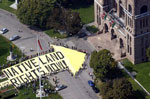 Since 1993, RAN’s Protect-An-Acre (PAA) program has distributed more than one million dollars in grants to over 150 Indigenous-led organizations, frontline communities, and allies around the world working to regain control of and sustainably manage their traditional territories. PAA is one of the most direct and effective ways you can stand in solidarity with Indigenous communities and contribute to the protection of our world’s forests.
~~~~~~~~~~~~~~~~~~~~~~~~
RAN


 Be a Seed for Change
You must be logged in to post a comment.