Tag Archives: Google

a message from … Jeremy Bird, BarackObama.com


Exactly one year ago, millions of Americans will head to polling places all around the country.

We’ve been reminding you of that a lot lately because so much is at stake.

And it’s time to kick up our organizing efforts, no matter where you live.

Today, we’re rolling out an interactive campaign calendar that’s going to play a crucial role in keeping us all looped in on the organizing we’re doing. It’s got it all — from upcoming primaries and debates to neighborhood canvasses and trainings happening in your community.

We’ll be updating this calendar regularly — and you’ll know about changes as soon as we do, because it can sync with your Outlook and Google calendars online. So important campaign dates, like the last day you can register to vote where you live, will be in the same place with your all your other to-dos.

If you want to be a part of all the building we’re going to do together in the next year, let us know by making a commitment to volunteer in this campaign — then download the calendar to stay in the loop. www.BarackObama.com

Here’s what I think is really cool about this calendar: It doesn’t just keep you up to date on the campaign’s day-to-day activities. It actually maps out our organizing for the next 12 months — lets you know what phase we’re currently in, what that means for your community, and how the work we’re all doing is connected to the bigger picture.

Right now, we’re in the team-building phase — honing in on growing neighborhood teams of supporters in communities across the country. This is the phase that lays the foundation for the four phases to come. Click on one of the links in this message, and have a look for yourself.

When you do, you’ll see a number — 365 — the number of days we have to build teams and reach out to voters between now and Election Day. That time is a gift — but only if we use it. Let’s go.

Commit to volunteer for 2012, and stay up to date by downloading our new interactive calendar:

WWW.BarackObama.com

Thanks,

Jeremy

Jeremy Bird
National Field Director
Obama for America

Official Google blog … Clean Power Finance- Green blog


Taking in more sun with Clean Power FinancePosted: 27 Sep 2011 09:00 AM PDT

(Cross-posted from the Green Blog)This morning, at the Renewable Energy Finance Forum (REFF-West) in San Francisco, I announced a new $75 million investment to create an initial fund with Clean Power Finance that will help up to 3,000 homeowners go solar. This is our second investment in residential solar, and we’ve now invested more than $850 million overall to develop and deploy clean energy.As we said when we made our first residential solar investment, we think it makes a lot of sense to use solar photovoltaic (PV) technology—rooftop solar panels—to generate electricity right where you need it at home. It greens our energy mix by using existing roof space while avoiding transmission constraints, and it can be cheaper than drawing electricity from the traditional grid.Purchasing a solar system is a major home improvement, but the upfront cost has historically been one of the biggest barriers for homeowners. Solar installers across the country don’t always have the resources to find financing for customers, or the capital to provide it themselves. And for investors like Google, banks and others, it can be difficult to enter a fragmented solar market with many companies, and get connected to individual homeowners.

That’s where Clean Power Finance comes in. They’ve developed an open platform that connects installers with investors like Google to provide financing to homeowners. Solar installers sign up with Clean Power Finance to get access to the company’s comprehensive sales solutions, including consumer financing from investors, like the Google fund. This enables installers to sell more systems and grow their business. The installer builds the system, the investor (in this case, Google) owns it, and homeowners pay a monthly payment for the system, at a price that’s often less than paying for energy from the grid. Maintenance and performance are taken care of by Clean Power Finance and its network of installers.

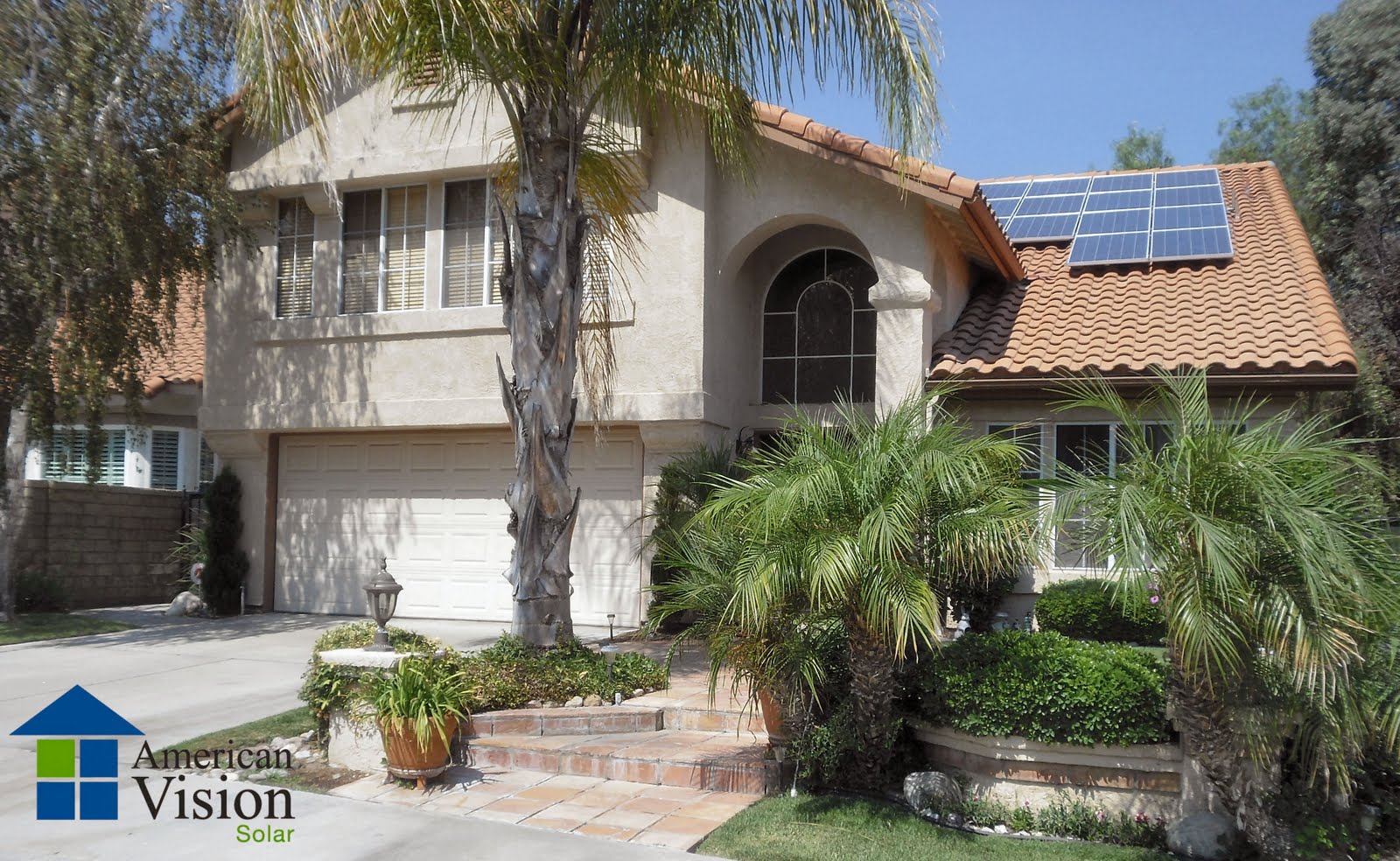
Owned by Google, operated by Clean Power Finance and installed by American Vision Solar, the Colin family of Santa Clarita, Calif. has a 4.14 kW solar system

This innovative and scalable model makes business sense for Google, Clean Power Finance, solar installers and homeowners too. We’re excited to be one of the first investors to partner with Clean Power Finance and enable the company to continue forging strong relationships with solar installers (like the ones they announced last week with SunLogic, California Solar Systems, American Vision Solar—learn more on Clean Power Finance’s website). By making financing more readily available, the Clean Power Finance platform has the potential to lower costs and accelerate adoption of solar energy.

We’ve already installed a 1.6MW rooftop solar installation at the Googleplex back in 2007. Now, through Clean Power Finance and our previous investment this year, we’re hoping to have an even larger impact. We look forward to watching our funding help more than 10,000 homeowners generate clean electricity from the sun.

Posted by Rick Needham, Director of Green Business Operations

European Commission President Barroso takes your questions on YouTubeWorld ViewPosted: 27 Sep 2011 03:12 AM PDT

(Cross-posted on the YouTube Blog)Tomorrow, September 28, European Commission President José Manuel Barroso will deliver his annual State of the Union Address. In these turbulent times, we wanted to give people a chance to make their voices heard and ask their questions about the EU.  So we teamed up with broadcaster Euronews and invited President Barroso to answer your questions in a special, live YouTube World Viewinterview that will take place on Thursday, October 6 at 10:00am Central European Time.Starting today, we invite you to submit your questions for President Barroso via youtube.com/worldview. Questions can be on any topic, from the Euro crisis and austerity measures to growth and jobs, from foreign policy and immigration to ethnic minority issues, human rights and the environment. You can ask written or video questions—and view and vote on other people’s questions—in any of the European Union’s languages, thanks to Google Translate.During the interview on October 6, hosted by Euronews anchor Alex Taylor, the President will answer a selection of the most popular questions, as determined by your votes. The interview will be streamed and broadcast in multiple languages on both YouTube and Euronews.

President Barroso’s interview will be the first multi-lingual livecast in the World View series, which gives anyone with an Internet connection the ability to pose questions, vote on what’s most important to them and get answers directly from senior politicians and world leaders.  President Barroso’s interview follows interviews with U.S. President Obama, President Kagame of Rwanda, U.K. Prime Minister Cameron, Spanish Prime Minister Zapatero and Israeli Prime Minister Netanyahu.

Whatever your question, President Barroso wants to hear from you. Be sure to submit your question via the World View channel before midnight CET on Wednesday October 5.

Posted by Al Verney, Head of Communications, Google Brussels

Official Google blog


From the desert to the web: bringing the Dead Sea Scrolls online

(Cross-posted on the Nonprofits Blog, the Google.org Blog and the European Public Policy Blog)It’s taken 24 centuries, the work of archaeologists, scholars and historians, and the advent of the Internet to make the Dead Sea Scrolls accessible to anyone in the world.  Today, as the new year approaches on the Hebrew calendar, we’re celebrating the launch of the Dead Sea Scrolls online; a project of The Israel Museum, Jerusalempowered by Google technology.http://youtu.be/5rYj_0foJYA

Written between the third and first centuries BCE, the Dead Sea Scrolls include the oldest known biblical manuscripts in existence.  In 68 BCE, they were hidden in 11 caves in the Judean desert on the shores of the Dead Sea to protect them from the approaching Roman armies. They weren’t discovered again until 1947, when a Bedouin shepherd threw a rock in a cave and realized something was inside.  Since 1965, the scrolls have been on exhibit at the Shrine of the Book at The Israel Museum, Jerusalem. Among other topics, the scrolls offer critical insights into life and religion in ancient Jerusalem, including the birth of Christianity.

Now, anyone around the world can view, read and interact with five digitized Dead Sea Scrolls.  The high resolution photographs, taken by Ardon Bar-Hama, are up to 1,200 megapixels, almost 200 times more than the average consumer camera, so viewers can see even the most minute details in the parchment.  For example, zoom in on the Temple Scrollto get a feel for the animal skin it’s written on—only one-tenth of a millimeter thick.

You can browse the Great Isaiah Scroll, the most well known scroll and the one that can be found in most home bibles, by chapter and verse. You can also click directly on the Hebrew textand get an English translation.  While you’re there, leave a comment for others to see.

The scroll text is also discoverable via web search.  If you search for phrases from the scrolls, a link to that text within the scroll viewers on the Dead Sea Scrolls collections site may surface in your search results.  For example, search for [Dead Sea Scrolls “In the day of thy planting thou didst make it to grow”], and you may see a link to Chapter 17:Verse 11 within the Great Isaiah Scroll.

This partnership with The Israel Museum, Jerusalem is part of our larger effort to bring important cultural and historical collections online.  We are thrilled to have been able to help this project through hosting on Google Storage and App Engine, helping design the web experience and making it searchable and accessible to the world.  We’ve been involved in similar projects in the past, including building the Yad Vashem Holocaust photo collection and collections at the Prado Museum in Madrid.  We encourage organizations interested in partnering with us in our archiving efforts to enter their information in this form. We hope you enjoy visiting the Dead Sea Scrolls collection online, or any of these other projects, and interacting with history at your fingertips.

Posted by Eyal Miller, New Business Development and Eyal Fink, Software Engineer, Israel Research and Development Center

Office Google blog …Gone fishin’


Gone fishin’—piloting community supported fisheries at Google

Posted: 29 Jul 2011 09:44 AM PDT

(Cross-posted on the Google Green Blog)I’ve always loved the ocean—I was born in Shanghai, which means “upon the sea.” And as a chef, I’m always drawn to food that claims a spirit of place. After moving to California, near Half Moon Bay, I began visiting the docks to buy seafood, and got to know the fishermen.Over time, it became evident to me that this part of our food supply is broken: many consumers purchase stale, unsustainably-raised fish from chain grocers. Meanwhile, fishermen often sell their diminishing catch to wholesalers at a very low profit, meaning their livelihoods are no longer sustained by their catch. There’s also the environmental factor to consider: Overfishing and illegal practices cause worldwide decline in ocean wildlife populations and wreak havoc on underwater habitats—not to mention the carbon footprint of transporting seafood far from its origin.Google’s chefs have long been committed to sourcing food for our cafes as locally, seasonally and organically as possible. And in our Mountain View headquarters, many employees cook with the same ingredients at home thanks to on-site Community Supported Agriculture (CSA) programs. When I joined the team as an executive chef in Mountain View, I wanted to make a difference in our purchasing program for seafood. For the five years leading up to then, I wrote a column for the San Francisco Chronicle called “Seafood by the Season,” and I knew it could be done. In early 2010, we began a push to apply the most rigorous standards to our seafood-buying practices, and respond to the in-the-moment fluctuations of the catch from small, independent fishermen.

Things took off from there. My colleague Quentin Topping dreamed of providing the same high-quality seafood we serve in our cafes for Googlers to take home to their families. That idea became the Google Community Supported Fishery (CSF), which we launched in May 2011. In this program, Googlers sign up to purchase a weekly supply of local, sustainable seafood, supplied through a partnership with the Half Moon Bay (HMB) Fisherman’s Association.

The Google Culinary team on a visit with fishermen in Half Moon Bay, Calif.—Quentin and I are the second and third from the left, in black.

We tend to think on a massive scale at Google—whether it’s how to deliver instant search results around the globe or help thousands of small businesses get online—but when it comes to feeding our employees at work and at home, it really comes down to a local touch. Knowing where our seafood, meat and produce come from, as well as knowing how they’re raised, farmed or harvested, makes all the difference in the on-the-ground work of sustainability. We see many bright spots ahead for our Community Supported Agriculture and Fishery programs, such as expansion to other offices and adding a grass-fed beef and pasture-raised poultry program. It’s exciting to work someplace where we can think big and local.

We know of two CSFs in the Bay Area. The Half Moon Bay Fishermen’s Association supplies only Google at the moment, but will soon add public drop-off sites—keep posted by visiting Farmigo.com. The other is CSea out of Bodega Bay. If you live elsewhere, we hope you’ll consider stepping up to create one in your area.

And even if you don’t live near the ocean or have direct access to fresh-caught seafood, the choices you make about what fish to purchase or order in restaurants can make a real difference. You may want to consider following the guidelines that we used for our Google Green Seafood policy: Whenever possible, purchase species caught locally and in-season, by small, independent fisher-families, using environmentally-responsible methods. We think it’s important to be responsive to the fluctuations of catch too, and source from fisheries that enforce catch limits or are guided by ecosystem-based management programs. As for us, we’ll continue to research and source responsibly managed farmed seafood, and always keep transparency and Googler health at the center of our program.

Posted by Liv Wu, Executive Chef

Get Elastic : Bloggers Digest July 2011


Bloggers Digest July 2011

Posted under General on July 29th, 2011 by Linda Bustos / No Comments
 
Bloggers Digest is our monthly ritual that highlight posts from other blogs that are of value and interest to online retailers and Internet marketers.

  • Confused by your PPC metrics and reports? The Rimm-Kaufman Group demystifies 24 of the top paid search metrics.