Tag Archives: KFC

On Strike


By

Fast Food Workers Strike for a Higher Minimum Wage

Fast food workers in at least 60 cities across the country went on strike today in order to demand a living wage.

MinWageStrike2

MinWageStrike1

The Service Employees International Union (SEIU) notes that the median wage for fast food workers at chains like KFC, McDonald’s, and Taco Bell is just $8.94 per hour.

Meanwhile, the industry is raking in $200 BILLION a year in profits and CEOs are literally making thousands of dollars per hour:

Yet while top executives at food corporations like McDonald’s, Taco Bell, Olive Garden and Red Lobster make an average of $9.4 million per year, or $4,517 per hour, a full-time worker on minimum wage earns $15,080 per year — less than those execs pull down in four hours. And while the industry takes in $200 billion a year, many of its workers rely on taxpayer-subsidized food stamps and Medicaid to get by.

Here are some fast facts about the minimum wage — and why it’s time to raise it.

Raising the Minimum Wage Would Boost the Economy

  • When the minimum wage is increased for workers, the entire economy benefits. Increasing the minimum wage would put money in the pocket of workers, who are likely to spend the money immediately on things like housing, food, and gas. This boost in demand for goods and services helps stimulate the economy. The money gets funneled back to employers who would need to hire more staff to keep up with the demand.

Millions of Americans Would Benefit From Increasing the Minimum Wage

  • Millions of workers would benefit from raising the minimum wage. Raising the minimum wage would not just help those who earn the minimum wage. Workers earning near the new minimum wage would also see an indirect increase due to what economists call a spillover effect.
  • Women would benefit tremendously from raising the minimum wage. Most minimum wage workers are women—in 2012, over 64% of minimum-wage workers were women.

Wages Have Not Kept Up With Increased Productivity or Inflation

Over the past few decades, worker productivity in the U.S. has risen dramatically, but the average American worker is not reaping the benefits. Instead, wages have grown at a tepid pace, and workers are getting a smaller and smaller piece of the pie.

  • Wages are not keeping pace with increased productivity. From 1968 to 2012, worker productivity rose 124%. If the minimum wage kept up with increases in worker productivity, the minimum wage would be close to $22 an hour.
  • The minimum wage has not kept pace with inflation. Back in 1968, the federal minimum wage was $1.60 an hour. If the minimum wage kept up with inflation, it would be $10.74 today. Today’s minimum wage of $7.25 an hour is 31% lower than the value of the minimum wage in 1968.

Rising Inequality

Although the average workers’ wages have remained stagnant, the pay for those at the top has skyrocketed.

  • CEOs make 273 times more than average workers do. In 1965, CEOs made 20.1 times the pay of the average worker. By 2012, that ratio was more than 10 times larger: CEOs made 273 times the pay of the average worker in 2012.
  • The 1% is getting richer and richer. Between 1979 and 2007, the richest top 1% of American households saw their income rise by 281%, or an increase of more than $973,000 per household. Meanwhile, the poorest Americans saw an increase in their income of only 16%, or $2,400.

Raising the Minimum Wage is a Winning Issue

Raising the minimum wage, which nearly three in four Americans supports, is also “a political goldmine” for Democrats:

Wouldn’t it be nice if there was an issue that was hugely popular with the public, fit perfectly into the progressive agenda, appealed to the white working class, and split the Republican Party right in half? Sounds to be good to be true, right? Actually, it’s hiding in plain sight: raising the minimum wage.

BOTTOM LINE: One demand of the March on Washington for Jobs and Freedom, which happened 50 years ago yesterday, was “a national minimum wage act that will give all Americans a decent standard of living.” As we reflect on the legacy of Dr. King, our increasingly economically unequal society, and the plight of low-wage workers, it’s clear that it’s way past time to raise the minimum wage.

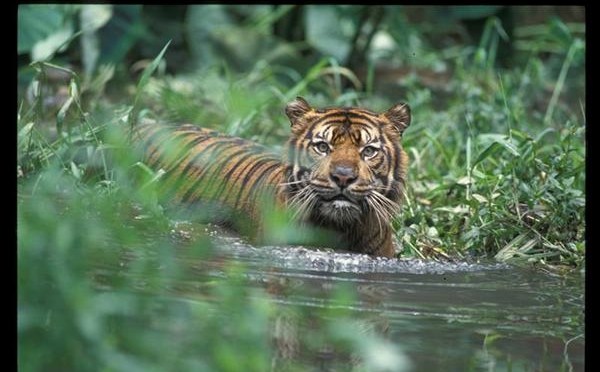
400 Sumatran tigers left in the wild –


Donate today!
Help us save the last remaining Sumatran tigers and stop KFC from destroying rainforests by making a donation of $5 today.

Last week, over 40,000 online activists sent a message to KFC CEO David Novak asking him to end his company’s relationship with rainforest destruction.
With only 400 Sumatran tigers left in the wild, time is running out to save their forest homes from destruction for fast food packaging.
KFC is definitely feeling the heat. KFC restaurants in Indonesia have already cut business ties with notorious rainforest destroyer, Asia Pulp & Paper (APP). But there’s been nothing but a shameful silence from the company’s headquarters in Kentucky. That has to change.
It’s only going to happen if we keep up the pressure. And that’s exactly what we intend to do with your support.
Please make a donation of $5 so that we can continue to put pressure on KFC and save the Sumatran tiger from extinction.
With so few tigers left in the wild, and their habitat disappearing fast, it is important that we act now to protect them.
Greenpeace is funded by people, not corporations, and the success of this campaign depends on activists like you uniting to stand up to corporate greed.
With your support, we’ll fight back with our expert staff on the ground, international market pressure from customers, and worldwide media exposure — but we need to do it now. The Indonesian rainforest, where the only wild Sumatran tigers left on the planet live, is being destroyed every day at an alarming rate. Please donate $5 today to help save the Sumatran tigers by getting KFC to end its relationship with rainforest destruction.
For the forests,
Rolf Skar Greenpeace Forest Campaign Director

The Sumatran tiger is almost extinct … GREENPEACE


There are only 400 Sumatran tigersremaining in the world and they’re in serious trouble.Donate today!Help us raise $60,000 by June 8th to save the last Sumatran tigers and their forest homes.

Only 400 Sumatran tigers are left in the world.

Just 80 years ago, there were three unique subspecies of tigers found in Indonesia. Today, two of them are extinct — and now the last one is in serious trouble.

At these horrifically low numbers, every day counts for the Sumatran tiger.

They need our help now. Please make an urgent donation to help save them.

WWW.Greenpeaceusa.org

The Sumatran tiger is classified as “critically endangered” — on the brink of extinction and barely hanging on.

They’ve lost 93% of their habitat because companies like Asia Pulp and Paper (APP) are destroying their forest homes. Tigers are left to roam landscapes where they are easily slaughtered by poachers for their body parts or shot by the people moving in.

How many more acres of destruction can the Sumatran tiger survive before its status moves from “critically endangered” to “extinct”? We have to act, and fast.

To fight back, we need your help to expose the massacre, pressure corporations like KFC to cut ties with APP and fight on the ground in Indonesia to save these last remaining Sumatran tigers.

We can’t wait another day. Not when we’re dealing with a population of only 400 tigers. If we don’t act now, these beautiful animals will be pushed to extinction — gone forever.

Since Greenpeace takes absolutely no money from corporations or governments, we depend entirely on you to power our independent and hard-hitting campaigns. Will you help save these 400 Sumatran tigers?

Please help us raise $60,000 in the next 9 days to make it possible. We need just 100 people from Washington to reach our goal.

Without you, these 400 tigers don’t stand a chance. APP will continue lining its pockets with profits, poachers will continue shooting these tigers and reselling their body parts in places like China, and these last Sumatran tigers will just be collateral damage.

Together, we can stop them.

Make a gift to Greenpeace today.

WWW.Greenpeaceusa.org

With the financial help of supporters like you, we’ve already put the squeeze on APP, convincing major companies like Nestle, Kraft and Mattel to stop buying products linked to rainforest destruction. And other companies have followed suit as well.

Over the past few weeks we’ve turned up the pressure on KFC to end their relationship with APP and to stop using rainforest fiber in its throw-away paper products. We’ve hit them in the press, at their corporate headquarters, on the web, over the phone lines and at stores around the world. We have plans to do even more — but we need your support to keep this work going and save the Sumatran tiger.

Please give a gift today to help give these last Sumatran tigers a future — before it’s too late.

Together we’ve rallied to overcome seemingly insurmountable problems and won victories to protect the planet — and I know we can do it again to save the Sumatran tiger.

Together we are powerful, together we make a difference.

For the forests,

Rolf Skar
Greenpeace Forest Campaign Director

P.S. We need just 100 supporters like you to donate from Washington to meet our goal.

Please donate right now via our secure website or by calling 1-800-722-6995.

What’s in KFC’s secret recipe?


Greenpeace
KFC is trashing critical Sumatran tiger habitat with its throw-away packaging.
Take Action
Tell KFC to stop using rainforest destruction before it’s too late!
Take ActionWWW.Greenpeaceusa.org

Rainforest destruction. Not what you expected? Unfortunately it’s true. Our researchers have found that KFC’s throw-away packaging contains fiber from Indonesia’s rainforest.
That’s right. KFC is destroying the habitat of the last remaining Sumatran tigers for potato wedges and 12-piece buckets of extra crispy chicken. It’s disgusting.
KFC gets the paper for its packaging from a notoriously destructive company called Asia Pulp & Paper (APP). And APP is driving rainforest destruction in Indonesia at an alarming rate to meet KFC’s demands — leaving endangered Sumatran tigers with nowhere to go.
Don’t let fast food packaging be the end of the Sumatran tiger and everything else that calls the Indonesian rainforest home. Help us send 50,000 messages to KFC in the next 72 hours by taking action right now.
Tell KFC to stop using rainforest destruction before it’s too late.
Greenpeace activists are delivering the very same message at KFC’s headquarters in Kentucky right now. It’s all part of the next phase in our campaign to protect the Sumatran tiger and save the Indonesian rainforest.
Together, we’ve already convinced some of the world’s largest companies — Nestle, Mattel, Kroger — to cut ties with APP. Now it’s time to keep the momentum going and do the same with KFC.
It wasn’t that long ago that the Sumatran tiger thrived in Indonesia. Today there are only a few hundred left in the wild. What will this look like a week from now? A month? A year? The answer to that question is up to us.
Companies like Asia Pulp & Paper are showing no signs of letting up. Even with all of our successes, at the current rate of destruction, the forecast for these tigers and the rainforest itself isn’t looking good.
It’s not too late, but KFC has to stop buying packaging from Asia Pulp & Paper. It won’t be easy and the company is only going to do it if we generate enough public outcry. That’s why it’s so important that you take action today.
Help us expose the truth behind KFC’s real recipe and tell it to stop serving up fast food in forest destruction. Send your email today.
For the forests,
Rolf Skar Greenpeace USA Forest Campaign Director