
Contact: Sandra Jonker, (360) 696-6211
WDFW seeks to share information on elk hoof disease
OLYMPIA-The Washington Department of Fish and Wildlife (WDFW) is holding a September public meeting and has launched a website to share information about reports of hoof disease among southwest Washington elk.
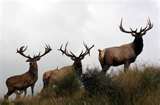
Lame elk or elk with overgrown or missing hooves in southwest Washington have been observed with increasing frequency in the region. At times, multiple animals in a group have been reported limping and showing signs of hoof disease, such as deformed hooves or club hooves. The condition has been observed in both male and female elk of various ages.
The public information meeting will run from 6-8 p.m., Monday, Sept. 17, in the Cowlitz PUD auditorium, 961 12th Ave., in Longview. It will include a brief presentation about the elk hoof disease, followed by a question-and-answer session.
WDFW is also providing an online reporting tool for citizens to report affected animals ( http://wdfw.wa.gov/conservation/health/hoof_rot/ ). The site offers information on the disease, as well as the reporting tool for those who observe elk with signs of hoof disease.
“The condition we are seeing in elk doesn’t appear to be an exact match with any of the known hoof diseases in domestic or wild animals, but it shares similarities with several diseases known in wildlife or livestock,” said Sandra Jonker, WDFW’s wildlife manager for the region. However, according to local veterinarians, the condition does not seem to be affecting domestic livestock in the area, she said.
WDFW is working with specialists in other natural-resource agencies and universities to gain a better understanding of what is causing the hoof disease.
Understanding the cause of elk hoof disease in southwestern Washington is an important step in understanding and managing its impacts, and citizen reports of elk with hoof disease will assist wildlife biologists in estimating the frequency and range of the condition, Jonker said.
“In recent years, outdoor recreation enthusiasts and landowners who shared reports of hair loss in western Washington Columbian black-tailed deer, helped wildlife biologists track the range and scope of that condition,” said Jonker. “We’re hoping that citizen observations can further our understanding of this disease as well.”


 Be a Seed for Change
You must be logged in to post a comment.