Tag Archives: republicans

Where Do Women Turn When Planned Parenthood Is Gone?


Where Do Women Turn When Planned Parenthood Is Gone?

When conservatives made the big push to defund Planned Parenthood, they swore the issue was not about denying women health care services, but about protecting taxpayer dollars from waste. Two recent reports from the front lines of the Planned Parenthood battle show otherwise.

As Kate Sheppard reports, when officials in Shelby County, Tennessee took nearly $400,000 in state funding from the local Planned Parenthood, the Obama administration had to step in and fund the clinic directly. But instead of funding Planned Parenthood, originally local leaders directed that money to a religious organization that provides some women’s health care services. Needless to say, the taxpayer dollars were not well used.

Between July 2011 and June 2012, more than $500,000 of the $1.3 million grant the county received was not used at all. Hannah Sayle reports that Christ Community Health Services was averaging just 51 Title X visits per month in early 2012, compared to Planned Parenthood’s 841 visits in August 2011.

Amazing. When an organization isn’t interested in providing family planning services, women eventually have to turn elsewhere for that care. As Sheppard reports, the number of Title X visits in the state didn’t go down, but they did in Shelby County, meaning women had to travel outside of the county to get the care they need. The demand for health care didn’t go down, it just became less accessible.

The same is true in Texas where reporter Andrea Grimes chronicled her efforts trying to find a health care provider under the state’s Women’s Health Program for a well-woman visit. Even in a major metropolitan area like Austin, Texas trying to find a clinic to provide low-income, quality reproductive health care now that the state has excluded Planned Parenthood from its funding regime is practically impossible. In one instance, Texas officials listed a colonscopy clinic as one of the places a woman could go for a pap smear. When Grimes called to try and schedule an appointment and inquire about the services, clinic workers were understandably confused.

We can expect similar stories out of states like Ohio and Arizona as more and more hard-right legislatures set their sights on family planning services. And as these case studies develop, we are learning what we already knew: making health care services inaccessible won’t make the need for those services go away. Instead, it makes women go to greater expense and hardship to simply take care of their bodies. And when it’s too much, women will simply skip visits. In the case of well-women visits, that means a missed cancer screen. For some women, well-visits are the only time they visit a doctor absent an emergency, so that means fewer checks for other chronic conditions.

The inevitable conclusion to these developments is of course an increasingly segregated and discriminatory method of delivering health care to women. The Ann Romneys of the world will always have access to the health care they want and they need. But working women will not. This isn’t hypothetical, it’s happening.

Related Stories:

Pennsylvania Joins Rush to Defund Planned Parenthood

Ohio GOP Move to Strip Planned Parenthood of Funds

Arizona Moves to Defund Planned Parenthood

Read more: http://www.care2.com/causes/when-planned-parenthood-leaves-who-provides-the-care.html#ixzz26eQAPqDX

70th anniversary of the death camp’s liberation


A Holocaust survivor stands outside a detention block of the Auschwitz Nazi death camp in Oswiecim, Poland, Tuesday, Jan. 27, 2015.
Some 300 Holocaust survivors traveled to Auschwitz for the 70th anniversary of the death camp’s liberation by the Soviet Red Army in 1945, down from 1,500 who attended the event 10 years ago.(AP Photo/Alik Keplicz)

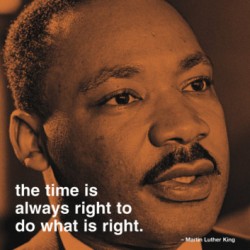
time to make the dream come alive …


mLKjr

Born on 1/15/1929 ….

Inspired by the philosophy of non-violent protest, Martin Luther King Jr. led the American Civil Rights Movement and played a key role in the struggle for racial and economic equality. –
biography.com

 Martin Luther King Jr.

“People are dying for the right to speak freely, for a better life, human rights in all its forms”

No one speaks to life’s struggles better than

 – MLK jr.

“Human Progress is neither automatic nor inevitable even a superficial look at history reveals that no social advance rolls in on the wheels of inevitability. Every step toward the goal of justice requires sacrifice, suffering, and struggle; the tireless exertions and passionate concern of dedicated individuals without persistent effort, time itself becomes an ally of the insurgent and primitive forces of irrational emotionalism and social destruction.

“This is no time for apathy or complacency … This is a time for vigorous and positive action.”

– MLK Jr.

Sarah Breedlove … Millionaire 12/23/1867


This Child of Slaves Grew Up to Become America’s First Female Millionaire

Random Celebrity Article By on October 20, 2014


America is considered to be the “land of opportunity”. Historically, it’s the country people have run to in order to escape persecution, poor living conditions, or lack of opportunities somewhere else. However, for the large number of African people stolen from their homes, shipped across the Atlantic, and sold into slavery, America was anything but a land of opportunity. So it’s pretty darn incredible that America’s first female self-made millionaire, Madam C.J. Walker, was the child of former slaves. Her story is one of perseverance, ingenuity, and triumph. If her amazing life doesn’t make you want to get off your butt and go make your dreams happen, than nothing will.

Madam C.J. Walker, also known as Sarah Breedlove, was born on December 23, 1867, just outside of Delta, Louisiana. She was born on the cotton plantation where her family had been enslaved. She held the distinction of being the first free-born child in the family. The youngest of five, she was the first person in her family born after the signing of the Emancipation Proclamation. However, by age 7, she was orphan. Both of her parents passed away within a year of each other. Their cause of death was not recorded. She was sent to live with her older sister in Mississippi, where it is believed she worked picking cotton and doing housework. Her life in Mississippi was anything but ideal, and though slavery had technically been abolished, most people in the South had yet to “get the memo”, as it were. She worked the same hours she would have worked as a slave and was paid a pittance. Then, she and her family members had to pay exorbitant fees to live in the very same shack that her sister had lived in while she was a slave. Making matters worse, was that her brother-in-law was physically abusive. Eventually, she couldn’t take it anymore. At 14, she married a man named Moses McWilliams, mostly in an effort to get away from her current living situation.

madame

The pair had a baby in 1885. Two years later, Moses passed away, and Sarah and her daughter A’Lelia moved to St. Louis to be closer to Sarah’s older brothers. Her brothers had found some success working as barbers. In St. Louis, she began working as a washerwoman. Her pay was only $1.50 per day. She used the majority of the money to pay for her daughter’s schooling, and also took whatever classes she could herself. She subsequently met and married Charles J. Walker. Mr. Walker worked in advertising and their relationship would prove to be a fortuitous one.

Due to a severe scalp condition, most likely caused by the lye-based products used to straighten her hair, Sarah Breedlove had begun to lose her hair in bunches. Whenever she had a spare moment in her kitchen, she began making her own hair care products, and experimenting with ways to treat her own scalp. A black woman named Annie Turnbo Malone heard about Sarah. Ms. Malone made and marketed her own line of African-American hair care products. She invited Sarah to come work for her as a commission agent. So Sarah, Charles, and A’Lelia relocated to Denver, Colorado and launched a hair care business under Ms. Malone. At the urging of her husband, Sarah changed her professional name to Madam C.J. Walker, and launched her business in earnest. Between her genuinely effective and well-made products and her husband’s advertising acumen, her business grew by leaps and bounds. The couple spent much of the early 1900s, traveling around selling her products all over the south. By 1908, she was able to go out on her own. She opened a factory and her own beauty school in Pittsburgh.

2

The company continued to grow, so Sarah, now Madam C.J., moved operations to Indianapolis. She began training a group of employees who were both salespeople and beauticians. Known as “Walker Agents“, these African-American entrepreneurs began selling her products all over the United States. She began sponsoring conventions, sales awards, and community events. She and her husband divorced in 1913, and rather than slowing her down, it seemed to galvanize her. She traveled to the Caribbean and Latin America, adding more and more “Walker Agents” to her roster and increasing her sales base. By this time, her daughter A’Lelia, had begun to take charge of some portions of operations. A’Lelia purchased prime real estate in Harlem and made it the new base of operations for Madam C. J. Walker Manufacturing. As more responsibility was shifted to her daughter, Madam C.J. Walker began focusing on philanthropy and community improvement. She created scholarship funds, sponsored the building and maintenance of multiple homes for the elderly, donated large sums to both the NAACP and the National Conference on Lynching, and, in 1913, donated the largest amount of money by an African-American to the Indianapolis YMCA.

3

She built a home in Irvington-on-Hudson, New York sometime around 1916 or 1917, and passed away there in 1919, due to hypertension. She was 51 years old. She was the sole owner of Madam C.J. Walker Manufacturing for most of its existence, and the company was worth over $1 million when she died. Additionally, she was worth close to $700,000 herself, separate from the company. That’s the equivalent of $13 million in today’s dollars. It was an astronomical amount in 1919.

At the time of her death in 1919, Madam C.J. Walker was the wealthiest African-American in the United States. She was also generally believed to the country’s first self-made female multi-millionaire. Assuming her net worth was approximately $2 million the year she died, that would be equivalent to $37 million today.

house

2

When she died, her will dictated that 2/3 of all future company profits be donated to charity from that point on. One third of her estate went to her daughter. Her home in Irvington-on-Hudson is now a registered landmark, and the arts center named after her in Indianapolis, the Walker Center, has become nationally famous.

Madam C.J. Walker, aka Sarah Breedlove, went from absolutely nothing, to wealthier than just about everyone else around her. Along the way, she made sure to give back to the community that supported her, and trained hundreds of “Walker Agents” about entrepreneurship, civic duty, and pride. She proved to an entire generation of African-Americans, many of whom had grown up enslaved, that success was possible. Historically and socially, the example she set has proven far more valuable than her millions of dollars.

In the Library: Fresh Fruit, Broken Bodies


fruit&veggiesThis book is an ethnographic witness to the everyday lives and suffering of Mexican migrants. : Migrant Farm workers in the United States (California Series in Public Anthropology)

Based on five years of research in the field (including berry-picking and traveling with migrants back and forth from Oaxaca up the West Coast), Holmes, an anthropologist and MD in the mold of Paul Farmer and Didier Fassin, uncovers how market forces, anti-immigrant sentiment, and racism undermine health and health care. Holmes’ material is visceral and powerful—for instance, he trekked with his informants illegally through the desert border into Arizona, where they were apprehended and jailed by the Border Patrol. After he was released from jail (and his companions were deported back to Mexico), Holmes interviewed Border Patrol agents, local residents, and armed vigilantes in the borderlands. He lived with indigenous Mexican families in the mountains of Oaxaca and in farm labor camps in the United States, planted and harvested corn, picked strawberries, accompanied sick workers to clinics and hospitals, participated in healing rituals, and mourned at funerals for friends. The result is a “thick description” that conveys the full measure of struggle, suffering, and resilience of these farm workers.

Fresh Fruit, Broken Bodies weds the theoretical analysis of the anthropologist with the intimacy of the journalist to provide a compelling examination of structural and symbolic violence, medicalization, and the clinical gaze as they affect the experiences and perceptions of a vertical slice of indigenous Mexican migrant farm workers, farm owners, doctors, and nurses. This reflexive, embodied anthropology deepens our theoretical understanding of the ways in which socially structured suffering comes to be perceived as normal and natural in society and in health care, especially through imputations of ethnic body difference. In the vehement debates on immigration reform and health reform, this book provides the necessary stories of real people and insights into our food system and health care system for us to move forward to fair policies and solutions.

from amazon.com