Tag Archives: Supreme Court of the United States

Take Action: Send a Message to the Wal-Mart Women


A woman taking a stand for fair pay is incredible. A whole group of women taking a stand for fair pay? Inspirational. And that’s exactly what is happening now.

Send a Message of Support to the Women of Wal-Mart

 The inspiring women of Wal-Mart are standing up against pay discrimination. Will you send them a message of support today?

www.nwlc.org

Ten years after Betty Dukes and her colleagues first brought their claims of discrimination in pay and promotions against Wal-Mart, their case will go before the Supreme Court in two weeks. It doesn’t get much more inspiring than that!

They need our support. Women at Wal-Mart on average were paid far less than men, despite generally having higher performance ratings and more seniority. And women employees were more likely to be passed over for promotions.

Women are not WorthLess. Add your voice and support the women of Wal-Mart!

On March 29, arguments will start in the case to determine whether women employed at Wal-Mart stores across the country can join together in a class action to challenge Wal-Mart’s pay and promotion practices alleged to discriminate against women.

It isn’t easy for these women to do what they are doing — but it’s the right thing to do. Take action and send them a message of appreciation today!

Thank you for your support, and we’ll keep you updated as the case progresses!

Sincerely,

Fatima Goss Graves

Vice President for Education and Employment

National Women’s Law Center

P.S. Want more information about the case? Check out our new fact sheet about the type of gender stereotyping these women faced on the job at Wal-Mart.

www.nwlc.org

Take Action: Support the Women of Wal-Mart


As you may already know, the women of Wal-Mart have taken their fight for fair pay all the way to the Supreme Court.

Today the National Women’s Law Center, together with the American Civil Liberties Union and 32 other organizations, took a stand in support of the women of Wal-Mart by filing a friend-of-the-court brief in Wal-Mart v. Dukes, the Supreme Court case.

Pledge now to Stand with the Women of Wal-Mart and to continue to fight against pay discrimination. www.nwlc.org

The brief tells a shocking story. Women at Wal-Mart on average earned $5,000 less than men, even though women tended to have higher performance ratings and more seniority. Women also were less likely to be promoted to store manager positions and had to wait significantly longer for promotions than men.

As our new fact sheet highlights, scores of statements from women employed at Wal-Mart describe the gender stereotyping women regularly faced on the job. The claim in this case is that these sorts of stereotypes affected pay and promotion decisions at Wal-Mart because of Wal-Mart’s company-wide reliance on unchecked, subjective decision making by individual managers.

At the heart of this case is an important question — Is Wal-Mart too big to be held accountable?

We don’t think so. The Supreme Court has long held that when informal personnel practices lead to a discriminatory result, a class of employees can challenge this practice. The Supreme Court should rule that under these laws, there is no such thing as “too big to be held accountable.”

We will keep you updated on this case and provide opportunities to take action. Cases like this remind us of the profound and lasting impact our courts have on women and their families and why it’s important to confirm federal judges who understand the impact of the law on individuals and who are willing to hold powerful corporate interests accountable when they violate the law.

Will you pledge to Stand with the Women of Wal-Mart and continue to fight against pay discrimination?  www.nwlc.org

Thank you for continuing the fight against pay discrimination.

Sincerely,

Fatima Goss Graves

Vice President for Education and Employment

National Women’s Law Center

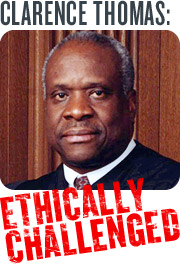
Tell Clarence Thomas: Recuse yourself


A case challenging the constitutionality of the health care reform bill passed by Congress is headed to the Supreme Court, and Justice Clarence Thomas has a supreme ethical conflict.

It’s been widely reported that the Thomas family has financial ties to the conservative organizations leading the campaign to bring down our new health care law — the Patient Protection and Affordable Care Act.

Rep. Anthony Weiner and 73 other members of Congress have signed a letter detailing the appearance of ethical conflict and asking Justice Thomas to recuse himself from deliberations on the constitutionality of health care reform.

We’re asking you to sign a companion letter that Rep. Weiner — a champion of progressive issues — will deliver to the Supreme Court along with the letter signed by members of Congress.

Tell Justice Clarence Thomas: Recuse yourself from deliberations on the constitutionality of health care reform. Click here to automatically sign the letter below.

The letter to Justice Thomas reads: http://act.credoaction.com/r/?r=7064&id=16386-2591629-BPS9vgx&t=9

As an Associate Justice, you are entrusted with the responsibility to exercise the highest degree of discretion and impartiality when deciding a case. We join Rep. Anthony Weiner and other members of Congress in writing to note our surprise at recent revelations of your financial ties to leading organizations dedicated to lobbying against the Patient Protection and Affordable Care Act. We write today to respectfully ask that you maintain the integrity of this court and recuse yourself from any deliberations on the constitutionality of this act.

The appearance of a conflict of interest merits recusal under federal law. From what we have already seen, the line between your impartiality and you and your wife’s financial stake in the overturn of health care reform is blurred. Your spouse is advertising herself as a lobbyist who has “experience and connections” and appeals to clients who want a particular decision — they want to overturn health care reform. Moreover, your failure to disclose Ginni Thomas‘s receipt of $686,589 from the Heritage Foundation, a prominent opponent of health care reform, between 2003 and 2007 has raised great concern.

This is not the first case where your impartiality was in question. As Common Cause points out, you “participated in secretive political strategy sessions, perhaps while the case was pending, with corporate leaders whose political aims were advanced by the [5-4] decision” on the Citizens United case. Your spouse also received an undisclosed salary paid for by undisclosed donors as CEO of Liberty Central, a 501(c)(4) organization that stood to benefit from the decision and played an active role in the 2010 elections.

Given these facts, there is a strong conflict between the Thomas household’s financial gain through your spouse’s activities and your role as an Associate Justice of the United States Supreme Court. We urge you to recuse yourself from this case. If the US Supreme Court‘s decision is to be viewed as legitimate by the American people, this is the only correct path.

We appreciate your thoughtful consideration of this request. http://act.credoaction.com/r/?r=7064&id=16386-2591629-BPS9vgx&t=10

Click here to automatically sign your name to our letter to Justice Thomas that will be delivered to the Supreme Court by progressive champion Rep. Anthony Weiner.

Thomas failed to disclose that his wife Ginni Thomas received a total of $686,589 in compensation from the Heritage Foundation.1 Furthermore his wife is currently advertising herself as a lobbyist who has “experience and connections” to conservative groups who have an explicit agenda to overturn health care reform — by repeal in the Congress or overturning the law in the courts.2

Justice Thomas is no stranger to questions of ethics. Along with Justice Antonin Scalia he attended meetings organized by the secretive, Tea Party-funding billionaire Koch brothers. The Koch brothers have been key players in rewriting the political landscape after the Citizens United Supreme Court decision unleashed the floodgates of corporate money in federal politics.3 And Thomas’ wife has received an undisclosed salary paid for by undisclosed donors as CEO of Liberty Central, a 501(c)(4) organization that was formed to take advantage of Citizens United rules and to play an active role in the 2010 elections.

Unlike other members of the federal judiciary, Supreme Court Justices have no specific code of ethics to which they may be held accountable. But there is a clear appearance of a conflict of interest between his wife’s clear financial stake in overturning the health care law and Justice Thomas’ personal duty to exhibit the highest degree of discretion and impartiality. To protect the honor of the highest court in the land, Thomas must recuse himself from deliberations on the constitutionality of the Patient Protection and Affordable Care Act.

Tell Justice Clarence Thomas: Recuse yourself from deliberations on the constitutionality of health care reform. Clicking here will automatically sign your name to the above letter.

Sincerely,

Becky Bond, Political Director

CREDO Action from Working Assets

Notes:

1″What else haven’t they told us?” Common Cause, Jan. 21, 2011.

2″Adventures of Ginni Thomas,” Ben Smith, Politico, Feb. 4, 2011.

3″Justices Scalia And Thomas’s Attendance At Koch Event Sparks Judicial Ethics Debate,” Sam Stein, Huffington Post, Oct. 20, 2010.

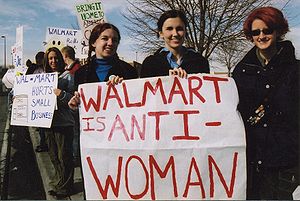
HEALTH CARE:An Activist Decision


Yesterday, a conservative district court judge appointed by President Ronald Reagan ruled that the individual mandate in the Affordable Care Act is unconstitutional, arguing further that, since he believes the mandate is “inextricably linked” to the rest of the measure, the entire law must be unconstitutional. “The act, like a defectively designed watch, needs to be redesigned and reconstructed by the watchmaker,” Judge Roger Vinson wrote. The ruling, however, contradicts 14 other court decisions, the opinion of over 100 law professors, not to mention recent polling showing that Americans want the law to be either protected or expanded. There is also a distinctly political aspect to the ruling. Vinson acknowledged borrowing heavily in his opinion from a brief written by the right-wing group Family Research Council, and he seemed to give a shout-out to the Tea Party in his ruling, which has long targeted health care reforms as “economic Marxism.”

THE RULING: Vinson ruled that, “[i]f Congress can penalize a passive individual for failing to engage in commerce, the enumeration of powers in the Constitution would have been in vain.” However, as the Center for American Progress’ Ian Millhiser writes, “there is a long line of Supreme Court decisions holding that Congress has broad power to enact laws that substantially affect prices, marketplaces, or other economic transactions. Because health care comprises approximately 17 percent of the national economy, it is impossible to argue that a bill regulating the national health care market does not fit within Congress’s power to regulate commerce.” The Supreme Court has long held that Congress can exercise its constitutional power to regulate interstate commerce to regulate insurance, which the Court has stated “touches the home, the family, and the occupation or the business of almost every person in the United States.” A group of 35 economists — including three Nobel Prize winners — argue that the minimum coverage provision is “necessary to achieving Congress’ goal of reforming the national health insurance market and making quality medical care available to millions of Americans.” After finding the law unconstitutional, Vinson did not issue an injunction to halt the law’s implementation, but wrote that “the federal government should adhere to his declaratory judgment as the functional equivalent of an injunction.” This is quite confusing. It would be wise for states to wait for a Supreme Court ruling, but also under the Affordable Care Act, 12.5 million Americans are eligible to receive benefits right now — for example, three million seniors have already gotten checks to help make prescription drugs more affordable, and 1.8 million young adults who previously did not have insurance are able to get health coverage through their parents’ plan. Should these people immediately surrender their benefits because of Vinson’s ruling?

RED MEAT FOR THE RIGHT: There is undoubtedly a political context to Vinson’s ruling. Almost immediately following passage of the Affordable Care Act, Republicans began agitating for a full repeal. It was a major, stated goal of Republican and Tea Party candidates in the midterm elections, and the House of Representatives passed a repeal as soon as the GOP took control of the chamber. In the Senate, every Republican Senator has signed onto a repeal bill authored by Tea Party favorite Sen. Jim DeMint (R-SC). In his ruling, Vinson seemed to offer several nods to this far-right political movement. He referenced the “opposition to a British mandate giving the East India Company a monopoly and imposing a nominal tax on all tea sold in America,” which spoke directly to Tea Party activists across the country. “It’s very exciting. He’s invoking the tea party movement,” noted Mark Meckler, co-founder and national coordinator of the Tea Party Patriots, one of the largest tea party organizing groups. Vinson also “borrowed heavily” from the ultra-conservative Family Research Council in his ruling, which has been labeled a hate group by the Southern Poverty Law Center because of its extensive history of “defaming gays and lesbians.” Conservative media outlets were quick to amplify Vinson’s ruling. On Fox News this morning, Fox & Friends anchor Steve Doocy triumphantly noted for his audience that “we’ve argued on this program” that the individual mandate is “against the law.” Bill O’Reilly led his program last night with the news, and confidently predicted the Supreme Court would agree with Vinson: “say goodbye to Obamacare,” O’Reilly crowed.

A BUMP IN THE ROAD: Though Vinson’s reasoning seems to be faulty, there is potential for further rulings that would reinforce his view. The Department of Justice will appeal Vinson’s ruling, but the case will likely head to the Eleventh Circuit in Atlanta, “considered one of the country’s most conservative appellate benches.” (Hudson’s ruling in Virginia “is already with another conservative court, the United States Court of Appeals for the Fourth Circuit in Richmond.”) This is likely to ultimately reach the Supreme Court. However, Vinson’s reasoning seems to go against the findings of even conservative Supreme Court justices like Antonin Scalia. And while Vinson and Hudson issued high-profile rulings overturning health care reform, two other district court judges have upheld the law, and a total of 14 courts have found challenges to the individual mandate to be either without standing, or baseless. Also, more than 100 law professors recently signed a letter explaining that “the current challenges to the constitutionality of this legislation seek to jettison nearly two centuries of settled constitutional law.” In the past, when Congress has passed historic legislation, there have often been challenges — and victories for the challengers — in lower courts. But these have almost always been overturned by the Supreme Court. In United States v. Darby, the Supreme Court upheld a federal minimum wage and overruled a district court decision striking down federal child labor laws. In Helvering v. Davis, the Supreme Court reversed a Court of Appeals decision declaring Social Security unconstitutional. In Katzenbach v. McClung, the Supreme Court upheld the federal ban on whites-only lunch counters — reversing a district court’s decision striking down this law. In Katzenbach v. Morgan, the Supreme Court reversed a district court decision striking down a portion of the Voting Rights Act. “Luckily, as Millhiser writes, Vinson’s decision is “heavy on rhetoric, light on actual legal reasoning and all but certain to be ignored by higher-court judges who understand their duty to follow the Constitution. … When Vinson is remembered 50 years from now — if anyone remembers him at all — he will be remembered as one of the long line of activist judges who stood athwart history and got run over by it.”

Stand by the Women of Wal-Mart


When Lilly Ledbetter fought back against pay discrimination, you were there. After thousands of e-mails, phone calls, and letters to the editor, we helped to pass the Lilly Ledbetter Fair Pay Act and were just two votes short of moving forward with the Paycheck Fairness Act last fall.

Now it’s time to come together behind another group of brave women fighting pay discrimination. The women of Wal-Mart have taken their fight for fair pay all the way to the Supreme Court and they need our support.

Pledge now to stand with the women of Wal-Mart and to continue to fight against pay discrimination.

http://www.nwlc.org/what-you-can-do

So what is this case about? Ten years ago a group of women who worked at Wal-Mart stores filed a lawsuit alleging that their employer engaged in company-wide sex discrimination, by paying women less than comparable men, promoting fewer women to management positions, and promoting male employees more quickly.

On the very same day that the Center’s analysis showed that in 2010 women working full-time in sales and related occupations have the biggest wage gap in any industry, Wal-Mart filed a brief in the Supreme Court challenging the legality of its employees to proceed together in court. If Wal-Mart succeeds, the already uphill battle for women to fight pay discrimination will get even worse.

The Court’s ruling will affect women who face pay discrimination around the country, for generations to come. Cases like this remind us of the profound and lasting impact our courts have on the women and their families who rely on courts for justice, and the importance of confirming federal judges who understand the impact of the law on individuals and who are willing to hold powerful corporate interests accountable when they violate the law.

We will keep you updated on this case and provide opportunities to take action. Please join our efforts to bring attention to this critical issue. The Women of Wal-Mart need to know that we have their backs! Will you pledge to stand with the women of Wal-Mart and continue to fight against pay discrimination?

Thank you for continuing the fight against pay discrimination.

Sincerely,

Fatima Goss Graves

Vice President for Education and Employment

National Women’s Law Center

P.S. For more information about what’s at stake for women in this case, read our latest article in The Huffington Post.