Tag Archives: United States armed forces

a message from Michelle Obama


Veterans Day provides us with the chance to mark the debt of honor we owe to all those who have worn the uniform of the United States. We remember those who gave their lives beneath our flag, in service of our freedom.

And with so many still fighting, we owe special thanks to the courageous families of those who serve.

Because when our servicemen and women deploy overseas, their loved ones are left to undertake heroic battles of their own at home. The unique challenges they face in support of men and women in uniform allow us all to enjoy the freedoms of our democracy.

Every time I have a chance to meet with these families, I’m struck by their strength and their quiet dignity — they are truly some of the most selfless, courageous people I’ve met.

And today is also a day to acknowledge the sacrifices these brave men and women make every day, and pray for the safe return of those they love.

I’ve felt their calling personally, and I want to encourage Americans across the country to step up and do more for our military families. Take the time to stay informed about the concerns and activities of the families of service members in your community. Let them know you recognize their struggles and appreciate all they do.

You can help by finding out the needs of the military families in your community and volunteering, from working with your local school’s PTA to hiring a military spouse.

Today and every day, I am moved by the personal sacrifices made by service families. And I’m humbled by the patriotism of those they support — our soldiers and airmen, our sailors and Marines.

Today, if you can, please take a moment to offer your gratitude for the families of the veterans and active service members that you know. Or go online to serve.gov to find out how you can serve military families in your area.

Sincerely,

Michelle

IRAQ: WikiLeaks’ Releases Iraq War Logs


On Friday, the international organization WikiLeaks release

d The Iraq War Logs, a “huge trove of secret field reports” — 391,832 documents in all — from the U.S. military in Iraq. The archive is the second such cache obtained by WikiLeaks and made available to news organizations. The first, released in July, was a trove of 77,000 reports covering six years of the U.S.-led war in Afghanistan. National Security Network’s Heather Hurlburt described the reports as “add[ing] a numbing amount of new, awful detail to what we already knew about the Iraq war.” The documents suggest that violence was reduced from 2007 “not only because the American military committed to more troops and a new strategy, but because Iraqis themselves, exhausted by years of bloody war, were ready for it.” According to the New York Times, the deaths of Iraqi civilians also “appear to be greater than the numbers made public by the United States during the Bush administration.”

ABUSE OF IRAQIS BY IRAQIS: While the newly released documents “offer few glimpses of what was happening inside American detention facilities, they do contain indelible details of abuse carried out by Iraq’s army and police.” The Guardian reports that the documents reveal that “U.S. authorities failed to investigate hundreds of reports of abuse, torture, rape and even murder by Iraqi police and soldiers whose conduct appears to be systematic and normally unpunished.” Britain’s Deputy Prime Minister Nick Clegg “said the allegations of killings, torture and abuse were ‘extremely serious’ and ‘needed to be looked at.'” Joel Wing noted that “Iraq’s political parties were quick to put [the Iraqi police] to work in their internal struggle to form a new Iraqi government,” with Iyad Allawi’s Iraqi National Movement saying “that the documents gave proof that Prime Minister Nouri al-Maliki should not stay in office.”

IRAN IN IRAQ: The reports “underscore the seriousness with which Iran’s role [in Iraq] has been seen by the American military.” According to the documents, Iran’s military “intervened aggressively in support of Shiite combatants, offering weapons, training and sanctuary and in a few instances directly engaging American troops.” Robert Farley, an Associate Professor of International Relations at the University of Kentucky, wrote that it is “utterly unsurprising” that Iran intervened in Iraq. “Attempting to manage the political situation in a neighboring country, while simultaneously weakening a potential enemy, is something that countries do.” Iran’s involvement in Iraq has not primarily been military, but rather political and economic. As Center for American Progress analysts Brian Katulis and Matthew Duss wrote in April 2008, depictions of Iran’s role in Iraq as purely military “ignore an inconvenient truth: The leaders in Iraq’s current government are closely aligned with Tehran and represent some of Iran’s closest allies in Iraq.” Iran has been similarly politically involved in neighboring Afghanistan. Afghan President Hamid Karzai “said Monday that his government receives as much as $1 million at least once or twice a year from Iran,” just as he said Washington doles out “bags of money” to his office.

COSTS AND CONSEQUENCES: While the documents reveal that coalition forces found traces of past Iraqi weapons programs, Wired Magazine reported that, the “war logs don’t reveal evidence of some massive WMD program by the Saddam Hussein regime,” as the Bush administration had claimed existed, but that “remnants of Saddam’s toxic arsenal, largely destroyed after the Gulf War, remained.” There are no earth-shattering revelations in the new cache, but they do deepen our understanding of the war’s disastrous consequences, both for the U.S. and for the region, particularly in regard to the wide-scale inter-community violence and sectarian cleansing that gripped the country in 2006-7. The violence led to the displacement of over 4.5 million Iraqis, both within and without the country, the vast majority of whom have been unable to return home, remaining displaced either inside Iraq or in neighboring countries. A February 2010 Center for American Progress report, The Iraq War Ledger, examined the costs and benefits of the Iraq intervention, and concluded “there is simply no conceivable calculus by which Operation Iraqi Freedom can be judged to have been a successful or worthwhile policy. The war was intended to show the extent of America’s power. It succeeded only in showing its limits.”

JUSTICE: Uncertainty Around DADT


Last week, the Justice Department asked Judge Virginia Phillips to stay her broad injunction barring the military from enforcing the Don’t Ask, Don’t Tell policy until it has an opportunity to appeal the decision to the U.S. Ninth Circuit Court of Appeals. In the appeal notice that accompanied the stay request, the government argued that ending enforcement of the policy “before the appeal in this case has run its course will place gay and lesbian servicemembers in a position of grave uncertainty.” “If the Court’s decision were later reversed, the military would be faced with the question of whether to discharge any servicemembers who have revealed their sexual orientation in reliance on this Court’s decision and injunction,” the government wrote. “Such an injunction therefore should not be entered before appellate review has been completed.” Meanwhile, the Department of Defense has also issued new orders via email late Thursday afternoon “informing all five branches of the military that they must comply with an injunction ordered by a federal judge” until the judge grants the government’s request. The Pentagon warned gay and lesbian servicemembers against changing their behavior in the interim. “We note for servicemembers that altering their personal conduct in this legally uncertain environment may have adverse consequences for themselves or others should the court’s decision be reversed,” Under Secretary of Defense for personnel and readiness Clifford Stanley wrote on Thursday.

FRUSTRATION OVER APPEAL: DOJ‘s appeal of the decision comes after intense lobbying from House and Senate Democrats — including House Speaker Nancy Pelosi (D-CA) — to allow the recent ruling to stand. As DADT scholar Nathaniel Frank explained, “The court case, I think, is one of the more likely now, for the President to say, this actually is unconstitutional and although there is a tradition of defending standing law, it’s not obligated to defend a policy that it believes is unconstitutional.” President Obama has previously implied that DADT is constitutional and Republicans and two Democrats successfully filibustered repeal in the Senate (the measure passed the House in May). But Obama has consistently argued that he would continue to try to repeal DADT through the legislative process to accommodate the work of the Pentagon’s ongoing review. “I don’t think it’s too much to ask, to say ‘Let’s do this in an orderly way’ — to ensure, by the way, that gays and lesbians who are serving honorably in our armed forces aren’t subject to harassment and bullying and a whole bunch of other stuff once we implement the policy,” Obama told Rolling Stone magazine in late September. The appeal comes a day after Secretary of Defense Robert Gates warned that ending the ban is “an action that needs to be taken by the Congress and that it is an action that requires careful preparation, and a lot of training.” “It has enormous consequences for our troops,” Gates said, ignoring research by the Center for American Progress’ Larry Korb, Sean Duggan, and Laura Conley which has found that repeal is actually a simple process and has been completed without incident by many other countries, including some of our closest allies.

MILITARY RESISTANT TO CHANGE: Gates, along with other military leaders, has resisted and delayed changing the policy before the Pentagon releases its review of the ban during the first week of December. Following Gates’ remarks, The Palm Center established a website to track his prediction that the court’s decision to suspend the policy would have “enormous consequences,” including all reported instances of harm to unit cohesion, discipline and privacy that have arisen during this period of open gay service. “Now that the ban has been suspended, we are searching vigilantly for such consequences, and we will use the new web site as a hub for reporting what we find,” Palm Center Director Aaron Belkin said. Last week, the group also submitted a Freedom of Information Act request for all documentation of reported negative consequences of the suspension of DADT. Meanwhile, the Pentagon task force that has been studying the consequences of ending the policy, is “well along” in formulating its recommendations, and officials don’t expect ruling or the moratorium to affect its work. According to some military officials, “[t]he task force found deep resistance to the idea of repealing the law in some elements of the armed services, especially within the combat units, an officer familiar with the findings said. But the surveys also have found segments of the military who were not overly worried about allowing gays and lesbians to serve.”

ENDING THE BAN THROUGH CONGRESS: During an MTV/BET/CMT sponsored town hall on Thursday, Obama told young voters that the policy should be repealed by Congress, not through an executive order or the courts. Distinguishing himself from President Harry Truman — who desegregated the armed forces via executive order in 1948 — Obama explained that “the difference between my position right now and Harry Truman’s was that Congress explicitly passed a law that took away the power of the executive branch to end this policy unilaterally. So this is not a situation in which with a stroke of a pen I can simply end a policy.” Obama stressed that he’s been able to convince Gates and Joint Chiefs of Staff Chairman Mike Mullen to support repeal and promised that the policy would end “on my watch.” “But I do have an obligation to make sure that I’m following some of the rules,” Obama said. “I can’t simply ignore laws that are out there, I’ve got to work to make sure that they are changed.” On Thursday, White House Press Secretary Robert Gibbs promised that Obama would work to end the policy during the lame duck session of Congress, telling the Advocate’s Kerry Eleveld that the President would be “actively involved in that.” Obama should also suspend discharges using his stop loss authority, thus ending the discharges of qualified men and women during wartime.

Koran Burning Could Endanger Troops


by   Rachel Slajda

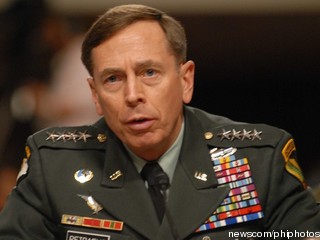
Gen. David Petraeus, the top U.S. commander of the Afghanistan War, said today the planned burning of Korans by a Florida church could put American troops in danger.

“It could endanger troops and it could endanger the overall effort,” Petraeus told the Wall Street Journal. “It is precisely the kind of action the Taliban uses and could cause significant problems. Not just here, but everywhere in the world we are engaged with the Islamic community.”

Petraeus’ comments come in the wake of anti-American protests in Kabul. Earlier today, 500 demonstrators, including members of parliament and Muslim clerics, gathered outside the U.S. embassy to condemn the “International Burn A Koran Day” planned by the Dove World Outreach Center, a small church in Florida. Protesters burned the church’s pastor, Terry Jones, in effigy and called for “Death to America.”

A similar protest, reportedly attracting thousands of Muslims, was held this weekend in Jakarta, Indonesia.

Petraeus said the Koran-burning, planned for Sept. 11, could give the Taliban the kind of anti-American propaganda they can exploit to turn fellow Afghans against the U.S. military.

Jones has vowed to go forward with his plan to burn Korans despite public outcry both locally and nationwide. He could not immediately be reached for comment.

Iraq …a message from President Obama


RE-Post …

Tonight marks the end of the American combat mission in Iraq.

As a candidate for this office, I pledged to end this war responsibly. And, as President, that is what I am doing.

Since I became Commander-in-Chief, we’ve brought home nearly 100,000 U.S. troops. We’ve closed or turned over to Iraq hundreds of our bases.

As Operation Iraqi Freedom ends, our commitment to a sovereign, stable, and self-reliant Iraq continues. Under Operation New Dawn, a transitional force of U.S. troops will remain to advise and assist Iraqi forces, protect our civilians on the ground, and pursue targeted counterterrorism efforts.

By the end of next year, consistent with our agreement with the Iraqi government, these men and women, too, will come home.

Ending this war is not only in Iraq’s interest — it is in our own. Our nation has paid a huge price to put Iraq’s future in the hands of its people. We have sent our men and women in uniform to make enormous sacrifices. We have spent vast resources abroad in the face of several years of recession at home.

We have met our responsibility through the courage and resolve of our women and men in uniform.

In seven years, they confronted a mission as challenging and as complex as any our military has ever been asked to face.

Nearly 1.5 million Americans put their lives on the line. Many returned for multiple tours of duty, far from their loved ones who bore a heroic burden of their own. And most painfully, more than 4,400 Americans have given their lives, fighting for people they never knew, for values that have defined our people for more than two centuries.

What their country asked of them was not small. And what they sacrificed was not easy.

For that, each and every American owes them our heartfelt thanks.

Our promise to them — to each woman or man who has donned our colors — is that our country will serve them as faithfully as they have served us. We have already made the largest increase in funding for veterans in decades. So long as I am President, I will do whatever it takes to fulfill that sacred trust.

Tonight, we mark a milestone in our nation’s history. Even at a time of great uncertainty for so many Americans, this day and our brave troops remind us that our future is in our own hands and that our best days lie ahead.

Thank you,

President Barack Obama