Tag Archives: United States

consumer.ftc.gov ~~~ summer


Crooks use clever schemes to defraud millions of people every year. They often combine sophisticated technology with age-old tricks to get people to send money or give out personal information. They add new twists to old schemes and pressure people to make important decisions on the spot. One thing that never changes: they follow the headlines — and the money.

Stay a step ahead with the latest info and practical tips from the nation’s consumer protection agency. Browse FTC scam alerts by topic or by most recent.

Most Recent Scam Alerts

Mississippi, 1964


Civil Rights Workers.jpg


MichaelSchwerner, Andrew Goodman, and James Chaney had only just begun working on the Freedom Summer campaign to register black Mississippians to vote when they suddenly disappeared.

Schwerner and Goodman were two Jewish men from New York—they had been there less than a week—and Chaney was a local black activist. They had just finished investigating the bombing of a nearby church when theywere taken into custody under false pretenses, and never again seen by their fellow volunteers.The disappearance of these three men sparked national outrage, and the FBI converged on Mississippi to investigate. They discovered that on June 21, 1964, immediately upon being released from custody, the young activists had been brutally beaten and murdered by a Ku Klux Klan lynch mob. The FBI’s investigation led to the first successful federal prosecution of a civil rights case in Mississippi.

 the anniversary of the day we lost these brave defenders of civil rights. Here are two things you can do to commemorate this day:

First, pledge to vote this November to honor the sacrifices made by Freedom Summer activists for our right to vote.

Then, share this graphic on Facebook to honor these three fallen activists.

Share this graphic
The circumstances under which we fight may have changed, but our values remain constant. All Americans, regardless of income or the color of their skin, must be able to freely exercise their constitutional right to vote.

The work of civil rights activists to protect this right did not stop when Freedom Summer ended, or even with the passage of the Voting Rights Act of 1965. As long as there are legislators fighting to keep our most vulnerable populations away from the polls, our work and our struggle continues.

Join your voice with your fellow champions of civil and human rights. Take just one minute to do these things:

Pledge to exercise your hard-won right to vote in November.

http://action.naacp.org/My-Vote-2014

Share this graphic to honor the ongoing fight for voting rights.

http://action.naacp.org/Honor-Freedom-Summer

In solidarity,

Lorraine C. Miller
Interim President and CEO
NAACP

Why Do Women Use Birth Control? Believe It or Not, Nobody Asks ~ repost


Why Do Women Use Birth Control? Believe It or Not, Nobody Asks

First posted in 2012 …

This is not my article, and to be honest I’m not sure if they still subscribe to what is written below., but it seemed well worth reposting …

According to a report by the Guttmacher Institute most women in the US use contraception because it allows them to better care for themselves, their families, complete their education, and achieve economic security.

Jennifer Frost and Laura Lindberg of the Institute said most studies on contraceptive use fail to ask women why they use contraception. To fill this gap, the authors surveyed 2,094 women receiving services at 22 family planning clinics nationwide. The majority of participants reported that contraception has had a significant impact on their lives, allowing them to take better care of themselves or their families (63%), support themselves financially (56%), complete their education (51%) or keep or get a job (50%).

“Women value the ability to plan their childbearing, and view doing so as critical to being able to achieve their life goals,” said study author Laura Lindberg in a statement. “They need continued access to a wide range of contraceptives so they can plan their families and determine when they are ready to have children.”

When the women were asked why they were using contraception at this point in their lives they all expressed concerns about the consequences an unintended pregnancy would have on their families’ and their own lives. Not surprisingly the single most frequently cited reason for using contraception was that the women could not afford to take care of a baby at that time.

Along those economic concerns, nearly one in four women reported that they or their partners were unemployed which was also an important reason for their contraception use.

And to drive home the point that contraception and abortion are issues mothers deal with, among the women with children who participated in the study nearly every one of them reported their desire to best care for their current children as a reason for contraception use. “Notably, the reasons women give for using contraception are similar to the reasons they give for seeking an abortion,” according to Lawrence B. Finer, author of a previous Guttmacher study on that topic. “This means we should see access to abortion in the broader context of women’s lives and their efforts to avoid unplanned childbearing, in light of its potential consequences for them and their families.”

Inextricably tied to economic concerns, women cited economic opportunity as another reason they used contraception. 56 percent of respondents said it allowed them to support themselves financially, 51 percent said it allowed them to complete their education while 50 percent said it allowed them to keep or get a job.

So when Republicans like Paul Ryan promise to take away the contraception benefit in Obamacare, and when lawmakers across the state want an employer to have the ability to veto insurance coverage for contraception, let’s be clear what those lawmakers really want, and that’s to take away women’s ability to be economically self-sufficient.

–  The question remains , now 9 yrs later … Why get in the way of an individual’s choice and why treat Women like the choice is barbaric? Men like those in the article who wield their positions of power also rely on the 2nd Amendment as a crutch   ~Nativegrl77

USA.gov … Beware of Skin Lotions Tainted with Mercury


a repost… mercury poisoning via skin care products and food is still a real issue

A Mysterious chemical found in dead cat’s brain reopens debate over mercury poisoning disaster

In February 2020, The Minamata poisoning has been considered a textbook example of how inorganic mercury turns into organic mercury, and how a toxic substance propagates up the food chain to humans. by Victoria Dinh, 

AND in January of 2019

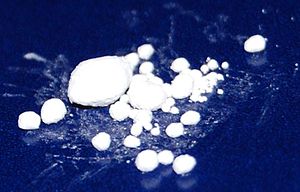
The Texas Department of State Health Services (DSHS) is warning the public of skin creams containing mercury. Mercury has been found in some skin creams made, altered, or sold in Mexico and other countries.

In one case, an individual in Texas was diagnosed with mercury poisoning after using a product purchased in Mexico that was labeled as Pond’s skin cream. The mercury was not added by the original manufacturer but by a third party, presumably in Mexico. A similar case of mercury poisoning through skin cream has recently been identified in California, and Texas has had others in the past. Skin creams containing mercury claim to lighten the skin, treat acne, or fade freckles, blemishes, and age spots.

Mercury is dangerous and can cause adverse health effects in both adults and children. Products containing mercury are especially of concern for pregnant women or nursing mothers, because mercury may be passed on to fetuses and infants.

Clinical Presentation:

The symptoms associated with mercury poisoning are often non-specific, and thus, pose difficulties for diagnosis. Due to this, it is often misdiagnosed and leads to clinical treatments that do not address the underlying mercury poisoning.

General symptoms of mercury poisoning may include shaking, tremors, impaired balance or coordination, headaches, hypertension, depression, insomnia, weight loss, fatigue, nervousness, irritability, anxiety, memory loss, difficulty concentrating, or numbness or tingling in hands, feet, lips.

In children, prolonged exposure to mercury poisoning may present as excessive salivation or thirst, gingivitis, irritability, anorexia, poor muscle tone, leg cramps, hypertension, rash, peeling or flaking skin, or pink extremities (e.g. hands and feet).

Long term exposure to mercury may cause damage to the gastrointestinal tract, nervous system and kidneys. Symptoms may present as extreme fatigue, muscle aches, weakness, and sores in the mouth, in addition to the symptoms listed above.

Recommendations for Clinicians:

Health care providers should:

  • Ask patients suspected of mercury poisoning if they use skin creams purchased in Mexico or other countries.
  • If the product was not purchased from a major retailer in these countries, or was unsealed upon purchase, urge patients to stop use immediately.
  • Ensure the skin cream container is tightly closed, isolated in a sealed bag, and labeled, “Mercury: Do Not Touch”.
  • Contact the Texas Poison Center Network at 1-800-222-1222 for queries about mercury poisoning medical management.

If a patient is suspected of using skin creams containing mercury, DSHS recommends healthcare providers conduct mercury analysis on blood and urine specimens.

Recommendations for Public:

People should only purchase skin care products in original, sealed containers sold by reputable retailers.

Individuals who believe they may have been exposed to mercury through skin creams should contact their healthcare provider, or the Texas Poison Center Network at 1-800-222-1222.

If individuals have skin cream products containing mercury in their home, then the closed containers should be discarded at a household hazardous waste facility. If there is not a household hazardous waste facility available in their community, then the product may be tightly closed, placed in a sealed and labeled bag, and discarded with household garbage.

To find a household hazardous waste facility near you, please visit:    https://www.tceq.texas.gov/assets/public/assistance/hhw/hhw_contacts.pdf

For More Information:

To report cases, questions about proper disposal of products containing mercury, or for questions about medical management related to mercury poisoning, please contact:

Texas Poison Center Network
1-800-222-1222

or

DSHS Environmental Surveillance and Toxicology Branch
512-776-7268
epitox@dshs.texas.gov

Mercury in Skin Creams Fact Sheet

DSHS News Release

Memorial day … in memory of


Most if not all memorial days are full of wonderful events and more often than not they all provide unforgettable programs! 

 In memory of …

my Brother, who served as a US Marine

Graves at Arlington on Memorial Day.JPG

And …  an amazing repeat  of  a show done in 2006; about Pearl Fryar;  a self- made man and Topiary Garden Artist in Bishop, SC;

his amazing gift for making shrubs into magnificent pieces of art was very moving and yes I cried; if you see the show on cable … it tells his story, the son of a share-cropper who listened to his dad and made something of himself… as Pearl says and while his neighbors, friends and some relatives wondered what was going on with this man so obsessed, so determined who truly loved but wanted to perfect his art, it became obvious that his gift…self-taught, was definitely centered from something deep and beyond.  The viewer hears the history and witnesses the progress of his story …his idea of love, peace, and goodwill in a town with racial tension he not only brought people into a town that was suffering economically but some folks from the area who normally avoided each other crossed paths just to see his artistry.

pearlfryar.com

The Garden

Since the early 1980s, Pearl Fryar has created fantastic topiary at his garden in Bishopville, South Carolina. Living sculptures, Pearl’s topiary are astounding feats of artistry and horticulture. Many of the plants in Pearl’s garden were rescued from the compost pile at local nurseries. With Pearl’s patience and skilled hands, these “throwaways” have thrived and have been transformed into wonderful abstract shapes. Pearl Fryar and his garden are now internationally recognized and have been the subject of numerous newspaper and magazine articles, television shows, and even a documentary, A Man Named Pearl. Today, the Pearl Fryar Topiary Garden draws visitors from around the globe.

Visitors to the Pearl Fryar Topiary Garden experience a place that is alternately beautiful, whimsical, educational, and inspiring. Pearl’s garden contains over 300 individual plants and few are spared from his skilled trimming. His extraordinary topiary is complemented by his “junk art” sculptures placed throughout the garden. Pearl’s garden is a living testament to one man’s firm belief in the results of positive thinking, hard work, and perseverance, and his dedication to spreading a message of “love, peace and goodwill.”

In 2006, the Garden Conservancy and the Pearl Fryar Topiary Garden, Inc. formed a partnership with Pearl Fryar. Through this partnership, they hope to preserve and maintain the Pearl Fryar Topiary Garden and to further Pearl’s message of inspiration and hope.

Please consider donating to the Pearl Fryar Topiary Garden, Inc. to help ensure that Pearl’s garden is cared for and kept open to inspire future generations.

For more information about the Garden Conservancy and its mission to protect exceptional American gardens, please visit the Garden Conservancy website.

**********

The last one is a c-span(video 2010) story that we cannot continue to ignore, deny or shove under the rug, c-span interviews the author of a book about Henrietta Lacks, Rebecca Skloot; 2010

An update needs to be included as the Lacks family, after years of litigation did gain an agreement

NIH makes privacy agreement with Henrietta Lacks’ family http://usat.ly/1esA2JK via @usatoday ~ 2013

Henrietta’s story starts in 1920 her birth and ends sometime in the early fifties, this story seems only to be coming into the light of day and while i cried again while watching this, it is sad, might be unacceptable by some, even after several children, after years of reports, publicity and whatnot the Lacks family seems to be the only one who didn’t benefit from the story of this woman whose cells were used to create a cell line for medical research but got nothing in return.   I first heard about the Lacks story in 2010 while in a coffee shop, then we all heard Oprah and some associates decided to make a movie…hopefully some of the revenue will be given to the family.   It is a story that makes you gasp, gets you upset, mad and it will make you cry and wonder how the science community got away with not paying Henrietta Lacks and or her family for her contribution.   If I understood the interviewer the Lacks family has recently gotten more PR about their Mother’s story but it’s unclear if anyone paid money for all the stories and or tv programs about her. It is a story that appears on the surface a story of unintentional theft of her cells then used by a scientist who did not tell her or her family even after it was evident that the cells were unusual, that they were used and what effect they would eventually have on science today.I understand that back then technology may not have been as advanced but it did advance and still if the reports are correct, the science community gave Henrietta nothing or her family. It happened in a time when minorities were treated very poorly and even if the reports state that standard procedure was this that and the other .. .the 70″s gave way to new ways to handle science technologies; it’s time to pay Henrietta Lacks and her family back.

Just some things to remember

… Happy Memorial Day

~ Nativegrl77