 0896 – Formosus ended his reign as pope.
1541 – Ignatius of Loyola became the first superior-general of the Jesuits.
1581 – Francis Drake was knighted by Queen Elizabeth I. A few months earlier he became the first Englishman to circumnavigate the world.
1687 – King James II ordered that his declaration of indulgence be read in church.
1812 – The territory of Orleans became the 18th U.S. state and will become known as Louisiana.
1818 – A plan was passsed by the U.S. Congress that the U.S. flag would have 13 red and white stripes and 20 stars and that a new star would be added for the each new state.
1841 – U.S. President William Henry Harrison, at the age of 68, became the first president to die in office. He had been sworn in only a month before he died of pneumonia.
1848 – Thomas Douglas became the first San Francisco public teacher.
1850 – The city of Los Angeles was incorporated.
1862 – In the U.S., the Battle of Yorktown began as Union General George B. McClellan closed in on Richmond, VA.
1887 – Susanna M. Salter became mayor of Argonia, KS, making her the first woman mayor in the U.S.
1902 – British Financier Cecil Rhodes left $10 million in his will that would provide scholarships for Americans to Oxford University in England.
1905 – In Kangra, India, an earthquake killed 370,000 people.
1914 – The first known serialized moving picture opened in New York City, NY. It was “The Perils of Pauline”.
1917 – The U.S. Senate voted 90-6 to enter World War I on the Allied side.
1918 – The Battle of Somme, an offensive by the British against the German Army ended.
1932 – After five years of research, professor C.G. King, of the University of Pittsburgh, isolated vitamin C.
1945 – Hungary was liberated from Nazi occupation.
1945 – During World War II, U.S. forces liberated the Nazi death camp Ohrdruf in Germany.
1949 – Twelve nations signed a treaty to create The North Atlantic Treaty Organization (NATO).
1953 – Fifteen doctors were released by Soviet leaders. The doctors had been arrested before Stalin had died and were accused of plotting against him.
1967 – The U.S. lost its 500th plane over Vietnam.
1967 – Johnny Carson quit “The Tonight Show.” He returned three weeks later after getting a raise of $30,000 a week.
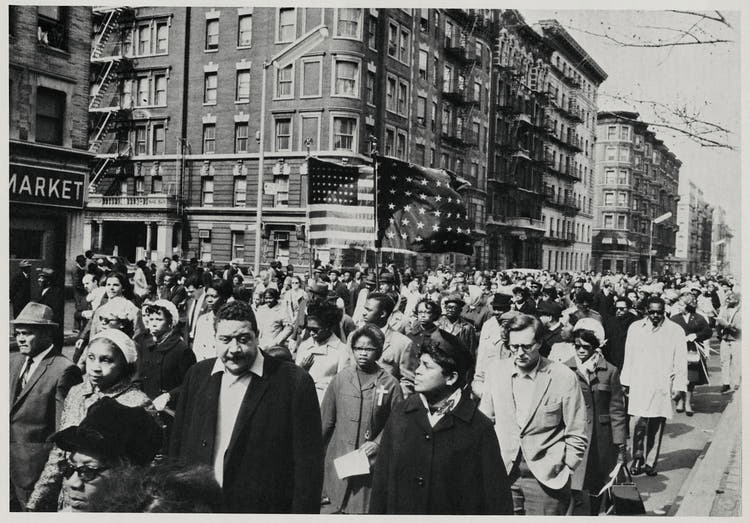
1968 – Martin Luther King Jr. was assassinated at the age of 39.
1969 – Dr. Denton Cooley implanted the first temporary artificial heart.
1971 – Veterans stadium in Philadelphia, PA, was dedicated this day.
1973 – In New York, the original World Trade Center twin towers opened. At the time they were the tallest building in the world.
1974 – Hank Aaron tied Babe Ruth’s major league baseball home-run record with 714.
1975 – More than 130 people, most of them children, were killed when a U.S. Air Force transport plane evacuating Vietnamese orphans crashed just after takeoff from Saigon.
1979 – Zulfikar Ali Bhutto, the president of Pakistan, was executed. He had been convicted of conspiring to murder a political opponent.
1981 – Henry Cisneros became the first Mexican-American elected mayor of a major U.S. city, which was San Antonio, TX.
1983 – At Cape Canaveral, the space shuttle Challenger took off on its first flight. It was the sixth flight overall for the shuttle program.
1984 – U.S. President Reagan proposed an international ban on chemical weapons.
1985 – In Sudan, a coup ousted President Nimeiry and replaced him with General Dahab.
1986 – Wayne Gretzky set an NHL record with his 213th point of the season.
1987 – The U.S. charged the Soviet Union with wiretapping a U.S. Embassy.
1988 – Arizona Governor Evan Mecham was voted out of office by the Arizona Senate. Mecham was found guilty of diverting state funds to his auto business and of trying to impede an investigation into a death threat to a grand jury witness.
1990 – In the U.S., securities law violator Ivan Boesky was released from federal custody.
1991 – Pennsylvanian Senator John Heinz and six others were killed when a helicopter collided with Heinz’s plane over a schoolyard in Merion, PA.
1992 – Sali Berisha became the first non-Marxist president of Albania since World War II.
1994 – Netscape Communications (Mosaic Communications) was founded.
1995 – U.S. Senator Alfonse D’Amato ridiculed judge Lance Ito using a mock Japanese accent on a nationally syndicated radio program. D’Amato apologized two days later for the act.
1999 – The Colorado Rockies and the San Diego Padres played the first major league season opener to be held in Mexico. The Rockies beat the Padres 8-2.








You must be logged in to post a comment.