9/27/62~In the Library ~ Silent Spring, by Rachel Carson ~ Women’s History


repost

Rachel Carson’s book “Silent Spring“, an early voice for our environment in 1962 Rachel Carson’s watershed work Silent Spring was first published on September 27, 1962. Originally serialized in The New Yorker magazine, the book shed light on the damage that man-made pesticides inflict on the environment. Its publication is often viewed as the beginning of the modern environmentalist movement in America.

Silent Spring

 See why Carson’s analysis is more relevant now than ever.Buy Silent Spring at Amazon.com     

Rachel Carson, writer, scientist, and ecologist, grew up simply in the rural river town of Springdale, Pennsylvania. Her mother bequeathed to her a life-long love of nature and the living world that Rachel expressed first as a writer and, later, as a student of marine biology. Carson graduated from Pennsylvania College for Women (now Chatham College) in 1929, studied at the Woods Hole Marine Biological Laboratory, and received her MA in zoology from Johns Hopkins University in 1932.

She was hired by the U.S. Bureau of Fisheries to write radio scripts during the Depression, and supplemented her income writing feature articles on natural history for the Baltimore Sun. She began a fifteen-year career in the federal service as a scientist and editor in 1936 and rose to become Editor-in-Chief of all publications for the U. S. Fish and Wildlife Service.

Not only that, but she wrote pamphlets on conservation and natural resources and edited scientific articles, but in her free time, she turned her government research into lyric prose, first as an article “Undersea” (1937, for the Atlantic Monthly), and then in a book, Under the Sea-wind (1941).

In 1952, she published her prize-winning study of the ocean, The surrounding Sea, which was followed by The Edge of the Sea in 1955. These books constituted a biography of the ocean and made Carson famous as a naturalist and science writer for the public. Carson resigned from government service in 1952 to devote herself to her writing.

She wrote several other articles designed to teach people about the wonder and beauty of the living world, including “Help Your Child to Wonder,” (1956) and “Our Ever-Changing Shore” (1957), and planned another book on the ecology of life. Embedded within all of Carson’s writing was the view that human beings were, but one part of nature distinguished primarily by their power to alter it, in some cases irreversibly.

Disturbed by the profligate use of synthetic chemical pesticides after World War II, Carson reluctantly changed her focus in order to warn the public about the long term effects of misusing pesticides. In Silent Spring (1962) she challenged the practices of agricultural scientists and the government, and called for a change in the way humankind viewed the natural world.

Carson was attacked by the chemical industry and some in government as an alarmist, but courageously reminded us that we are a vulnerable part of the natural world, subject to the same damage as the rest of the ecosystem. Testifying before Congress in 1963, Carson called for new policies to protect human health and the environment.

Rachel Carson died in 1964 after a long battle against breast cancer. Her witness for the beauty and integrity of life continues to inspire new generations to protect the living world and all its creatures.

Sources: history.com

March 15th – Rodney King – In Memory


George Holliday, man who filmed Rodney King beating by LAPD officers, dies at 61 : r/news

Charges and Indictments: Rodney King was released without charges initially, but on March 15, Sergeant Stacey Koon and officers Powell, Wind, and Briseno were indicted by a Los Angeles grand jury in connection with the beating. All four were charged with assault with a deadly weapon and excessive use of force2.

African American construction worker Rodney King—whose videotaped beating by white Los Angeles Police Department officers in March 1991 (and the officers’ subsequent treatment by the courts) sparked violent race riots—was found dead in his swimming pool in California.

Source: britannica.com

1889 – Dr. Susan La Flesche Picotte becomes the first Native American Woman to graduate from Med School


On March 18, 1889, Dr. Susan La Flesche Picotte becomes the first Native American woman to graduate from medical school. She was top of her class at the Woman’s Medical College of Pennsylvania. 

As an eight-year-old on Nebraska’s Omaha Reservation, La Flesche experienced a formative moment: staying at the bedside of an elderly Omaha woman in agonizing pain, waiting all night for the white doctor to arrive. The woman died overnight and the doctor never appeared.

“It was only an Indian and it [did] not matter,” she later recalled—had the old woman been white, La Flesche intuited, the doctor would have hurried over at the first notice.

La Flesche went on to study at Women’s Medical College of Pennsylvania and, at 24, graduated a year early. While her colleagues encouraged her to stay and practice medicine on the East Coast, she returned home to Nebraska with the intent of serving her community.  Soon after, she became the sole physician for more than 1,200 people in the Omaha and nearby Winnebago Tribes, across over 400 miles. After she married in 1894 and had two sons, she continued to serve patients across the reservation, taking her children on house calls as needed.

In 1913, with help of her husband and donations, La Flesche opened up the first privately funded hospital on a reservation. She intended to help anyone who needed it, white or Native.

Source: history.com for the complete article

on this day … 3/14 1936 – Adolf Hitler told a crowd of 300,000 that Germany’s only judge is God and itself.


1489 – Catherine Cornaro, Queen of Cyprus, sold her kingdom to Venice. She was the last of the Lusignan dynasty.
1629 – A Royal charter was granted to the Massachusetts Bay Colony.

1647 – During the Thirty Years War, France, Sweden, Bavaria and Cologne signed a Treaty of Neutrality.

1743 – First American town meeting was held at Boston’s Faneuil Hall.

1757 – British Admiral John Byng was executed by a firing squad on board HMS Monarch for neglect of duty.

1794 – Eli Whitney received a patent for his cotton gin.

1864 – Samuel Baker discovered another source of the Nile in East Africa. He named it Lake Albert Nyanza.

1891 – The submarine Monarch laid telephone cable along the bottom of the English Channel to prepare for the first telephone links across the Channel.

1900 – U.S. currency went on the gold standard with the ratification of the Gold Standard Act.

1900 – In Holland, Botanist Hugo de Vries rediscovered Mendel’s laws of heredity.

1901 – Utah Governor Heber M. Wells vetoed a bill that would have relaxed restrictions on polygamy.

1903 – The U.S. Senate ratified the Hay-Herran Treaty that guaranteed the U.S. the right to build a canal at Panama. The Columbian Senate rejected the treaty. A deal was signed on November 6, 1903 with the newly independent Panama.

1904 – The U.S. Supreme Court upheld the governments claim that the Northern Securities Company was an illegal merger between the Great Northern and Northern Pacific Railway companies.

1905 – French bankers refused to lend money to Russia until after their war.

1905 – The British House of Commons cited a need to compete with Germany in naval strength.

1906 – The island of Ustica was devastated by an earthquake.

1912 – An anarchist named Antonio Dalba unsuccessfully attempted to kill Italy’s King Victor Emmanuel III in Rome.

1914 – Henry Ford announced the new continuous motion method to assemble cars. The process decreased the time to make a car from 12½ hours to 93 minutes.

1915 – The British Navy sank the German battleship Dresden off the Chilean coast.

1918 – An all-Russian Congress of Soviets ratified a peace treaty with the Central Powers.

1923 – President Harding became the first U.S. President to file an income tax report.

1932 – George Eastman, the founder of the Kodak company, committed suicide.

1936 – Adolf Hitler told a crowd of 300,000 that Germany’s only judge is God and itself.

1939 – Hungary occupied the Carpatho-Ukraine. Slovakia declared its independence.

1943 – U.S. President Franklin D. Roosevelt became the first U.S. President to fly in an airplane while in office.

1945 – In Germany, a 22,000 pound “Grand Slam” bomb was dropped by the Royal Air Force Dumbuster Squad on the Beilefeld railway viaduct. It was the heaviest bomb used during World War II.

1947 – The U.S. signed a 99-year lease on naval bases in the Philippines.

1947 – Moscow announced that 890,532 German POWs were held in the U.S.S.R.

1951 – U.N. forces recaptured Seoul for the second time during the Korean War.

1958 – The U.S. government suspended arms shipments to the Batista government of Cuba.

1964 – A Dallas jury found Jack Ruby guilty of the murder of Lee Harvey Oswald.

1967 – John F. Kennedy’s body was moved from a temporary grave to a permanent one.

1976 – Egypt formally abrogated the 1971 Treaty Friendship and Cooperation with the Soviet Union.

1978 – An Israeli force of 22,000 invaded south Lebanon. The PLO bases were hit.

1979 – The Census Bureau reported that 95% of all Americans were married or would get married.

1979 – Near Peking, China, at least 200 people died when a Trident aircraft crashed into a factory.

1980 – A Polish airliner crashed while making an emergency landing near Warsaw. 87 people were killed. A 14-man U.S. boxing team was aboard the plane.

1981 – Three Pakistani airline hijackers surrendered in Syria after they had exchanged 100 passengers and crewmen for 54 Pakistani prisoners.

1983 – OPEC agreed to cut its oil prices by 15% for the first time in its 23-year history.

1989 – Imported assault guns were banned in the U.S. under President George H.W. Bush.

1991 – The “Birmingham Six,” imprisoned for 16 years for their alleged part in an IRA pub bombing, were set free after a court agreed that the police fabricated evidence.

1991 – Bolivian interior minister Guillermo Capobianco resigned after U.S. officials accused him of receiving money from drug traffickers.

1995 – American astronaut Norman Thagard became the first American to enter space aboard a Russian rocket.

1996 – U.S. President Bill Clinton committed $100 million for an anti-terrorism pact with Israel to track down and root out Islamic militants.

1998 – An earthquake left 10,000 homeless in southeastern Iran.

2002 – A Scottish appeals court upheld the conviction of a Libyan intelligence agent for the 1988 bombing of Pan Am Flight 103. A five-judge court ruled unanimously that Abdel Basset Ali al-Megrahi was guilty of bringing down the plane over Lockerbie, Scotland.

2003 – Robert Blake was released from jail on $1.5 million bail. Blake had been jailed for the murder of his wife Bonny Lee Bakley.

PI Day … 3/14


Pi(e) Day: The similarities and differences between the number and the nom | Archive | roanoke.com

Pi has been calculated to over one trillion digits beyond its decimal point. As an irrational and transcendental number, it will continue infinitely without repetition or pattern. While only a handful of digits are needed for typical calculations, Pi’s infinite nature makes it a fun challenge to memorize, and to computationally calculate more and more digits.

What Is Pi In Math?
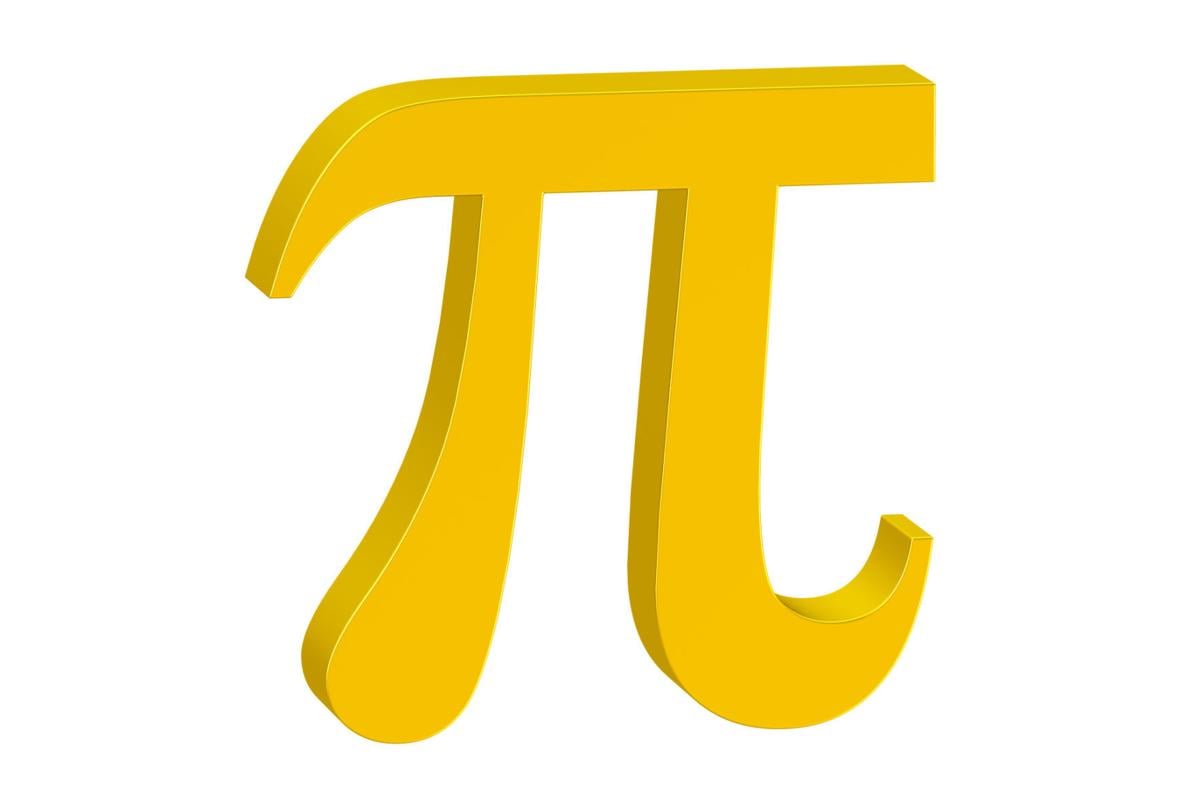
Pi (π) is the ratio of a circle’s circumference to its diameter. Pi is a constant number, meaning that for all circles of any size, Pi will be the same.
The diameter of a circle is the distance from edge to edge, measuring straight through the center. The circumference of a circle is the distance around.   Circle Diagram
History of Pi
By measuring circular objects, it has always turned out that a circle is a little more than 3 times its width around. In the Old Testament of the Bible (1 Kings 7:23), a circular pool is referred to as being 30 cubits around, and 10 cubits across. The mathematician Archimedes used polygons with many sides to approximate circles and determined that Pi was approximately 22/7. The symbol (Greek letter π) was first used in 1706 by William Jones. A ‘p’ was chosen for ‘perimeter’ of circles, and the use of π became popular after it was adopted by the Swiss mathematician Leonhard Euler in 1737. In recent years, Pi has been calculated to over one trillion digits past its decimal. Only 39 digits past the decimal are needed to accurately calculate the spherical volume of our entire universe, but because of Pi’s infinite & patternless nature, it’s a fun challenge to memorize, and to computationally calculate more and more digits.

Geometry (Geometry Calculators)
The number pi is extremely useful when solving geometry problems involving circles. Here are some examples:
The area of a circle (Area of a circle calculator).
A = πr2
Where ‘r’ is the radius (distance from the center to the edge of the circle). Also, this formula is the origin of the joke “Pies aren’t square, they’re round!”

The volume of a cylinder (Volume calculator).
V = πr2h
To find the volume of a rectangular prism, you calculate length x width x height. In that case, length x width is the area of one side (the base), which is then multiplied by the height of the prism. Similarly, to find the volume of a cylinder, you calculate the area of the base (the area of the circle), then multiply that by the height (h) of the cylinder.
Last Updated on July 25th, 2018

Source: piday.org

wiki