USDA~ FSN ~ FDA ~ MAY 2026 -Recalls – Food Safety Alerts – Previous Month & last day of prior month update


** PA, Utz Quality Foods, LLC Issues Voluntary Recall of Certain Limited Varieties of Zapp’s and Dirty Potato Chips. For more information about Utz® or its products, please visit or call 1-800-FOR-SNAX. Call them because there are alot of Batch Codes.

** JCB Flavors, LLC of Watertown, Wisconsin, is voluntarily recalling select topical seasoning products due to the potential presence of Salmonella. For questions or further information, please contact JCB Flavors, LLC Customer Service at 1-920-390-7700. The impacted products are 1.6 oz retail containers available through e-commerce platforms and retail stores nationwide. Lot # 057596

Stoltzfus Family Dairy Recalls Sour Cream and Onion Cheese Curds Because of Possible Health Risk. If you have any questions or concerns, please feel free to reach out to us directly at vern@stoltzfudairy.com for more information or call us at (315) 829-4089 during our business hours, Monday through Friday 8:00am to 4:00pm. To date, Stoltzfus Family Dairy has not received any reports of illness or injury related to these products. 

Sour Cream and Onion Cheese Curds in 8oz bagBest By: 03/25/2026
Sour Cream and Onion Cheese Curds in 8oz bagBest By: 04/23/2026
Sour Cream and Onion Cheese Curds in 8oz bagBest By: 04/29/2026
Sour Cream and Onion Cheese Curds in 8oz bagBest By: 05/06/2026

** Legacy Snack Solutions of Waukesha, Wisconsin, is voluntarily recalling certain batches of Giant Eagle Baked Pita Chips With Parmesan, Garlic & Herb because they have the potential to be contaminated with Salmonella. This action follows a California Diaries, Inc. milk powder recall due to a concern of potential Salmonella contamination. To receive a full refund or replacement, please take a photo of the product’s bar code panel and Best If Used By date, and then you should dispose of the product. You may return to the store of purchase with your receipt or call the Legacy Snack Solutions customer care line 24/7 at 1-800-532-6120 to request a credit.

** Consumers with questions regarding this recall can contact Jesse Withrow at 740-280-2141 or mywifeslaw@outlook.com. My Wife’s Slaw is voluntarily recalling its Original and Jalapeno Heat flavored coleslaw sold in 8 oz and 16 oz glass mason jars. The products included in this recall are adulterated because they were produced without the benefit of inspection and the safety parameters were not able to be verified. Products were sold directly to consumers through online sales via mywifeslaw.web.appExternal Link Disclaimer. All products that have been produced are being recalled. Products were available to be shipped nationwide. No reports of illnesses involving these products have been reported.

Pharmacal Issues Nationwide Recall of MG217 Multi-Symptom Treatment Cream & Skin Protectant Eczema Cream Due to Microbial Contamination
– May/8/2026- Jackson, WI, Pharmacal is recalling one lot of MG217 Multi-symptom Treatment Cream & Skin Protectant Eczema Cream, 6oz tube to the consumer level. The product has been found to be contaminated with Staphylococcus aureus.Risk Statement: Use of the product could result in a range of infections from localized to severe or life-threatening adverse events. Patients with weakened immune systems or compromised skin — such as those with wounds, burns, or skin disorders — are at increased risk for serious infections, including skin and skin structure infections, infective endocarditis (infection of the heart valves), bone and joint infections, bloodstream infections, and life-threatening conditions like sepsis and septic shock. To date, Pharmacal has not received any reports of adverse events related to this recall.View Full Recall

** Spring & Mulberry is voluntarily expanding its previously announced recall of select chocolate bars due to possible contamination from Salmonella. Consumers: recalls@springandmulberry.com Spring & Mulberry takes the safety and quality of its products extremely seriously. Consumers with questions may contact the company at recalls@springandmulberry.com. Customer service will respond during business hours Monday-Friday 9am-5pm Eastern Standard Time.

Kathryn Shah. The list contains a few Batch and lot Codes

**Shining Sea Fish Co. of Detroit MI, is recalling its catch weight packages of “Ma Cohen’s Kippered Herring” smoked fish because this product consists of, uneviscerated fish longer than five inches, which has the potential to be contaminated with Clostridium botulinum, a bacterium which can cause life-threatening illness or death. Consumers are warned not to use the product even if it does not look or smell spoiled. The recalled “Ma Cohens Kippered Herring” were distributed in retail grocery stores throughout MI, MN, and ND. Consumers who have purchased any packages of “Ma Cohen’s Kippered Herring” are urged to return them to the place of purchase for a full refund. Consumers with questions may contact the company Monday through Friday 9:00am – 3:00pm EST at 1-313-542-2637

The product is packaged in a clear plastic package, and a foil label with the product name and information and LOT #’s on the back of the package. The expiration dates are printed on the back of the package or listed on store added stickers along with the catch weight.

LOT 25079 Expiration May 03 2026, LOT 25055 Expiration May 12 2026, LOT 25028 Expiration June 03 2026, LOT 26344 Expiration July 22 2026


consumer.quality@richelieufoods.com Media may contact Moazzam
Chaudhry, Richelieu Foods, Inc. Vice
President of

Consumers may also contact ALDI Inc.
at 800-325-7894 or by visiting:
https://help.aldi.us/contact-form-other Brands: Mama Cozzi’s ~ Nationwide

** Media and consumers may contact
Porkie Co. Of Wis., Inc at 414-483-6562
or recall@porkkingood.com Brand: Pork King and Pork King Good

** Consumer Contact: Palermo Villa Inc.
Customer Service 1-844-267-4500. Brands: Culinary Circle and Great Value ~ Nationwide

**Jonco Industries Recalls Certain Consumer-Sized White Cheddar Seasoning Products Because of Possible Health Risk. The recalled products were distributed in limited quantities through retail stores.

The affected products include White Cheddar Seasoning sold in the following consumer-facing formats: Consumers with questions may contact Jonco Industries at 414-449-2000 during normal business hours.

Fireworks White Cheddar Seasoning, 1.6 oz jars, sold at West Allis Cheese and Sausage. The affected lot codes are: 088594-7-1.

Williams Sonoma–branded Popcorn Sampler Gift Box, containing a White Cheddar Seasoning component. The affected lot codes are: 088594-2-1.

Fireworks Popcorn Poppings & Toppings gift set containing a White Cheddar Seasoning component sold at West Allis Cheese and Sausage. The affected lot codes are: 088594-5-1.

**  Utz Quality Foods, LLC, a subsidiary of Utz Brands, Inc., is issuing a voluntary recall in the United States of certain limited varieties of Zapp’s® and Dirty® potato chips. This voluntary recall follows notification to Utz that a seasoning containing dry milk powder, sourced from California Dairies, Inc. and supplied by a third-party supplier, may contain the presence of Salmonella. The affected seasoning batches tested negative for Salmonella prior to use; however, out of an abundance of caution, Utz is recalling the limited varieties of Zapp’s and Dirty brand potato chips identified below. Consumers who have these products should not eat them and should discard any products they may have. For questions or refunds, consumers may contact the Utz Customer Care team email or call 1-877-423-0149, Monday through Friday from 9:00 am – 6:00 pm Eastern Time. Retailers should check their inventories and shelves to confirm that none of the products are present or available for purchase by consumers. This voluntary recall is being conducted with the knowledge of the United States Food and Drug Administration.

** Second Nature Brands of Madison Heights, MI, is voluntarily recalling certain 10-ounce packages of SECOND NATURE KETO CRUNCH SMART MIXTM because the product may contain undeclared cashews, pistachios, and cherries. he affected product was distributed nationwide in retail stores and through online orders. The product comes in a 10-ounce pouch with UPC 077034013405. Affected pouches are marked with “Best if used by 2/12/2027” on the backside of pouch. Packages with other Best if used by dates are not affected. No illnesses have been reported to date in connection with this issue. Consumers may contact the company by calling +1.800.651.7263 Monday-Friday from 8:00AM to 8:00PM ET, Saturday-Sunday from 9:00AM to 5:00PM ET or via recall@secondnaturebrandsus.com

** Boulder, CO – May 2, 2026 – The a2 Milk Company (“a2MC”) has voluntarily recalled three specific batches of its imported a2 Platinum Premium USA label infant formula 0-12 months (“Product”) due to the presence of cereulide. The Product is sold only in the United States. a2 Platinium Premium infant formula 0-12 months Milk-based powder with Iron.

31.7oz tin22102694547/15/2026
31.7oz tin22103246091/21/2027
31.7oz tin22103217121/15/2027

Cereulide is a heat-stable toxin produced by some strains of the bacterium Bacillus cereus. Illness occurs through the consumption of food contaminated with the toxin and preparing formula with hot water does not eliminate it. Report a Product Problem through SmartHub, or

Complete and submit a Medwatch report Online at www.fda.gov/medwatch/report.htm, or by Regular Mail or Fax: Download the form from http://www.fda.gov/MedWatch/getforms.htm or call 1-800-332-1088 to request a reporting form, then complete and return to the address on the pre-addressed form, or submit by fax to 1-800-FDA-0178

** Insulet stated that Pods from certain lots may have a small tear in the internal tubing that delivers insulin. If this happens, insulin may leak inside the Pod instead of being fully infused in the body as intended, potentially leading to under-delivery of insulin. Customers in the U.S. with adverse reactions, quality problems, or questions about this issue should contact Insulet at 1-800-641-2049 or visit https://www.omnipod.com/current-poddersExternal Link Disclaimer to reach a live agent chat.

** Ghirardelli Chocolate Company of San Leandro, California is voluntarily recalling certain powdered beverage mixes because they have the potential to be contaminated with Salmonella. This action follows a California Dairies, Inc. milk powder recall due to a concern of potential Salmonella contamination, which was supplied to a third-party manufacturer and used as an ingredient in powdered beverage mixes. The affected beverage mixes are packaged in large formats intended for food service and institutional customers, but some powdered beverage mixes may also have been available for purchase by consumers through e-commerce platforms. No illnesses have been reported to date. Consumers who purchased one of the recalled powdered beverage mixes listed above may contact Ghirardelli Chocolate Company directly at 1-844-776-0419 for questions or more information 7 days a week, 24 hours a day. The list is long; go to fda.gov for all the LOT NUMBERS

**

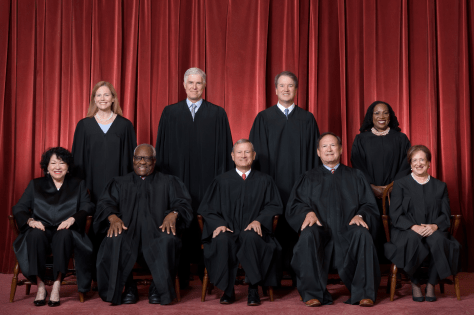
What is the Purcell Principle?


It’s a rule the Supreme Court created in Purcell v. Gonzalez (2006). It says:

Courts should avoid changing election rules close to an election because it might confuse voters.

This principle has been used to:

  • block fixes to illegal maps
  • freeze lower‑court rulings
  • allow elections to proceed under maps already found to violate the Voting Rights Act

In other words:

If a map is illegal but the election is near, the Supreme Court often says: “Use the illegal map anyway — we’ll deal with it later.”

This is why you see Black districts eliminated or weakened right before elections, even when courts agree the maps are discriminatory.

me and AI … let me know if you think it’s not accurate and cite the source for the correction if needed

May 1787 the Beginning of the Constitutional Convention – 25,28,29th


The last week of May marks the anniversary of the first meeting of the 1787 Constitutional Convention in Philadelphia.  The convention was called to address problems with the Articles of Confederation, which had been drafted in 1777 in order to provide a system for a national government.  By 1779, the Articles had been ratified by all the colonies except Maryland.  Maryland had initially refused to ratify the Articles due to a dispute between the various colonies about claims to the lands west of the colonies.  In 1781, Maryland was finally persuaded to ratify the Articles which then served as the basis for a federal government until 1789.

The Articles of Confederation provided the new emerging country with a name, “The United States of America,” and an unicameral congress.  The Articles, however, had several weaknesses, including an inability to directly raise revenue or enforce economic regulations.  These weaknesses, as well as economic troubles and local uprisings in the 1780s, such as Shay’s Rebellion, contributed to interest in amending the Articles.  The first steps towards amending the Articles were taken at the Annapolis Convention on September 11, 1786.  The Virginia Legislature had called for a convention of all states in Annapolis to discuss interstate commerce issues but when delegates from only five states attended, the delegates decided that such problems could only be dealt with if the Articles of Confederation were revised.  Three days later, on September 14,1786, Alexander Hamilton drafted a report proposing a convention of all states to revise the Articles.  The resolution acknowledged the problems in the current system and proposed a remedy:

That there are important defects in the system of the Federal Government is acknowledged by the Acts of all those States, which have concurred in the present Meeting; That the defects, upon a closer examination, may be found greater and more numerous, than even these acts imply, is at least so far probably, from the embarrassments which characterize the present State of our national affairs, foreign and domestic, as may reasonably be supposed to merit a deliberate and candid discussion, in some mode, which will unite the Sentiments and Councils of all the States. In the choice of the mode, your Commissioners are of opinion, that a Convention of Deputies from the different States, for the special and sole purpose of entering into this investigation, and digesting a plan for supplying such defects as may be discovered to exist, will be entitled to a preference from considerations, which will occur without being particularized.

The Annapolis Report further suggested that Congress direct:

the appointment of Commissioners, to meet at Philadelphia on the second Monday in May next, to take into consideration the situation of the United States, to devise such further provisions as shall appear to them necessary to render the constitution of the Federal Government adequate to the exigencies of the Union; and to report such an Act for that purpose to the United States in Congress assembled, as when agreed to, by them, and afterwards confirmed by the Legislatures of every State, will effectually provide for the same.

This report was transmitted to Congress and in February 1787 the Congress, following the suggestions of the Annapolis Report called for a convention to begin on May 14, 1787 “to render the constitution … adequate to the exigencies of the Union.”

Though the convention was to begin on May 14th, only eight delegates had arrived in Philadelphia, and it was not until May 25th that a sufficient number of delegates were present to begin proceedings.  The convention began with the election of a president, George Washington; a secretary, William Jackson; and the nomination of a three member committee consisting of Messrs. WytheHamilton and C. Pinckney, which was directed to draft the rules for the convention.  A doorkeeper and messengers were also appointed.

On May 28th, Mr. Wythe presented the proposed rules to the Convention and on May 29th the rules, as amended, were adopted.  Also, on May 29th, Edmund Randolphintroduced the Virginia Plan.  Although introduced by Randolph, the plan was largely the work of another delegate, James Madison.  As the work of the convention was officially to amend the Articles of Confederation, the Virginia Plan began with the phrase “Resolved that the Articles of Confederation ought to be so corrected & enlarged as to accomplish the objects proposed by their institution; namely, “common defence, security of liberty and general welfare.”  The plan suggested, among other things, that the Congress be split into two branches, that a national executive and judiciary be established with the national legislature picking the executive.

Convention at Philadelphia, 1787 / Hartford : Published by Huntington & Hopkins, 1823. Library of Congress, Prints & Photographs Division, //hdl.loc.gov/loc.pnp/cph.3b39116

Convention at Philadelphia, 1787 / Hartford : Published by Huntington & Hopkins, 1823. Library of Congress, Prints & Photographs Division, //hdl.loc.gov/loc.pnp/cph.3b39116

Working rapidly, the outline on a three part system of government consisting of a legislature, executive and judiciary was agreed upon by May 30th.  During the next two months, the Convention put forth and debated the general principles of the government.  On July 26th, the Convention adjourned for 10 days while the five member Committee of Detail drafted a constitution based on the Convention’s work.  Returning to work on August 6th, the Convention spent the next month debating and amending the proposed document.  Then on September 17, 1787, the Convention completed its work and the state delegations unanimously agreed to approve the Constitution.  All but three of the members then signed the Constitution, after debating this step, and Convention President Washington, transmitted the document by letter to Congress.  Since the proceedings of the Convention had been secret, Washington had to explain in his letter why the Convention had drafted a document for the institution of a new system of government rather than proposals to amend the existing Articles of Confederation:

The friends of our country have long seen and desired, that the power of making war, peace, and treaties, that of levying money and regulating commerce, and the correspondent executive and judicial authorities should be fully and effectually vested in the general government of the Union: But the impropriety of delegating such extensive trust to one body of men is evident-Hence results the necessity of a different organization. In all our deliberations on this subject we kept steadily in our view, that which appears to us the greatest interest of every true American, the consolidation of our Union, in which is involved our prosperity, felicity, safety, perhaps our national existence … That it will meet the full and entire approbation of every state is not perhaps to be expected; … we hope and believe; that it may promote the lasting welfare of that country so dear to us all, and secure her freedom and happiness, is our most ardent wish.

Although the proceedings of the convention were kept secret at the time, the Convention’s Secretary, William Jackson, gathered up the journals and related papers and delivered them to George Washington, who in turn delivered the papers to the Department of State in 1796.   In 1818, Congress ordered that the journals be printed.  After the publication of the journals in 1819, the next several decades saw publications of notes of the proceedings by various attendees, including Madison’s, which were published in 1840.  Then in 1911, Max Farrand published a four volume set titled The Records of the Federal Convention of 1787.  This compilation brought together the journals of the convention along with Madison’s notes and the notes of various of the other delegates, including those of Rufus King.  The fourth volume of the set included supplemental materials such as letters from the delegates written during the convention.  Farrand’s Records is considered to be one of the best sources of information about the Constitutional Convention as it brings together in one publication the diverse materials which form the record of the Convention

resources: loc, internet

History 1961 – A bus carrying Freedom Riders was bombed and burned in Alabama


In memory of… a repost


Freedom Riders were groups of white and African American civil rights activists who participated in Freedom Rides, bus trips through the American South in 1961 to protest segregated bus terminals. Freedom Riders tried to use “whites-only” restrooms and lunch counters at bus stations in Alabama, South Carolina and other Southern states. The groups were confronted by arresting police officers—as well as horrific violence from white protestors—along their routes, but also drew international attention to their cause.

The 1961 Freedom Rides, organized by the Congress of Racial Equality (CORE), were modeled after the organization’s 1947 Journey of Reconciliation. During the 1947 action, African-American and white bus riders tested the 1946 U.S. Supreme Court decision in Morgan v. Virginia that found segregated bus seating was unconstitutional.

The 1961 Freedom Rides sought to test a 1960 decision by the Supreme Court in Boynton v. Virginia that segregation of interstate transportation facilities, including bus terminals, was unconstitutional as well. A big difference between the 1947 Journey of Reconciliation and the 1961 Freedom Rides was the inclusion of women in the later initiative.

In both actions, black riders traveled to the American South—where segregation continued to occur—and attempted to use whites-only restrooms, lunch counters and waiting rooms.

The original group of 13 Freedom Riders—seven African Americans and six whites—left Washington, D.C., on a Greyhound bus on May 4, 1961. Their plan was to reach New OrleansLouisiana, on May 17 to commemorate the seventh anniversary of the Supreme Court’s Brown v. Board of Education decision, which ruled that segregation of the nation’s public schools was unconstitutional.

The group traveled through Virginia and North Carolina, drawing little public notice. The first violent incident occurred on May 12 in Rock Hill, South CarolinaJohn Lewis, an African-American seminary student and member of the SNCC (Student Nonviolent Coordinating Committee), white Freedom Rider and World War II veteran Albert Bigelow, and another African-American rider were viciously attacked as they attempted to enter a whites-only waiting area.

The next day, the group reached Atlanta, Georgia, where some of the riders split off onto a Trailways bus.

On May 14, 1961, the Greyhound bus was the first to arrive in Anniston, Alabama. There, an angry mob of about 200 white people surrounded the bus, causing the driver to continue past the bus station.

The mob followed the bus in automobiles, and when the tires on the bus blew out, someone threw a bomb into the bus. The Freedom Riders escaped the bus as it burst into flames, only to be brutally beaten by members of the surrounding mob.

The second bus, a Trailways vehicle, traveled to Birmingham, Alabama, and those riders were also beaten by an angry white mob, many of whom brandished metal pipes. Birmingham Public Safety Commissioner Bull Connorstated that, although he knew the Freedom Riders were arriving and violence awaited them, he posted no police protection at the station because it was Mother’s Day.

Photographs of the burning Greyhound bus and the bloodied riders appeared on the front pages of newspapers throughout the country and around the world the next day, drawing international attention to the Freedom Riders’ cause and the state of race relations in the United States.

Following the widespread violence, CORE officials could not find a bus driver who would agree to transport the integrated group, and they decided to abandon the Freedom Rides. However, Diane Nash, an activist from the SNCC, organized a group of 10 students from Nashville, Tennessee, to continue the rides.

U.S. Attorney General Robert F. Kennedy, brother of President John F. Kennedy, began negotiating with Governor John Patterson of Alabama and the bus companies to secure a driver and state protection for the new group of Freedom Riders. The rides finally resumed, on a Greyhound bus departing Birmingham under police escort, on May 20.

The violence toward the Freedom Riders was not quelled—rather, the police abandoned the Greyhound bus just before it arrived at the Montgomery, Alabama, terminal, where a white mob attacked the riders with baseball bats and clubs as they disembarked. Attorney General Kennedy sent 600 federal marshals to the city to stop the violence.

The following night, civil rights leader Martin Luther King Jr. led a service at the First Baptist Church in Montgomery, which was attended by more than one thousand supporters of the Freedom Riders. A riot ensued outside the church, and King called Robert Kennedy to ask for protection.

Kennedy summoned the federal marshals, who used teargas to disperse the white mob. Patterson declared martial law in the city and dispatched the National Guard to restore order.

On May 24, 1961, a group of Freedom Riders departed Montgomery for Jackson, Mississippi. There, several hundred supporters greeted the riders. However, those who attempted to use the whites-only facilities were arrested for trespassing and taken to the maximum-security penitentiary in Parchman, Mississippi.

During their hearings, the judge turned and looked at the wall rather than listen to the Freedom Riders’ defense—as had been the case when sit-in participants were arrested for protesting segregated lunch counters in Tennessee. He sentenced the riders to 30 days in jail.

Attorneys from the National Association for the Advancement of Colored People (NAACP), a civil rights organization, appealed the convictions all the way to the U.S. Supreme Court, which reversed them.

The violence and arrests continued to garner national and international attention, and drew hundreds of new Freedom Riders to the cause.

The rides continued over the next several months, and in the fall of 1961, under pressure from the Kennedy administration, the Interstate Commerce Commission issued regulations prohibiting segregation in interstate transit terminals.

history.com

history… may 14


1264 – King Henry III was captured by his brother in law Simon deMontfort at the Battle of Lewes in France.

1509 – In the Battle of Agnadello, French defeated Venitians in Northern Italy.

1607 – An expedition led by Captain Christopher Newport went ashore at Jamestown, Virginia. The group had arrived at the location the day before. This became the first permanent English colony in America.

1610 – French King Henri IV (Henri de Navarre) was assassinated by a fanatical monk, François Ravillac.

1643 – Louis XIV became King of France at age 4 upon the death of his father, Louis XIII.

1727 – Thomas Gainsborough was born. He was an English painter.

1787 – Delegates began gathering in Philadelphia for a convention to draw up the U.S. Constitution.

1796 – The first smallpox vaccination was given by Edward Jenner.

1804 – William Clark set off the famous expedition from Camp Dubois. A few days later, in St. Louis, Meriwether Lewis joined the group. The group was known as the “Corps of Discovery.”

1811 – Paraguay gained independence from Spain.

1853 – Gail Borden applied for a patent for condensed milk.

1862 – The chronograph was patented by Adolphe Nicole.

1874 – McGill University and Harvard met at Cambridge, MA, for the first college football game to charge admission.

1878 – The name Vaseline was registered by Robert A. Chesebrough.

1879 – Thomas Edison incorporated the Edison Telephone Company of Europe.

1897 – “The Stars and Stripes Forever” by John Phillip Sousa was performed for the first time. It was at a ceremony where a statue of George Washington was unveiled.

1897 – Guglielmo Marconi made the first communication by wireless telegraph.

1913 – The Rockefeller Foundation was created by John D. Rockefeller with a gift of $100,000,000.

1935 – The Philippines ratified an independence agreement.

1940 – The Netherlands surrendered to Nazi Germany.

1942 – The Women’s Auxiliary Army Corps (WAAC) was established by an act of the U.S. Congress.

1942 – “Lincoln Portrait” by Aaron Copland was performed for the first time by the Cincinnati Symphony Orchestra.

1942 – The British, while retreating from Burma, reached India.

1948 – Prime Minister David Ben-Gurion proclaimed the independent State of Israel as British rule in Palestine came to an end.

1955 – The Warsaw Pact, a Easter European mutual-defense treaty, was signed in Poland by eight communist bloc countries including the Soviet Union.

1961 – A bus carrying Freedom Riders was bombed and burned in Alabama.

1967 – Mickey Mantle hit his 500th homerun.

1969 – Jacqueline Susann’s second novel, “The Love Machine,” was published by Simon and Schuster.

1973 – Skylab One was launched into orbit around Earth as the first U.S. manned space station.

1975 – U.S. forces raided the Cambodian island of Koh Tang and recaptured the American merchant ship Mayaguez. All 40 crew members were released safely by Cambodia. About 40 U.S. servicemen were killed in the military operation.

1980 – U.S. President Carter inaugurated the Department of Health and Human Services.

1985 – Ray Kroc’s first McDonald’s restaurant became the first fast-food business museum. It is located in Des Plaines, Illinois.

1988 – In the Andean village of Cayara, Peru’s military was involved in a massacre of at least 26 peasants.

1992 – Former Soviet President Mikhail S. Gorbachev addressed members of the U.S. Congress, appealing to them to pass a bill to aid the people of the former Soviet Union.

1996 – A tornado hit 80 villages in nothern Bangladesh. More than 440 people were killed.

1998 – The Associated Press marked its 150th anniversary.

1998 – The final episode of the TV series “Seinfeld” aired after nine years on NBC.

1999 – North Korea returned the remains of six U.S. soldiers that had been killed during the Korean War.

1999 – Jess Marlow received a star on the Hollywood Walk of Fame.

2005 – The art exhibit “Gumby and Friends: The First 50 Years” opened at the Lynn House Gallery in Antioch, CA.

on-this-day.com