April 1, 2020 — Many emergency room workers remove their clothes as soon as they get home — some before they even enter. Does that mean you should worry about COVID-19 transmission from your own clothing, towels, and other textiles?
While researchers found that the virus can remain on some surfaces for up to 72 hours, the study didn’t include fabric. “So far, evidence suggests that it’s harder to catch the virus from a soft surface (such as fabric) than it is from frequently touched hard surfaces like elevator buttons or door handles,” wrote Lisa Maragakis, MD, senior director of infection prevention at the Johns Hopkins Health System.
for the complete article: webmd.com/lung/news/20200401
More than 15 years after it was first established, the National Museum of African American History and Culture opens on the National Mall on September 24, 2016. Barack Obama, the nation’s first African American president, leads the ceremony and officially opens the museum by ringing the Freedom Bell, a bell from an African American Baptist church founded in 1776.
As far back as 1915, there had been proposals for a museum recognizing the achievements of African Americans. In 1929, President Herbert Hoover approved a commission to create such an institution, but it never received funding. Various attempts were made to pass legislation establishing a museum through Congress, including multiple bills introduced by Georgia congressman and civil rights icon John Lewis, but even after the Board of Regents of the Smithsonian Institution joined the effort in the 1990s it still took more than a decade.
The trial for eight antiwar activists charged with inciting violent demonstrations at the August 1968 Democratic National Convention opens in Chicago before Judge Julius Hoffman. Initially there were eight defendants, but one, Bobby Seale of the Black Panthers, denounced Hoffman as a racist and demanded a separate trial. The seven other defendants, including David Dellinger of the National Mobilization Committee to End the War in Vietnam (MOBE); Rennie Davis and Tom Hayden of MOBE and Students for a Democratic Society (SDS); and Jerry Rubin and Abbie Hoffman of the Youth International Party (Yippies), were accused of conspiring to incite a riot.
At the height of the antiwar and civil rights movements, these young leftists had organized protest marches and rock concerts at the Democratic National Convention. During the event, clashes broke out between the protesters and the police and eventually turned into full-scale rioting, complete with tear gas and police beatings. The press, already there to cover the Democratic convention, denounced the overreaction by police and Chicago Mayor Richard Daley’s handling of the situation.
The Chicago Seven were indicted for violating the Rap Brown law, which had been tagged onto the Civil Rights Bill earlier that year by conservative senators. The law made it illegal to cross state lines in order to riot or to conspire to use interstate commerce to incite rioting. President Johnson’s attorney general, Ramsey Clark, refused to prosecute the case.
** Par Health Issues Voluntary Nationwide Recall of Two Lots of Dexmedetomidine HCl in 0.9% Sodium Chloride Injection Due to the Presence of Particulate Matter. ROCHESTER, MI– September 18, 2026 –Par Health is voluntarily recalling two lots of Dexmedetomidine HCl in 0.9% Sodium Chloride Injection 400 mcg/100 mL (4 mcg/mL) to the hospital level. To date, Par Health has not received any reports of adverse events related to this recall.
Dexmedetomidine HCl in 0.9% Sodium Chloride Injection 400 mcg/100 mL (4 mcg/mL) is formulated for intravenous infusion. The product is indicated for sedation of initially intubated and mechanically ventilated adult patients during treatment in an intensive care setting and for sedation of non-intubated adult patients prior to and/or during surgical and other procedures.
Dexmedetomidine HCl in 0.9% Sodium Chloride Injection 400 mcg/100 mL (4 mcg/mL) for Intravenous Infusion, Distributed by: Par Pharmaceutical
42023-187-01
87558
02/2027
88802
04/2027
These lots were distributed nationwide to wholesalers between May 13, 2025 and June 29, 2025.
Par Health is providing written notification to wholesale accounts that have received the affected lots and are arranging for return of all existing inventory of Lots 87558 and 88802 through Inmar, Inc. Wholesale distributors and hospital pharmacies that have the product being recalled should immediately discontinue use and stop distribution. If you have further distributed the recalled product, please notify your accounts or any additional locations which may have received the recalled product.
Questions regarding this recall can be directed to Inmar, Inc. at 1-833-599-3197 Monday through Friday between the hours of 9 a.m. and 5 p.m. ET or by email at rxrecalls@inmar.com.
Gias Foods has issued a nationwide recall of two lots of Better goods Authentic Italian Lemon Alfredo Fettuccine sold at Walmart after testing found the product may be contaminated with Listeria
A food testing program in Scotland has revealed a high level of compliance but also showed examples of microbial contamination and meat substitution. Food Standards Scotland (FSS) funds an annual
Texas, Idaho, New York, New Jersey, Florida, Texas, Illinois, Mississippi, California, Florida
WASHINGTON, Sept. 06, 2026 – Prime Line Distributors, Inc., a Fort Lauderdale, Fla., firm, and Ferrarini USA, Inc., a Hoboken, N.J., firm, are recalling approximately 1,513 pounds of imported ready-to-eat (RTE) pork products that may be adulterated with Listeria monocytogenes ( Lm), the U.S. Department…
Impacted Products
• Various weight cardboard cases containing two pieces of individually vacuumed packed “PRIME LINE DISTRIBUTORS, INC. GUANCIALE PORK JOWL PRODUCT OF ITALY” with “LOT: 263311US” and “BEST IF USE BY DATE: 05.16.27” printed on the label.• Various weight individually vacuumed packaged “GUANCIALE PORK JOWL PRODUCT OF ITALY” with “LOT: 263311US” and “BEST IF USE BY: 05.16.27” printed on the label. The product has an additional label with “DOK GUANCIALE” on the packaging.• Various weight cardboard cases containing two pieces of individually vacuumed packed “GUANCIALE PORK JOWL PRODUCT OF ITALY” with “LOT: 263311US” and “BEST IF USE BY DATE: 05.16.27” printed on the label.• Various weight individually vacuumed packaged “FERRARINI GUANCIALE DRY-CURED PORK JOWL” with “LOT: 263311US” and “BEST IF USE BY DATE: 05.16.27” printed on the label.
Alasko brand frozen whole raspberries are being recalled in Canada because of contamination with norovirus. This recall was triggered by findings by the Canadian Food Inspection Agency during its investigation. By News Desk
Danone USA is recalling of So Delicious Dairy Free Salted Caramel Cluster Non-Dairy Frozen Dessert pints with best-by dates on and before April 3, 2028, because consumers complained. By News Desk
Two men have been charged in Norway for their roles in selling farmed salmon that was unfit for human consumption. The defendants, both men in their 50s, worked in senior By Joe Whitworth
** Sept. 06, 2026 – Prime Line Distributors, Inc., a Fort Lauderdale, Fla., firm, and Ferrarini USA, Inc., a Hoboken, N.J., firm, are recalling approximately 1,513 pounds of imported ready-to-eat (RTE) pork products that may be adulterated with Listeria monocytogenes ( Lm), the U.S. Department…
Impacted Products
• Various weight cardboard cases containing two pieces of individually vacuumed packed “PRIME LINE DISTRIBUTORS, INC. GUANCIALE PORK JOWL PRODUCT OF ITALY” with “LOT: 263311US” and “BEST IF USE BY DATE: 05.16.27” printed on the label.• Various weight individually vacuumed packaged “GUANCIALE PORK JOWL PRODUCT OF ITALY” with “LOT: 263311US” and “BEST IF USE BY: 05.16.27” printed on the label. The product has an additional label with “DOK GUANCIALE” on the packaging.• Various weight cardboard cases containing two pieces of individually vacuumed packed “GUANCIALE PORK JOWL PRODUCT OF ITALY” with “LOT: 263311US” and “BEST IF USE BY DATE: 05.16.27” printed on the label.• Various weight individually vacuumed packaged “FERRARINI GUANCIALE DRY-CURED PORK JOWL” with “LOT: 263311US” and “BEST IF USE BY DATE: 05.16.27” printed on the label.
The Connecticut Department of Consumer Protection Food and Standards Division has issued a cease-and-desist order to Phire in the Hole of Monroe, CT, and asked the company to. ByNews Desk
Evergreen Fresh Sprouts LLC of Moyie Springs, ID, is recalling 215 cases of Broccoli Sprouts, because they have been linked to an outbreak of Salmonella infections. The sprouts were delivered
Leaping Bear Farm is recalling eggs after Vermont health and agriculture officials detected Salmonella in eggs and environmental samples from the farm. The recall covers cartons dated between June 1. ByNews Desk
PK brand Roasted Lemon N’ Chilli Peanuts are being recalled in Canada because of Salmonella contamination. The peanuts were distributed in Ontario and Quebec, according to the Canadian Food Inspection. ByNews Desk
Coaticook brand Aged Cheddar Cheese is being recalled in Canada because of contamination with Listeria monocytogenes. The recall was initiated by the company. ByNews Desk
El Eden Import Distributor Corp., a Long Island City, NY, firm, is recalling 264 pounds of potato chip products containing chicharrón (pork cracklings) because they were produced in the Republic. ByNews Desk
Prime Line Distributors Inc. of Fort Lauderdale, FL., and Ferrarini USA Inc. of Hoboken, NJ, are recalling 1,513 pounds of imported ready-to-eat (RTE) pork products that may. ByNews Desk
The seed supplier behind a multi-state outbreak linked to sprouts may have been named quietly in an obscure FDA report. First reported by Phyllis Entis on eFoodAlert.com, ByNews Desk
An unnamed seed company is now under investigation in an outbreak traced to fresh sprouts. And, another product has been added to the recall of implicated sprouts. The outbreak of E. coli and Salmonella infections has previously been linked to alfalfa sprouts grown by Everything Sprouts of Minneapolis, MN. The company recalled its Crunchy Protein Sprout Mix and Zesty Garlic Mix sprouts sold under the Calco and Everything Sprouts brands. ByCoral Beach
The company said it was taking all necessary steps to fully clarify the matter ByJoe Whitworth
** Evergreen Fresh Sprouts LLC Recalls Broccoli Sprouts Because of Possible Health Risk. Evergreen Fresh Sprouts LLC of Moyie Springs, IDAHO is recalling 215 cases (6/4oz bags per case) of Broccoli Sprouts, because it has the potential to be contaminated with Salmonella. Our company has ceased the production and distribution of broccoli sprouts since 9/04/2026 and is currently conducting a root cause investigation. Consumers who have purchased affected Broccoli Sprouts are urged to immediately discard product. Consumers with questions may contact the company at 1-208-267-4258, Monday-Friday, 7am-2 pm GMT. The Broccoli Sprouts were delivered to three distributors in WA between 8/24/26 and 9/2/26, and product may have been further distributed and sold in retail stores to consumers in ID, MT, and WA. The affected Broccoli Sprouts were packaged in clear plastic 4oz. Zip lock bags, UPC code 8 38796 00105 1, and have the Use By dates of 9/07/26, 9/09/26, 9/11/26, 9/14/26, and 9/16/26.
We were notified that our broccoli sprouts product has been related to a multistate outbreak of Salmonella Bovismorbifican. The outbreak includes 22 cases as of 9/9/2026.
** Made Fresh Salads, Inc. Recalls Ready-to-Eat Deli-Style Salads and Cream Cheese Because of Possible Health Risk. Made Fresh Salads Inc. of Bay Shore, NY is recalling all Ready to Eat Deli Style Salads and cream cheese, because they have the potential to be contaminated with Listeria monocytogenes. The various salads were distributed in Brooklyn, Queens, Bronx and New York City by direct delivery to retail stores and distributors. Products are distributed in 30 lb. and 5 lb. white plastic tubs with a Made Fresh Salads label or a Northside Label and a half-size aluminum pan.
The salads being recalled are as follows: expiration dates from September 3, 2026 through September 18, 2026 printed on the bottom left of the label. Consumers who have purchased Made Fresh Salads are urged to return it to the place of purchase for a full refund. Consumers with questions may contact the company at (718) 765-0082 Monday through Friday 9am to 5 pm ET.
The list is long … take the time to check, and the products may have been repacked by retail locations in deli-style or other retail packaging. Retail packaging and coding will vary based on location of purchase.
** BMC Medical Co., Ltd. Recalls Luna G3 APAP (Model LG3600) with Firmware G3-2.00.76 Due to Firmware Defect. Beijing, China, retrospectively reported to the US Food and Drug Administration (FDA) a recall of 20,160 Luna G3 APAP (Model LG3600) devices distributed in the United States due to firmware defect. This corrective action was not reported to customers. On August 19, 2026, the FDA classified this retrospective recall as a Class I recall (FDA Recall Number: Z-2979-2026).
BMC has identified that firmware version, G3-2.00.76 installed on these Luna G3 APAP (Model LG3600) devices contained a firmware defect. BMC conducted a firmware upgrade of these devices to version G3-2.00.77 for 20,160 affected devices at the U.S. importer’s warehouse from October through December 2024. After reporting the retrospective recall, BMC discovered that potentially up to 196 units did not receive the upgrade and identified that these devices may still contain firmware version G3-2.00.76.
If the affected device(s) operates simultaneously under high pressure, high respiratory rate, and high peak flow an “Error” message on the device display is triggered, followed by automatic shutdown resulting in a failure to deliver therapy. For any inquiries, please contact RH, the U.S. importer of BMC, at telephone number 863-226-6285 or via email at 3B-Recall@reacthealth.com, Monday through Friday, between 8:00 a.m. and 5:00 p.m. Eastern Time (ET). Additionally, BMC may be reached at any time by email at bmc-recall@bmc-medical.com.
** Foods Alive Recalls Organic Moringa Leaf Powder Because of Possible Health Risk. Foods Alive Inc of Angola, IN, is recalling its 8-ounce packages of organic moringa leaf powder because they have the potential to be contaminated with Salmonella, an organism which can cause serious and sometimes fatal infections in young children, frail or elderly people, and others with weakened immune systems. he recalled organic moringa leaf powder was distributed nationwide in retail stores and through online sellers including but not limited to www.foodsalive.comExternal Link Disclaimer.
The product comes in an 8 ounce stand up pouch with a freshest by date of 110127 and the number 02726 below the date, and were shipped between January 27th and August 7th 2026.
No illnesses have been reported to date in connection with this problem. Consumers who have purchased 8 ounce packages of organic moringa leaf powder are urged to return them to the place of purchase for a full refund. Consumers with questions may contact the company at 260-488-4497.
** Frutas y Hortalizas del Sur S.A., San Carlos, Chile expands its July 3, 2026, recall of frozen organic IQF blueberries to include one lot of Great Value frozen Organic Triple Berry Blend 10 OZ because of potential contamination with Escherichia coli O145:H28 (E. coli O145). This recalled product was shipped to select Walmart stores in 16 states including Alabama, Arkansas, Florida, Illinois, Indiana, Kentucky, Louisiana, Minnesota, Mississippi, Missouri, North Carolina, Ohio, Oklahoma, South Carolina, Texas and Wisconsin. Consumers should check their freezers for the affected product.
The affected product is:
Product: Great Value Organic Triple Berry Blend 10 OZ (Including Strawberries, Blackberries and Blueberries), with UPC: 7874211226
Package Size: 10 oz
Lot Code: 6040 01-6 (in front of the package)
Best If Used By Date: February 9, 2028
Consumers who have Great Value Organic Triple Berry 10 OZ with lot code 6040 01-6 should not consume it. Frutas y Hortalizas del Sur S.A. is working closely with the appropriate regulatory authorities and its customers regarding this recall.
Consumers or customers with questions regarding this recall may contact:
The recalled products may contain bacteria, including Pseudomonas aeruginosa, which is an environmental organism found widely in soil and water. People with weakened immune systems or external medical devices who are exposed to Pseudomonas aeruginosa face a risk of serious infection that may require medical treatment. The bacteria can enter the body if inhaled, through the eyes, or through a break in the skin. People with healthy immune systems are usually not affected by the bacteria.
Remedy:
Consumers should stop using the recalled cleaners immediately. Consumers will be asked to register at https://mistolinrecall.expertinquiry.com/ and submit a picture of the 12-digit UPC code printed on the label and a picture of the date code printed on the side of the bottle and dispose of the product in its container with household trash. Consumers registering bottles in the affected scents with date codes printed on the bottle beginning with PR01 and followed by a five-digit number between 25091 and 26168 will receive a full refund of the purchase price, with receipt or of the manufacturer’s suggested retail price, without receipt.
** B. Braun Medical Inc. Issues Voluntary Nationwide Recall of 0.9% Sodium Chloride Injection USP, 100 mL, in a 150 mL PAB® Container Due to the Presence of Particulate Matter. Product was distributed Nationwide to hospital and healthcare facilities from February 27, 2026 to August 3, 2026.
B. Braun is notifying its distributors and customers by mail and is arranging for return and replacement of all recalled products. Customers that have the recalled product should return to place of purchase.
Consumers with questions regarding this recall can contact B. Braun by emailing recalls@bbraunusa.com, Monday to Friday 8:00am to 5:00pm EST.
** American Regent, Inc. Issues Voluntary Nationwide Recall of Three Lots of Epinephrine Injection, USP 30 mg/ 30 mL (1 mg/mL) Due to the Presence of Particulate Matter and Lack of Assurance of Sterility. September 3, 2026 – New Albany, OH, American Regent, Inc. is conducting a nationwide voluntary recall of three lots of Epinephrine Injection, USP 30 mg/ 30 mL (1 mg/mL) multidose vials to the consumer level. Customer complaints were received for leaking and cracked vials, resulting in a lack of assurance of sterility. The firm’s investigation also revealed the presence of particulate matter identified as Nylon, Cellulosic, Acrylic, Polyethylene, and Glass. Epinephrine Injection, USP 30 mg/ 30 mL (1 mg/mL) packaged in a multi dose vials, administered intravenously, intramuscularly, or subcutaneously and is to be used by or under the direction of a physician. Epinephrine Injection, USP is indicated for the emergency treatment of allergic reactions (Type I), including anaphylaxis, which may result from insect stings or bites, foods, drugs, sera, diagnostic testing substances, and other allergens, as well as idiopathic anaphylaxis or exercise-induced anaphylaxis. Epinephrine Injection, USP is also indicated to increase mean arterial blood pressure in adult patients with hypotension associated with septic shock. Epinephrine Injection, USP is a clear, colorless, sterile solution available in a 30 mL multiple-dose vial containing 1 mg/mL. The affected Lot Numbers 25128L1C0, 25280L1C0, and 26108L1C0 were distributed nationwide in the United States. Phone: 800-645-1706 (8:00AM-6:00PM EST, Monday – Thursday, 8:00AM- 4:00PM EST, Friday)American Regent, Inc. Customer Service
** Frutas y Hortalizas del Sur S.A. Expands Recall to Include One Lot of Great Value Frozen Organic Triple Berry Blend Because of Potential Contamination with Escherichia coli O145:H28 (E. coli O145). This recalled product was shipped to select Walmart stores in 16 states, including Alabama, Arkansas, Florida, Illinois, Indiana, Kentucky, Louisiana, Minnesota, Mississippi, Missouri, North Carolina, Ohio, Oklahoma, South Carolina, Texas, and Wisconsin. Consumers should check their freezers for the affected product.
The affected product is:
Product: Great Value Organic Triple Berry Blend 10 OZ (Including Strawberries, Blackberries and Blueberries), with UPC: 7874211226
Package Size: 10 oz
Lot Code: 6040 01-6 (in front of the package)
Best If Used By Date: February 9, 2028
Consumers who have Great Value Organic Triple Berry 10 OZ with lot code 6040 01-6 should not consume it.Media Contact: Joshua Weiss
An unnamed seed company is now under investigation in an outbreak traced to fresh sprouts. And, another product has been added to the recall of implicated sprouts.
Authorities in Hong Kong have issued a warning about a brand of imported rice noodles because of formaldehyde. The Centre for Food Safety (CFS) of the Food and Environmental Hygiene
** LMSI LLC/Kofinas Olive Oil Issues a Voluntary Recall of its Garlic Mediterranean Infused Extra Virgin Olive Oil for Using a Garlic Essential Oil Not Approved for Culinary Use. LMSI LLC/ Kofinas Olive Oil is issuing a voluntary recall of its Garlic Mediterranean infused extra virgin olive oil for using a garlic essential oil not approved for culinary use. The flavored oil was bottled in glass bottles in 500 ml, 250 ml, and 100 ml sizes.
The recalled products were available for sale from August 31, 2025, to August 27, 2026, at the following locations:
Montgomery Store & Infusion Kitchen: 8210 Market Place Ln., Cincinnati, OH 45242
The Judiciary Act of 1789 is passed by Congress and signed by President George Washington, establishing the Supreme Court of the United States as a tribunal made up of six justices who were to serve on the court until death or retirement. That day, President Washington nominated John Jay to preside as chief justice, and John Rutledge, William Cushing, John Blair, Robert Harrison and James Wilson to be associate justices. On September 26, all six appointments were confirmed by the U.S. Senate.
The U.S. Supreme Court was established by Article 3 of the U.S. Constitution. The Constitution granted the Supreme Court ultimate jurisdiction over all laws, especially those in which their constitutionality was at issue. The high court was also designated to oversee cases concerning treaties of the United States, foreign diplomats, admiralty practice and maritime jurisdiction. On February 1, 1790, the first session of the U.S. Supreme Court was held in New York City’s Royal Exchange Building.

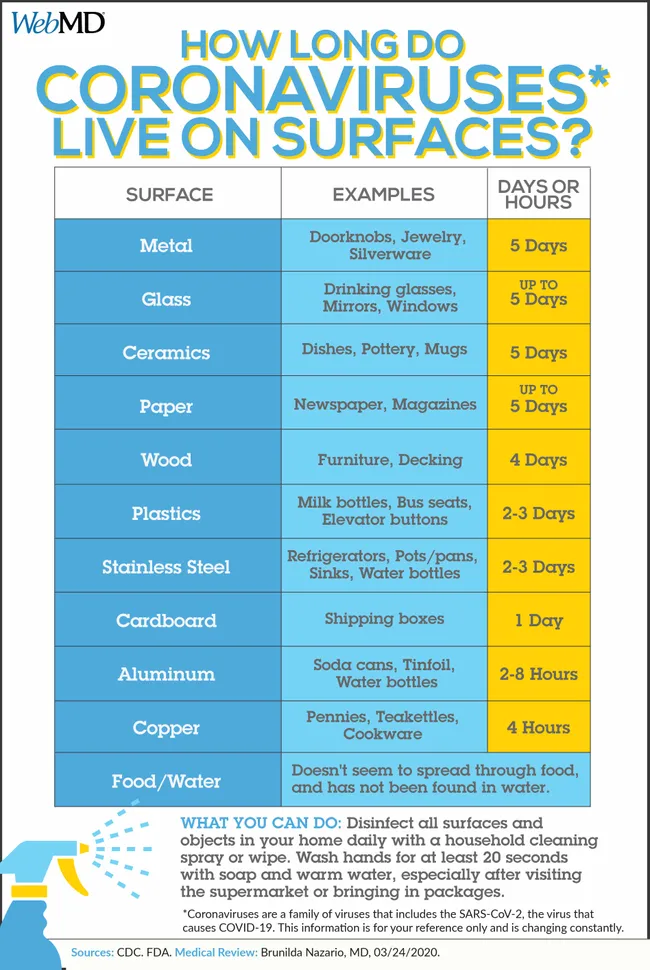 ce suggests that it’s harder to catch the virus from a soft surface (such as fabric) than it is from frequently touched hard surfaces like elevator buttons or door handles,” wrote Lisa Maragakis, MD, senior director of infection prevention at the Johns Hopkins Health System.








You must be logged in to post a comment.