on this day … 9/24  


1789 – The U.S. Congress passed the First Judiciary Act. The act provided for an Attorney General and a lower federal courts.

1869 – Thousands of businessmen were financially ruined after a panic on Wall Street. The panic was caused by an attempt to corner the gold market by Jay Gould and James Fisk.

1915 – “The Lamb,” Douglas Fairbanks first film, was shown at the Knickerbocker Theater in New York City, NY.

1929 – The first all-instrument flight took place in New York when Lt. James H. Doolittle guided a Consolidated NY2 Biplane over Mitchell Field.

1933 – “Roses and Drums” was heard on WABC in New York City. It was the first dramatic presentation for radio.

1934 – Babe Ruth played his last game as a New York Yankee player.

1938 – Don Budge became the first tennis player to win all four of the major titles when he won the U.S. Tennis Open. He had already won the Australian Open, the French Open and the British Open.

1957 – The Brooklyn Dodgers played their last game at Ebbets Field.

1957 – U.S. President Eisenhower sent federal troops to Little Rock, AR, to enforce school integration.

1960 – The first nuclear powered aircraft carrier was launched. The USS Enterprise set out from Newport News, VA.

1961 – “The Bullwinkle Show” premiered in prime time on NBC-TV. The show was originally on ABC in the afternoon as “Rocky and His Friends.”

1963 – The U.S. Senate ratified a treaty that limited nuclear testing. The treaty was between the U.S., Britain, and the Soviet Union.

1968 – “60 Minutes” premiered on CBS-TV.

1968 – “The Mod Squad” premiered on ABC-TV.

1977 – “The Love Boat” debuted on ABC-TV. The theme song was sung by Jack Jones and was written by Paul Williams and Charles Fox.

1995 – Three decades of Israeli occupation of West Bank cities ended with the signing of a pact by Israel and the PLO.

1996 – The United States, represented by President Clinton, and the world’s other major nuclear powers signed a Comprehensive Test Ban Treaty to end all testing and development of nuclear weapons.

1998 – The U.S. Federal Reserve released into circulation $2 billion in new harder-to-counterfeit $20 bills.

2001 – U.S. President George W. Bush froze the assets of 27 suspected terrorists and terrorist groups.

2003 – Anthony Hopkins received a star on the Hollywood Walk of Fame.

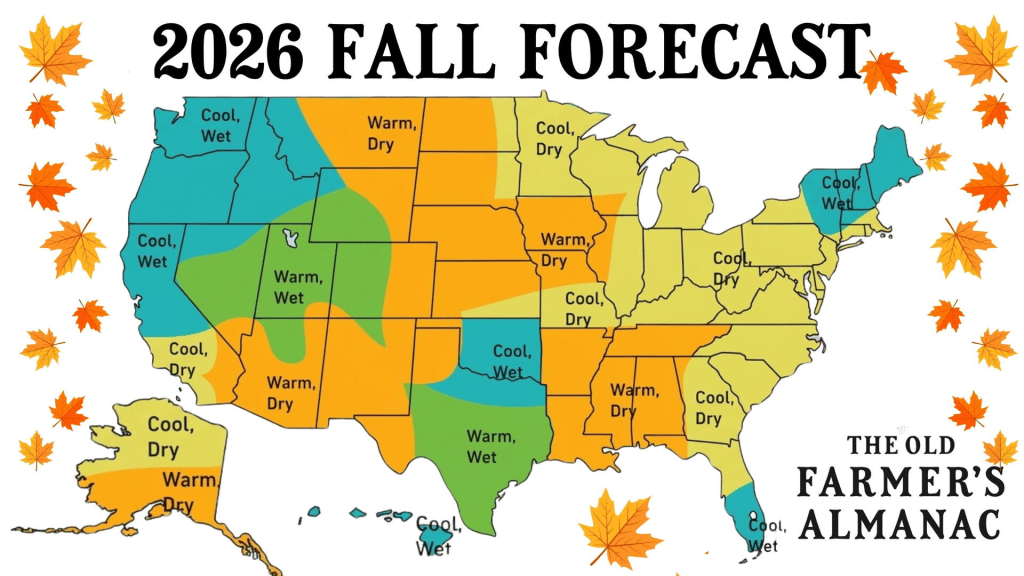
Fall 2026 Weather Predictions From The Old Farmer’s Almanac


Written By:Bob Smerbeck and Brian Thompson, Meteorologists

Fall 2026 forecast map for the United States. See the regional forecasts below for details on temperatures and precipitation.

Will our sweaters get more use this fall? The Old Farmer’s Almanac has the Fall 2026 weather predictions ready. See what temperatures and precipitation look like across the U.S. and Canada—with highlights for every region.

alamanac.com for the complete article

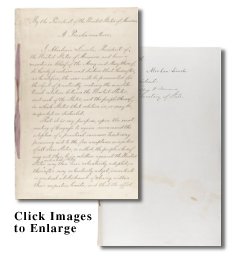
Preliminary Emancipation Proclamation, September 22, 1862 ~ signed on 1863


“. . . on the first day of January . . . all persons held as slaves within any State, or designated part of a State, the people whereof shall then be in rebellion against the United States shall be then, thenceforward, and forever free.” President Abraham Lincoln, preliminary Emancipation Proclamation, September 22, 1862

President Lincoln issued the preliminary Emancipation Proclamation in the midst of the Civil War, announcing on September 22, 1862, that if the rebels did not end the fighting and rejoin the Union by January 1, 1863, all slaves in the rebellious states would be free.

Read more…


1789 – The U.S. Congress authorized the office of Postmaster General.


United States Postal Service

Fifty volumes of copies of Letters Sent by the Postmaster General between October 3, 1789, and December 31, 1836, are here reproduced. Each volume is assigned an alphabetical designation and contains an index of names of correspondents. The letters are arranged chronologically. The volumes reproduced on rolls 28, 38, and 46 are letters to members of Congress.

The letters, written by the Postmaster General, deal with activities of the Post Office Department and relate chiefly to post offices, postmasters, mail transportation, mail contracts, departmental organizations, appropriations, legislation, postal laws and regulations, budget, international mail service, international postal conventions, postage stamps, departmental employees, mail fraud, lottery cases, and claims against the Post Office Department and postmasters.

The Postmasters General holding office during the time these letters were written were: Samuel Osgood, beginning September 26, 1789; Timothy Pickering, beginning August 12, 1791; Joseph Habersham, beginning February 25, 1795; Gideon Granger, beginning November 28, 1801; Return J. Meigs, Jr., beginning April 11, 1814; John McLean, beginning December 9, 1823; William T. Barry, beginning March 9, 1829; and Amos Kendall, beginning April 11, 1835.

The Office of the Postmaster-General originated on July 26, 1775, with the selection by the Continental Congress of Benjamin Franklin as Postmaster General for a term of one year. The position of Postmaster General was continued by the Congress of the Confederation.


An act of September 22, 1789 (1 Stat. 70), under the Federal Government provided for the temporary establishment of a general post office and authorized the appointment of a Postmaster General who was subject to the direction of the President. It also provided that the duties, salaries, and regulations of the Department should be the same as those under the Congress of the Confederation. An act of February 20, 1792 (1 Stat. 232), later provided in detail for the Post Office Department and the postal service generally. Subsequent acts made the Post Office a permanent agency and enlarged its duties.

The Post Office operated as a single, undifferentiated unit until the appointment of a chief clerk on April 1, 1818. This officer was assigned supervision of the field operations of the Post Office, including mail contracts, inspections, activities of special agents, disbursements, and measures to deal with mail depredations. As the Post Office came to perform more services, other functions of the Postmaster General were delegated to the Chief Clerk and the Assistant Postmaster General. (The First Assistant Postmaster General was authorized on January 28, 1792; the Second Assistant Postmaster General on April 30, 1810; the Third Assistant Postmasters General on July 2, 1836; and the Fourth Assistant Postmaster General on March 3, 1891.) The salary of the Postmaster General was placed on an equal basis with that of other Department heads on March 2, 1827, and in 1830 the Postmaster General became a regular Member of the Cabinet.

The records reproduced in this microcopy are part of Record Group 28, Records of the Post Office Department. Related records are among Records of the Bureaus of Assistant Postmasters General, the Bureau Accounts, and the Bureau of the Chief Inspector of the Post Office Department also in Record Group 28.

politics,pollution,petitions,pop culture & purses